
Chinese Shindai belongs to Tokyo’s small-counter Chinese tier, where the room matters as much as the cooking rhythm. In Dogenzaka, the format is compact, reservation-led, and recognised by Tabelog Chinese TOKYO 100 in 2023, 2024, and 2026, placing it in a sharper category than Shibuya’s casual late-night dining orbit.
Pearl is the En Primeur Club membership app — saves, bookings, and concierge access live there. Same editors, same standards.
- Address
- Japan, 〒150-0043 Tokyo, Shibuya, Dogenzaka, 2 Chome−23−13 渋谷デリタワービル 2F
- Phone
- +81 3-3476-6120
- Website
- shibuya-bed.jp
 Saves & bookings on Pearl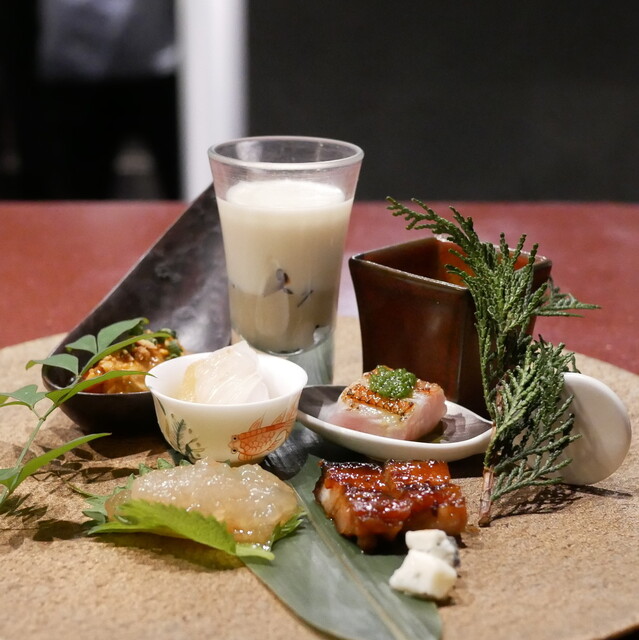
Dogenzaka shifts quickly after dark: station glare, uphill lanes, building signs, then the quieter focus of a second-floor counter. That shift explains how serious Chinese restaurants in Tokyo often work beyond obvious hotel dining. The city has grand Cantonese rooms, Sichuan specialists, and casual gyoza-and-beer institutions, but another precision happens at small counters, where the meal is paced before the guest and the kitchen cannot hide behind ceremony.
Chinese Shindai sits in that tight register. Its selection for Tabelog Chinese TOKYO 100 in 2023, 2024, and 2026 is a public signal that matters in Tokyo: repeat recognition in a category where user literacy is high and regional Chinese styles meet local expectations for sourcing, timing, and restraint. This is not Shibuya as neon convenience. It is Shibuya as a dense district supporting specialist dining above street level, minutes from nightlife churn but operating at a disciplined tempo.
A counter-led Chinese format in Shibuya's high-density dining grid
Tokyo Chinese dining has never been one lane. Cantonese banquet culture, mapo-tofu lunch counters, Shanghainese crab seasons, wine-led modern rooms, and Japanese-Chinese yoshoku inheritances coexist here. The sharper recent split is between scale and focus. Some rooms rely on breadth, long menus, and business-dinner flexibility; others compress the experience into a fixed-course counter where sequence and temperature carry the argument. Chinese Shindai belongs to the latter camp, closer in spirit to Tokyo’s sushi and kappo counters than to the large-table Chinese model.
That matters because Chinese technique changes when the diner is close to the pass. Wok timing, steam, frying, reductions, and service intervals become visible rather than backstage mechanics. The counter narrows the distance between kitchen and guest, suiting a city trained to read micro-format restaurants seriously. Here, value is not abundance; it is whether the room can sustain attention over a full sequence without slipping into performance.
Dogenzaka also changes the context. Nearby Shibuya dining can be loud, inexpensive, and fast: yakiniku, curry, bakeries, bars, ramen, and standing-room drinking compete for the same evening traffic. Comparison venues show the spread: Yakiniku Horumon Arai Ya Shibuya occupies a casual meat-driven price lane, while VIRON Shibuya ten belongs to the bakery-café rhythm. Kuroda, MarieIranganee, and Murghee show how broad the neighbourhood’s non-Japanese and casual dining field has become. Against that background, a compact Chinese counter reads less as spectacle than as a refusal to dilute the format.
Where the room, drinks, and recognition define the experience
The sensory frame is controlled rather than theatrical. A Tokyo counter restaurant asks diners to notice quiet cues: the cadence of a simultaneous start, reduced movement in a small room, and glassware and plates circulating without a larger dining room’s sprawl. Chinese cuisine can be loud in aroma and technique, but the Tokyo counter model reins that energy into measured progression. This address is best understood as a small-format interpretation of Chinese cooking within Tokyo’s exacting service culture, not a maximalist Chinese restaurant.
Drinks add another layer. Sake, shochu, and wine sit naturally beside contemporary Chinese cooking in Japan, where pairings often move beyond tea or beer. A sommelier presence and BYO option place the meal inside a more wine-aware category than many visitors associate with Shibuya Chinese restaurants. That does not make it formal in the old hotel sense; it makes it personal, because bottle and pacing join the same conversation as heat, oil, broth, vinegar, and smoke.
Recognition needs careful reading. Tabelog Chinese TOKYO 100 is not a Michelin star and does not claim the same inspection model. Its significance is different: it reflects a Tokyo-native discovery and evaluation culture where repeat selection can put a small restaurant on a serious dining itinerary. For travellers, the distinction is useful. Michelin often maps international prestige; Tabelog category lists better show where local demand and niche enthusiasm concentrate. Chinese Shindai’s repeated inclusion places it in that local conversation, especially for diners who know Tokyo’s strongest meals are not always attached to global hotel brands or English-forward rooms.
For a broader city read, place this meal beside other Tokyo categories rather than treating it as an isolated reservation. The capital’s dining breadth is visible across Our full Tokyo restaurants guide, while the travel frame sits in Our full Tokyo hotels guide, Our full Tokyo bars guide, Our full Tokyo wineries guide, and Our full Tokyo experiences guide. The point is not to rank Shibuya against Ginza or Aoyama, but to see how a nightlife-heavy district can sustain exact, low-capacity dining when the format is strong.
How to place it in a Tokyo itinerary
This is for travellers who know Tokyo rewards planning around formats, not only cuisines. A fixed-course counter has a different social contract from a flexible à la carte room: arrival timing, dietary communication, and attention to pacing matter more. The restaurant suits diners seeking a focused evening, not a spontaneous Shibuya stop between bars. It also suits guests interested in how Chinese cooking is reframed through Tokyo’s counter culture, where reduced distraction turns the meal into a study in sequence.
Families require a conditional read. The restaurant is not built like a casual family dining room, but reserved use is listed as available, changing the calculation for parties with children. For adults, the stronger case is the combination of small-room discipline, Chinese technique, and a drinks program with sake, shochu, and wine. In a city crowded with famous counters, that mix gives the restaurant a defined lane.
Readers building a wider Japan dining route can use contrast to sharpen the decision. Tokyo’s casual and specialist spectrum includes places such as. 鮪と炭火焼き うお炭 秋葉原店, 12/10 Shinjuku ten, 124. KAGURAZAKA (Yakitori), 2D Cafe, and 3 Chome no Curry Ya San. Beyond the capital, the same planning logic applies to -Grilled beef Sukiyaki- KAMAKURA TANUKIAN 鎌倉 たぬき庵 in Kamakura,.cafe in Osaka,.know in Kumamoto, (Shoku) Vietnam in Kawasaki, [Curry Senmon Ten] Maruyama Kyoju. in Sapporo, and [ki:] in Kyoto. For a transpacific sake comparison, Jōdo Saké Bar in Los Angeles and Onigiri Time in Pasadena show how Japanese drinking and casual food formats travel outside Japan.
Quick Comparison
Comparable options at the same price tier.
| Venue | Cuisine | Price | Awards | Notes |
|---|---|---|---|---|
| Chinese ShindaiThis venue — the venue you are viewing | Innovative Chinese Chef’s Counter | $$$ | , | |
| Chuka Kosai JASMINE Hiroo honten | Chinese Dim Sum & Cantonese-leaning Chinese | $$$ | , | Shibuya |
| Chugoku Ikkyosai Bai En | Authentic Chinese course restaurant | $$$ | , | Taitō |
| 桃仙閣 東京 | Traditional Japanese-Style Chinese | $$$ | , | Roppongi |
| Reikasai | Qing Dynasty Imperial Chinese Cuisine | $$$ | , | Minato |
| Shangri-La's secret ROPPONGI | Yunnan Mushroom Hot Pot | $$$ | , | Minato |












At a Glance
- Intimate
- Modern
- Hidden Gem
- Sophisticated
- Date Night
- Special Occasion
- Business Dinner
- Chefs Counter
- Design Destination
- Standalone
- Sommelier Led
- Corkage Allowed
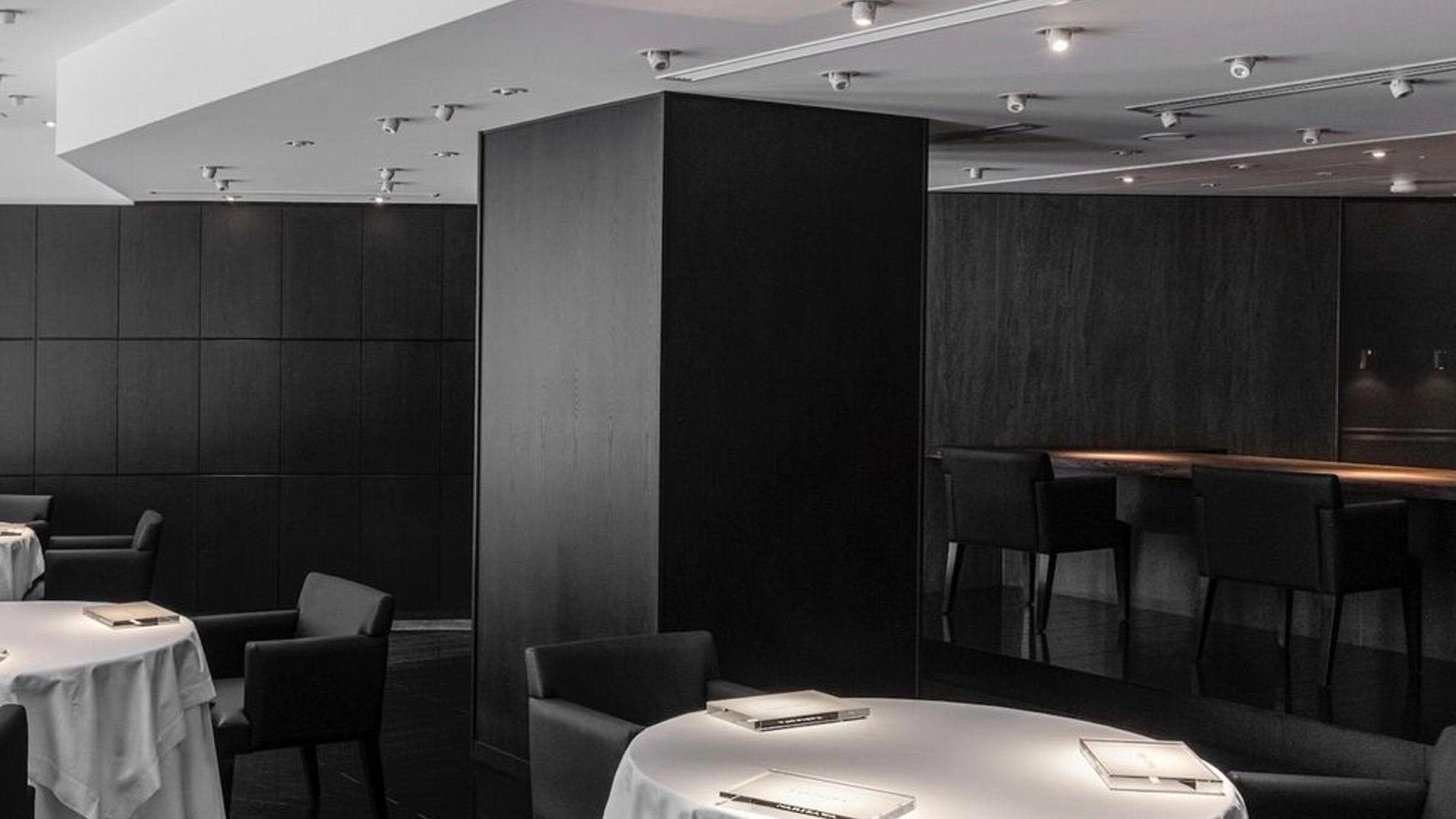
A small, counter-only space with a calm, refined atmosphere and modern design; lighting appears subdued and focused on the counter, creating an intimate, almost chef’s-table feel suited to adults rather than families.