A sushi counter in Hakodate's Yunokawa district, 鮨処 木はら sits within one of Hokkaido's most productive seafood corridors, where cold Tsugaru Strait currents deliver sea urchin, scallop, and squid to local boats year-round. The address places it away from the tourist-heavy harbour area, signalling a neighbourhood operation oriented toward local regulars rather than passing trade.
Pearl is the En Primeur Club membership app — saves, bookings, and concierge access live there. Same editors, same standards.
- Address
- 2 Chome-1-2 Yunokawacho, Hakodate, Hokkaido 042-0932, Japan
- Phone
- +81138578825
- Website
- hakodate-kihara.com
 Saves & bookings on Pearl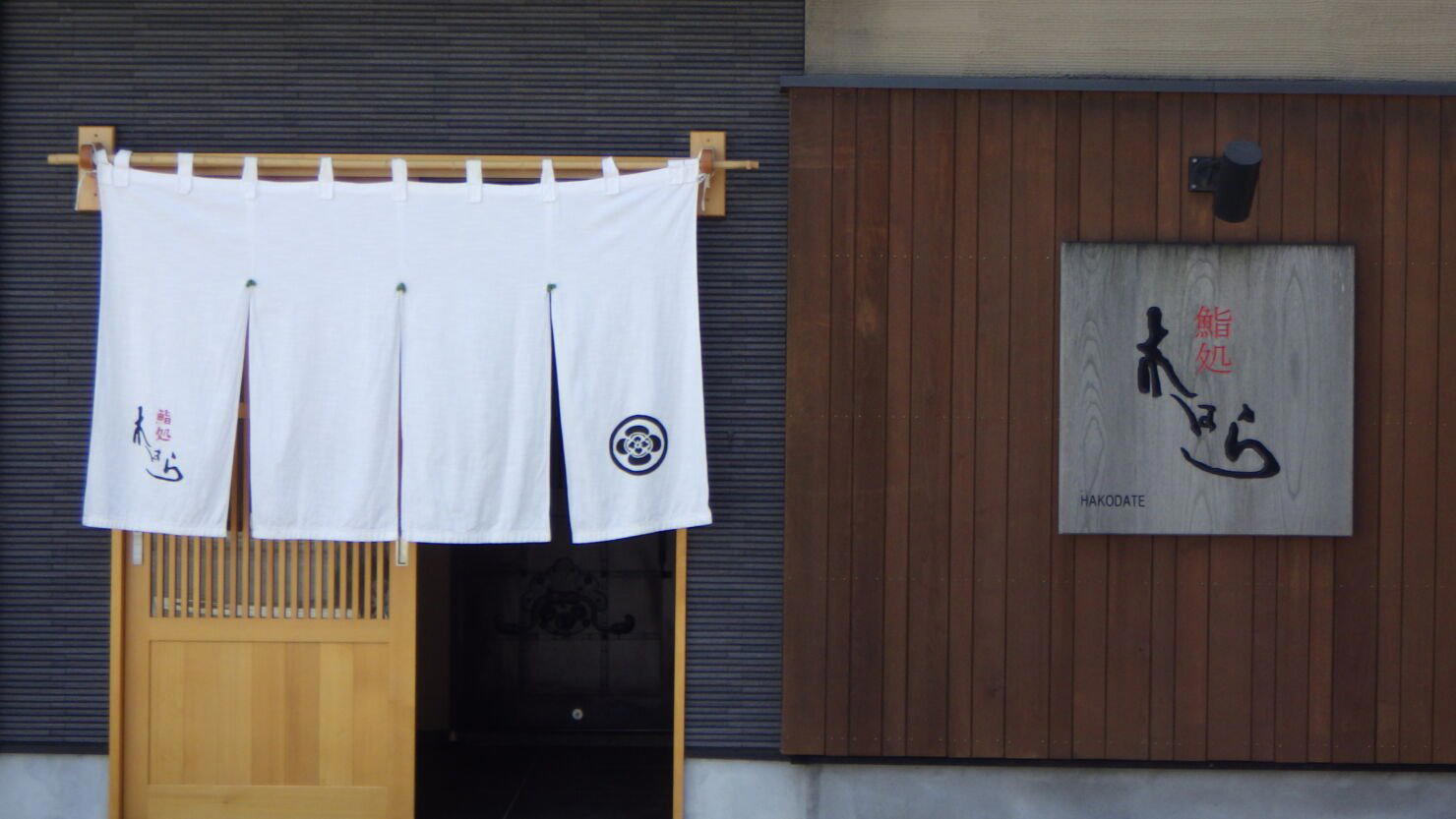
Where Hokkaido's Cold Waters Meet the Counter
鮨処 木はら is a Hakodate-Style Omakase Sushi restaurant in Yunokawa, Hakodate. The air off the Tsugaru Strait carries salt and cold in equal measure, and by the time you reach the Yunokawa district, east of the city centre, past the tram terminus, where the streets thin and the residential blocks take over, the contrast between the chill outside and the warm cedar glow of a small counter inside registers immediately. This is the physical grammar of neighbourhood sushi in northern Japan: modest approach, compressed interior, the soft percussion of a knife on hinoki wood.
鮨処 木はら occupies an address at 2 Chome-1-2 Yunokawacho that places it squarely in that Yunokawa register, away from the morning market crowds at the waterfront, away from the tourist corridors around Hakodate station. Yunokawa is better known as Hokkaido's oldest hot spring resort zone, a working neighbourhood with onsen ryokan on one side and unremarkable residential streets on the other. A sushi counter here is not positioning for foot traffic. It is a deliberate address for a certain kind of diner.
Hokkaido as a Seafood Argument
To understand what a counter like this is doing in Hakodate, you need to understand what Hokkaido does to sushi as a category. The island sits at the convergence of the warm Tsushima Current and the cold Oyashio Current, a collision that produces some of the most nutrient-dense fishing grounds in the North Pacific. Hakodate itself draws from the Tsugaru Strait, where sea urchin (uni), squid (ika), and Pacific cod concentrate in volumes that have made the city a reference point in Hokkaido seafood for decades.
That context shifts what a serious local sushi counter is dealing with. In Tokyo's Ginza, omakase counters compete partly on sourcing networks, the ability to pull from distant prefectures, aged fish specialists, and controlled supply chains. In Hakodate, the argument for local provenance is structural. The fish arrives from nearby. The uni season, running roughly from May through September with Hokkaido's Murasaki and Bafun varieties peaking at different points, sets the rhythm of any serious counter's year. By autumn, the scallops and crab shift into focus. The seafood calendar here is not a marketing device, it is a genuine operational constraint and opportunity.
This is why autumn and winter visits to Hakodate sushi counters carry a different weight than the summer uni peak. The cold months bring snow crab, Hokkaido-caught Pacific cod in its prime, and the kind of fatty fish that cold water produces. For a counter sourcing from local boats and Hakodate's wholesale market, one of the three largest seafood wholesale operations in Japan, seasonal timing is the primary determinant of what appears on the counter.
The Yunokawa Setting
The sensory register of a neighbourhood counter in a district like Yunokawa is distinct from the high-polish environments you find at destination restaurants. There is no theatrical entrance sequence, no curated playlist bleeding through a speaker system. What you get instead is the kind of compression that small-format sushi has always depended on: the counter as the entire event, the chef's movements as the main visual, the smell of fresh-cut fish and barely-warm rice as the ambient atmosphere.
Hakodate's dining scene has a few reference points at the higher end, Enoteca La Ricolma works Italian wine and produce into a local frame, while L'oiseau par Matsunaga and Lela represent different registers of the city's Western-influenced dining. maison FUJIYA Hakodate and Kira each operate in their own distinct formats. Against that range, a neighbourhood sushi counter in Yunokawa reads as the most locally embedded option, the one least oriented toward an outside audience.
That positioning has a practical implication. Booking operates through relationships, sometimes through phone, often through recommendations passed between locals.
Hakodate in the Hokkaido Sushi Hierarchy
Within Hokkaido's sushi geography, Sapporo has the density, counters like 夕佳山乃 represent the island's most concentrated fine-dining sushi competition. Hakodate operates differently: smaller city, tighter scene, stronger argument for proximity to source. The Hakodate morning market (Asaichi) is one of the most-referenced wholesale access points in the region.
For Japanese regional sushi at larger scale, counters like Harutaka in Tokyo or destination-format operations at HAJIME in Osaka and Gion Sasaki in Kyoto set a different bar, awards, extended press attention, international recognition. Goh in Fukuoka and akordu in Nara operate at the upper bracket of their respective cities. 木はら is a working neighbourhood counter: smaller, quieter, and anchored in a city where the seafood does a significant portion of the work.
Beyond Hokkaido, Japan's broader regional sushi tradition includes counters like 一本木 名川製 in Nanao, another smaller-city operation relying on local sea provenance rather than metropolitan profile. The pattern across these venues is consistent: local supply chain, regular clientele, minimal public-facing infrastructure.
Planning a Visit
Yunokawa sits roughly twenty minutes by tram from Hakodate station, at the eastern edge of the city where the hot spring district merges into quieter residential streets. The most reliable route for a visitor is a direct approach through accommodation. Timing matters: if Hokkaido uni is your objective, the May-to-September window is the operational window, with Bafun uni (the richer, sweeter variety) generally peaking earlier in the season. For crab and cold-water fatty fish, the winter months from November onward carry their own logic.
For a broader orientation to Hakodate's dining across formats and price points, the guide maps the city's scene. Those planning Hokkaido itineraries with appetite for the region's wider counter sushi and kaiseki tradition may also want to cross-reference 湖畔荘 in Takashima and 奥羽荘 in Nishikawa Machi for a fuller picture of northern Japan's small-format dining culture. For reference points at the other end of the formality spectrum, Le Bernardin in New York City and Atomix in New York City illustrate what counter-format seafood precision looks like at its most institutionally recognised.
Comparable Options
Comparable venues nearby, for context on price, style, and recognition.
| Venue | Cuisine | Price | Notes |
|---|---|---|---|
| 鮨処 木はらThis venue — the venue you are viewing | Hakodate-Style Omakase Sushi | $$$$ | |
| Shunsai Shungyo Tajima | Seasonal Japanese Izakaya with Omakase | $$$ | Tomiokacho |
| Uni Murakami | Sea Urchin Specialty Japanese | $$$$ | Otemachi |
| Uni Senmon Ten Yoichiya Hakodate asaichi ten | Hokkaido uni and seafood donburi | $$$ | Hakodate Asaichi (Morning Market) / near Hakodate Station |
| Sushi Dokoro Minami | Traditional Sushi Omakase | $$$ | Suehirocho |
| Lela | Innovative French | $$$$ | Goryokakucho |
At a Glance
- Elegant
- Intimate
- Scenic
- Sophisticated
- Date Night
- Special Occasion
- Celebration
- Chefs Counter
- Waterfront
- Panoramic View
- Local Sourcing
- Sustainable Seafood
- Waterfront
Modern and clean with dignified atmosphere created by solid Aomori hiba counter; serene views of Tsugaru Strait and Shimokita Peninsula on clear days.