
Tabelog 100 #11
Our verdict
Ajisai Honten places Hakodate’s salt-ramen tradition in a clear, practical frame: local kombu, light broth construction, and a price band that keeps the meal closer to everyday eating than destination dining theatre. Its Tabelog Ramen HOKKAIDO 100 selections in 2024 and 2025 give the shop a credible signal within Hokkaido’s ramen field, especially for travellers already near Goryokaku.

Pearl is the En Primeur Club membership app — saves, bookings, and concierge access live there. Same editors, same standards.
- Address
- Japan, 〒040-0001 Hokkaido, Hakodate, Goryokakucho, 29−22 イーストフォート・ビル
- Phone
- +81 138-51-8373
- Hours
- Daily 11 AM–9 PM
- Website
- ajisai.tv
- Directions
- Get directions
The menu
What to order
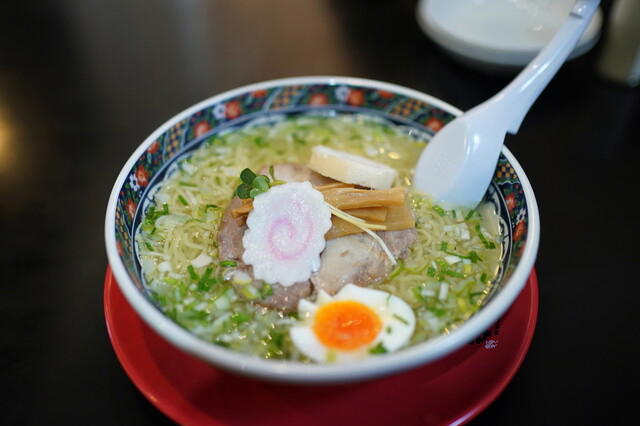
- Shio Ramen
- Tokusei Shio Ramen
- Ajisai Shio Ramen
Approaching the Goryokaku area, Hakodate changes register: the port-city romance gives way to tram stops, park traffic, families, and visitors folding lunch around a fortress walk. Ramen fits that rhythm better than a formal meal. The local bowl is not Sapporo’s miso-heavy calling card or Asahikawa’s soy-and-lard profile; Hakodate is associated with shio ramen, a clearer, lighter style that depends on broth discipline rather than force.
Ajisai Honten belongs to that civic food map. Its recognition in Tabelog Ramen HOKKAIDO 100 for 2024 and 2025 puts it among the prefecture’s scrutinised ramen addresses, but the useful point is not prestige alone. In Hakodate, salt ramen works as a reading of place: kelp from southern Hokkaido, a port city’s long-running appetite for clean soup, and a format that welcomes office lunches, families, and travellers without asking them to turn dinner into a ceremony.
Hakodate shio ramen, built on southern Hokkaido kombu
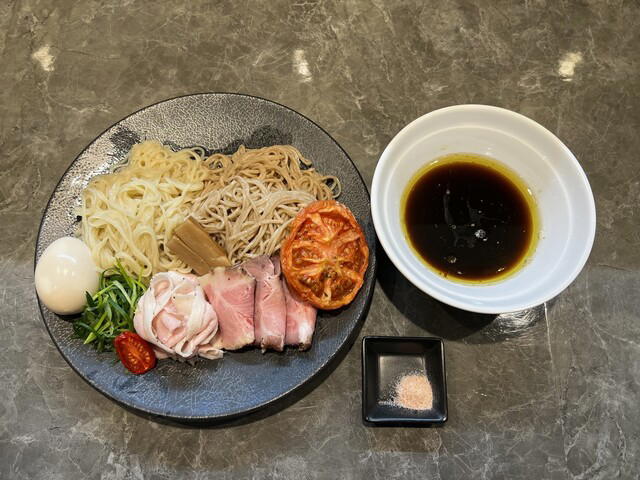
Salt ramen is unforgiving because it has fewer places to hide. Miso can absorb heaviness; soy can lean on aroma and colour. Shio broth shows balance quickly. The house description for Ajisai Honten’s central bowl points to a base using kombu from the southern region, pork bones, chicken carcasses, and natural rock salt, paired with specially made straight thin noodles. That ingredient list explains the local appeal better than any slogan: maritime umami, animal-body support, and a noodle shape that suits a lighter soup.
Hokkaido ramen is often discussed through the capital-city shorthand of butter, corn, miso, and winter calories. Hakodate’s version is quieter and older in temperament. The broth is the argument. When kombu is part of the structure, not a garnish, the bowl sits closer to the region’s seafood and kelp economy than to a generic station ramen template. That makes the sourcing angle matter: southern Hokkaido’s kelp is not decorative provenance, it is part of how salt ramen gains depth without turning opaque.
The menu classification also says something about the shop’s category. Ramen, dumplings, and Chinese-style dishes place it in the everyday Japanese-Chinese lineage rather than a chef-counter tasting format. That matters for expectation. This is a ramen room with counter seating and tatami space, not a hushed dining room built around pacing and explanation. The better comparison inside Hakodate is not French or Italian dining, even though the city has those registers at addresses such as Colz, Enoteca La Ricolma, and the higher-spend dinner bracket represented by Nidaime Saheiji. It is closer to the city’s casual food logic, where a distinct local style carries the meal.
Award recognition without fine-dining behaviour
Tabelog’s Ramen HOKKAIDO 100 selection is useful because ramen culture in Japan is crowded, opinionated, and highly regional. A 2025 listing and a Tabelog score of 3.65 give Ajisai Honten an external signal without changing the basic contract of the meal. The budget sits at JPY 1,000 to JPY 1,999 for lunch and dinner, which keeps the experience in the accessible ramen tier rather than the reservation-led dining tier.
That distinction is valuable in Hakodate, where visitors often over-index on seafood markets and under-read the city’s noodle identity. Ramen here can operate as a mid-itinerary reset: clear broth after richer seafood, a quick lunch before Goryokaku, or a family meal that does not require a long table negotiation. The absence of reservations reinforces the category. This is a queue-and-turnover format with 58 seats, take-out available, and a non-smoking room, which makes it more flexible than a small counter but less controllable than a booked restaurant.
The city’s broader dining spread runs from sukiyaki and local staples at Asari Honten to curry at Ganso Indian Curry Koike and casual local cooking at Hakodate Fusaya Daimon ten. For a broader read on the city’s food map, use Our full Hakodate restaurants guide; for planning beyond the table, the same city lens extends to Our full Hakodate hotels guide, Our full Hakodate bars guide, Our full Hakodate wineries guide, and Our full Hakodate experiences guide.
How to place it within a Japan ramen itinerary
Ajisai Honten makes the clearest case for travellers who want a Hakodate-specific bowl rather than another interchangeable ramen stop. Its location near Goryokaku helps, but the stronger reason is stylistic: shio ramen here gives a cleaner counterpoint to Hokkaido’s heavier ramen stereotypes. If the trip includes Sapporo or Asahikawa, Hakodate’s salt profile adds useful contrast.
For readers building a wider Japan food route, the address sits in a different lane from destination beef, café, curry, sake-bar, and onigiri stops such as -Grilled beef Sukiyaki- KAMAKURA TANUKIAN 鎌倉 たぬき庵 in Kamakura. 鮪と炭火焼き うお炭 秋葉原店 in Tokyo.cafe in Osaka.know in Kumamoto, (Shoku) Vietnam in Kawasaki, [Curry Senmon Ten] Maruyama Kyoju. in Sapporo, Jōdo Saké Bar in Los Angeles, and Onigiri Time in Pasadena. The point is not luxury, but specificity: a regional ramen form, priced for regular use, with enough recognition to justify choosing it over a random bowl near the tram line.
Frequently asked questions
Does Ajisai Honten work for a family meal?
Yes. Ajisai Honten is listed as children welcome, with 58 seats and categories that include ramen, dumpling, and Chinese in Hakodate. The price range, JPY 1,000–JPY 1,999, keeps it in an easy family-lunch bracket.
What should I expect atmosphere-wise at Ajisai Honten?
Expect a non-smoking room with counter seating and a tatami room, plus a 58-seat setup rather than a small counter-only ramen shop. It sits in Hakodate near Goryokaku Park and opens daily from 11:00 AM to 8:25 PM, which suits both lunch and early dinner.
What's the pricing like at Ajisai Honten?
Pricing at Ajisai Honten is listed as JPY 1,000 - JPY 1,999 JPY 1,000 - JPY 1,999 View spending breakdown.
What are Ajisai Honten's hours?
Hours at Ajisai Honten: Mon: 11 AM–9 PM; Tue: 11 AM–9 PM; Wed: 11 AM–9 PM; Thu: 11 AM–9 PM; Fri: 11 AM–9 PM; Sat: 11 AM–9 PM; Sun: 11 AM–9 PM.
Where is Ajisai Honten located?
Ajisai Honten is located in Hakodate.
What makes Ajisai Honten worth seeking out?
Ajisai Honten has a Tabelog Ramen HOKKAIDO 100 listing for 2025, and the public record points to over 80 years of history. The house style is traditional shio ramen, built around kombu, pork bones, chicken carcasses, and natural rock salt, which places it firmly in Hakodate’s salt-ramen tradition. Check the venue's official channels for the latest details.
Comparable Spots, Quickly
Comparable venues by cuisine and price in the same metro.
| Venue | Cuisine | Price | Awards | Notes |
|---|---|---|---|---|
| Ajisai HontenThis venue — the venue you are viewing | Hakodate shio ramen | $10–20 | Tabelog 100 #11 | Not listed |
| RAMEN ROOM 18 | Modern Hokkaido Ramen by Tsuta | $10–20 | Tabelog 100 #81 | Showa |
| Asari Honten | Traditional Sukiyaki in Historic House | $30–50 | Tabelog 100 #94 | Horaicho |
| Kira | Creative Japanese Kaiseki | $20–30 | Not listed | Sumiyoshi-cho |
| Ganso Indian Curry Koike | Traditional Japanese curry (Indian-style) | $10–20 | Tabelog 100 #54 | Horaicho |
| 五島軒本店 レストラン雪河亭 | Traditional Japanese-Western Yoshoku | $20–30 | Not listed | 末広町 |
Recognition history
Dated appearances from independent guides and award organizations, with the underlying list record or original source where available.
Tabelog 100 #11 · No. 11
Tabelog · Tabelog 100 - Ramen - HOKKAIDO - 2025
Details
- Lively
- Classic
- Cozy
- Well Known
- Solo
- Family
- Casual Hangout
- Group Dining
- After Work
- Open Kitchen
- Standalone
- A La Carte
- Counter Dining
- Beer
- Sake
Current opening hours
- Monday
- 11 AM–9 PM
- Tuesday
- 11 AM–9 PM
- Wednesday
- 11 AM–9 PM
- Thursday
- 11 AM–9 PM
- Friday
- 11 AM–9 PM
- Saturday
- 11 AM–9 PM
- Sunday
- 11 AM–9 PM
Hours can change for holidays and private events. Last verified .
Bustling but relaxed ramen shop with a simple, stylish interior, counter seats and tatami rooms, focused on efficient service and casual comfort rather than formality.