

1 Michelin Key · Relais Chateaux Award
Selected by the Michelin Hotels guide 2025, Hotel Biaclyn Hakodate occupies a Funami-cho address in one of Hokkaido's most historically layered port cities. The property sits within a city better known for its nineteenth-century Western architecture and morning seafood markets than for large-scale resort infrastructure, placing it in a compact, character-led tier of Hakodate accommodation.

Pearl is the En Primeur Club membership app — saves, bookings, and concierge access live there. Same editors, same standards.
- Address
- 17-3 Funamicho, Hakodate, Hokkaido 040-0055, Japan
- Phone
- +81 138-83-2273
- Website
- biaclyn.com
- Directions
- Get directions
A Port City That Shapes Its Hotels
Hakodate is one of the few Japanese cities where the built environment tells a coherent historical story. Opened to foreign trade in 1854 as one of Japan's first treaty ports, the city accumulated a layer of Western-style stone and brick buildings along its waterfront that survive largely intact today. Motomachi, the hillside quarter above the bay, holds consulates, Orthodox and Catholic churches, and Meiji-era merchant houses within a walkable radius. That architectural density is not incidental — it defines how the city positions itself and, by extension, how its accommodation options are evaluated by arriving guests. Hotels here are assessed against a backdrop that already carries strong aesthetic weight.
Hotel Biaclyn Hakodate, addressed at 17-3 Funami-cho, sits in the lower bay district, a neighbourhood that connects the Hakodate morning market to the waterfront warehouse precinct known as Kanemori Red Brick Warehouse. The surrounding streets carry that same layered character: functional fishing-port infrastructure alongside repurposed heritage buildings and the kind of low-rise urban grain that rarely survives in larger Japanese cities. The physical setting frames any stay here before a guest reaches the lobby.
Michelin Recognition in a Second-Tier City Context
Japan's Michelin Hotels program, now in its 2025 edition, applies the same selection rigour to accommodation that the restaurant guide applies to dining. The MICHELIN Selected designation awarded to Hotel Biaclyn Hakodate places it within a peer group defined by consistent quality standards rather than by scale or brand affiliation. Michelin's hotel selections in smaller Japanese cities are notably sparse compared to Tokyo or Kyoto, which makes any entry from Hakodate a meaningful signal about the property's relative standing in the local accommodation market.
For context, Michelin-selected hotels across Japan span a range from major international flagships like Bvlgari Hotel Tokyo and HOTEL THE MITSUI KYOTO to intimate ryokan formats such as Gora Kadan in Hakone and Asaba in Izu. Hotel Biaclyn Hakodate's inclusion positions it closer to the character-led, city-integrated end of that spectrum than to resort-scale operations. The selection also implicitly endorses Hakodate's growing relevance as a deliberate travel destination rather than a one-night stopover on a Hokkaido itinerary.
The Funami-cho Location as an Editorial Statement
Where a hotel sits in Hakodate communicates something specific. The city organises itself around a few distinct zones: the hilltop Motomachi heritage quarter, the bayside Kanemori district, the morning market adjacent to JR Hakodate Station, and the residential grid that fills the Oshima Peninsula beyond. Funami-cho places Hotel Biaclyn Hakodate within easy reach of the waterfront without committing it to the heavily photographed Kanemori tourist circuit. That positioning suggests a property oriented toward guests who want access to Hakodate's defining character without being inside its most trafficked node.
Arriving guests typically reach Hakodate via JR Hakodate Station, which sits at the northern tip of the peninsula. The Shinkansen extension to Shin-Hakodate-Hokuto, operational since 2016, connects the city to the Tokyo-Sapporo rail corridor, and a further extension directly into central Hakodate is planned for 2030, which will materially change how the city receives visitors from the Japanese mainland. For international travellers, Hakodate Airport handles direct connections from several Asian cities, with the city centre reachable in roughly twenty minutes by taxi or airport bus.
Design Reading: What the Address Implies
The Funami-cho address places Hotel Biaclyn Hakodate in a part of the city where architectural contrast is the norm rather than the exception. The neighbourhood has absorbed decades of incremental development alongside preserved Meiji and Taisho-era structures, producing a streetscape where contemporary buildings read against older ones rather than replacing them. Hotels in this zone tend to calibrate their interiors against that external context, either by drawing on the port city's material palette — weathered timber, stone, maritime-grey palettes, or by offering a deliberate counterpoint through cleaner contemporary finishes.
Hakodate's international architectural heritage, concentrated in Motomachi a short tram ride away, includes examples of Western ecclesiastical, consular, and domestic building types that are rarely concentrated in a single Japanese neighbourhood. The Hakodate Orthodox Church, the Former British Consulate, and the rows of banka stone-walled merchant buildings collectively represent a design vocabulary that filters into how the city's accommodation sector presents itself to design-aware travellers. Properties in this context inherit an ambient aesthetic standard whether or not they explicitly reference it.
Planning a Stay: Timing, Access, and the Broader Hakodate Argument
Hakodate rewards visits in two distinct seasons. Summer, from July through September, brings mild temperatures relative to the rest of Hokkaido and the full operation of the morning market, where squid caught overnight appears on counter grills by six in the morning. Winter, particularly December and January, delivers the snowbound version of the hilltop and the illuminated Hakodate night view from Mount Hakodate, consistently ranked among Japan's three canonical night panoramas alongside Nagasaki and Kobe. Both windows generate material differences in what the city delivers experientially, and the choice between them should drive timing decisions as much as any hotel-specific consideration.
Travellers building a broader Hokkaido or northern Japan itinerary will find Hakodate a natural entry point, particularly given the Shinkansen connection. Pairing it with a design-led Hokkaido property such as Zaborin in Kutchan or the resort infrastructure around Higashiyama Niseko Village creates a northern arc that works as a standalone itinerary. For those extending south through Japan's Michelin-selected hotel tier, properties like Nishimuraya Honkan in Kinosaki, Kamenoi Besso in Yufu, and Satoyama-Jujo in Niigata represent comparable character-led alternatives in different regional contexts.
See our full Hakodate restaurants guide for the city's dining context, where morning seafood counters and the city's distinctive Chinese-influenced ramen tradition anchor a food scene that punches well above its population size.
How Hotel Biaclyn Hakodate Sits Within the Broader Selection
Japan's Michelin hotel selection now spans an unusually wide geographic and format range, from urban grand hotels to single-building ryokan with fewer than ten rooms. Island properties like Jusandi in Ishigaki and Benesse House in Naoshima occupy a different niche from the lakefront formats of Fufu Kawaguchiko or the onsen-village context of Atami Izusan Karaku. Hotel Biaclyn Hakodate slots into the urban, port-city category, where the primary draw is a city's character and food culture rather than landscape or thermal infrastructure.
That distinction matters for how travellers should frame a stay here. The value proposition is Hakodate itself: the morning market, the Motomachi architecture, the night view, and a harbour-city food culture that has been absorbing and adapting outside influences since the mid-nineteenth century. The hotel's Michelin recognition confirms a baseline quality standard; the city delivers the surrounding argument.
Comparable Venues
Comparable venues nearby, for context on price, style, and recognition.
| Venue | Cuisine | Price | Awards | Notes |
|---|---|---|---|---|
| Hotel Biaclyn HakodateThis venue — the venue you are viewing | Historic consulate residence blended with contemporary luxury suites | $1,500–2,500 | 1 Michelin Key · Relais Chateaux Award | Not listed |
| Tsubaki (海石榴) | Traditional Japanese sukiya-style ryokan with contemporary comfort, positioned as a high-end kaiseki dining destination. | Not listed | 5-Star | Oku-Yugawara |
| moksa | Modern ryokan rebirth hotel blending tradition with contemporary wellness. | $100–200 | Michelin Selected | Yase |
| ふふ奈良 | 隈研吾設計の数奇屋風スモールラグジュアリーリゾート | Not listed | 5-Star | 高畑町 |
| Ishigaki Hills | Modern villas blending architecture with nature for immersive island retreats | $500–750 | Michelin Selected | Miyara |
| Gekkoju Yufuin (月洸樹 由布院) | Ultra-luxury all-suite resort ryokan with modern Western furnishings and Japanese design elements. | $500–750 | Michelin Selected | Yufuin Onsen |
Recognition history
Dated appearances from independent guides and award organizations, with the underlying list record or original source where available.
Michelin 1 Key
Michelin
Relais Chateaux Award
Relais Chateaux
Full recognition history (3 entries)
Michelin Selected
Michelin
Continue exploring
More in Hakodate
Details
- Elegant
- Scenic
- Quiet
- Sophisticated
- Intimate
- Historic
- Romantic Getaway
- Honeymoon
- Anniversary
- Historic Building
- Panoramic View
- Pool
- Sauna
- Fitness Center
- Spa
- Waterfront
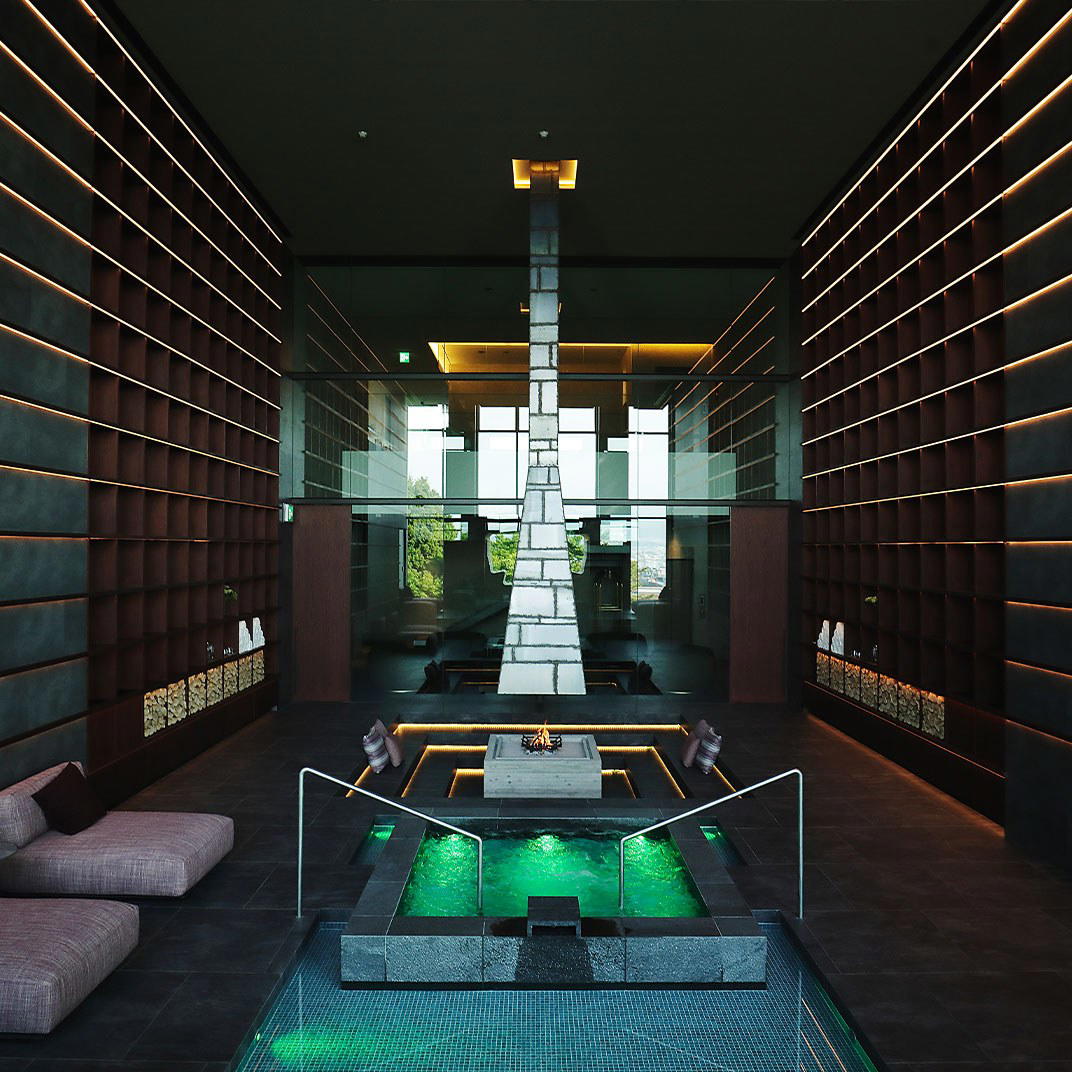
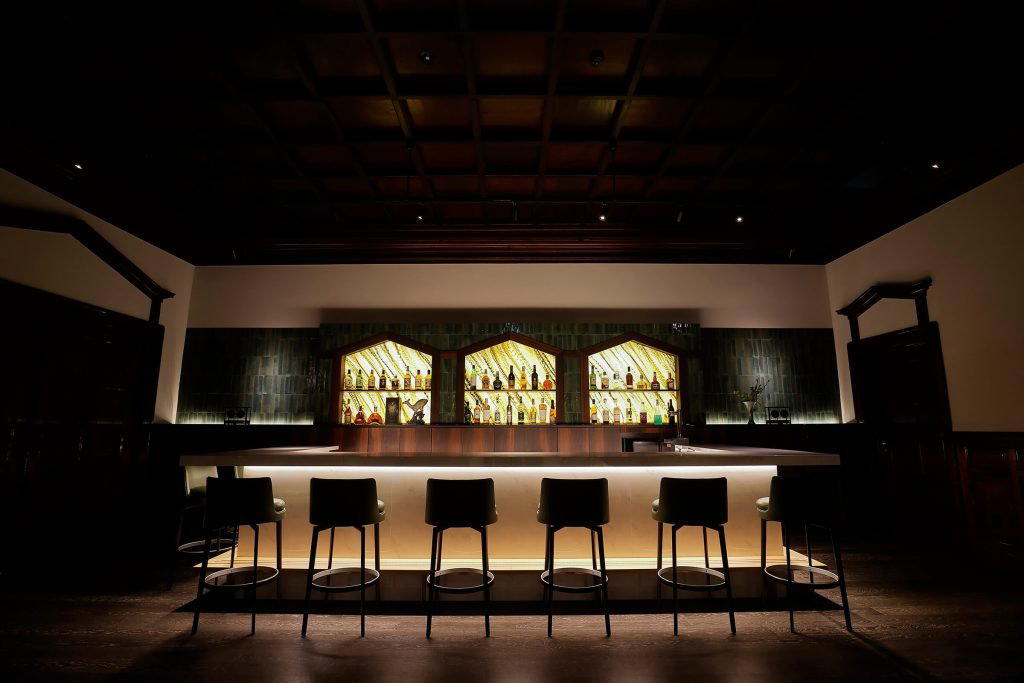
Polished historic atmosphere with ornate ceilings, chandeliers, bay windows, and serene wellness spaces featuring fireplaces and Japanese gardens.