
Our verdict
Hakodate's most focused uni counter operates from a modest Otemachi address, serving Hokkaido sea urchin across a tight morning-to-afternoon window. Ranked #340 in Japan by Opinionated About Dining in 2024 and #385 in 2025, Uni Murakami sits within a specialist tier of ingredient-driven restaurants that let a single product carry the entire menu. The format rewards early arrival and a clear understanding of what the kitchen does, and does only.

Pearl is the En Primeur Club membership app, where members save venues, book tables and use the concierge.
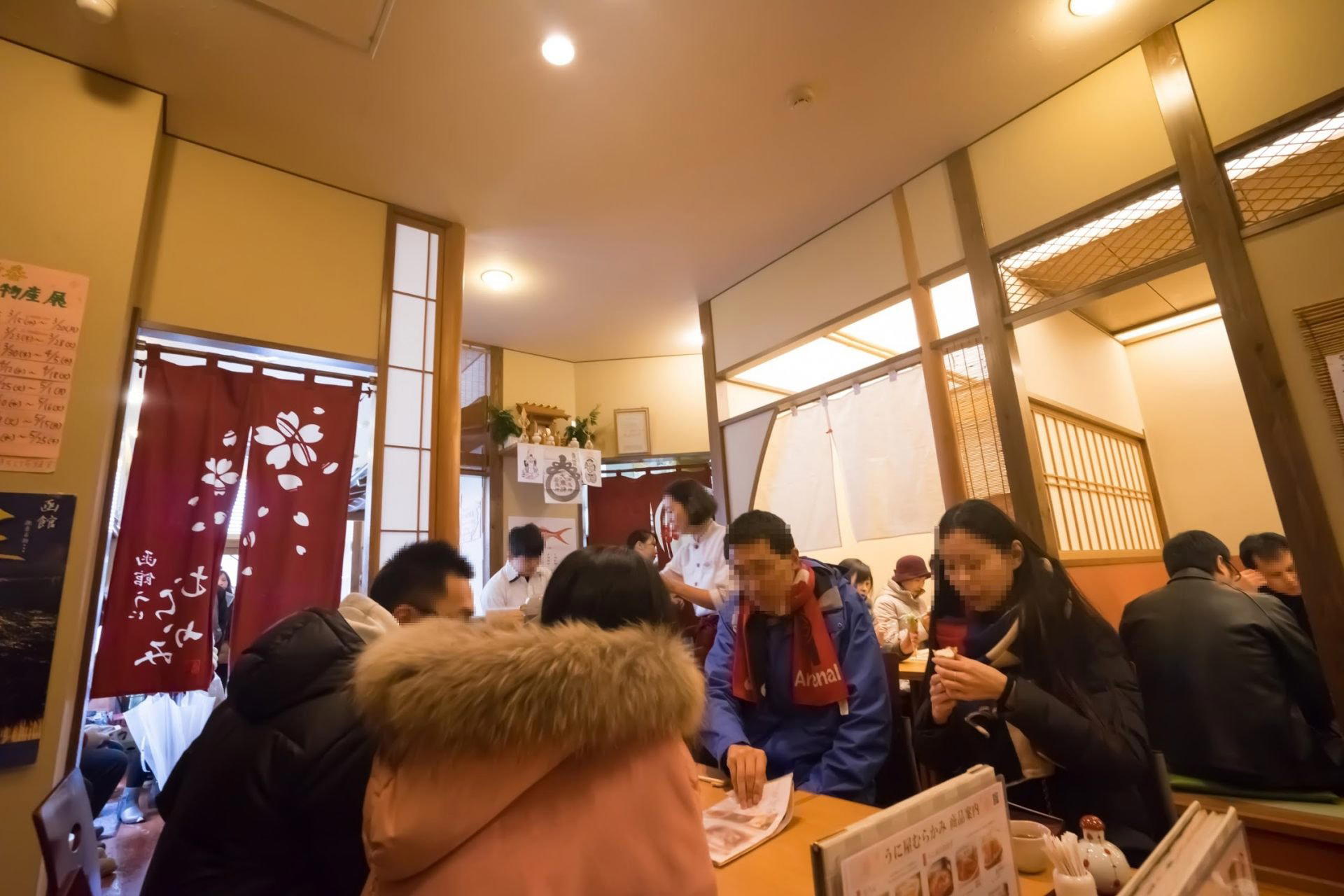
The menu
What to order
- Uni Don
- Uni Gratin
- Sea Urchin Feast Set
Hakodate and the Sea Urchin Tradition
In Hokkaido, the sea urchin conversation is not abstract. The island supplies a substantial share of Japan's premium uni output, and Hakodate, as its southern port city, sits at the intersection of cold-water fishery and a dining culture shaped by that proximity. What has emerged in this city is a small group of restaurants that treat uni not as a garnish or an accent but as the entire argument. These are not kaiseki houses with a uni course, nor sushi counters that rotate through seasonal ingredients. They are mono-product specialists, and the logic behind them is distinct: when the sourcing is local and the season is right, restraint in format is the correct editorial choice.
That positioning sits at the opposite end of the spectrum from, say, HAJIME in Osaka or Gion Sasaki in Kyoto, where the kitchen's ambition spans technique, narrative, and multi-course architecture. In Hakodate, the leading uni-focused addresses ask the ingredient to do all that work. The reward for the diner is a kind of clarity that multi-course formats rarely achieve.
The Setting and the Hour
Uni Murakami operates from 22-1 Otemachi, a central Hakodate address within reasonable distance of the waterfront market district where much of the city's seafood commerce still happens each morning. The kitchen runs from 8:30 am to 3:00 pm, Wednesday closed, which means it functions on fish-market time rather than restaurant time. That schedule is not incidental. Uni degrades quickly once removed from the shell; a morning-to-early-afternoon window aligns the kitchen's service hours with the point at which the product is at its peak. Diners arriving close to opening tend to encounter the widest selection. Those arriving after midday may find certain grades or presentations already exhausted.
The Otemachi location places Uni Murakami within Hakodate's older commercial and port-facing core. The neighbourhood carries none of the self-conscious design signalling of Tokyo's dining districts. What it offers instead is an unmediated relationship with the supply chain that feeds the restaurant, a quality that specialist ingredient-driven formats have always depended on, from oyster houses in Brittany to rice-focused kappo in Niigata.
The Ingredient at the Centre
Hokkaido uni divides broadly into two types: murasaki uni (purple sea urchin) and bafun uni (short-spine sea urchin). The latter is smaller, more intensely flavoured, and commands a higher market price. Both are present in Hokkaido waters, and the prefecture's cold Pacific currents produce roe with a richness and low bitterness that distinguishes it from warmer-water equivalents harvested further south or abroad. The season for Hokkaido uni peaks through the summer months, roughly June through August, though the precise window shifts by species and by fishing zone.
A restaurant that builds its entire identity around a single ingredient accepts a seasonal exposure that most kitchens avoid. When the product is excellent, the simplicity of the format amplifies it. When the season is difficult, poor water temperatures, irregular harvests, there is nowhere to hide. That vulnerability is, in a sense, a trust signal: a kitchen confident enough in its sourcing to stake the whole menu on one thing is making a public commitment to quality that a diversified menu does not require.
Chef Kiichi Sasaki leads the kitchen. In a mono-product format, the chef's role is less about compositional invention and more about selection, timing, and the discipline to present the ingredient without obscuring it. The acclaim Uni Murakami has received reflects that the sourcing and execution meet a standard recognised well beyond Hokkaido.
Recognition and Where It Sits
The slight shift in ranking reflects the competitive density of Japan's dining scene rather than any diminishment of the restaurant's quality, Japan's OAD list spans hundreds of entries across every format and price tier, and movement within it is normal.
For context, OAD's Japan list includes multi-Michelin-starred kaiseki and sushi institutions alongside tightly focused specialists. Harutaka in Tokyo and venues such as Goh in Fukuoka and akordu in Nara occupy different parts of the same list. Uni Murakami's presence there confirms it operates within a nationally recognised tier of serious restaurants, not merely a popular local address.
For comparison with other regionally focused specialists that have achieved national recognition, see also affetto akita in Akita, 1000 in Yokohama, and 6 in Okinawa, each of which has built a distinct identity from regional product and format discipline.
Hakodate in a Wider Dining Context
Hakodate's dining scene is smaller and less internationally documented than Sapporo's, but it rewards the traveller willing to organise a trip around specific addresses rather than a broad dining calendar. The city's proximity to both Pacific and Sea of Japan fishing grounds means seafood of a quality that rarely reaches Tokyo at comparable freshness. Alongside Uni Murakami, the city supports a range of other formats worth noting: Enoteca La Ricolma and maison FUJIYA Hakodate represent different points on the city's dining range. The full Hakodate restaurants guide maps the broader picture.
Travellers building a Hakodate itinerary will find the Hakodate hotels guide and the Hakodate bars guide useful for rounding out the trip. For those interested in what the region produces beyond food, the Hakodate wineries guide and Hakodate experiences guide cover ground that the city's dining focus sometimes overshadows.
The contrast with a venue like Le Bernardin in New York City, a kitchen that also centres seafood but within a French fine-dining architecture, is instructive. Both represent serious commitments to aquatic product; the philosophical difference is between maximalist technique and the kind of restraint that allows a single species, at its seasonal peak, to constitute the entire experience. Atomix in New York City offers yet another point of comparison: Korean fine dining that uses tasting-menu architecture to narrate a culinary tradition, where Uni Murakami's approach is to remove the architecture entirely and trust the ingredient.
Planning a Visit
Uni Murakami opens Tuesday through Sunday from 8:30 am, closing at 3:00 pm, with Wednesday as the weekly closure. The early-to-midday window means it fits naturally as a late breakfast or lunch destination rather than a dinner reservation. Arriving early is advisable, both for selection and because limited-volume specialists in Japan frequently serve through their stock before the posted closing time. The address at 22-1 Otemachi is in central Hakodate, accessible from the city's main transport points.
What to Order at Uni Murakami
The menu at Uni Murakami is built around Hokkaido sea urchin, and the decision at the table comes down to which variety and which preparation format the kitchen is offering on a given day. Bafun uni, when available, represents the more concentrated flavour profile: dense, oceanic, with a sweetness that holds even at room temperature. Murasaki uni is lighter and more delicate, more forgiving for those unfamiliar with the intensity of Hokkaido roe. Chef Kiichi Sasaki's kitchen, recognised by Opinionated About Dining in both 2024 and 2025, operates within the discipline of letting the day's catch determine the menu rather than the reverse. The practical advice is to ask what is freshest on arrival and order accordingly.
Frequently asked questions
When can I go to Uni Murakami?
Hours at Uni Murakami: Hours: Monday 8:30 am–3 pm Tuesday 8:30 am–3 pm Wednesday Closed Thursday 8:30 am–3 pm Friday 8:30 am–3 pm Saturday 8:30 am–3 pm Sunday 8:30 am–3 pm.
Cuisine and Recognition
| Venue | Cuisine | Price | Awards | Notes |
|---|---|---|---|---|
| Uni MurakamiThis venue (the venue you are viewing) | Sea Urchin Specialty Japanese | $50–100 | Not listed | Not listed |
| Harutaka | Edo-Style Omakase Sushi | $200–300 | 3 Michelin Stars · World's 50 Best #76 | Sushi |
| RyuGin | Modern Kaiseki | $500+ | 3 Michelin Stars · World's 50 Best #41 | Kaiseki, Japanese |
| HAJIME | Avant-Garde Japanese Fine Dining | $300–500 | 3 Michelin Stars · World's 50 Best #83 | French, Innovative |
| L'Effervescence | Modern French with Japanese Influences | $200–300 | 3 Michelin Stars · World's 50 Best #69 | French |
| HOMMAGE | Modern French with Japanese Influences | $150–200 | 2 Michelin Stars · World's 50 Best #78 | Innovtive French, French |
Recognition history
Dated appearances from independent guides and award organizations, with the underlying list record or original source where available.
Opinionated About Dining Top Restaurants in Japan Recommended
Opinionated About Dining
Full recognition history (3 entries)
Opinionated About Dining Top Restaurants in Japan Ranked #385
Opinionated About Dining
Opinionated About Dining Top Restaurants in Japan Ranked #340
Opinionated About Dining
Continue exploring
More in Hakodate
Restaurants in Hakodate
All restaurants in Hakodate →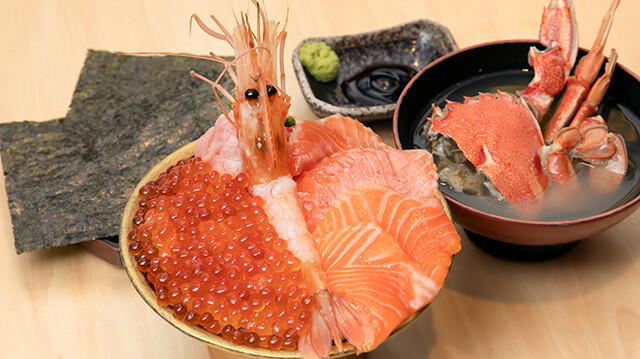
Hotels in Hakodate
All hotels in Hakodate →
Details
- Elegant
- Sophisticated
- Intimate
- Special Occasion
- Date Night
- Business Dinner
- Private Dining
- Sake Program
- Local Sourcing
- Sustainable Seafood
- A La Carte
- Set Menu
- Sake
Current opening hours
- Monday
- 8:30 AM–3 PM
- Tuesday
- 8:30 AM–3 PM
- Wednesday
- Closed
- Thursday
- 8:30 AM–3 PM
- Friday
- 8:30 AM–3 PM
- Saturday
- 8:30 AM–3 PM
- Sunday
- 8:30 AM–3 PM
Hours can change for holidays and private events. Hours as of .
Spacious interior with stylish Japanese latticework windows, cherry blossom motif, and a cool modern space focused on presentation for a relaxed and sophisticated dining experience.