
Tabelog Bronze
Our verdict
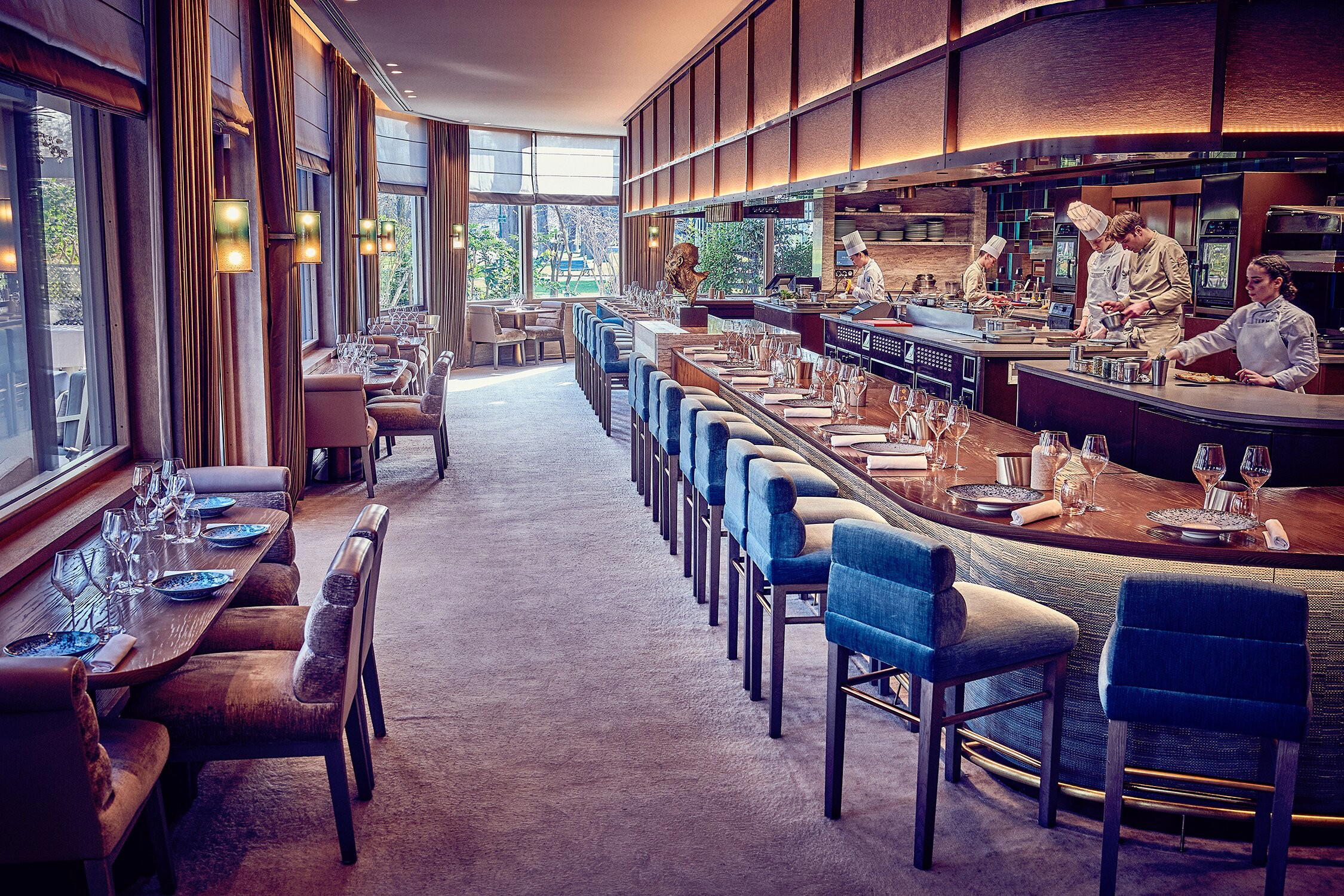
A French-Kyoto table in Nakagyo Ward with a Tabelog Bronze Award and a score of 3.83, Les champs d'or operates Tuesday through Saturday across lunch and dinner services. The kitchen works a French foundation with Kyoto sensibility, placing it in a small but growing category of Western fine dining that earns sustained local recognition in a city dominated by kaiseki.

Pearl is the En Primeur Club membership app, where members save venues, book tables and use the concierge.
French Fine Dining in a City Built for Kaiseki
Kyoto's dining identity is so thoroughly defined by its kaiseki tradition that a French kitchen earning genuine local recognition here represents something worth paying attention to. The city's most celebrated addresses Gion Sasaki, Hyotei, Kikunoi Honten, and Mizai, all operate within the kaiseki grammar of seasonal restraint, meticulous sequence, and hyper-local sourcing. French kitchens working in this city do not simply compete with that tradition; they are measured against it. A Tabelog score of 3.83 and a 2025 Bronze Award, earned in that context, represents a meaningful signal of consistent quality.
Les champs d'or occupies a narrow address in Nakagyo Ward, on Izutsuya-cho in the Yanaginobamba corridor, a part of central Kyoto where older machiya streetscapes sit within walking distance of Nishiki Market and the concentrated commerce of Shijo. This is not the preserved historic quarter of Gion or Higashiyama, but it carries its own density of serious restaurants and local regulars who move between Western and Japanese formats without the tourist-driven allegiances that shape dining in more visited neighbourhoods.
What the Tabelog Score Actually Tells You
Tabelog's Bronze Award tier, particularly in a city as competitive as Kyoto, corresponds to a level of dining that attracts repeat local customers, not just curious visitors. The restaurant runs five days a week, Tuesday through Saturday, and closes on Sunday and Monday. Lunch runs from 12:00 with last orders at 13:30; dinner from 18:00 with last orders at 19:30. The compressed service windows, particularly the 90-minute last order at dinner, indicate a kitchen running a structured menu format rather than à la carte flexibility.
For context within Kyoto's broader Western fine dining scene, the French-Kyoto category is small. HAJIME in Osaka represents the region's highest-profile French expression with three Michelin stars, while akordu in Nara demonstrates how European-influenced kitchens can operate at a serious level outside the major centres. Les champs d'or positions itself within Kyoto's more grounded peer tier, the local recognition of Tabelog rather than international award architecture, which often indicates a restaurant serving a committed Japanese clientele rather than a foreign-visitor demographic.
The Wine Dimension: French Cuisine in a Sake City
Running a serious French kitchen in Kyoto carries an implicit obligation to the cellar. In a city where every formal meal defaults to sake pairing and where local producers like Fushimi's brewers have centuries of context behind them, a French restaurant's wine program has to make a genuine argument for its own existence. The most persuasive French tables in Japan's secondary cities have tended to do this not by recreating a Parisian cellar wholesale, but by anchoring the French framework with bottles that reflect the kitchen's own culinary positioning.
The name itself, les champs d'or, the golden fields, carries a Burgundian register that suggests the kitchen's French reference point. Burgundy remains the dominant philosophical influence on French fine dining in Japan, partly because its emphasis on terroir-specificity and seasonal restraint maps most cleanly onto the kaiseki principles that Kyoto diners already understand. A cellar built around that sensibility, weighted toward village and premier cru Burgundy with selective additions from other French regions, would align logically with the cuisine the kitchen is producing and with the expectations of the local clientele most likely to be walking through the door.
For a restaurant operating in this tier and earning Tabelog recognition over multiple cycles, the wine program is not incidental. Kyoto's most serious French restaurants have historically treated the sommelier function as a key part of the dining proposition, a counterpart to the chef's sourcing discipline, building the cellar with the same attention to provenance that the kitchen applies to its ingredients. Comparing this approach to how Le Bernardin in New York City or Atomix in New York City have built wine programs that serve as editorial statements about the kitchen's ambitions gives useful framing: at this level of dining, the list is never just a list.
Nakagyo Ward as a Dining Address
Central Kyoto's Nakagyo Ward has a different dining character from the more photographed quarters. The concentration of serious local restaurants here, spanning Japanese, French, Italian, and Chinese formats at the ¥¥¥ to ¥¥¥¥ tier, reflects a clientele of Kyoto professionals and repeat visitors who eat out regularly and apply consistent standards. This is the neighbourhood where Isshisoden Nakamura has maintained its formal Japanese presence for generations, and where the city's less visible culinary institutions tend to accumulate.
That density matters for how you read Les champs d'or's Tabelog performance. A score of 3.83 in a neighbourhood where the competition includes Mizai and the various kaiseki counters operating within a short radius represents a kitchen that has made its case on local terms, not tourist terms. For comparison, look at how French cuisine has found its footing in other Japanese cities: Harutaka in Tokyo and Goh in Fukuoka both illustrate how Western-influenced kitchens can earn standing among local audiences who have access to the full range of Japanese fine dining alternatives.
Planning Your Visit
Les champs d'or operates Tuesday through Saturday only. Lunch: 12:00 to 15:00, last orders at 13:30. Dinner: 18:00 to 22:30, last orders at 19:30. Phone: 075-255-2277 (the primary reservation channel, based on available data). Address: Izutsuyacho 419, Nakagyo Ward, Kyoto. Reservations: Given the Tabelog recognition and the five-day-per-week operation with compressed service windows, advance booking is advisable, call ahead rather than relying on walk-in availability. Budget: Dress: No confirmed dress code, but smart casual at minimum aligns with the formality implied by the format.
For broader planning across Kyoto's dining, drinking, and hospitality options, see our full Kyoto restaurants guide, our full Kyoto hotels guide, our full Kyoto bars guide, our full Kyoto wineries guide, and our full Kyoto experiences guide. If you are extending your trip across the Kansai region, HAJIME in Osaka and akordu in Nara offer natural reference points for the region's French-influenced fine dining. Further afield, 1000 in Yokohama and 6 in Okinawa show how Western-format fine dining continues to develop across Japan's regional cities.
Frequently asked questions
What time does Les champs d'or open and close?
Hours at Les champs d'or: Tue, Wed, Thu, Fri, Sat 12:00 - 15:00 L.O. 13:30 18:00 - 22:30 L.O. 19:30.
Does Les champs d'or have a Michelin star or similar recognition?
Les champs d'or has received recognition including: Tabelog Bronze Award 2025 Score: 3.83 Cuisine: French / Kyoto Phone: 075-255-2277 Hours: Tue, Wed, Thu, Fri, Sat 12:00 - 15:00 L.O. 13:30 18:00 - 22:30 L.O. 19:30 Address: Kyoto Kyoto City中京 Ward柳馬場通六角下ru井筒屋419 Tabelog:.
What should I eat at Les champs d'or?
The kitchen sits at the intersection of French technique and Kyoto ingredient sensibility, a combination the Tabelog community has rated at 3.83, placing it among the city's recognised Western tables. Specific menu details are not published, so the safest approach is to trust the set course format and check the venue's official channels at 075-255-2277 to ask about current dishes or seasonal focus.
What part of town is Les champs d'or in?
Les champs d'or is located at Japan, 〒604-8113 Kyoto, Nakagyo Ward, Izutsuyacho, 419, Kyoto.
What makes Les champs d'or worth seeking out?
Earning a Tabelog Bronze Award in Kyoto, a city where the local dining standard is set by multi-generational kaiseki houses, is a meaningful credential for a French kitchen. The 3.83 score (2025) reflects sustained repeat-customer approval rather than tourist traffic, which in Kyoto's competitive Nakagyo Ward carries weight. Few French restaurants in the city operate at a comparable recognition level.
Can Les champs d'or accommodate dietary restrictions?
French fine dining restaurants running structured set menus in Kyoto typically require advance notice for dietary restrictions, and there is no published accommodation policy for Les Champs d'Or specifically. Call 075-255-2277 before booking to discuss requirements; the restaurant operates Tuesday through Saturday for both lunch and dinner service.
Pricing, Compared
A quick snapshot of similar venues for side-by-side context.
| Venue | Cuisine | Price | Awards | Notes |
|---|---|---|---|---|
| Les champs d'orThis venue (the venue you are viewing) | Classic French Fine Dining | Not listed | Tabelog Bronze | Not listed |
| Gion Sasaki | Modern Kaiseki | $300–500 | 3 Michelin Stars · La Liste Top Restaurants | Kaiseki, Japanese |
| cenci | Innovative Italian-Japanese Fusion | $100–150 | 1 Michelin Star · World's 50 Best #76 | Italian |
| Ifuki | Sumibi Kappo Kaiseki | $200–300 | 2 Michelin Stars · La Liste Top Restaurants | Kaiseki |
| Kyokaiseki Kichisen | Kyoto Kaiseki | $200–300 | 2 Michelin Stars · La Liste Top Restaurants | Japanese |
| Kyo Seika | Modern Chinese Fine Dining | $150–200 | 1 Michelin Star · Tabelog Bronze #216 | Chinese |
Recognition history
Dated appearances from independent guides and award organizations, with the underlying list record or original source where available.
Tabelog Bronze
Tabelog
Full recognition history (2 entries)
Tabelog 100 #84 · No. 84
Tabelog · Tabelog 100 - French - WEST - 2025
Continue exploring
More in Kyoto
Restaurants in Kyoto
All restaurants in Kyoto →
Bars in Kyoto
All bars in Kyoto →
Hotels in Kyoto
All hotels in Kyoto →
Wineries in Kyoto
Browse all →
Details
- Elegant
- Sophisticated
- Intimate
- Date Night
- Special Occasion
- Open Kitchen
- A La Carte
Current opening hours
- Monday
- Closed
- Tuesday
- 12–3 PM, 6–10 PM
- Wednesday
- 12–3 PM
- Thursday
- 12–3 PM, 6–10 PM
- Friday
- 12–3 PM
- Saturday
- 12–3 PM, 6–10 PM
- Sunday
- Closed
Hours can change for holidays and private events. Hours as of .
Sophisticated and elegant interior with attentive service and a chic atmosphere.