Located in Taito City's downtown corridor, コウタロウ ハセガワ ダウンタウン キュイジーヌ occupies a district where Tokyo's older commercial fabric and its contemporary dining ambitions overlap. The address places it within reach of both Ueno's institutional quarter and Akihabara's denser foot traffic, a positioning that shapes both its clientele and its competitive context within the capital's broader restaurant tier.
Pearl is the En Primeur Club membership app — saves, bookings, and concierge access live there. Same editors, same standards.
- Address
- 4 Chome-2-11 Taito, Taito City, Tokyo 110-0016, Japan
- Phone
- +81358268663
- Website
- hasegawa-kotaro.com
- Directions
- Get directions
 Saves & bookings on Pearl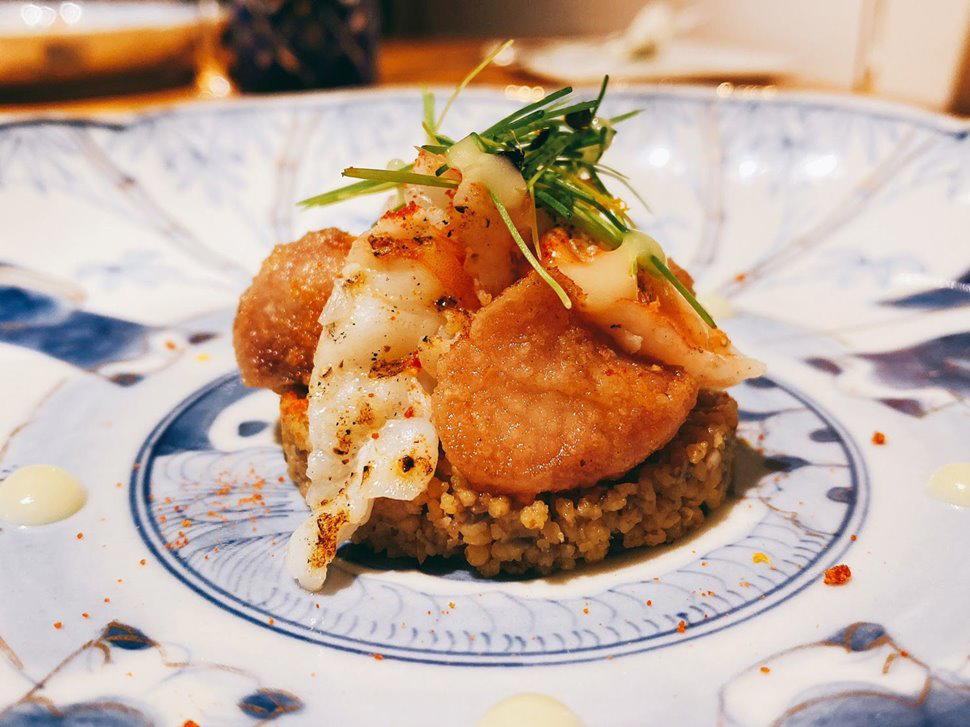
Taito City and the Geography of Tokyo's Mid-Tier Dining Scene
コウタロウ ハセガワ ダウンタウン キュイジーヌ is a restaurant in Taito City, Tokyo, serving modern French with Japanese influences at about $150 per person. The 4-chome block of Taito sits in a part of the city that has historically absorbed overflow from Ueno's cultural institutions and Akihabara's electronics trade, which means its restaurant stock has always reflected a more pragmatic, less ceremonial relationship with food than, say, Ginza or Azabu-Juban. That context matters when placing コウタロウ ハセガワ ダウンタウン キュイジーヌ: the address at 4 Chome-2-11 Taito puts it in a neighbourhood defined by working rhythms rather than leisure circuits, which in Tokyo often produces the more interesting dining propositions.
Harutaka and RyuGin anchor the upper bracket; the city's more interesting mid-tier venues work the space between accessibility and craft. Taito's dining addresses have traditionally operated closer to that second register.
A District with a Long Memory
Taito Ward carries one of Tokyo's longer continuous commercial histories. The area around Ueno has functioned as a mercantile and transit hub since the Edo period, and the food businesses that took root here were built to serve a moving public rather than a resident elite. That legacy persists in the density and variety of the eating options per block, even as gentrification pressure from adjacent districts has begun to push rental costs upward. Restaurants that open here now navigate a neighbourhood in transition: rents below those of Shinjuku or Minami-Aoyama, but a clientele that is increasingly mixed in income and expectation.
For dining concepts with serious intent, whether French-inflected, washoku-rooted, or cross-cultural, Taito represents a particular kind of opening calculation. The capital's most awarded rooms, including L'Effervescence and Sézanne, operate from higher-rent, higher-visibility addresses where the cover charge must offset both real estate and expectation. A Taito address inverts that equation, allowing for a different kind of price-to-craft relationship.
The Wine Question in Tokyo's Downtown Restaurants
The capital's upper-end rooms, places like Crony with its French-innovative format, have invested heavily in cellar depth and sommelier credentials, making the wine program a direct part of their competitive positioning. That investment has filtered downward, and restaurants in districts like Taito now face a genuine expectation gap: diners who drink well at destination rooms expect comparable curation when they eat closer to home.
The wine list, in this context, functions as a signal of seriousness that operates independently of cuisine type. A thoughtfully constructed cellar in a Taito address reads differently than one at a Ginza counter, it implies conviction rather than obligation. Tokyo's downtown dining has historically leaned on sake and shochu to anchor its beverage programs, and those categories remain commercially safer in neighbourhoods with mixed international and domestic trade. The shift toward wine-literate lists in areas outside the luxury core reflects both the rising knowledge base of Tokyo diners and the increasing availability of Japanese natural and regional producers who can be priced accessibly without sacrificing quality signals.
HAJIME in Osaka to Gion Sasaki in Kyoto, tend to derive their authority not from cellar size alone but from curation philosophy: the relationship between what is poured and what is plated. That philosophy is harder to execute than list length suggests, and it remains one of the genuine differentiators between restaurants in this category.
Tokyo in the Context of Japan's Broader Restaurant Tier
The capital concentrates international attention, but significant work is being done in regional addresses: akordu in Nara and Goh in Fukuoka demonstrate that the Tokyo-or-nothing logic that once governed fine dining itineraries has become less reliable. Even smaller markets have produced destination-worthy rooms: 一本木 肴川製 in Nanao and 湖畔荘竃 in Takashima represent the kind of regional specificity that travel-literate diners are actively seeking.
The comparison is less with Sézanne or L'Effervescence and more with the neighbourhood-specific propositions that serve a local professional clientele alongside visiting diners who have moved beyond the standard tourist circuit. That is also true of what Birdland in Sakai and Bistro Ange in Toyohashi represent in their own markets: restaurants with real conviction operating outside the highest-visibility tiers.
Particularly instructive comparators for a downtown Tokyo proposition with serious intent are not Le Bernardin in New York City but closer in spirit to Atomix, which built its reputation on specificity of vision in a city where there was many technically accomplished competition.
Know Before You Go
Comparable Spots
Comparable venues nearby, for context on price, style, and recognition.
| Venue | Cuisine | Price | Notes |
|---|---|---|---|
| コウタロウ ハセガワ ダウンタウン キュイジーヌThis venue — the venue you are viewing | Modern French with Japanese Influences | $$$$ | Not listed |
| ラ・ロシェル山王 | French Kaiseki | $$$$ | Chiyoda |
| アムール | Japanese-French Fine Dining | $$$$ | Shibuya |
| サンプリシテ | Fish-Centric Modern French Omakase | $$$$ | Shibuya |
| トレフ ミヤモト | Aromatic French Fine Dining | $$$$ | Minato |
| レフェルヴェソンス | Modern French-Japanese Fine Dining | $$$$ | Minato |




At a Glance
- Intimate
- Elegant
- Sophisticated
- Date Night
- Special Occasion
- Sake Program
Current opening hours
- Monday
- 6–8:30 PM
- Tuesday
- 6–8:30 PM
- Wednesday
- 6–8:30 PM
- Thursday
- 6–8:30 PM
- Friday
- 6–8:30 PM
- Saturday
- 6–8:30 PM
- Sunday
- Closed
Hours can change for holidays and private events. Last verified .
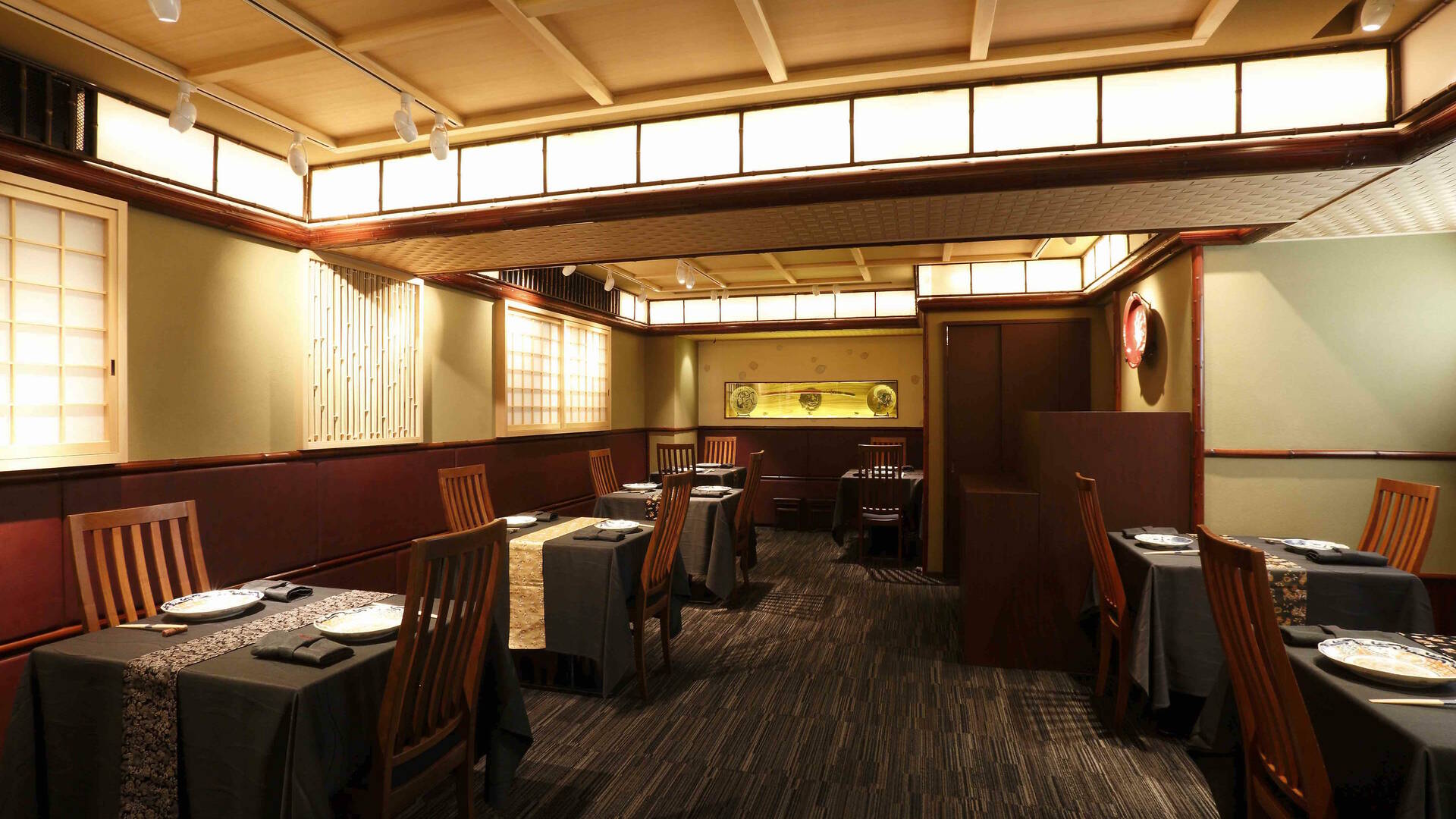
Simple interior with beautiful Japanese and antique plates, warm and welcoming atmosphere with gentle service.