Located in a ground-floor unit of a Daikanyama building, サンプリシテ (Simplicité) sits in a Shibuya neighbourhood that has long attracted a particular type of Franco-Japanese dining venture. The name signals the French tradition of simplicity as a guiding principle, a premise with deep roots in both classical cuisine and the Japanese aesthetic of restraint. Sparse data makes comprehensive coverage difficult, but the address places it firmly in one of Tokyo's most curated dining corridors.

Daikanyama and the Franco-Japanese Simplicity Tradition
The Daikanyama and Ebisu corridor in Shibuya has, over the past three decades, become one of Tokyo's more consequential addresses for a specific kind of restaurant: small, French-inflected, and built around the idea that restraint is a technique in itself. サンプリシテ, whose name translates directly from French as 'simplicity,' occupies the ground floor of the SOPHIAS Daikanyama building on Ebisunishi 2-chome, a pocket of the city where boutique fashion and considered dining have coexisted since the 1990s. That address alone tells experienced Tokyo diners something before they have read a single review.
The concept of simplicity as a culinary statement has a longer history than most current dining trends. In classical French cuisine, the move toward fewer, purer components was already underway by the time nouvelle cuisine formalized it in the 1970s. In Japan, that impulse found a natural counterpart in the aesthetics of ma — the productive use of negative space — and in kaiseki's insistence that each ingredient justify its presence. When French technique migrated seriously into Tokyo's kitchens in the late twentieth century, the meeting of these two traditions produced something that neither Paris nor Tokyo had independently developed: a hybrid discipline where French structure and Japanese precision reinforced each other rather than competing. Restaurants working under that hybrid model now form a distinct category in Tokyo's dining ecosystem, and the Franco-Japanese segment of that category runs from accessible bistro formats all the way up to multi-starred tasting menus at venues like L'Effervescence and Sézanne.
The shortlist, unlocked.
Hard-to-book tables, cellar releases, and concierge-planned trips.
Get Exclusive Access →Where Simplicité Sits in Tokyo's French Dining Tier
Tokyo's French restaurant scene has stratified considerably. At the upper end, ¥¥¥¥ tasting-menu venues compete on Michelin recognition, ingredient sourcing, and international reservation demand. Below that tier, a mid-range ¥¥¥ bracket , represented by restaurants like Florilège , has demonstrated that serious French cooking in Tokyo does not require a multi-course prix-fixe at four-star prices to attract a committed audience. Crony, working in the innovative-French register, occupies a similar space where the format is more relaxed but the culinary ambition remains high.
サンプリシテ's position within this structure is not confirmed by available awards data or published price-tier information in the current record. What the Daikanyama address does suggest is a venue oriented toward a neighbourhood clientele with exposure to European dining culture , the area draws that demographic consistently , rather than a destination-only model dependent on foreign visitors or Michelin tourism. That distinction matters: restaurants designed primarily for their immediate neighbourhood tend to operate differently from those calibrated for international reservation platforms, and often offer a more direct reading of what the kitchen actually values.
Across Japan, French-influenced venues operating under a philosophy of restraint have produced some of the country's most discussed cooking. HAJIME in Osaka has built a three-star identity around ecological precision. Gion Sasaki in Kyoto applies a different discipline: Japanese kaiseki structure with a kitchen that reads Western technique selectively. akordu in Nara works the Spanish-Japanese intersection with comparable rigour. Each of these venues demonstrates that the most compelling cooking currently happening in Japan often emerges from exactly this kind of structured cross-cultural premise, rather than from either tradition practiced in isolation.
The Cultural Weight Behind the Name
Choosing 'simplicité' as a name is a specific declaration. In French culinary culture, simplicity is not a shortcut; it is the end state that skilled technique is supposed to produce. Escoffier's late-career writing returned to this point repeatedly: that the measure of a kitchen was not how many components it could assemble, but how precisely it could reduce a preparation to its necessary elements. The Japanese parallel is equally demanding. The concept of 引き算 (hikizan), or 'subtraction,' describes the discipline of removing rather than adding , a principle visible in everything from ikebana flower arrangement to sushi counter cooking at venues like Harutaka, where the restraint of the presentation is itself the point.
A restaurant that places this convergence at the centre of its identity, through its name, is making a claim about what it thinks cooking should do. Whether サンプリシテ fulfils that claim in its current form is a question that available data cannot answer. What can be said is that the cultural tradition behind the name has produced some of the most serious cooking in both France and Japan, and that Tokyo in particular has proven itself a city where that tradition lands with particular force. Venues operating in this register have also found international peer comparisons useful: the French-technique-meets-Japanese-produce model that drives so much of Tokyo's high dining has influenced kitchens as far as Le Bernardin in New York City, where precision and reduction are similarly treated as primary values rather than stylistic choices.
Daikanyama as a Dining Address
The SOPHIAS Daikanyama building on Ebisunishi sits in a neighbourhood that rewards repeat visits across different meal formats. The area's concentration of independent cafés, wine bars, and small-plate restaurants has made it a circuit rather than a destination: diners tend to know the corridor and rotate through its options based on season and occasion. For visitors approaching from elsewhere in Tokyo, Daikanyama Station on the Tokyu Toyoko Line is the most direct access point, placing the venue within a short walk. The broader Shibuya ward is also served by Ebisu Station, approximately equidistant for those arriving from central Tokyo.
For context on how Tokyo's dining geography maps to culinary ambition across Japan, our full Tokyo restaurants guide covers the major neighbourhoods and price tiers in detail. Venues worth cross-referencing for their handling of the simplicity-as-discipline ethos include RyuGin in Tokyo's Roppongi, where kaiseki structure operates at multi-star level, and further afield Goh in Fukuoka, whose kitchen draws on Kyushu ingredients with comparable editorial restraint. Regional venues across Japan working in similar registers include 一本木 石川製 in Nanao, 夕佳亭山乃 in Sapporo, 湖畔荘 in Takashima, 広羽屋 in Nishikawa Machi, Birdland in Sakai, and Bistro Ange in Toyohashi. For an international frame on how Korean and French hybrid cooking operates at the fine-dining level, Atomix in New York City provides a useful comparative reference.
Know Before You Go
- Address: 〒150-0021 Tokyo, Shibuya, Ebisunishi, 2 Chome−17−13 SOPHIAS代官山 1F
- Nearest station: Daikanyama (Tokyu Toyoko Line); Ebisu (JR Yamanote Line) is also walkable
- Phone / Website: Not published in current record , verify via Google Maps or local reservation platforms before visiting
- Booking: Walk-in availability is not confirmed; contact ahead of any visit
- Price range: Not confirmed in current record
- Awards / Recognition: Not confirmed in current record
Frequently Asked Questions
- Is サンプリシテ child-friendly?
- Without confirmed price-tier or format data for this Tokyo venue, a firm answer is not possible , but Daikanyama restaurants in this neighbourhood generally skew toward adult dining, and the Franco-Japanese restraint ethos the name implies tends to suit a quieter room over a family-casual one.
- What should I expect atmosphere-wise at サンプリシテ?
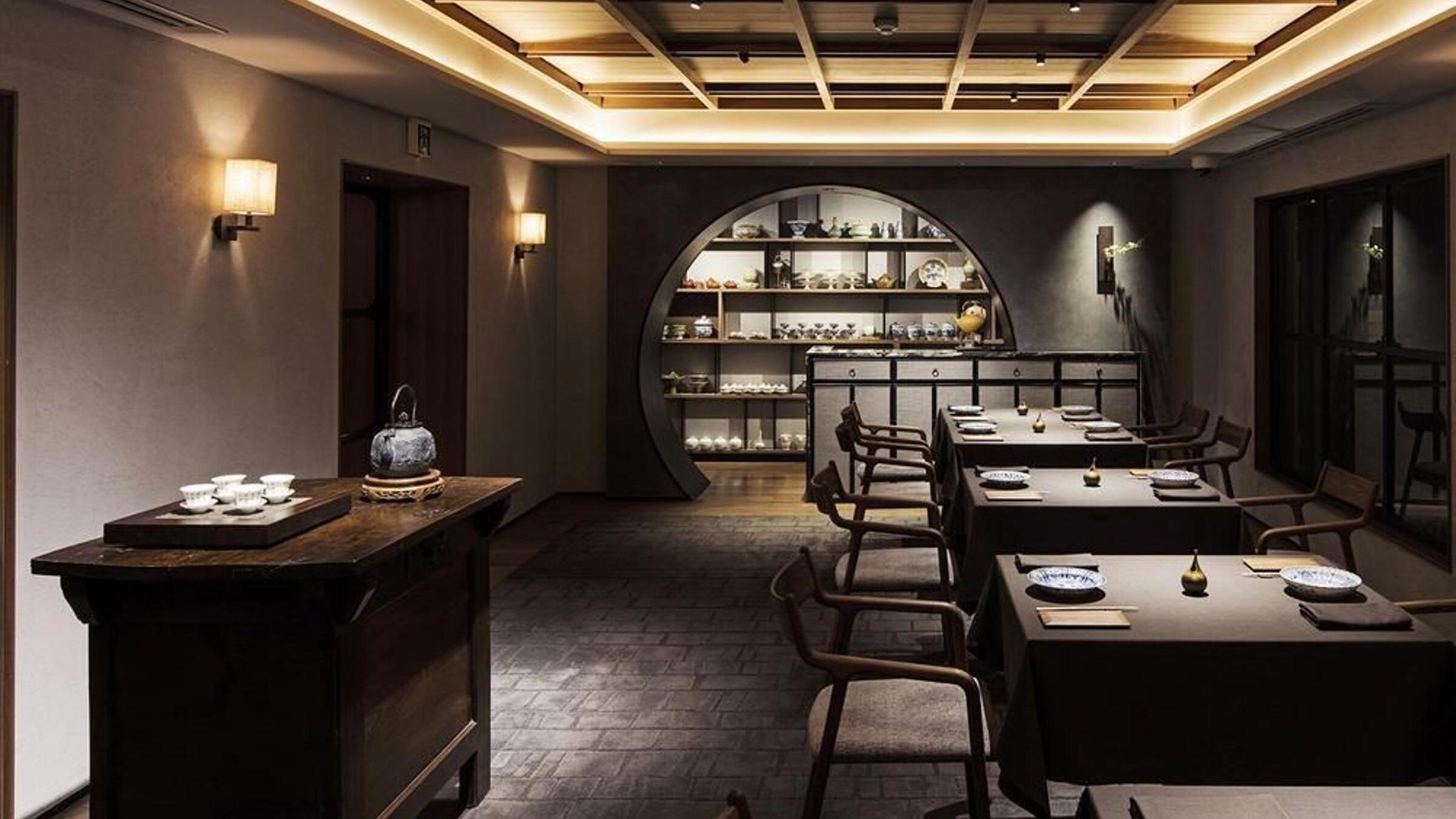
- Daikanyama sets a consistent register for its restaurants: considered interiors, moderate volumes, and a clientele that treats dining as an occasion without requiring formality. Without confirmed awards or price data for this venue, the most reliable guide to atmosphere is the neighbourhood itself, which has historically attracted small, precise, independently run rooms rather than high-turnover or casual formats. The address in a boutique commercial building on Ebisunishi reinforces that expectation.
- What do people recommend at サンプリシテ?
- No confirmed signature dishes, menu format, or chef attribution are available in the current record for this venue. Given the Franco-Japanese simplicity premise the name signals , a tradition that in Tokyo has produced focused, seasonal menus at venues across the ¥¥¥ to ¥¥¥¥ range , the kitchen's approach to seasonal French technique applied to Japanese produce would be the expected draw, but specific dish recommendations should be sourced from current visitor reviews rather than assumed from the name alone.
- Do they take walk-ins at サンプリシテ?
- If this venue operates at a higher price point consistent with the Daikanyama fine-dining corridor, walk-in availability is likely limited, particularly on weekend evenings when the neighbourhood draws significant foot traffic. Contacting the venue directly before visiting is advisable; without confirmed booking method or awards data in the record, assuming availability without a reservation carries meaningful risk.
- Is サンプリシテ connected to a particular French regional culinary tradition?
- The name alone does not signal a specific French regional affiliation , 'simplicité' as a culinary concept cuts across classical, nouvelle, and contemporary French traditions rather than anchoring to a single region. In Tokyo's French dining scene, some venues orient explicitly toward Lyonnaise or Burgundian models, while others, like L'Effervescence, have built their identity around a broader philosophy of natural cooking that transcends regional categories. Without confirmed chef credentials or menu data for this venue, its specific regional reference points remain unverified.
Same-City Peers
Comparable options at a glance, pulled from our tracked venues.
Need a table?
Our members enjoy priority alerts and concierge-led booking support for the world's most difficult tables.
Get Exclusive AccessThe shortlist, unlocked.
Hard-to-book tables, cellar releases, and concierge-planned trips.
Get Exclusive Access →