Our verdict
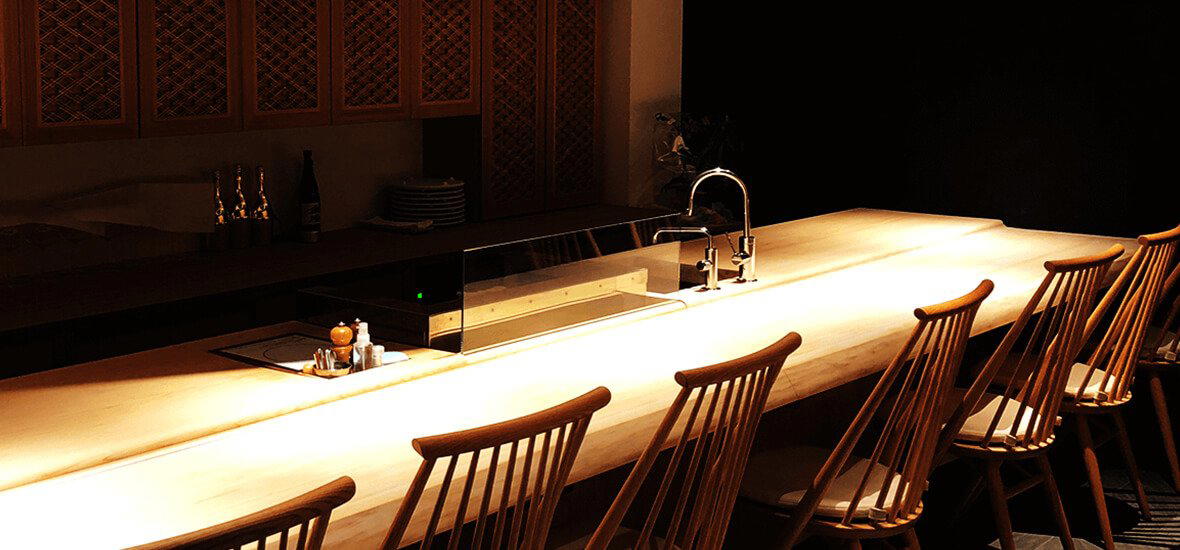
Niku Kappo Kinza occupies a basement on Ginza 6-chome, working at the intersection of kappo discipline and premium beef cookery. The format sits within a broader Tokyo tradition of counter-based dining where ingredient provenance and kitchen transparency take precedence over elaborate production. For those who return regularly, it is the precision of the beef preparation and the rhythm of a pared-back, course-driven service that keeps them coming back.

Pearl is the En Primeur Club membership app, where members save venues, book tables and use the concierge.
Ginza's Counter Tradition and Where Beef Kappo Fits
Ginza has long operated as a proving ground for formats that ask a great deal of the diner: counter seating, a kitchen in plain view, courses determined largely by the kitchen rather than the menu card. The neighbourhood's premium dining scene now spans omakase sushi at addresses like Harutaka, French-rooted tasting menus at Sézanne, and the kind of kaiseki discipline found at RyuGin. Within that range, niku kappo occupies a specific and growing niche: the application of kappo's sequential, counter-paced discipline to premium Japanese beef, rather than to the fish and vegetables that defined the form historically.
The word kappo itself carries weight. Literally meaning "to cut and to cook," it describes a style of restaurant that prizes the cook's craft at close range, where diners follow the sequence dictated by what is leading that evening rather than choosing from a static list. Translated into a beef context, this means each cut is addressed on its terms: some served raw or barely warmed, others charcoal-grilled or simmered. The format has built a following among Tokyo diners who consider the sushi counter too narrow and the French tasting menu too removed from direct ingredient contact.
The Address: Below Street Level in Ginza 6-chome
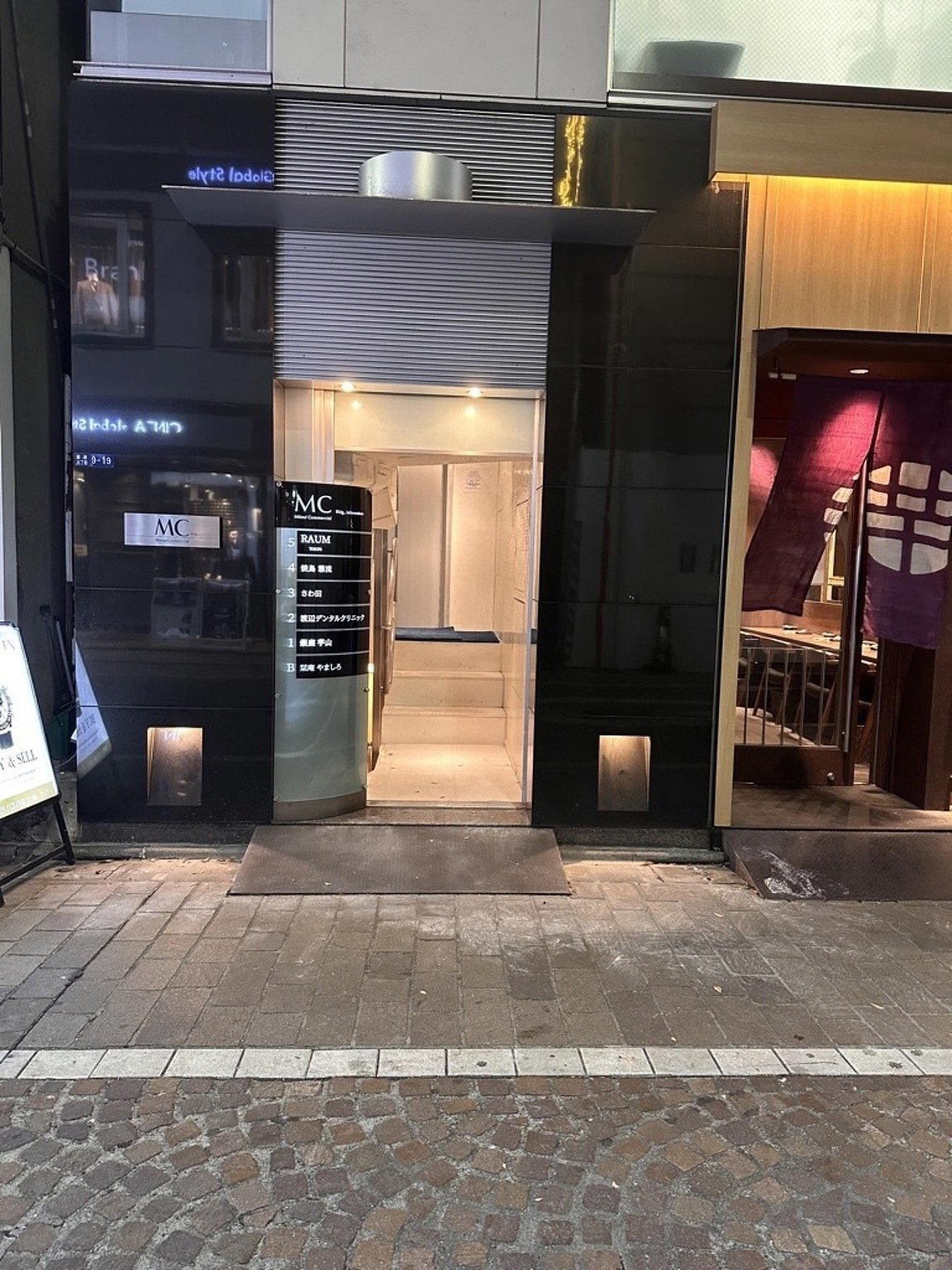
にく割烹金座 operates from a basement space on Ginza 6-chome, within a block that sits between the major Ginza crossing and Shimbashi. Basement dining in Tokyo carries no stigma. Some of the city's most deliberate counter experiences are found below street level, where the separation from passing foot traffic reinforces the sense of a self-contained room operating on its own schedule. The Ginza 6-chome address places the restaurant within walking distance of the area's concentration of high-spend dining, positioning it alongside peers in the ¥¥¥¥ tier while maintaining the lower-profile entry that basement rooms naturally provide.
This physical configuration matters to the regulars' experience. Arriving via a staircase rather than a lobby-level entrance creates a small but deliberate shift in register, a transition from the commercial energy of Ginza's main shopping spine to a room where the pace is set entirely by the kitchen. For those who return, this consistency of atmosphere is part of the offer.
What Regulars Come Back For
In Tokyo's premium counter culture, a restaurant earns its regular clientele by doing a small number of things with sustained accuracy rather than by rotating through novel formats. The niku kappo model at addresses like にく割烹金座 rests on a commitment to sourcing premium domestic beef, to sequence, and to the kind of kitchen-diner proximity that makes watching preparation part of the meal rather than incidental to it. Tokyo diners who have moved through the omakase sushi circuit, through kaiseki counters, and through French tasting rooms often arrive at niku kappo as a format that combines the ingredient-first rigour of sushi with the structural patience of multi-course cooking.
For those with exposure to comparable formats in other Japanese cities, the reference points vary. In Osaka, HAJIME applies rigorous French technique to Japanese produce. In Kyoto, Gion Sasaki works within kaiseki's seasonal grammar. In Fukuoka, Goh extends kaiseki into more personal territory. None of these share a format with niku kappo, but the underlying logic of the committed regular is the same across all of them: the room earns repeat visits through consistency rather than spectacle.
What the regulars at a well-run niku kappo counter understand, and what first-time visitors sometimes take a course or two to appreciate, is that the beef here is not presented as performance. There is no tableside theatre for its own sake. The sequence is calibrated to move through textures and temperatures in a way that builds rather than simply accumulates. This is closer in spirit to what Ginza's serious sushi counters are doing, where each piece is a considered edit rather than an addition, than it is to the yakiniku format, where the diner controls the grill and the pacing.
Tokyo Niku Kappo in Context
The niku kappo category has expanded in Tokyo over the past decade, in part because premium Japanese beef production has grown in visibility and in part because the counter format has proven adaptable to ingredient categories beyond fish. The format also appeals to a dining market that places a high value on the chef's editorial control. In the same way that innovative French kitchens in Tokyo, from L'Effervescence to Crony, have built audiences who trust the kitchen's sequence over the diner's own selection, niku kappo uses a similar contract between chef and guest.
Outside Tokyo, beef-focused counter cooking exists but rarely with the same density of options. Regional addresses like Nanao's premium counter or Sapporo's dedicated beef-focused room serve their local markets well, but Ginza operates at a different volume of competition and expectation. That concentration pushes kitchens toward a higher baseline.
For a broader map of where にく割烹金座 sits within Tokyo's full dining range, our full Tokyo restaurants guide covers the city's major categories and neighbourhoods in detail. Those building an itinerary across Japan might also consult akordu in Nara, Takashima's destination dining, or Nishikawa Machi's regional counter to understand how premium Japanese dining distributes itself outside the major cities.
Planning a Visit
| Venue | Format | Price Tier | Neighbourhood |
|---|---|---|---|
| にく割烹金座 | Niku Kappo (beef counter) | Not confirmed | Ginza 6-chome, B1F |
| Harutaka | Omakase sushi | ¥¥¥¥ | Ginza |
| RyuGin | Kaiseki | ¥¥¥¥ | Roppongi |
| Sézanne | French tasting menu | ¥¥¥¥ | Marunouchi |
The restaurant is located at 6-5-12 Ginza, Chuo City, Tokyo, basement level. Advance reservation is standard practice for counter formats in this category across Ginza. Visitors planning around regional Japan stops such as Birdland in Sakai or Bistro Ange in Toyohashi should confirm directly with each venue, as policies vary considerably.
Frequently asked questions
Where do I go for にく割烹金座?
にく割烹金座 is located at Japan, 〒104-0061 Tokyo, Chuo City, Ginza, 6 Chome−5−12 地下1階, Tokyo.
Is にく割烹金座 suitable for diners who don't read Japanese?
Hotel concierges at Ginza-area properties regularly handle reservations and pre-visit communication for counters of this type. Once seated, the kappo format requires minimal menu navigation since the course sequence is kitchen-led.
What should I eat at にく割烹金座?
The kitchen operates within the kappo format, so the course sequence is determined by the kitchen rather than selected by the diner. The focus is premium Japanese beef, presented through a progression that reflects the kappo tradition of knife work and heat technique rather than tabletop grilling. Arriving with no fixed expectations about specific cuts or preparations is the appropriate posture for this format.
Can I walk in to にく割烹金座?
Counter restaurants at this category in Ginza almost universally require advance reservation. The basement location on Ginza 6-chome and the fixed-course format both point to a kitchen calibrated for a set number of covers per service. Attempting to walk in without a reservation is unlikely to succeed; contact via the venue directly or through a hotel concierge is the standard approach in this part of Tokyo.
What makes にく割烹金座 worth seeking out?
The niku kappo format occupies a specific position between yakiniku, where the diner does the cooking, and kaiseki, where beef is incidental rather than central. At a Ginza counter in this category, the kitchen applies the full range of kappo technique to premium Japanese beef as its primary subject. That combination, counter proximity to the kitchen, chef-determined progression, and beef as the organizing principle, is less common than either of its parent formats.
How does にく割烹金座 handle allergies?
At counter-format restaurants in Tokyo, particularly those operating fixed courses, dietary restrictions typically need to be communicated at the time of reservation rather than on arrival. Reaching out directly, or asking a hotel concierge to make the inquiry in Japanese, is the practical approach before booking.
Accolades, Compared
Comparable venues nearby, for context on price, style, and recognition.
| Venue | Cuisine | Price | Awards | Notes |
|---|---|---|---|---|
| にく割烹金座This venue (the venue you are viewing) | Niku Kappo (Meat Kappo) | Not listed | Not listed | Not listed |
| Mon cher ton ton (六本木 モンシェルトントン) | Kobe Beef Teppanyaki | Not listed | Tabelog 100 #69 | Roppongi |
| きよ田 離れ | High-end Edomae Sushi Omakase | $500+ | Black Pearl 1 Diamond · Tabelog 100 #11 | Ginza |
| 鮨 くわ野 | Edomae Sushi Omakase | $200–300 | Not listed | Chūō |
| Restaurant Katsura | Japanese Teppanyaki Steakhouse | Not listed | Tabelog 100 #80 | Chūō |
| Keyakizaka | Modern Teppanyaki with Premium Wagyu | $150–200 | Tabelog 100 #57 | Minato |