Our verdict
豪龍久保 occupies a basement room in Nishiazabu, one of Tokyo's more exacting dining corridors, where the bar for technique and sourcing runs consistently high. The kitchen works at the intersection of classical Japanese culinary discipline and globally absorbed methods, drawing on local producers whose output shifts across Japan's distinct seasonal calendar. It belongs to a tier of Tokyo dining where the reservation, not the signage, is the address.

Pearl is the En Primeur Club membership app, where members save venues, book tables and use the concierge.
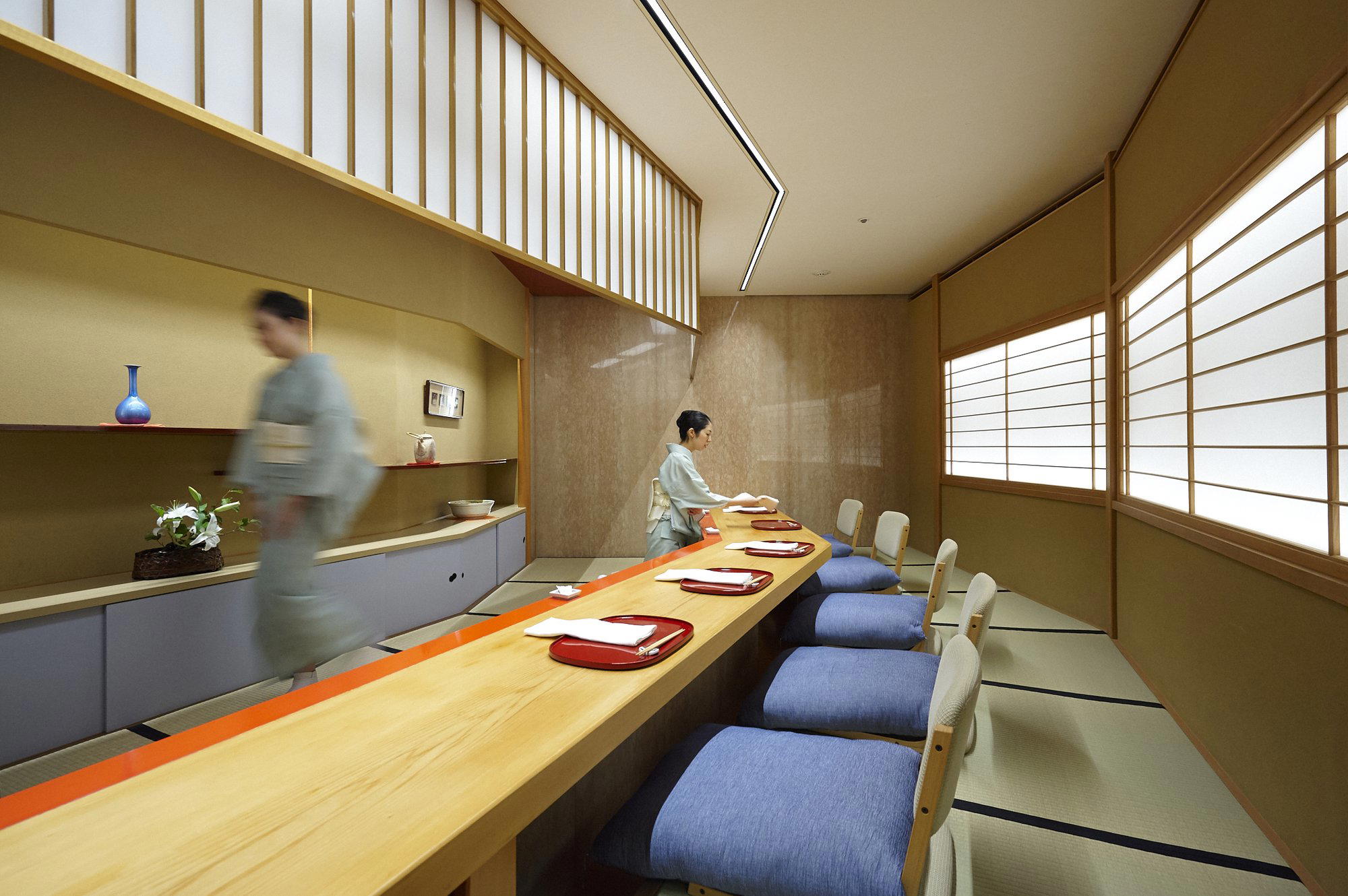
Nishiazabu After Dark: Where Tokyo's Serious Dining Happens Below Street Level
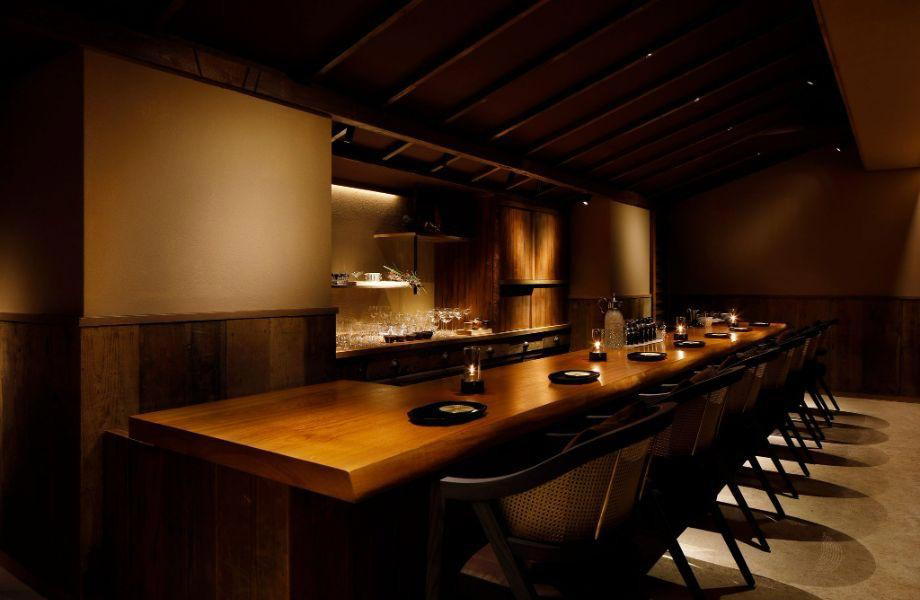
The basement entrance on Nishiazabu 2-chome tells you something before you reach the counter. Tokyo's most deliberate restaurants have long favoured this format: descend, shed the street, and enter a room calibrated entirely around what's on the plate. 豪龍久保 follows that tradition with the kind of address that circulates through word of mouth rather than window signage. The neighbourhood itself sets the context. Nishiazabu sits between the fashion money of Minami-Aoyama and the diplomatic heft of Azabu-Juban, and the restaurants here, particularly in basement and back-street formats, tend to assume a visitor who already knows what they're looking for.
This corner of Minato City has quietly accumulated some of Tokyo's most deliberate dining rooms over the past decade. The density of serious Japanese cooking in a relatively compact residential-commercial grid means that 豪龍久保 does not need to compete on visibility.
The Technique Behind the Tradition: Local Ingredients, Global Methods
Japan's most interesting cooking of the past two decades has been defined less by fusion in the blunt Western sense and more by a specific productive tension: indigenous ingredients interpreted through methods absorbed from classical European kitchens, and vice versa. The leading practitioners treat this not as novelty but as expanded vocabulary. 豪龍久保 operates inside that school of thinking, where the sourcing discipline of Japanese ingredient culture, the obsessive traceability, the seasonal specificity, the producer relationships that stretch across prefectures, is the foundation, and whatever techniques serve the ingredient leading are applied without ideological restriction.
This model has precedent across Japan's contemporary fine dining tier. L'Effervescence in Tokyo applies French classical structure to ingredients that are overwhelmingly Japanese in origin and seasonal logic. Crony pushes further into innovation while remaining anchored to Japanese sourcing intelligence. Further afield, HAJIME in Osaka and akordu in Nara demonstrate how kitchens outside Tokyo have built their own versions of this cross-trained discipline. What distinguishes the better practitioners in this field is restraint: the technique does not announce itself. The ingredient does.
Japan's seasonal calendar is not decorative here. It is operational. Spring brings mountain vegetables, butterbur shoots, bamboo shoots from specific highland plots, that behave differently from one year to the next depending on rainfall. Autumn produces matsutake from carefully managed forests in Kyoto and Iwate prefectures, and the window for peak quality is narrow. A kitchen that builds its identity around this ingredient logic commits to a programme of constant sourcing adjustment that most restaurants find operationally inconvenient. The serious ones treat it as the point.
Positioning in the Tokyo Fine Dining Tier
Tokyo's high-end restaurant market has stratified considerably. At the apex sit the multi-Michelin counters whose reservation systems function like lottery draws, months or years in advance. Below that, though the gap in quality is often marginal, sits a tier of restaurants with serious credentials, strong local reputations, and booking windows that are tight but manageable with the right approach and timing. 豪龍久保 occupies territory in this second tier: known to the circuit that matters, operating without the international marketing apparatus that drives queues at more globally profiled addresses.
Comparison with other Nishiazabu and wider Tokyo addresses is instructive. RyuGin in Roppongi operates kaiseki at the highest technical register with three Michelin stars and a booking calendar that functions accordingly. Harutaka in Ginza benchmarks premium sushi against the city's most demanding counter audience. Sézanne at Four Seasons Marunouchi represents French technique fully transposed to Tokyo's expectations. What these addresses share, and what 豪龍久保 shares with them, is a kitchen that does not hedge. The cooking is committed, the sourcing is deliberate, and the format demands attention from the guest.
For readers assembling a Tokyo itinerary around dining as a primary purpose, our full Tokyo restaurants guide maps these tiers in more detail. The city rewards specificity: knowing which neighbourhood, which format, and which culinary lineage suits your priorities makes the difference between a good meal and the right one.
Japan Beyond Tokyo: The Sourcing Network
One of the underappreciated structural facts of Tokyo's finest kitchens is how much their quality depends on Japan's regional producer network. The leading fish comes from Hokkaido, Nagasaki, and the Tsugaru Strait. The leading beef from Kagoshima and Hyogo. Vegetables from micro-farms in Chiba, Shizuoka, and the mountain regions of Nagano. A restaurant in Nishiazabu is, in practice, a relay point for ingredient relationships that span the archipelago.
This is also why the regional restaurant scene matters to understanding Tokyo. Gion Sasaki in Kyoto and Goh in Fukuoka are not lesser versions of Tokyo dining, they are in direct competition for the same producer relationships and, increasingly, for the same well-travelled guest. affetto akita in Akita, Aji Arai in Oita, and aki nagao in Sapporo are part of a broader recalibration where serious cooking has diffused outward from the major urban centres. Knowing this network is useful context for anyone eating at Tokyo's most ingredient-focused counters: the kitchen's relationships often run deep into those same regional webs.
Internationally, the model has clear parallels. Le Bernardin in New York City has long treated classical French technique as a vehicle for the leading available seafood rather than as an end in itself. Lazy Bear in San Francisco operates a similarly deliberate sourcing and seasonality discipline in a counter-format setting. The approach is not uniquely Japanese, but Japan's producer culture and seasonal rigour give it a particular intensity.
Planning Your Visit
豪龍久保 is located at 2-15-1 Nishiazabu, Minato City, Tokyo, in the basement level of the Matsuzawa Building (B1). The nearest transit options are Hiroo Station on the Hibiya Line or Roppongi Station on the Hibiya and Oedo Lines, both within walking distance of the Nishiazabu address. The area is leading approached on foot from either station, particularly in the evening when the neighbourhood's restaurant cluster is most active.
| Venue | Cuisine | Price Tier | Format | Booking Horizon |
|---|---|---|---|---|
| 豪龍久保 (Nishiazabu) | Japanese (precise sourcing) | Not confirmed | Basement counter/room | Confirm directly |
| RyuGin (Roppongi) | Kaiseki | ¥¥¥¥ | Multi-room formal | Months in advance |
| L'Effervescence (Minami-Aoyama) | French | ¥¥¥¥ | Townhouse format | Weeks to months |
| Crony (Tokyo) | Innovative, French | ¥¥¥¥ | Counter/open kitchen | Weeks ahead |
| Harutaka (Ginza) | Sushi | ¥¥¥¥ | Counter omakase | Months in advance |
For restaurants at this level in Nishiazabu, booking through a hotel concierge with local contacts or a specialist reservation service remains the most reliable route.
Frequently asked questions
How do I find 豪龍 ä¹ 保?
豪龍 ä¹ 保 is located at Japan, 〒106-0031 Tokyo, Minato City, Nishiazabu, 2 Chome−15−1 三澤ビル B1, Tokyo.
What do regulars order at 豪龍久保?
The kitchen at 豪龍久保 operates on a seasonal sourcing model, so the menu rotates with Japan's produce calendar rather than around fixed signature dishes. Regulars who return across seasons are the ones best positioned to track what the kitchen is doing, a first visit is best approached without a fixed agenda, letting the counter's current direction lead. The basement location at 2-15-1 Nishiazabu is consistent with a format where the chef determines the progression.
Do I need a reservation for 豪龍 ä¹ 保?
Reservations are recommended for 豪龍 ä¹ 保 in Tokyo. Confirm current policy via the venue's official channels.
Do I need a reservation for 豪龍久保?
At a counter-format restaurant operating at this tier of Tokyo's Nishiazabu dining scene, a reservation is not optional. Tokyo's serious basement counters, particularly in Minato City's Nishiazabu grid, fill well in advance, and arriving without a booking is unlikely to yield a seat.
Peers You’d Cross-Shop
A quick peer reference to anchor this venue in its category.
| Venue | Cuisine | Price | Awards | Notes |
|---|---|---|---|---|
| è±ªé¾ ä¹ ä¿This venue (the venue you are viewing) | Not listed | Not listed | Not listed | Not listed |
| Harutaka | Edo-Style Omakase Sushi | $200–300 | 3 Michelin Stars · World's 50 Best #76 | Sushi |
| L'Effervescence | Modern French with Japanese Influences | $200–300 | 3 Michelin Stars · World's 50 Best #69 | French |
| RyuGin | Modern Kaiseki | $500+ | 3 Michelin Stars · World's 50 Best #41 | Kaiseki, Japanese |
| Crony | Modern French with Japanese Influences | $150–200 | 2 Michelin Stars · World's 50 Best #34 | Innovative, French |
| Den | Modern Japanese Kaiseki | $150–200 | 2 Michelin Stars · World's 50 Best #51 | Innovative, Japanese |
Continue exploring
More in Tokyo
Restaurants in Tokyo
All restaurants in Tokyo →

Bars in Tokyo
All bars in Tokyo →




Details
- Special Occasion
- Chefs Counter
- Sake Program
- Counter Dining