모리
Our verdict
모리 sits in Haeundae-gu, one of Busan's most competitive dining districts, where the address alone signals a particular tier of intent. With limited publicly available data, the restaurant operates in the register that rewards curiosity over research, the kind of place Busan locals return to rather than announce. For visitors cross-referencing the city's broader dining scene, it warrants a closer look alongside the neighbourhood's more documented peers.

Pearl is the En Primeur Club membership app, where members save venues, book tables and use the concierge.
Haeundae's Dining Register and Where 모리 Sits Within It
Busan's Haeundae-gu has undergone a significant repositioning over the past decade. What was once primarily a coastal leisure district, known internationally for its beach and domestically for its seafood markets, has developed a layered dining scene that now includes serious contemporary Korean cooking, Japanese-influenced counters, and a handful of quieter, harder-to-categorise rooms that operate largely by word of mouth. The address at 1124-2 Jung-dong places 모리 within this evolving district, where the most interesting restaurants tend to resist easy classification and rely on a returning local audience rather than tourist footfall.
Across South Korea, the past decade has produced a generation of restaurants that draw on deep Korean culinary tradition while absorbing technique and format from Japanese and European fine dining. Seoul led that movement, with places like Mingles in Seoul establishing a template for refined Korean cooking that has since influenced restaurants far beyond the capital. Busan's response has been slower and more organic, shaped by the city's port character and its existing identity as a place where food is dense, direct, and historically tied to markets and pojangmacha culture rather than tasting-menu formats. The interesting restaurants to watch here are those that hold that local identity while absorbing broader influences, a tension that defines much of the city's current dining conversation.
The Cultural Weight of the Korean Table in a Coastal City
Korean dining culture carries particular obligations that differ from the omakase or tasting-menu traditions it sometimes borrows from. The communal table, the insistence on banchan as context rather than afterthought, and the deep regional specificity of ingredients, Busan's access to the South Sea means a different pantry than Seoul or the inland provinces, all shape what a serious restaurant in this city can and should be. Haeundae's proximity to working fish markets gives local kitchens access to ingredients that restaurants elsewhere simulate with effort. That geographic advantage tends to reward restraint: the leading cooking in this city often does less to its primary ingredients rather than more.
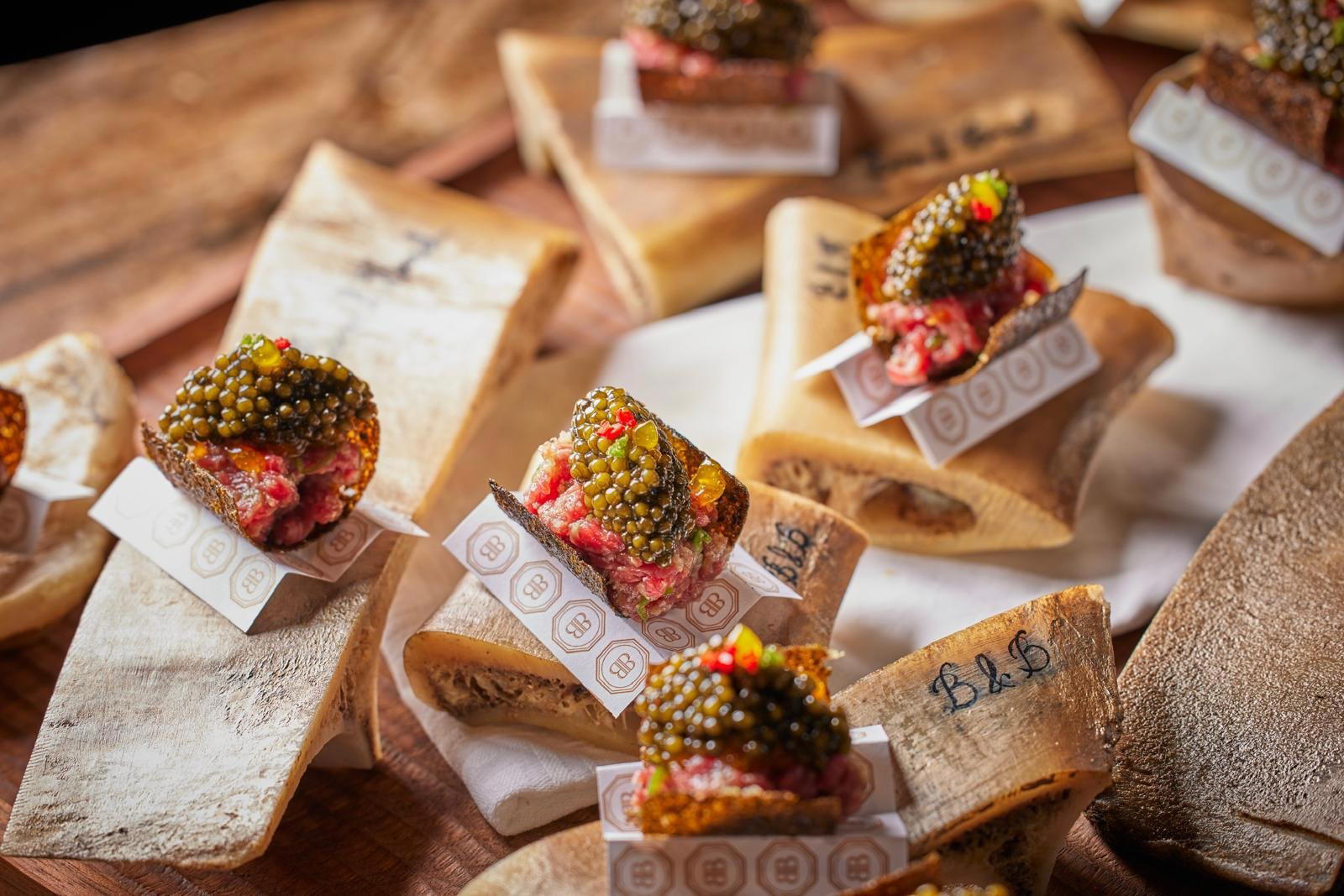
This is the culinary logic that separates Busan's strongest dining rooms from those chasing a metropolitan template. Restaurants like Palate, operating in the contemporary register, and Mori, drawing on Japanese influence at a higher price point, each represent a different answer to the question of what refinement means in this city. Born and Bred occupies yet another tier, one that imports a global steakhouse grammar into a port city with its own deeply rooted meat traditions. The restaurants that tend to endure here are those that find a position relative to Busan's specific culinary inheritance rather than against an abstract idea of fine dining.
At the other end of the spectrum, places like 100.1. Pyeongnaeng and 1969 Buwondong Kalguksu demonstrate that the most culturally significant dining in Busan is often entirely uninterested in recognition frameworks. These are restaurants whose authority comes from decades of repetition, from a single dish executed at a level where comparison becomes beside the point. They represent a different kind of seriousness, one rooted in the Korean idea that mastery means depth in a narrow range rather than range itself.
What Sparse Information Signals in a Scene Like This
The limited publicly available data on 모리 is itself a data point. In Busan's current dining environment, the restaurants with the thinnest digital footprint tend to fall into one of two categories: either early-stage operations still building an audience, or established rooms that operate by referral and return visits and have made a deliberate choice to remain outside the standard discovery channels. Given the Jung-dong address in Haeundae-gu, a location that carries a certain commercial rent level, the latter is the more plausible reading.
Across South Korea, this pattern is consistent. Some of the country's most considered cooking happens in spaces with no English-language presence, no booking platform integration, and no chef profile in international press. Doosoogobang in Suwon and Injegol in Inje County both operate in registers where the absence of marketing infrastructure is a marker of focus rather than oversight. The same logic applies to 권숙수 - Kwon Sook Soo in Gangnam-gu, where the cooking's seriousness and the restaurant's reticence to court international attention are directly connected. These restaurants share a common orientation: they are built for people who already know why they are there.
Temple cuisine at places like Baegyangsa Temple in Jangseong-gun represents the most extreme version of this disposition, food that exists entirely outside recognition economies and draws authority from centuries of practice rather than critical endorsement. 모리, operating in a commercial context, sits somewhere between those poles, but the same principle applies: the absence of a digital profile does not indicate absence of substance.
Planning a Visit: What to Know Before You Go
The address at 1124-2 Jung-dong, Haeundae-gu, places 모리 within walking distance of Haeundae's main commercial corridor, an area well-served by Busan Metro Line 2 via Haeundae Station. For visitors working through the city's dining options, our full Busan restaurants guide maps the district's full range across price tiers and cuisine types. Given the lack of a published phone number or website, the practical approach is to visit in person during off-peak hours to inquire about reservations, or to ask locally, the kind of restaurant that operates quietly in Haeundae tends to be known to hotel concierge staff in the neighbourhood.
For travellers using Busan as a base for broader regional exploration, the dining logic extends outward: Double T Dining in Gangneung represents a comparable register of considered cooking in a smaller coastal city. Those extending to Jeju will find relevant reference points at Cheon Jee (천지) and 더 플라잉 호그 in Seogwipo. For international comparison, the format discipline of a focused, quiet room with serious intent has parallels at Le Bernardin in New York City and the community-driven model of Lazy Bear in San Francisco, though the Korean context produces a distinct version of that ambition. Market Café in Incheon offers another data point for how Korean dining rooms at an accessible price tier handle the balance between informality and craft. 에버리움펜션 in Cheoin extends that comparison into a rural hospitality register.
Frequently asked questions
Where do I go for 모리?
모리 is located at 1124-2 Jung-dong, Haeundae-gu, Busan, South Korea, Busan.
What do regulars order at 모리?
No menu data is publicly documented for 모리, which in Busan's current dining environment often signals a kitchen that adjusts to season and supply rather than a fixed carte. Regulars at restaurants of this type in Haeundae-gu tend to defer to the kitchen's direction rather than ordering à la carte. The safest approach is to ask on arrival what the kitchen is running that day.
What's the best way to book 모리?
Reservations are recommended for 모리 in Busan. Confirm current policy via the venue's official channels.
What's the best way to book 모리?
No phone number or website is publicly listed for 모리 at 1124-2 Jung-dong, Haeundae-gu, Busan, which is common among Busan's quieter neighbourhood restaurants that rely on returning guests. Showing up in person to inquire about availability or asking a local contact to assist with a Korean-language call is the most reliable approach. Busan Metro Line 2 (Haeundae station) puts the Jung-dong address within easy reach if you're scouting in advance.
Cost Snapshot
| Venue | Cuisine | Price | Awards | Notes |
|---|---|---|---|---|
| 모리This venue (the venue you are viewing) | Not listed | Not listed | Not listed | Not listed |
| Palate | Contemporary French with Korean Fusion | $150–200 | 1 Michelin Star · La Liste Top Restaurants | Contemporary |
| Mori | Japanese Kaiseki | $200–300 | 1 Michelin Star | Japanese |
| Born and Bred | Modern Hanwoo Beef Omakase Steakhouse | $100–150 | Michelin Plate · World's 50 Best #51 | Steakhouse |
| Anmok | Modern Korean Dwaeji-Gukbap | $10–20 | Michelin Bib Gourmand | Not listed |
| Bao Haus | Taiwanese-inspired Bib Gourmand | $10–20 | Michelin Bib Gourmand | Not listed |
Continue exploring