Cheon Jee (천지)
Cheon Jee sits in Jeju's Jungmun corridor, where the island's volcanic soil and surrounding waters have long defined what ends up on the plate. The name itself — heaven and earth — signals an orientation toward local provenance that runs through contemporary Jeju dining. For visitors tracing South Korea's regional food traditions, it represents a useful reference point in the island's growing fine-dining scene.
 Discover on Pearl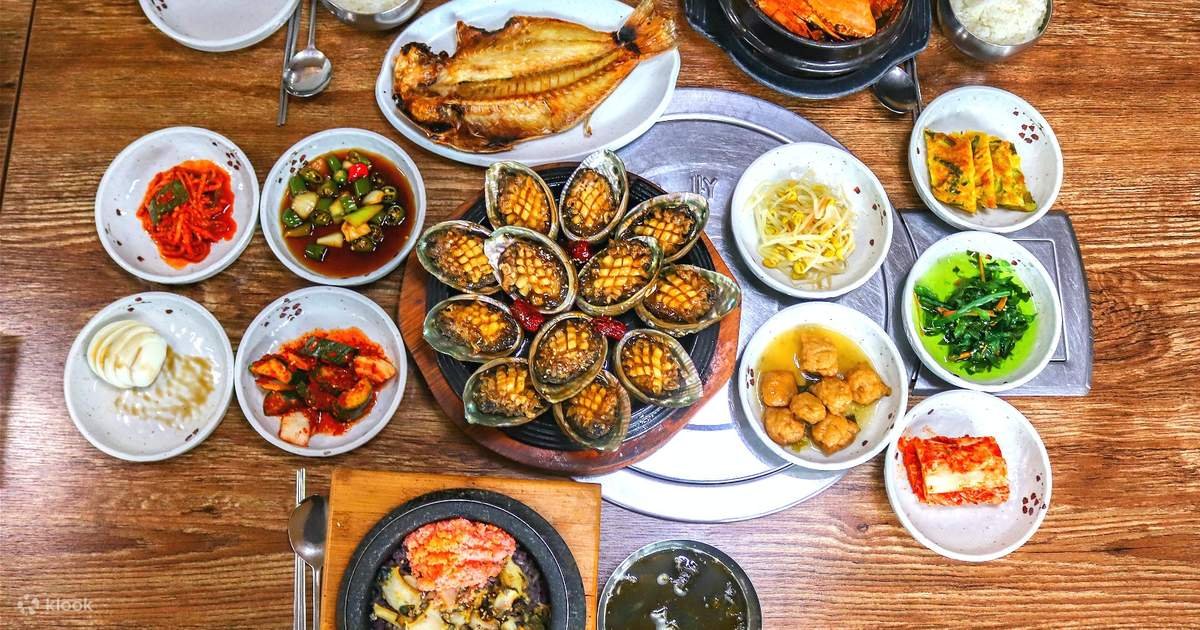
Where the Island Decides the Menu
Jeju's Jungmun strip carries a particular weight in South Korean resort dining. The road running through it — 중문관광로 — links international hotels, haenyeo diving grounds, and a coastline that functions as both larder and backdrop. Restaurants here operate under conditions that mainland Korean fine dining rarely faces: genuine geographic isolation from supply chains, volcanic terroir that produces distinct black pig breeds and citrus varieties, and a haenyeo diving culture that places live abalone, sea urchin, and conch on the table in ways that Seoul's high-end Korean restaurants can only approximate through logistics and cost. Cheon Jee (천지) occupies an address on this corridor , 중문관광로72번길 75 , and the name, translating roughly to heaven and earth, frames the kitchen's relationship with what surrounds it before a single dish arrives.
That framing matters as an editorial lens because ingredient provenance has become the central argument in contemporary Jeju dining. Where Seoul counters like 권숙수 (Kwon Sook Soo) in Gangnam-gu justify premium pricing partly through technique and pedigree, Jeju's serious kitchens justify theirs through access: the urchin was in the water this morning, the black pork was raised on an island farm with no mainland genetics, the mandarin vinegar is pressed from citrus that only grows at this latitude. That argument is harder to make in a city, which is why Jeju's dining scene, modest in scale compared to Seoul or Busan, carries disproportionate authority on the question of what Korean ingredients actually taste like at their source.
The shortlist, unlocked.
Hard-to-book tables, cellar releases, and concierge-planned trips.
Get Exclusive Access →Jeju's Ingredient Geography as Kitchen Context
The island's food geography breaks into rough zones. The northern coast around Jeju City concentrates the everyday seafood markets and haenyeo cooperative stalls where much of the island's catch moves at wholesale speed. The southern corridor around Jungmun and Seogwipo tilts toward the resort tier, where kitchens have the space and clientele to treat those same ingredients with more deliberation. This is the context in which places like 더 플라잉 호그 (The Flying Hog) in Seogwipo operate, and it is the context that gives Cheon Jee's address its immediate legibility to anyone who has spent time tracing the island's food corridors.
Jeju black pig , heukdwaeji , is the island's most discussed protein, and the wider Korean pork dining tradition it sits within is well documented: high-heat grilling, ssam wraps, fermented pastes as condiment infrastructure. But the island version of this tradition operates on different material. Jeju's black pigs carry a lineage distinct from mainland breeds, producing fat marbling and skin texture that behave differently over charcoal. Restaurants along the Jungmun stretch that work with island-raised heukdwaeji rather than blended stock are making a sourcing claim that is traceable , and increasingly, scrutinized by Korean food media. For wider reference on how Korean regional protein traditions translate into fine dining formats, the work coming out of Seoul at places like Mingles in Seoul shows how far fermentation and native Korean ingredient logic can travel when treated as a serious program rather than a regional curiosity.
The Jungmun coastline also means Jeju citrus in serious quantities. Hallabong, cheonhyehyang, and the more common gamgyul mandarin grow at altitudes and in volcanic mineral conditions that distinguish them from citrus grown on the mainland. Kitchens in this corridor that use local citrus as an acid component , in sauces, in fermented applications, in palate-cleansing preparations , are working with something genuinely different from what a Seoul kitchen has available by overnight freight. That difference is subtle but cumulative across a meal, and it is one reason why Jeju dining at the serious tier rewards attention beyond its comparative lack of Michelin coverage relative to the capital.
How Cheon Jee Fits the Wider Regional Pattern
Korea's regional fine dining scene has matured considerably in the past decade. The concentration of Michelin recognition in Seoul , through venues in Gangnam and the historic center , has obscured genuine culinary development in secondary cities and island destinations. Mori in Busan represents how a port city's seafood identity can translate into a focused tasting format. Double T Dining in Gangneung shows how East Coast Korean ingredients read in a contemporary dining context. Jeju occupies a different position in this regional picture: its isolation is an asset rather than a liability, because it forces ingredient specificity that continental kitchens rarely achieve.
Cheon Jee's placement within Jeju's Jungmun zone puts it in proximity to the island's premium dining tier, where the sourcing story is the primary editorial argument. The venue operates without the awards signals that mark Seoul's leading tables , no Michelin star, no 50 Best placement in the available record , which positions it in the broader cohort of serious Jeju kitchens that attract domestic Korean food travelers rather than international award-circuit visitors. That is a meaningful distinction: the domestic Korean food traveler visiting Jeju is typically making an ingredient pilgrimage, not a technique pilgrimage, and kitchens that understand this emphasis accordingly. For context on what technique-first Korean fine dining looks like at full intensity, Seoul's Kwon Sook Soo and the temple food tradition documented at places like Baegyangsa Temple in Jangseong-gun mark the outer poles of what Korean culinary tradition can mean in practice.
The Jungmun address also places Cheon Jee within reach of Jeju's main resort infrastructure, which shapes its booking reality. Resort-corridor restaurants in South Korea typically see demand spike during Korean national holidays , Chuseok, Lunar New Year, and the summer school-holiday period from late July through August , and taper in the quieter shoulder months of November and early spring. Visitors planning around ingredient quality rather than crowds tend to target March through May, when the island's spring vegetables and continuing winter seafood season overlap, or October, before the holiday rush returns.
Planning a Visit
Cheon Jee's address at 중문관광로72번길 75 places it within the Jungmun resort cluster, accessible from Jeju City by expressway in approximately 40 minutes and from Seogwipo central in under 20. The Jungmun area is better served by rental car than by public transit , the bus connections from Jeju City exist but involve transfers that add significant time. For visitors spending several days on the island, the Jungmun corridor offers a logical anchor for a southern day, pairing Cheon Jee with visits to the coastal haenyeo grounds or Cheonjiyeon waterfall nearby. Contact details and current booking availability are leading confirmed through direct search, as phone and website data are not available in our current record. For a broader framework of where Cheon Jee sits among the island's options, our full 제주시 restaurants guide maps the range from casual heukdwaeji grills to the island's more considered dining formats. Comparable pork-focused options worth cross-referencing include 88돼지, another Jeju-area entry in our database that documents the island's serious grilling tradition.
Frequently Asked Questions
- Is Cheon Jee (천지) suitable for children?
- Jeju's Jungmun resort corridor draws a significant family travel segment, and restaurants in this zone generally accommodate multi-generational groups. That said, if Cheon Jee operates at the considered dining tier that its name and positioning suggest, the pacing and format may suit older children better than young ones. Without confirmed pricing or format data in our record, the clearest approach is to contact the venue directly before booking to clarify whether they can accommodate the group's specific needs.
- What is the overall feel of Cheon Jee (천지)?
- Based on its Jungmun location and the naming convention , 천지 meaning heaven and earth , Cheon Jee reads as a kitchen oriented toward Jeju's natural ingredient landscape rather than urban Seoul-style formal dining. The resort corridor context suggests an atmosphere suited to unhurried meals with attention to local provenance, though confirmed style data is not available in our current record. Visitors who have experienced similar Jeju dining in the Jungmun zone generally describe an environment that balances considered cooking with the island's characteristically less rigid service register compared to Seoul's leading tables.
- What is the signature dish at Cheon Jee (천지)?
- No specific signature dishes appear in our current venue record. Given the kitchen's apparent orientation toward Jeju ingredients and its address in the Jungmun corridor, preparations built around heukdwaeji black pork, haenyeo-sourced seafood, or local citrus would be consistent with the island's broader culinary identity at this tier , but confirming what the kitchen currently offers requires checking directly with the venue rather than relying on inference from regional context alone.
- Do they take walk-ins at Cheon Jee (천지)?
- Walk-in availability in Jeju's Jungmun resort corridor varies considerably by season. During peak Korean holiday periods and the summer travel window, even mid-tier restaurants in this zone operate close to capacity, making advance booking the more reliable approach. Our current record does not include confirmed booking policy for Cheon Jee; contacting the venue ahead of travel , particularly for visits during July through August or the Chuseok period , is the practical minimum for avoiding disappointment.
- How does Cheon Jee (천지) connect to Jeju's haenyeo diving tradition, and does that influence what appears on the menu?
- Jeju's haenyeo divers have sustained the island's live seafood supply for centuries, surfacing abalone, turban shell, sea urchin, and octopus that move directly into local kitchens with minimal cold-chain delay. Restaurants in the Jungmun zone with access to this supply channel can offer seafood at a freshness level that mainland Korean kitchens cannot replicate through freight logistics alone. Whether Cheon Jee works directly with haenyeo cooperatives is not confirmed in our current record, but its positioning within the island's southern culinary corridor makes that connection plausible , and worth asking about when making a reservation.
How It Stacks Up
These are the closest comparables we have in our database for quick context.
| Venue | Cuisine | Price | Awards | Notes |
|---|---|---|---|---|
| Cheon Jee (천지) | This venue | |||
| Eatanic Garden | Contemporary | ₩₩₩₩ | Michelin 1 Star | Contemporary, ₩₩₩₩ |
| Onjium | Korean | ₩₩₩₩ | Michelin 1 Star | Korean, ₩₩₩₩ |
| 7th Door | Korean, Contemporary | ₩₩₩₩ | Michelin 1 Star | Korean, Contemporary, ₩₩₩₩ |
| Palate | Contemporary | ₩₩ | Michelin 1 Star | Contemporary, ₩₩ |
| L'Amitié | French | ₩₩₩ | Michelin 1 Star | French, ₩₩₩ |
Need a table?
Our members enjoy priority alerts and concierge-led booking support for the world's most difficult tables.
Get Exclusive AccessThe shortlist, unlocked.
Hard-to-book tables, cellar releases, and concierge-planned trips.
Get Exclusive Access →