Dim Tao

Michelin Plate
Our verdict
Dim Tao holds consecutive Michelin Plate recognition (2024 and 2025) as one of the few dedicated dim sum addresses in Busan's Haeundae district. Priced at the entry tier for the city's Michelin-tracked restaurants, it occupies a specific gap in a dining scene otherwise dominated by Korean-native formats.

Pearl is the En Primeur Club membership app, where members save venues, book tables and use the concierge.
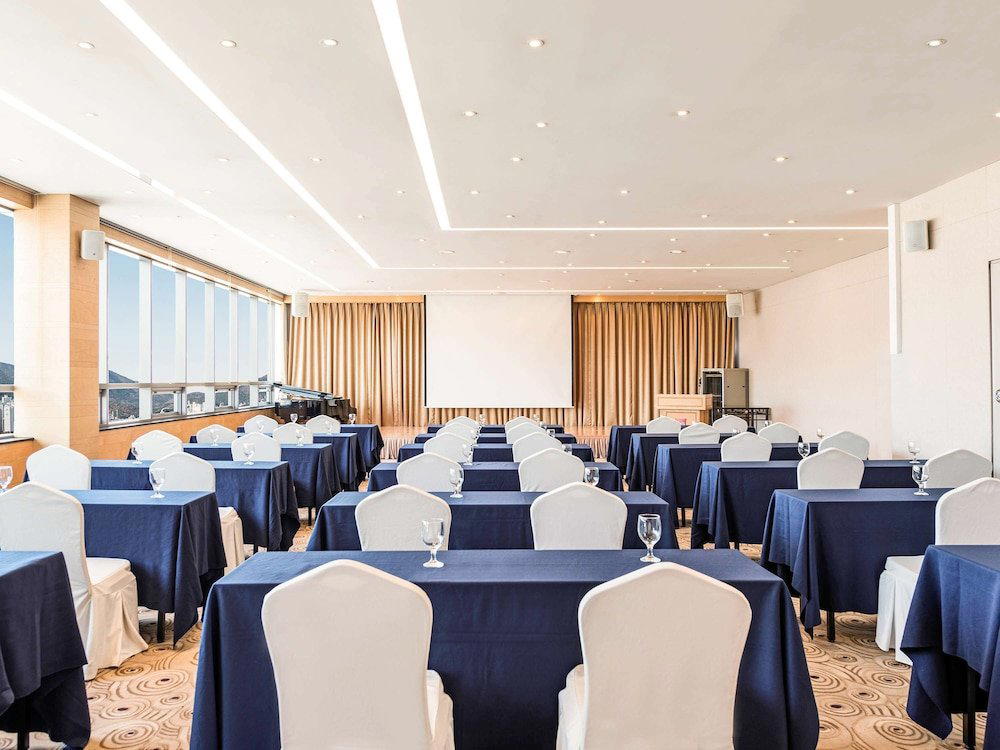
The menu
What to order
- Har Gow
- Shrimp-stuffed Fried Eggplant
- Shrimp and Chinese Chives Dumplings
- Xiao Long Bao
- Wonton Soup
Where Dim Sum Lands in Haeundae
Haeundae is Busan's most internationally oriented district: beach-facing hotels, a dense grid of restaurants pulling from Japanese, Chinese, and Western traditions, and a resident and tourist population that skews cosmopolitan relative to the rest of the city. Within that context, the presence of a Michelin-recognised dim sum address makes a particular kind of sense. Cantonese dim sum culture has spread across East and Southeast Asia through port cities and commercial corridors, and Busan, South Korea's largest port, sits squarely on that map. Dim Tao, at 25 Udong 1-ro in Haeundae-gu, occupies a spot where that history and the district's contemporary appetite for variety converge.
The address itself places the restaurant inside the Haeundae residential and commercial belt rather than on the beachfront strip, which tends to position it for repeat local custom as much as tourist traffic. That distinction matters. Dim sum at its finest functions as a social meal format, built around shared plates arriving in succession, conversation, and tea. A venue serving that format for a neighbourhood audience is likely calibrating its timing, pace, and portion logic differently from a one-visit tourist draw.
Dim Sum in a Korean City
Dedicated dim sum restaurants remain relatively rare across South Korea outside of Seoul's Chinese-Korean community pockets. The country's Chinese-influenced cooking has historically been filtered through a specific Korean-Chinese hybrid tradition, with dishes like jajangmyeon and tangsuyuk becoming thoroughly domesticated. Cantonese-style dim sum, with its emphasis on har gow, siu mai, turnip cake, and cheung fun, represents a different lineage entirely, and venues that execute it at a level attracting Michelin attention occupy a narrow tier.
To calibrate where that sits: internationally, the most technically demanding dim sum is found at addresses like Hongtu Hall in Guangzhou and Wu You Xian in Shanghai, where the tradition carries its fullest weight, or at Bao Teck Tea House in George Town, where a longer history of Cantonese migration gives the food a different kind of local rootedness. Dim Tao is not operating in those markets, and should not be read against them. It is operating in Busan, where its Michelin Plate recognition in both 2024 and 2025 signals consistent quality within the context of that city's dining offer.
The Michelin Plate in Busan's Hierarchy
South Korea's Michelin Guide has expanded its Busan coverage deliberately over recent years, and the city's tracked restaurants now span a meaningful range of formats and prices. The Michelin Plate designation, awarded to restaurants producing food of good quality that warrants attention, sits below Star level but above the general mass of unrecognised addresses. Retaining it across two consecutive years signals that inspectors are returning and finding the standard consistent, which is a more meaningful signal than a single-year appearance.
Dim Tao's price positioning at the entry tier (₩) places it at the accessible end of Busan's Michelin-tracked field. For comparison, Palate, the contemporary restaurant in the city, holds a Michelin Star at ₩₩, while Mori, the Japanese counter, carries its Star at ₩₩₩. Born and Bred, Busan's steakhouse reference, operates at the ₩₩₩₩ tier. Dim Tao offers Michelin-recognised quality at the lowest price point in that tracked cohort, which is a meaningful practical distinction for anyone building an itinerary across multiple meals.
Busan's food culture also has strong, deeply rooted Korean formats operating at the same price tier. Anmok serves dwaeji-gukbap, the port city's signature pork and rice soup, at the ₩ level, and 100.1. Pyeongnaeng operates in the naengmyeon space at the same price point. None of those carry Michelin recognition. Dim Tao sits in a specific position: Michelin-tracked, entry-priced, and serving a format that fills a genuine gap in the local offering.
Dim Sum as a Format Decision
Choosing dim sum in a city like Busan is partly a format decision as much as a cuisine one. The Cantonese yum cha tradition structures the meal around tea service and successive small plates, typically over a longer sitting than a Korean meal of equivalent price. That pacing suits groups more than solo diners, and the shared nature of the plates rewards tables that order broadly rather than sticking to one or two items. Across Asia, venues at this format level range from high-volume trolley-service operations to more restrained à la carte houses; Dim Tao's positioning as a Michelin Plate recipient suggests the latter register.
For visitors already covering Seoul's restaurant scene, the contrast with Korean fine dining formats is instructive. Addresses like Mingles, Gaon, and Kwon Sook Soo represent the highest register of Korean cuisine interpretation. Dim Tao operates in a different tradition entirely, and its value in a broader Korea itinerary lies precisely in that contrast. Regional cooking traditions worth exploring beyond the city also include places like Baegyangsa Temple in Jangseong-gun and The Flying Hog in Seogwipo, each representing distinct local food cultures at distance from Busan.
Planning a Visit
At the ₩ price point, it is accessible enough that it draws regular custom rather than special-occasion-only visits, which tends to produce a more honest spread of reviewer opinion than a venue propped up by occasion bias.
Walk-in availability at Michelin Plate restaurants in Busan can vary significantly by day and service; weekday lunches generally offer more flexibility than weekend morning services, when dim sum demand across East Asian dining cultures peaks. Haeundae's transport infrastructure is well-developed, with the district served by Busan Metro Line 2 at Haeundae station, making access direct from the city centre and from the main hotel corridor along Marine City.
For a complete picture of eating, drinking, and staying in the city, EP Club maintains full guides to Busan restaurants, Busan hotels, Busan bars, Busan wineries, and Busan experiences.
Frequently asked questions
How much does it cost to eat at Dim Tao?
Pricing at Dim Tao is listed as ₩.
What distinctions does Dim Tao have?
Dim Tao has received recognition including: Michelin Plate (2025); Michelin Plate (2024).
What do people recommend at Dim Tao?
As a dedicated dim sum venue in Haeundae, the menu follows the Cantonese yum cha format, small plates ordered across the table, so the approach itself is the draw rather than any single signature item. Specific dish recommendations are best confirmed directly with the restaurant on arrival.
Where do I go for Dim Tao?
Dim Tao is located at 25 Udong 1-ro, Haeundae-gu, Busan, South Korea, Busan.
Do they take walk-ins at Dim Tao?
The address is 25 Udong 1-ro, Haeundae-gu, Busan.
Cost and Credentials
| Venue | Cuisine | Price | Awards | Notes |
|---|---|---|---|---|
| Dim TaoThis venue (the venue you are viewing) | Hong Kong-style Dim Sum | $20–30 | Michelin Plate | Not listed |
| Palate | Contemporary French with Korean Fusion | $150–200 | 1 Michelin Star · La Liste Top Restaurants | Contemporary |
| Mori | Japanese Kaiseki | $200–300 | 1 Michelin Star | Japanese |
| Born and Bred | Modern Hanwoo Beef Omakase Steakhouse | $100–150 | Michelin Plate · World's 50 Best #51 | Steakhouse |
| 100.1. Pyeongnaeng | Pyongyang-style Naengmyeon | $10–20 | Michelin Bib Gourmand | Naengmyeon |
| Anmok | Modern Korean Dwaeji-Gukbap | $10–20 | Michelin Bib Gourmand | Dwaeji-gukbap |
Recognition history
Dated appearances from independent guides and award organizations, with the underlying list record or original source where available.
Michelin Plate
Michelin
Full recognition history (3 entries)
Michelin Plate
Michelin
Michelin Plate
Michelin
Continue exploring
More in Busan
Restaurants in Busan
All restaurants in Busan →
Bars in Busan
All bars in Busan →
Details
- Cozy
- Modern
- Group Dining
- Family
- Casual Hangout
- Open Kitchen
- Sake Program
- Small Plates
- A La Carte
- Tea
Current opening hours
- Monday
- 11:30 AM–2:30 PM, 5–8 PM
- Tuesday
- Closed
- Wednesday
- 11:30 AM–2:30 PM, 5–8 PM
- Thursday
- 11:30 AM–2:30 PM, 5–8 PM
- Friday
- 11:30 AM–2:30 PM, 5–8 PM
- Saturday
- 11:30 AM–2:30 PM, 5–8 PM
- Sunday
- 11:30 AM–2:30 PM, 5–8 PM
Hours can change for holidays and private events. Hours as of .
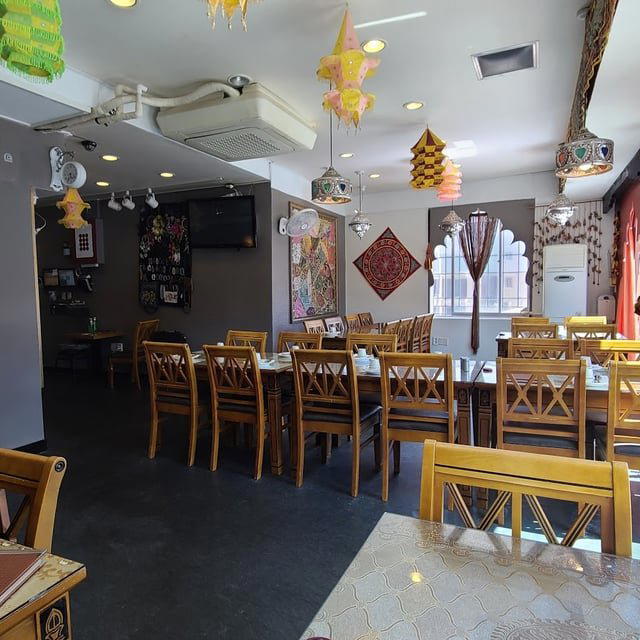
Clean, spacious, and roomy interior providing a relaxed and comfortable dining atmosphere.