Our verdict
ビブレ sits in Biei, a town in Hokkaido's Kamikawa District whose agricultural identity is inseparable from the food it produces. The surrounding patchwork of farms and volcanic soil define what ends up on the plate here, placing the restaurant inside a broader Hokkaido tradition of ingredient-led cooking where provenance is the point, not the garnish. For context on the wider dining scene, see our full Kamikawa District restaurants guide.

Pearl is the En Primeur Club membership app — saves, bookings, and concierge access live there. Same editors, same standards.
- Address
- Hokuei, Biei, Kamikawa District, Hokkaido 071-0224, Japan
- Phone
- +81166928100
- Hours
- Mon 11 AM–2:30 PM, 5:30–7:30 PMTue ClosedWed–Sun 11 AM–2:30 PM, 5:30–7:30 PM
- Website
- bi-ble.jp
- Directions
- Get directions
- Booking
- Book on TableCheck
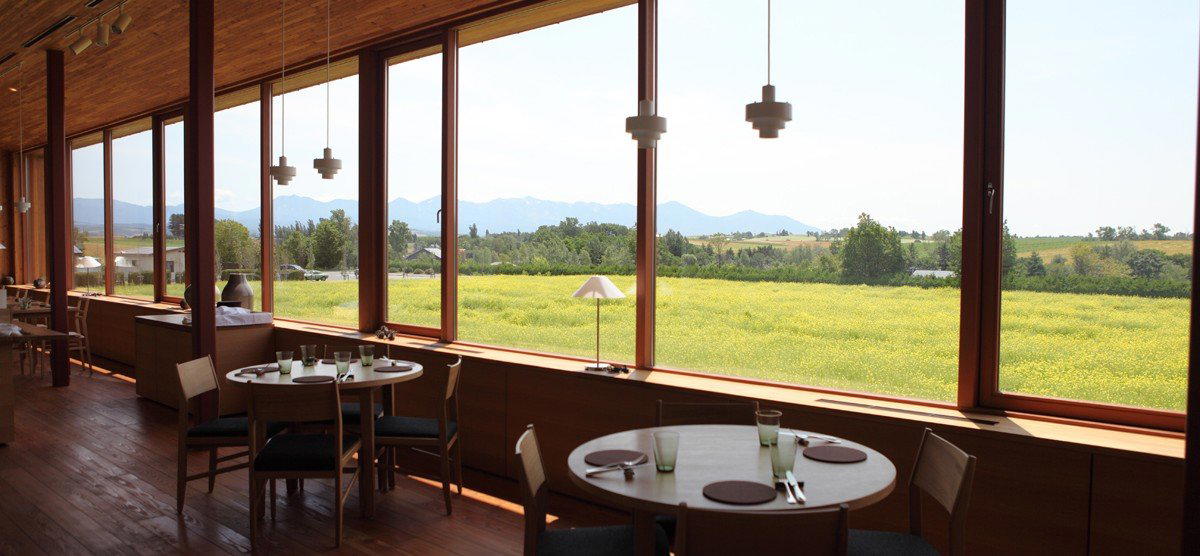
Where the Farm Defines the Table
Biei sits in the Kamikawa District of central Hokkaido, ringed by the Tokachi and Daisetsuzan mountain ranges, and what makes the town register beyond its famous patchwork fields is what those fields actually produce. The area's volcanic soil, cold winters, and sharp seasonal cycles yield agricultural goods — potatoes, corn, dairy, wheat, asparagus, beets — of a calibre that sends Sapporo restaurants scrambling for supplier relationships here. In that context, a restaurant operating in Biei itself is not chasing proximity to ingredients as a marketing device. It is simply surrounded by them, and the editorial question is how it handles that position.
ビブレ operates at the address in Hokuei, Biei, where that surrounding abundance is a baseline condition rather than a differentiator. Hokkaido's broader dining identity has long been shaped by this kind of ingredient determinism: the prefecture supplies roughly a quarter of Japan's agricultural output, and the restaurants that draw serious attention tend to be the ones that treat sourcing decisions as the primary creative act, not an afterthought. That is the tradition ビブレ enters.
Hokkaido's Ingredient Logic and Why Biei Sits at Its Centre
The conversation about Japanese fine dining often defaults to Tokyo counters and Kyoto kaiseki houses. Operations like Harutaka in Tokyo or Gion Sasaki in Kyoto define a tier of cooking where centuries of urban culinary culture and dense supplier networks make excellence almost structurally predictable. Provincial Hokkaido represents a different proposition. There is no equivalent density of culinary infrastructure. What exists instead is direct access to produce that urban kitchens pay a premium to import.
Biei's farms are not anonymous commodity operations. The town has developed an identity around named producers and small-scale, high-attention agriculture that feeds into restaurant supply chains across Hokkaido and beyond. Asparagus harvested here in late spring, dairy from cattle grazing the volcanic plateau, and wheat grown in the long cold season all carry a specificity of character that reflects terroir as clearly as any wine region. For a restaurant working in Biei, these are the raw materials available at source, and how they are handled determines the kitchen's argument.
That ingredient logic connects ビブレ to a broader pattern visible across Japan's most discussed regional kitchens. HAJIME in Osaka frames French-influenced innovation through Japanese ingredient philosophy. akordu in Nara positions itself inside Nara's agricultural identity. Goh in Fukuoka anchors its kaiseki approach in Kyushu's regional produce. In each case, the kitchen's relationship to its supply chain is the argument. Biei's context gives ビブレ a particularly direct version of that relationship.
The Setting: Rural Hokkaido as Dining Context
Approaching Biei from Asahikawa, the town's character shifts quickly from functional regional hub to agricultural landscape with genuine visual weight. The fields, famous in tourist photography, are not incidental to the dining experience here; they are its persistent context. Eating in Biei means eating inside the origin story of what arrives at the table, which is a different kind of atmosphere from a city restaurant that imports the same goods from three prefectures away.
This kind of rural fine dining has precedents across Japan. The 湖畔荘 in Takashima operates within a lakeside context where environment and meal are inseparable. The 羽根屋 in Nishikawa Machi similarly positions its offer within a natural setting that shapes the terms of the experience. For visitors travelling specifically to Hokkaido for the landscape, a meal in Biei at ビブレ carries a coherence that a Sapporo detour would not replicate. The food, if it follows the logic of its location, should read as an extension of the surrounding farms rather than a departure from them.
For reference on Sapporo's urban dining tier, the 古代山乃幸 in Sapporo represents one point on Hokkaido's range. Biei occupies a different register: smaller, quieter, and rooted in the source rather than the distribution point.
Positioning and Peer Context
That absence puts it in a category familiar across provincial Japan: kitchens that operate with genuine seriousness but outside the urban critical apparatus that generates ratings and columns. This is not a failure of quality. It is a function of geography. The same gap exists for many Hokkaido operations that do not maintain a Sapporo presence and do not pursue the Michelin inspector circuit.
For comparison, Bistro Ange in Toyohashi and Birdland in Sakai both operate in similarly non-metropolitan contexts where local reputation carries more weight than national press. The pattern holds: regional kitchens with strong ingredient sourcing logic often sustain loyal followings without the credentials that Tokyo or Kyoto dining culture treats as baseline. Outside Japan, analogues exist at operations like Le Bernardin in New York and Atomix in New York, where sourcing transparency forms part of the kitchen's identity at the highest tier. Biei represents a scaled-down but conceptually related argument: the ingredient origin is the story.
Other regional Japanese operations worth cross-referencing include 一本木 石川産 in Nanao, which anchors its offer in Noto Peninsula produce, and bodai in 那智勝浦町, another regional kitchen where geography determines the kitchen's entire orientation. The through-line across these operations is that distance from the critical centre is offset by proximity to source material that urban kitchens cannot replicate at equivalent freshness.
Planning a Visit
Biei is accessible from Asahikawa via the Furano Line on JR Hokkaido, a journey of roughly 35 to 40 minutes. From Sapporo, Asahikawa is approximately 80 minutes by limited express. The town is small, and the Hokuei address sits within Biei's agricultural fringe rather than its modest commercial centre, which makes private transport or a taxi from Biei Station the practical approach for reaching the restaurant. Hokkaido's high season runs through summer and the autumn colour period; spring asparagus and summer corn harvests represent the peak of local ingredient availability and would logically align with the most ingredient-driven menus. For a broader orientation to dining options across the region, the full Kamikawa District restaurants guide provides useful context, including venues across the tier range and formats available in the wider area. The Blue Ocean Steak in Nakagami District and Cafe Naoshima Konichiwa in Naoshima illustrate how Japanese regional restaurants handle vastly different format and price positions, giving useful reference points for calibrating expectations before a Biei visit.
Frequently asked questions
Can I bring kids to ビブレ?
ビブレ is located in Biei, a small agricultural town in Kamikawa District rather than a dense urban dining corridor, which typically suggests a quieter, less formal pace than city counter restaurants. No explicit children's policy is published. Given the rural Hokkaido setting and the absence of a formal tasting-menu-only format in the public record, families visiting Biei are unlikely to face the same restrictions common at omakase counters in Sapporo or Tokyo. Confirming directly before arrival is advisable.
What kind of setting is ビブレ?
ビブレ sits in Biei, Hokkaido — a town in the Kamikawa District framed by the Tokachi and Daisetsuzan mountain ranges and known across Japan for its rolling farmland. The address places it in the Hokuei area of Biei, away from the main tourist strip, which points toward a low-key, agriculture-adjacent atmosphere rather than a polished urban dining room. That rural grounding is consistent with Hokkaido's broader dining identity, where the ingredient source often shapes the room as much as the décor.
Is ビブレ in Biei worth visiting as a standalone destination from Asahikawa or Sapporo?
Biei in Kamikawa District is already a draw for visitors travelling the JR Furano Line from Asahikawa, approximately 35 to 40 minutes away, largely because of its agricultural landscape and produce reputation. A meal at ビブレ, located in the Hokuei area of Biei, sits logically within that itinerary rather than requiring a separate detour. No chef credentials or awards are currently in the public record, so the case for visiting rests on the town's ingredient context rather than documented critical recognition.
What do regulars order at ビブレ?
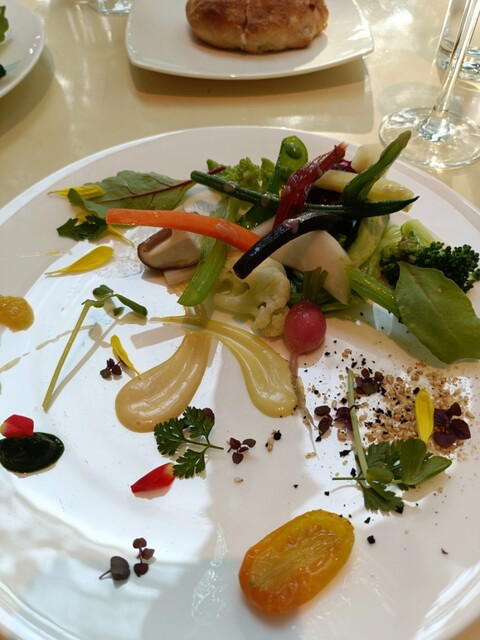
Specific menu items for ビブレ are not in the public record. What is clear from its location in Biei, Kamikawa District, is that the surrounding farmland produces some of Hokkaido's most-cited vegetables, dairy, and grains — the same ingredients that supply high-profile kitchens in Sapporo and Tokyo. Regulars in farm-proximate Hokkaido restaurants of this type typically gravitate toward whatever reflects the current harvest season, so ordering with that logic, rather than a fixed preference, tends to yield the most representative meal.
Where is ビブレ located?
ビブレ is located at Hokuei, Biei, Kamikawa District, Hokkaido 071-0224, Japan, Kamikawa District.
Is ビブレ reservation-only?
No booking policy is published for ビブレ. Restaurants in smaller Hokkaido towns like Biei often operate with limited covers and irregular hours tied to seasonal agricultural rhythms, making advance contact essential regardless of formal reservation requirements. Since no phone number or website is listed in the public record, the most reliable approach is to enquire through your accommodation in Biei or Asahikawa before travelling the roughly 35 to 40 minutes out on the JR Furano Line.
Comparable Spots, Quickly
Comparable venues nearby, for context on price, style, and recognition.
| Venue | Cuisine | Price | Notes |
|---|---|---|---|
| ビブレThis venue — the venue you are viewing | French Auberge | $100–150 | Not listed |
| Restaurant N | Seasonal French Fine Dining | Not listed | Hommachi |
| Asperges (アスペルジュ) | Biei Vegetable French | Not listed | 美瑛町 |
| Moliere Montagne | French fine dining in the Hokkaido mountains | Not listed | Not listed |
| Asperges | Seasonal French with Biei Vegetables | Not listed | Biei |
| Inoue (井上) | Modern Yakiniku | $150–200 | Ginza |
Continue exploring
More in Kamikawa District
Details
- Scenic
- Cozy
- Rustic
- Special Occasion
- Date Night
- Standalone
- Local Sourcing
- Mountain
- A La Carte
Current opening hours
- Monday
- 11 AM–2:30 PM, 5:30–7:30 PM
- Tuesday
- Closed
- Wednesday
- 11 AM–2:30 PM, 5:30–7:30 PM
- Thursday
- 11 AM–2:30 PM, 5:30–7:30 PM
- Friday
- 11 AM–2:30 PM, 5:30–7:30 PM
- Saturday
- 11 AM–2:30 PM, 5:30–7:30 PM
- Sunday
- 11 AM–2:30 PM, 5:30–7:30 PM
Hours can change for holidays and private events. Last verified .
Cozy and scenic atmosphere atop a small hill with natural, substantial wheat aromas from the bakery.