
Restaurant ASPERGE puts Hokkaido’s farm-country French cooking into sharper focus than Sapporo’s urban dining rooms. Its Tabelog French EAST “Tabelog 100” selections in 2021, 2023, and 2025 place it in a serious regional bracket, while the French and vegetable-dish categorisation signals a meal built around Biei’s produce culture rather than metropolitan ceremony.
Pearl is the En Primeur Club membership app — saves, bookings, and concierge access live there. Same editors, same standards.
- Address
- 北海道上川郡美瑛町大町2 美瑛選果
- Phone
- +81166925522
- Website
- biei-asperges.com
 Saves & bookings on Pearl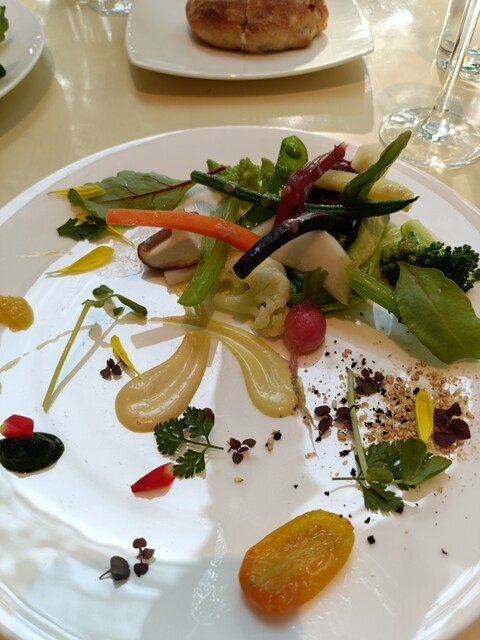
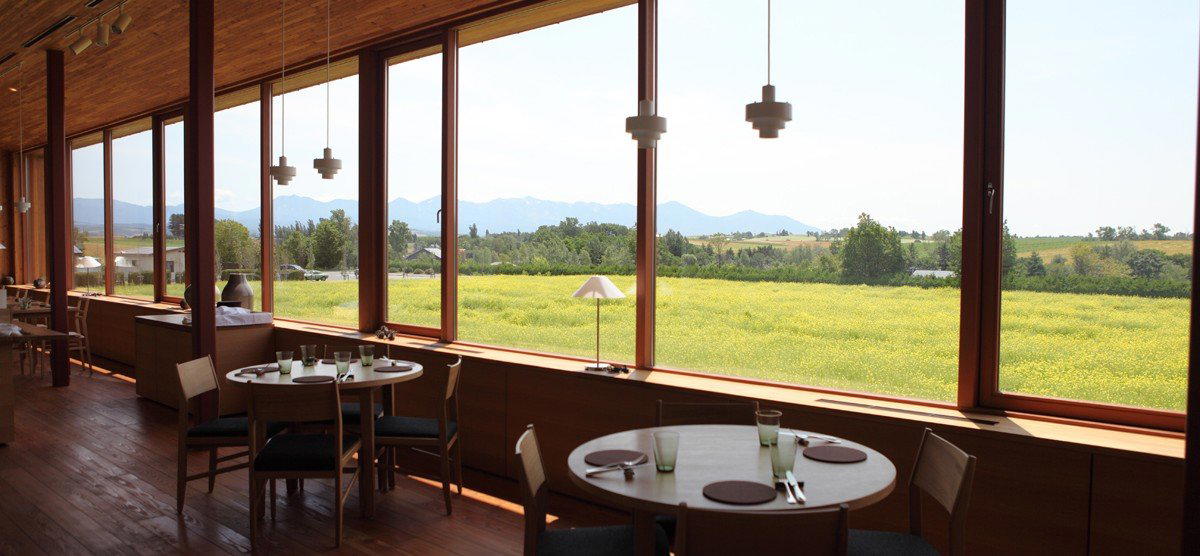
The approach to Biei changes the terms of a French meal before the first course is considered. This is not Sapporo’s city-centre rhythm of counters, late trains, and after-dinner bars; it is Hokkaido in agricultural register, where fields and daylight set the mood. Restaurant ASPERGE belongs to that setting. The room is described as a house restaurant, and that matters: the experience is framed less by grand dining-room theatre than by proximity to the produce culture that has made Biei a shorthand for Hokkaido’s vegetable-driven cooking.
That distinction is useful for travellers building a Sapporo itinerary. Hokkaido dining often gets reduced to seafood, ramen, dairy, and winter comfort food, but the island’s French restaurants have long used its farms as a serious advantage. In that context, ASPERGE’s categorisation as French and vegetable dishes is not a decorative label. It places the restaurant in a lane where technique is expected to serve seasonality, and where the visual field around the table is part of the argument for the meal.
Farm-country French with Biei as the frame
Hokkaido’s stronger French rooms tend to split into two camps: polished urban dining in Sapporo, and destination restaurants that make the countryside part of the meal’s logic. ASPERGE sits in the second camp. Compared with Sapporo’s Valore, which is priced in a higher dinner bracket, ASPERGE reads as a destination for travellers who want a French meal connected to Biei’s agricultural identity rather than a formal city-night occasion. That does not make it casual in intent. Its selections for Tabelog French EAST “Tabelog 100” in 2021, 2023, and 2025 indicate sustained recognition within eastern Japan’s French category.
The vegetable emphasis also separates the restaurant from the familiar Hokkaido tourist circuit. Farm Tomita and Tomita Melon House belong to a lighter, produce-tourism register; they are useful reference points for understanding the area’s pull, but they operate on a different dining scale. ASPERGE translates the same regional fixation with fields and harvest into a French format. The better comparison is not a snack stop after sightseeing, but a meal that asks whether Biei’s agricultural abundance can carry a composed restaurant experience.
For Sapporo-based travellers, this is the kind of booking that changes the day’s architecture. A meal here is not a quick detour between central Sapporo restaurants such as 175°DENO Tantanmen Sapporo kitaguchi ten, [Curry Senmon Ten] Maruyama Kyoju., Ajanta Indo Curry Ten, or Ajanta Sohonke. It belongs with a broader Hokkaido food day, closer in spirit to routes that take in destination rooms such as Aigues Vives, where the journey is part of the appetite.
The sensory case for leaving the city
The sensory appeal here is structural rather than ornamental. Biei gives the meal a slower visual tempo: open land, low buildings, seasonal colour, and a dining room that does not need to imitate Tokyo or Sapporo formality to make its point. In a region where produce can be treated as both ingredient and scenery, the restaurant’s strength lies in alignment. The category tells the reader what to expect: French technique, vegetable attention, wine as the listed drink focus, and a room positioned for dates and meals with friends rather than banquet-scale private dining.
There is a quiet confidence in that model. Japan’s regional French cooking can feel strained when it treats locality as a slogan, but Biei does not need the argument inflated. The town already supplies the context. A house-restaurant format lets the meal sit closer to its landscape, and ASPERGE’s repeated Tabelog 100 recognition suggests that this format has held its place beyond novelty. The result is less about rare luxury codes and more about clarity: a restaurant whose setting, category, and recognition point in the same direction.
That said, this is not the choice for every Sapporo trip. Travellers with one night in town may get more value from staying central and using Our full Sapporo restaurants guide to build a tighter food crawl, with Our full Sapporo bars guide for the late evening. ASPERGE suits the itinerary that has room for countryside pacing, a produce-led French meal, and a willingness to let lunch or dinner shape the day around it.
How it fits a wider Japan dining itinerary
For travellers moving beyond Hokkaido, ASPERGE offers a useful contrast to Japan’s dense urban dining scenes. Tokyo, Osaka, Kyoto, and regional cities often reward speed, specialisation, and neighbourhood repetition; Biei rewards the opposite. The meal makes sense beside broader planning that might include -Grilled beef Sukiyaki- KAMAKURA TANUKIAN 鎌倉 たぬき庵 in Kamakura,. 鮪と炭火焼き うお炭 秋葉原店 in Tokyo,.cafe in Osaka,.know in Kumamoto, (Shoku) Vietnam in Kawasaki, and [ki:] in Kyoto. Those links underline the point: Japan’s dining interest is not one hierarchy, but a set of local formats that reward different kinds of attention.
Planning around ASPERGE should also account for the rest of the trip. Travellers pairing the meal with an overnight base can use Our full Sapporo hotels guide; those building a broader Hokkaido culture day can cross-check Our full Sapporo experiences guide. Wine-minded readers should note the restaurant’s wine listing and, for wider regional context, Our full Sapporo wineries guide. For a different kind of Japan-linked drinking and casual dining reference abroad, Jōdo Saké Bar in Los Angeles and Onigiri Time in Pasadena sit far from Biei geographically, but they show how Japanese food culture travels when stripped into more compact formats.
The editorial case is simple: ASPERGE is strongest when treated as a Biei meal rather than a Sapporo substitute. Its recognition within Tabelog’s French EAST list gives it a credible quality signal, but the reason to make time for it is the setting’s control over the experience. Hokkaido’s countryside does not merely decorate the plate here; it defines why this French meal belongs on a northern Japan itinerary.
Comparison Snapshot
Comparable venues side-by-side for orientation.
| Venue | Cuisine | Price | Awards | Notes |
|---|---|---|---|---|
| Restaurant ASPERGEThis venue — the venue you are viewing | Farm-to-table French with Hokkaido produce | $$$ | , | |
| クネル | French Bistro with Hokkaido Ingredients | $$ | , | Chūō |
| ミクニ サッポロ | Seasonal French Fine Dining | $$$$ | , | Kita |
| タテオカ タケシ | One Michelin-Star French with Hokkaido Seasonal Tempura | $$$ | , | Chūō |
| susukinodepato | Hokkaido Seafood & Crab Buffet Dining | $$$ | , | Chūō |
| Sushi Saikou | Hokkaido Omakase | $$$ | , | Chūō |
Continue exploring
More in Sapporo

At a Glance
- Elegant
- Modern
- Scenic
- Cozy
- Date Night
- Special Occasion
- Business Dinner
- Group Dining
- Garden
- Design Destination
- Standalone
- Extensive Wine List
- Farm To Table
- Local Sourcing
- Sustainable Seafood
- Garden
- Mountain
Chic yet relaxed country restaurant with contemporary decor, colorful plating, and a calm atmosphere that emphasizes the beauty of seasonal vegetables and surrounding Hokkaido farmland.