Our verdict
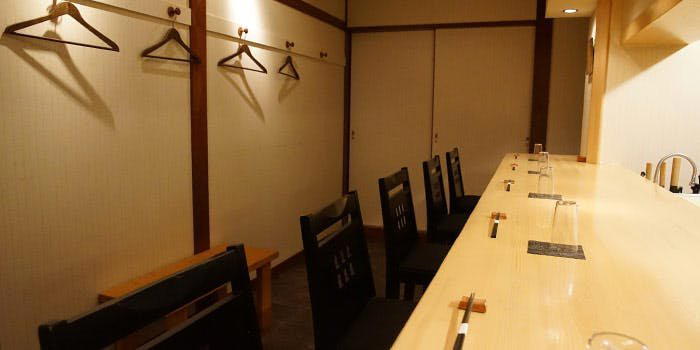
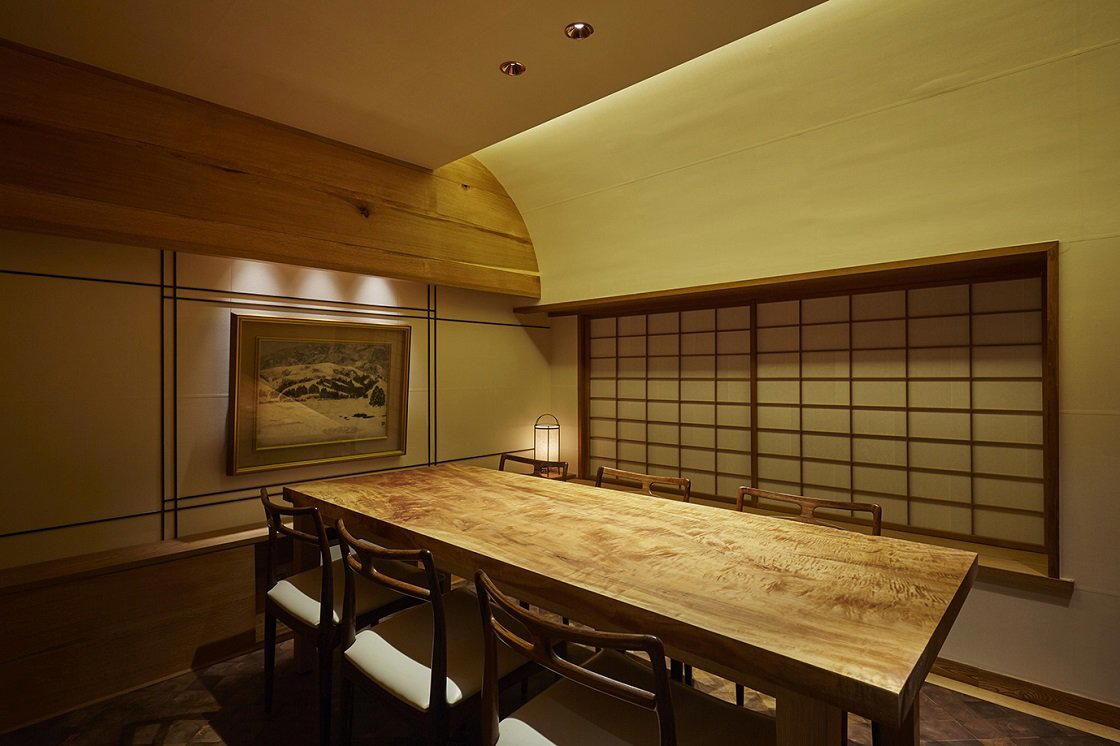
On the fifth floor of a low-key commercial building in Kobe's Motomachidori district, カルド occupies a position that rewards the traveller prepared to look past street-level signage.

Pearl is the En Primeur Club membership app, where members save venues, book tables and use the concierge.

The menu
What to order
- Tomato & Mozzarella Pizza
- Quattro Formaggi Pizza
- Lasagna
Finding Your Way to Motomachidori's Upper Floors
Kobe's restaurant culture has long operated on a principle of deliberate obscurity. In a city where Wagyu counters, French-influenced bistros, and Spanish kitchens share real estate across Kitanozaka, Motomachi, and the Tor Road corridor, the addresses that sustain loyal followings tend not to advertise loudly. カルド, reached via the fifth floor of the ニューもとビル on Motomachidori's first block, fits that pattern precisely. The building's exterior gives little away, and for a dining room operating this high above street level in a mid-century commercial block, the approach itself becomes part of the experience: a corridor, a lift, then a door that opens onto something the street below does not suggest.
That sense of vertical separation is characteristic of a particular strain of Japanese dining, especially in secondary cities where rent economics push ambitious kitchens upward rather than outward. Osaka's HAJIME and Kobe's own established restaurants like Aragawa have demonstrated for decades that destination dining in the Kansai region requires no street presence whatsoever, credibility travels by word of mouth, repeat reservation, and increasingly by the kind of low-visibility listing that signals an address worth investigating rather than one competing for footfall.
The Booking Calculus in a Low-Information Environment
The practical challenge with カルド is that the venue's public footprint is thin. This places it in a category of Kobe restaurants where reservation strategy depends on local knowledge, hotel concierge relationships, or direct contact through channels not indexed in standard aggregator searches.
This is not unusual for the city. Kobe's dining culture at a certain level mirrors patterns found at addresses like Fushin or fuxing, where the operational model assumes a returning clientele rather than walk-in traffic. If you are coordinating a trip that includes destinations elsewhere in the Kansai region, the same advance planning logic that applies to booking Gion Sasaki in Kyoto or Harutaka in Tokyo is relevant here: start early, work through verified local contacts, and treat the lead time as a design constraint rather than an inconvenience.
For travellers building a multi-city Kansai itinerary, the Motomachidori location is a practical anchor point. The address sits in Kobe's Chuo Ward, walkable from the main Motomachi shopping street and within reasonable distance of the Meriken Park waterfront. Transport from Kobe-Sannomiya, the city's central rail hub, is direct. The fifth-floor position means that once you have found the building, arrival is self-contained, no queue management, no street-level wait.
What Kobe's Dining Tier Means for カルド
Kobe occupies a specific position in the Kansai dining hierarchy. It is neither the volume market of Osaka nor the tradition-saturated milieu of Kyoto, but a city with its own distinct culinary character: a port history that introduced Western food culture earlier than most Japanese cities, a Wagyu identity that Setsugekka and similar addresses have built international reputations around, and a restaurant density in Chuo Ward that punches above what the city's population size would predict.
Within that context, a fifth-floor address on Motomachidori, a street with historic associations with Kobe's old-city commercial life, signals a specific kind of positioning: the neighbourhood is established, not emerging, and the building format suggests a kitchen focused on a known local clientele rather than tourist capture. For comparison, Ca Sento and Ash Restaurant represent different ends of the visibility spectrum in the same city, with the former carrying a degree of international profile and the latter operating with a lower public footprint. カルド's address format puts it closer to the latter model.
Across Japan's mid-size city restaurant culture, this pattern repeats. Addresses like akordu in Nara and Goh in Fukuoka demonstrate how serious kitchens outside Tokyo and Osaka maintain relevance through reservation depth and repeat clientele rather than media positioning. The same principle applies to regional specialists like 一本杉 川嶋制 in Nanao and 湖畔荘 in Takashima, where geographic specificity and local loyalty sustain operations that would be invisible to aggregator-dependent travellers.
Planning Your Visit: What to Know Before You Go
Given the absence of verified booking infrastructure in publicly available data, the most reliable approach for non-Japanese-speaking travellers is to route enquiries through a hotel concierge with Kobe relationships, or to engage a travel specialist familiar with Chuo Ward's restaurant circuit. A Kobe-focused itinerary that includes time in the Motomachi area can accommodate カルド as a morning or afternoon reconnaissance before an evening visit, the building is locatable, and the fifth-floor position means the room itself becomes the orientation point once you are inside.
For those building a broader Japan itinerary that includes dining at Atomix in New York City (for reference on low-visibility premium formats) or calibrating against the precision of Le Bernardin in New York City, the operative skill is the same: treat confirmed information as the planning floor and build flexibility into the schedule.
Regional context is worth consulting in full before any Kobe trip. Our full Kobe restaurants guide maps the city's dining geography across neighbourhoods and price tiers, with comparable entries for addresses like 夕刻山乃 in Sapporo and 岳羽屋 in Nishikawa Machi that follow analogous models in other Japanese cities. The pattern is consistent: the addresses that reward planning effort tend to be the ones that do not make planning easy.
Frequently asked questions
What part of town is カルド in?
カルド is located at Japan, 〒650-0022 Hyogo, Kobe, Chuo Ward, Motomachidori, 1 Chome−7−2 ニューもとビル 5階, Kobe.
Is カルド in Kobe accessible without speaking Japanese?
The venue operates at 1 Chome-7-2 Motomachidori, 5th floor of the ニューもとビル in Kobe's Chuo Ward, with no English-language website or international booking channel in verified data. For travellers without Japanese language ability, arranging contact through a Kobe hotel concierge is the most practical approach, as the venue's minimal digital presence suggests reservations are handled through direct communication.
What dish is カルド famous for?
EP Club's verified data does not confirm a signature dish at this stage. What the Kobe address does signal is a kitchen operating within a city that has historically emphasised Wagyu preparation and French-influenced technique. Until menu details are independently verified, the cuisine type remains unconfirmed.
How hard is it to get a table at カルド?
That combination typically points to a reservation process that runs through direct contact or local introduction. Non-Japanese-speaking travellers should plan lead time well in advance and consider using a hotel concierge in Kobe's Chuo Ward to make contact.
What makes カルド worth seeking out?
The address itself answers part of the question: a fifth-floor room inside a Motomachidori building in Kobe's Chuo Ward is not the kind of placement a venue takes by accident. Kobe sits in a specific tier of the Kansai dining circuit, distinct from Osaka's volume and Kyoto's tradition weight, which means restaurants here tend to develop a focused identity rather than competing for tourist footfall.
Can カルド accommodate dietary restrictions?
Given the venue's minimal public presence, it is advisable to communicate any restrictions at the time of reservation, ideally through a Japanese-speaking intermediary.
Is カルド overpriced or worth every penny?
In Kobe's Chuo Ward, upper-floor counter venues in the Motomachidori corridor generally position themselves at mid-to-premium price points relative to the city's dining market, though that cannot be applied to カルド without direct confirmation.
Similar Picks
Comparable venues nearby, for context on price, style, and recognition.
| Venue | Cuisine | Price | Awards | Notes |
|---|---|---|---|---|
| カルドThis venue (the venue you are viewing) | Italian Pizza and Pasta | $20–30 | Not listed | Not listed |
| Bar Ciccia | Casual Italian Bar & Trattoria | $30–50 | Tabelog 100 #26 | Chūō |
| quarto | Pizza & Italian Trattoria | $50–100 | Tabelog 100 #9 | Chūō |
| legno | Wood-Fired Italian | $50–100 | Tabelog 100 #11 | Chūō |
| Akaneya Coffee Ten | Traditional Japanese coffee shop (kissaten) | $1–10 | Tabelog 100 | Chūō |
| Misaku Kobe kitano ten | Kobe-style okonomiyaki & teppanyaki | $20–30 | Tabelog 100 #83 | Chūō |