Bar Bota belongs to Osaka’s quieter cocktail map: a Dojima address in Kita Ward rather than a nightlife-strip pitch.

Pearl is the En Primeur Club membership app — saves, bookings, and concierge access live there. Same editors, same standards.
- Address
- Japan, 〒530-0003 Osaka, Kita Ward, 37/F2−4−32 Dojima
- Phone
- +81 6-6676-8591
- Hours
- Mon–Thu 5 PM–12 AMFri–Sat 5 PM–1 AMSun 5 PM–12 AM
- Website
- fourseasons.com
- Directions
- Get directions
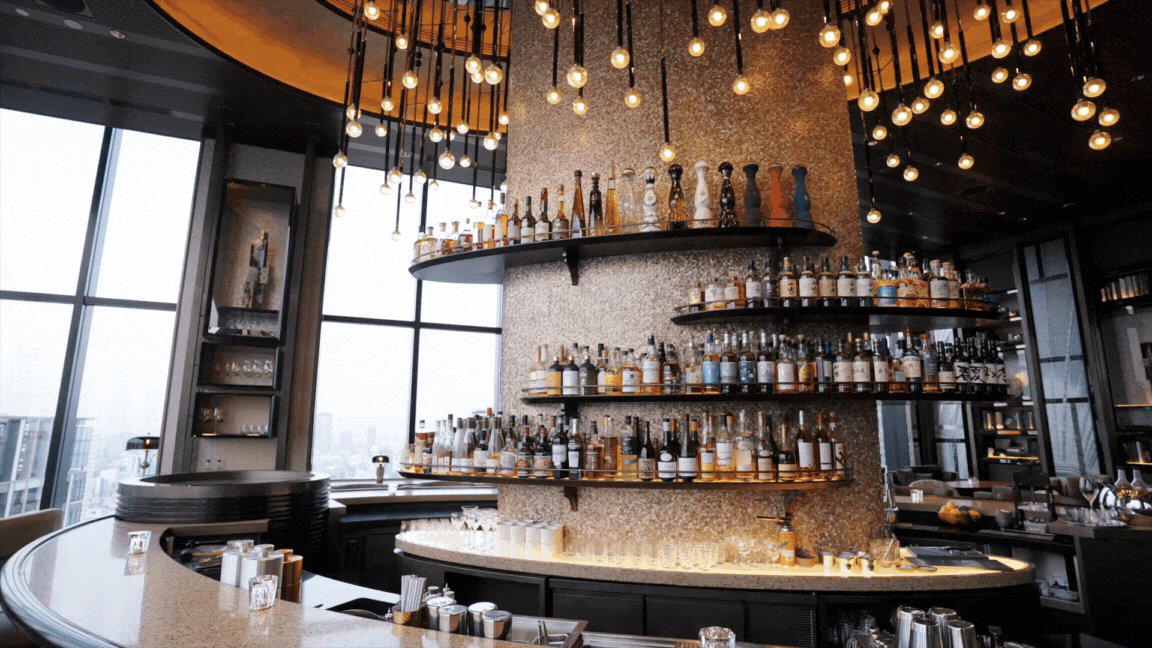
Dojima, not the obvious drinking strip
Approaching a bar in Dojima changes the rhythm of an Osaka night. The neighbourhood sits in Kita Ward, close to the city’s office, hotel, and dining traffic, but it does not behave like a neon-first entertainment quarter. That matters for Bar Bota. The address, Japan, 〒530-0003 Osaka, Kita Ward, 37/F2 Chome−4−32 Dojima, places it in a part of Osaka where cocktail bars tend to reward intention rather than casual wandering. The room itself should be read through that urban setting: less about spectacle, more about the controlled pace of a bar where the counter is the point of the evening.
Osaka’s cocktail culture is often discussed after Tokyo’s Ginza lineage or Kyoto’s hotel-bar discipline, yet the city has its own split. Namba and Shinsaibashi absorb much of the late-night attention, while Kita Ward gives serious drinkers a more business-district pattern: dinner first, then a measured drink nearby, often without the performance cues that dominate tourist nightlife. Bar Bota belongs to that second reading of the city.
The cocktail programme, judged by what is known and what is not
That absence is useful information for a reader. In Japan, many serious cocktail bars do not communicate through long public menus; they often rely on counter dialogue, classic technique, and the bartender’s read of the guest. That general tradition should not be confused with a claim about Bar Bota’s exact service style, but it does explain how to approach a venue where the public data is spare.
For drinkers comparing Osaka bars, the question is not whether every room has a published concept. The sharper question is whether the bar fits the night’s purpose. Bar Nayuta is usually filed by travellers within Osaka’s more exploratory cocktail conversation, while Craftroom suits those looking at the city through a contemporary craft lens. adee Lounge & Bar shifts the frame toward hotel-adjacent polish and skyline pacing. That distinction is not a weakness; it simply asks the guest to value location, mood, and bartender interaction over a checklist of named serves.
The practical way to order in a data-light cocktail bar is to begin with structure. Ask for a classic by base spirit, sweetness level, and strength, then let the bartender adjust from there. A gin martini, whisky highball, daiquiri, sidecar, or old fashioned can reveal more about a programme than a novelty drink when no verified house list is available. This is directive rather than decorative advice: order something that exposes dilution, temperature control, balance, and glassware choices. If a house recommendation is offered on the night, it can follow; the first drink should set the terms.
How Bar Bota fits the Kansai bar circuit
Kansai rewards drinkers who think beyond a single-city itinerary. Osaka supplies density and late-night energy, Kyoto brings hotel formality and historically polished service, and Nara has become part of the conversation through small bars with international recognition. A reader building a serious bar route can compare Bar Bota with Lamp Bar in Nara, where the city itself encourages a slower drinking pace, or Bee's Knees in Kyoto, where Kyoto’s cocktail scene leans into a different kind of theatre. Hotel Okura Kyoto in Kyoto Shi adds the hotel-bar reference point: precise, formal, and often more legible to international travellers.
Tokyo remains the national benchmark for many visitors because Ginza has trained drinkers to expect quiet rooms, exacting technique, and a strong classic-cocktail grammar. Star Bar Ginza in Tokyo belongs to that reference set, and its inclusion on a Japan drinking itinerary can make Osaka feel looser by comparison. That looseness is part of the appeal. Osaka’s bars do not need to imitate Ginza to matter; they can operate with less ceremony while still taking technique seriously. Bar Bota’s Dojima address places it in the portion of Osaka where that balance makes sense: accessible after dinner, restrained enough for a drink-led stop, and separated from the louder circuits that define many first visits to the city.
The wider Japanese map also complicates easy assumptions. Yakoboku in Kumamoto gives a regional counterpoint outside the Kansai-Tokyo axis, while Café La Trova in Miami shows how different the conversation becomes when cocktail culture is built around music, Cuban-American hospitality, and a more extroverted room. Those comparisons help define what Bar Bota is not. It is not positioned in the record as a stage bar, restaurant-bar hybrid, or award-driven destination. It is a compact entry in Osaka’s urban drinking fabric, and that is enough reason to place it carefully rather than inflate it.
What the sparse public record tells a careful traveller
For EP Club readers, that is not a cue to fill the gaps with guesswork. It is a planning signal. Treat Bar Bota as a bar that requires confirmation close to the date, especially if the evening depends on a tight schedule or a late arrival after dinner.
The strongest verified anchor is location. Dojima in Kita Ward is a sensible after-dinner zone, particularly for travellers eating in northern Osaka or staying near Umeda. Pairing the bar with dinner nearby is more practical than crossing the city late for a single drink. For dining context, Our full Osaka restaurants guide gives a broader map of where to eat before the bar, while Tempura Tarojiro in Osaka Shi is a useful reminder that Osaka nights often work well when food and drinks are planned as separate, deliberate stops rather than collapsed into one venue.
The lack of listed awards also affects expectation. Awards can help identify peer sets, but they can distort bar travel when they become the only filter. In a city like Osaka, where many counter bars operate with limited English-language visibility, an unawarded listing can still be relevant if it sits in the right district and serves a clear itinerary function. Bar Bota should be approached on those terms: a Dojima cocktail stop, not a trophy booking. That framing is more useful than pretending there is published evidence that does not exist.
Planning a night around Bar Bota
Build the evening around a confirmed restaurant reservation first, then treat Bar Bota as a post-dinner stop to verify on the day through local search, hotel concierge support, or direct signage if already nearby. This is especially relevant in Japan, where small bars may keep irregular holiday patterns or change service details without broad English-language announcements. The address in Dojima is concrete; the rest of the logistics need same-day checking.
Dress should follow the neighbourhood rather than an invented house code. Price is also unlisted, so arrive prepared for the range common to serious Japanese cocktail bars rather than expecting casual izakaya pricing. The safer editorial stance is to order fewer drinks with intent, begin with a classic, and leave room for one bartender-guided choice if the exchange supports it.
For readers sorting Osaka options, Bar Bota is strongest when used as a precision stop in Dojima. Choose Bar Juniper if the night is built around another style of Osaka bar crawl, consider Craftroom when contemporary cocktail language is the priority, and keep Bar Bota for a quieter northern-city evening where location and counter focus carry more weight than public accolades. That is the cleanest way to understand it: not as a heavily documented destination, but as part of Osaka’s more discreet cocktail geography.
- Tomato & Cheese
- Strawberry & Coconut
- Hinoki & Shiitake
- Dotonbori Slider
- Matcha & Yuzu Highball
- Tempered Edge
- Art of the Loom
Side-by-Side Snapshot
| Venue | Price | Awards |
|---|---|---|
| Bar BotaThis venue — the venue you are viewing | $50–100 | Not listed |
| Bar Nayuta | $10–20 | World's 50 Best #70 · Top 500 Bars Best Bars #242 |
| Craftroom | $20–30 | World's 50 Best #72 · Top 500 Bars Best Bars #334 |
| Nikolaschka | $30–50 | Star Wine List |
| Wine Bar Noam | $50–100 | Star Wine List |
| Bistro Champagne | $50–100 | Star Wine List |
Continue exploring
More in Osaka
Bars in Osaka
Browse all →




Restaurants in Osaka
Browse all →




Hotels in Osaka
Browse all →




Wineries in Osaka
Browse all →
Details
- Sophisticated
- Elegant
- Modern
- Scenic
- Romantic
- Trendy
- Date Night
- After Work
- Late Night
- Special Occasion
- Celebration
- Solo
- Panoramic View
- Design Destination
- Hotel Bar
- Seated Bar
- Lounge Seating
- Craft Cocktails
- Classic Cocktails
- Whiskey
- Gin
- Conventional Wine
- Zero Proof
- Skyline
Current opening hours
- Monday
- 5 PM–12 AM
- Tuesday
- 5 PM–12 AM
- Wednesday
- 5 PM–12 AM
- Thursday
- 5 PM–12 AM
- Friday
- 5 PM–1 AM
- Saturday
- 5 PM–1 AM
- Sunday
- 5 PM–12 AM
Hours can change for holidays and private events. Last verified .
Luxurious and design-forward, centered around a dramatic circular bar with dim, moody lighting and floor‑to‑ceiling windows that frame Osaka’s skyline; the feel is polished yet playful, with meticulous cocktail presentation and a relaxed, upscale hotel-bar energy.