Dominique Bouchet Tokyo carries the formal architecture of classical French cuisine into Ginza's most demanding dining corridor, where French kitchens compete directly with Japan's own haute tradition. The address on Ginza 1-chome places it within reach of the district's highest-tier counters, offering a reference point for how Parisian technique translates when the audience is Tokyo.
Pearl is the En Primeur Club membership app — saves, bookings, and concierge access live there. Same editors, same standards.
- Address
- Japan, 〒104-0061 Tokyo, Chuo City, Ginza, 1 Chome−5−6 銀座レンガ通り福神ビル 2F
- Phone
- +81362644477
- Website
- dominique-bouchet.jp
- Directions
- Get directions
 Saves & bookings on Pearl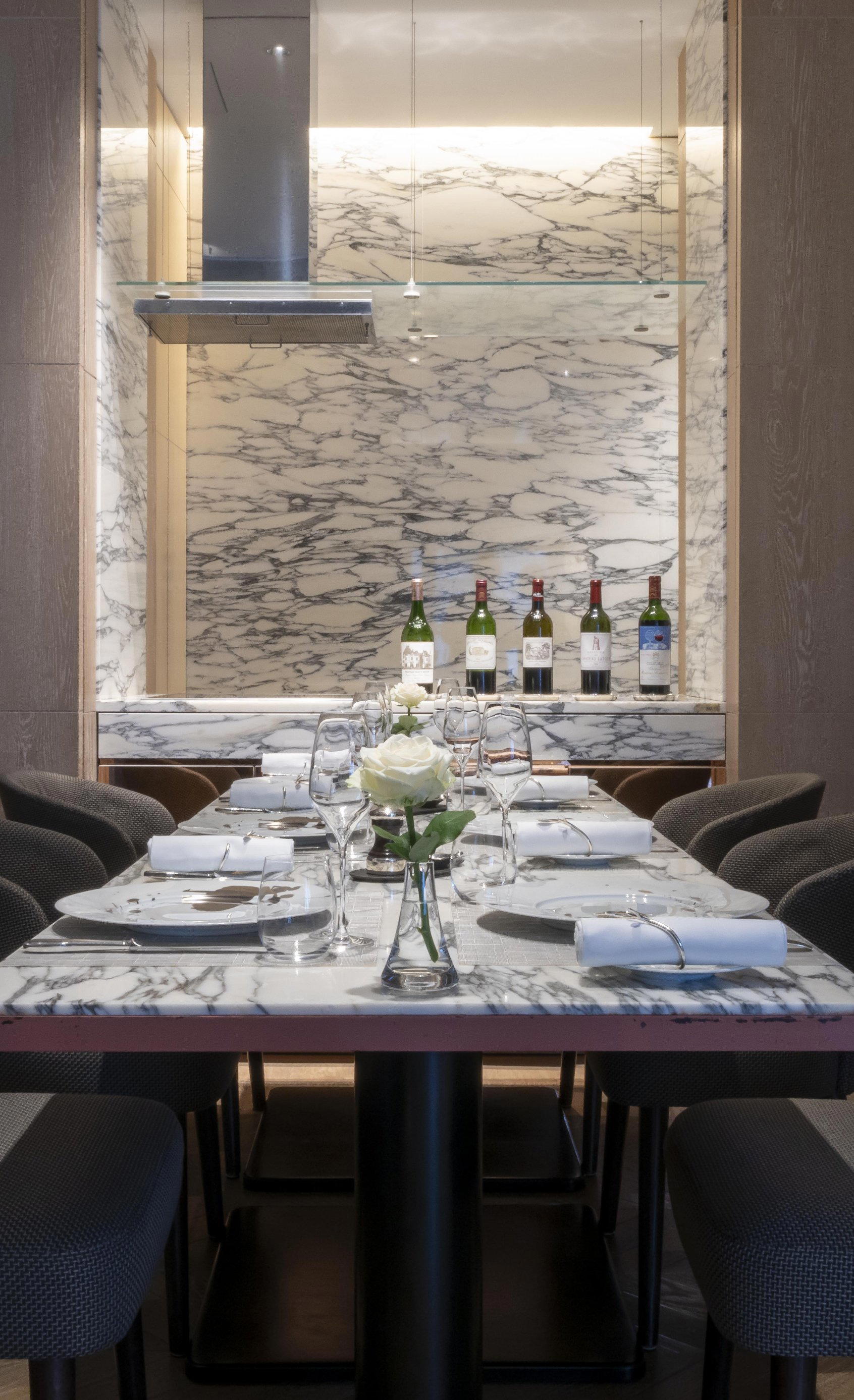
French Classicism in the City That Rewrote the Rules
When French haute cuisine first arrived in Tokyo in meaningful numbers during the 1980s and 1990s, it occupied a different position than it does today. The city's diners were learning the grammar of brigade service, butter-forward sauces, and the formal progression of the French menu. By the time Dominique Bouchet Tokyo established itself in Ginza, that grammar was already fluent across the city. Tokyo had not simply absorbed French cooking; it had produced its own interpretation, trained a generation of chefs in Lyon and Paris, and sent them home to open kitchens that in several cases outranked their European models on global lists. The French restaurant arriving in contemporary Ginza does so into a market that knows exactly what it is comparing.
That context shapes how a venue like Dominique Bouchet Tokyo is read by its audience. Ginza's dining corridor is among the more concentrated zones of high-end restaurants anywhere, a district where Harutaka operates at the summit of sushi formalism and where RyuGin has spent years reinterpreting kaiseki through a technical lens. French cuisine here competes not only with its peers but with native Japanese forms that have decades of local refinement behind them. The address in Ginza's brick-lane corridor, on the second floor of the Fukujin Building at 1-5-6, places the restaurant away from the main boulevard, a position that in Ginza typically signals deliberate restraint rather than accident.
The Cultural Weight of French Technique in Tokyo
Classical French cooking carries specific cultural freight when it crosses into Japan. The country's relationship with French cuisine has been unusually serious: Japan holds more Michelin stars than France, and a significant portion of those are awarded to French-influenced kitchens. The tradition Dominique Bouchet represents, rooted in the formal Parisian style that preceded nouvelle cuisine's lightening influence, sits at one end of a spectrum that now includes the lighter, more ingredient-responsive approach visible at L'Effervescence, or the technically inventive hybrid mode of Crony and the refined contemporary direction of Sézanne.
What distinguishes the classical French position in Tokyo is its refusal of local compromise. Where many French-trained chefs in Japan have progressively absorbed Japanese seasonality, ingredient sourcing, and plating aesthetics into their work, the classicist stance maintains the integrity of the source tradition as the defining principle. This is not a failure of adaptation; it is a different kind of cultural statement, one that treats the imported form as worth preserving on its own terms. For Tokyo diners, this creates a comparison point that is genuinely useful: the same technique applied without the local inflection that characterises so much of the city's hybrid French output.
The broader French dining scene in Japan extends well beyond Tokyo. HAJIME in Osaka has built a distinct identity around French technique redirected through Japanese precision. akordu in Nara applies European wine culture and kitchen discipline to a context shaped by ancient capital aesthetics. The contrast with Ginza's French addresses clarifies what is specific to Tokyo's version of the tradition: higher density of comparison, more demanding audiences, and greater proximity to the global conversation about where French cuisine sits in a world that has diversified its reference points.
Ginza as a Test for Any Serious Kitchen
Ginza functions differently from other Tokyo dining districts. Shibuya and Shinjuku offer volume and variety; Roppongi trades on international visibility. Ginza operates on precision and reputation, a district where the cost of occupancy demands that kitchens perform consistently at the summit of their category. The 1-chome end of Ginza, where the brick-lane addresses cluster, has a quieter character than the main Chuo-dori strip, which tends to favour venues that rely on reference and return custom over passing traffic.
For French kitchens specifically, this geography carries implications. The competition is immediate and named: the Ginza corridor contains multiple French addresses operating at the same price tier, each with a defined identity. Diners choosing between them are making distinctions about register, formality, and whether they want a kitchen that pulls toward Japanese interpretation or holds to European form. Dominique Bouchet Tokyo's position within this competitive set reflects a choice about where on that axis the kitchen plants its flag.
Comparable precision at the summit of Tokyo dining is visible across forms. Gion Sasaki in Kyoto demonstrates what total commitment to a single tradition produces in Japan's other great dining city, and the contrast with Tokyo's French corridor is instructive: Kyoto's premium addresses operate within a Japanese framework so established it requires no external validation, while Ginza's French kitchens must still argue their case to an audience that has plenty of other options. Across Japan's regions, serious kitchens from Goh in Fukuoka to restaurants in Nanao, Sapporo, Takashima, and Nishikawa Machi illustrate how distributed Japan's serious dining culture has become, which in turn raises the stakes for any Tokyo address claiming a position at the summit of its category.
For visitors orienting themselves in the Tokyo French scene from further afield, a useful comparison comes from the New York French tradition. Le Bernardin in New York City has maintained classical French discipline in a competitive metropolitan market for decades, and the parallels with Tokyo's French corridor, where classical technique must justify itself against both local alternatives and newer hybrid formats, are instructive. Atomix in New York City offers a different model: Korean fine dining that has absorbed French structural rigour without adopting French identity, a synthesis that has a counterpart in Tokyo's own hybrid kitchens.
Other serious addresses across Japan, including Birdland in Sakai and Bistro Ange in Toyohashi, show that the conversation about French cooking in Japan is not confined to major cities. The tradition has dispersed, localised, and evolved across the country in ways that make any single Ginza address part of a much larger national story.
Planning Your Visit
Dominique Bouchet Tokyo is located on the second floor of the Ginza Rengatsuji Fukujin Building, 1-5-6 Ginza, Chuo City, Tokyo.
Just the Basics
Comparable venues nearby, for context on price, style, and recognition.
| Venue | Cuisine | Price | Notes |
|---|---|---|---|
| ドミニク・ブシェ トーキョーThis venue — the venue you are viewing | Chūō, Modern French Fine Dining | $$$$ | Not listed |
| Paris Yugao | Not listed | $$$$ | Chūō, Neo-French Japonism & Teppanyaki in Ginza |
| サンプリシテ | Not listed | $$$$ | Shibuya, Fish-Centric Modern French Omakase |
| ナオト ケイ | Chiyoda, Modern French Omakase | $$$$ | Not listed |
| French Kitchen | Minato, Classic French Bistro | $$$$ | Not listed |
| モナリザ 丸の内店 | Chiyoda, Modern French Fine Dining | $$$$ | Not listed |










At a Glance
- Elegant
- Sophisticated
- Intimate
- Classic
- Date Night
- Special Occasion
- Business Dinner
- Private Dining
- Extensive Wine List
- Sake Program
Current opening hours
- Monday
- 12–1:30 PM, 6–10:30 PM
- Tuesday
- 12–1:30 PM, 6–10:30 PM
- Wednesday
- 12–1:30 PM, 6–10:30 PM
- Thursday
- 12–1:30 PM, 6–10:30 PM
- Friday
- 12–1:30 PM, 6–10:30 PM
- Saturday
- 12–1:30 PM, 6–10:30 PM
- Sunday
- 12–1:30 PM, 6–10:30 PM
Hours can change for holidays and private events. Last verified .
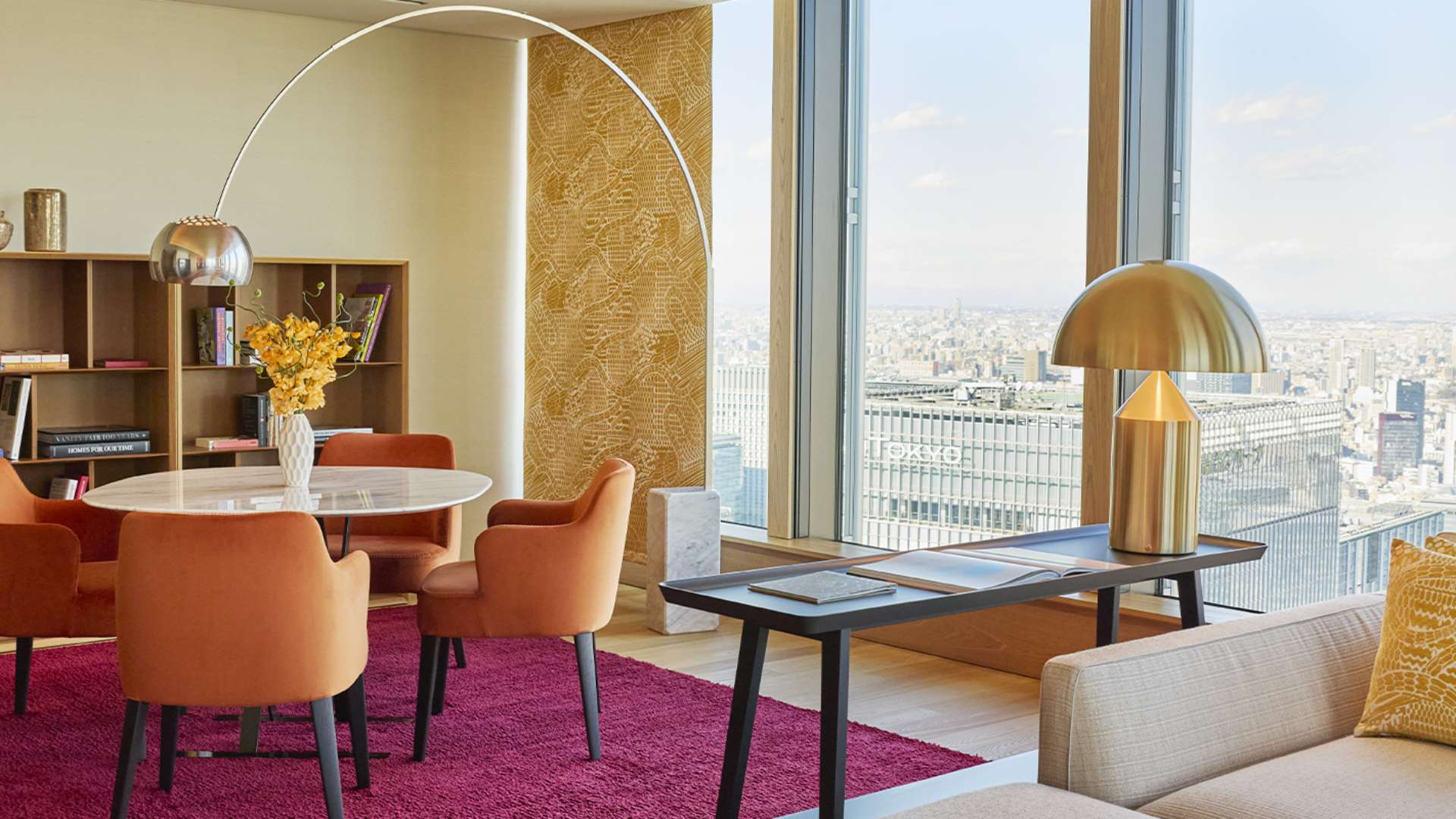
Refined and elegant with meticulous service in a compact, sophisticated space evoking a Parisian apartment.