Our verdict
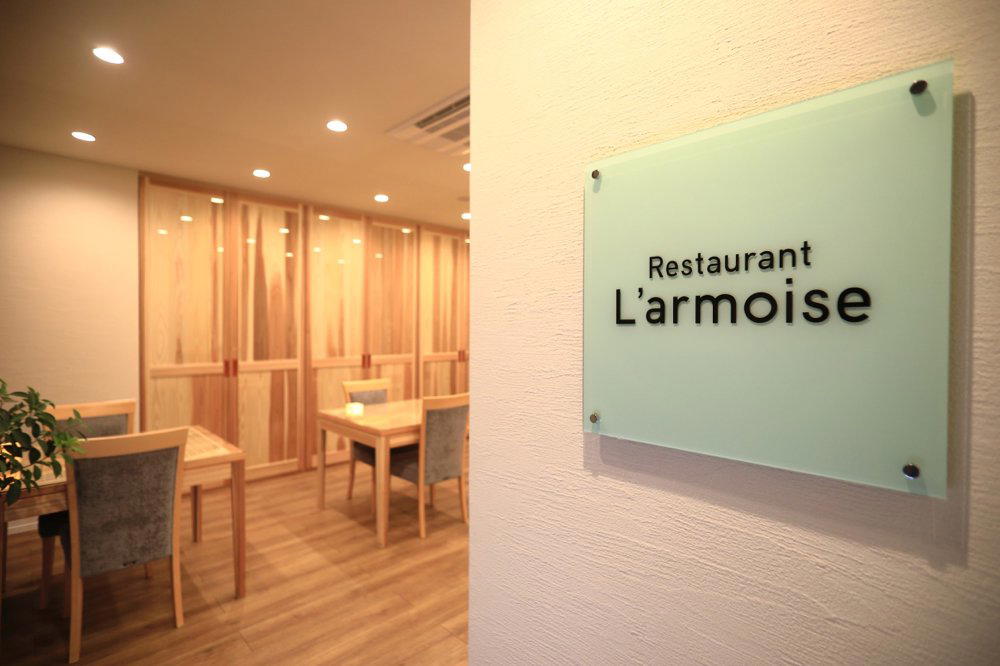
レストラン ラルモワーズ sits in Nagaoka's Omotemachi district, operating within a city that has long positioned itself as one of Niigata Prefecture's most serious tables for French-influenced cooking. Niigata's agricultural depth — Koshihikari rice, Snow Country vegetables, Japan Sea seafood — gives kitchens here raw material that urban French restaurants rarely access at this proximity. The address rewards those willing to move beyond Japan's better-mapped dining circuits.

Pearl is the En Primeur Club membership app — saves, bookings, and concierge access live there. Same editors, same standards.
- Address
- Japan, 〒940-0071 Niigata, Nagaoka, Omotemachi, 3 Chome−3-3 ダイアパレス表町 1階
- Phone
- +81258304622
- Hours
- Mon ClosedTue–Wed 11:30 AM–1:30 PM, 6–8 PMThu 6–8 PMFri–Sun 11:30 AM–1:30 PM, 6–8 PM
- Website
- restaurant-larmoise.info
- Directions
- Get directions
Nagaoka and the Niigata Ingredient Argument
The case for eating French cuisine outside Tokyo or Osaka has grown stronger over the past decade, and Niigata Prefecture sits at the centre of that argument. Nagaoka, the prefecture's second city, draws on one of Japan's most documented agricultural territories: Koshihikari rice paddies, cold-Sea vegetables that intensify during long winters, and Japan Sea seafood arriving with the kind of seasonal rhythm that urban supply chains tend to flatten. Kitchens working in this environment have proximity to raw material that restaurants in Ginza or Namba typically source through intermediaries, often at the cost of peak condition. Our full Nagaoka restaurants guide maps how the city's dining scene has quietly built on these structural advantages.
レストラン ラルモワーズ occupies the ground floor of Daiapalace Omotemachi, a residential building on 3-chome in central Nagaoka. The address is characteristically Japanese in its understatement: a building that signals permanence rather than spectacle, on a street that reads as neighbourhood rather than destination. In French regional cooking, this kind of low-profile footprint often correlates with a kitchen that relies on sourcing and technique rather than room design to carry the experience. Whether that holds here is the editorial question the address poses before you sit down.
The Sourcing Geography of Niigata French
Niigata's agricultural reputation rests on specifics. The Uonuma district, inland from Nagaoka, produces Koshihikari rice under conditions — temperature differential, water quality, soil composition — that have made it a benchmark across Japan. Snow Country produce, from burdock to mountain vegetables, arrives in markets with seasonal precision that reflects altitude and weather rather than logistics scheduling. On the coast, the Japan Sea yields species that rarely travel far: nodoguro (blackthroat seaperch), which commands serious attention among Niigata cooks, and snow crab during the winter months that define the region's culinary calendar.
French kitchens that work in this environment face an interesting editorial question: how much does the French framework serve the ingredient, and how much does the ingredient serve the French framework? The most considered answer in regional Japan tends to involve restraint, classical techniques applied with enough discipline to let provenance speak, rather than saucing toward a style that could have been executed anywhere. This is the lens through which French cooking in Niigata is most usefully read, and it positions restaurants like ラルモワーズ in a different competitive register than the innovation-led French houses in Japan's larger cities.
For context on what innovation-led French looks like at the upper end of the Japan market, HAJIME in Osaka operates a three-Michelin-star format built on conceptual ambition. akordu in Nara takes a different route, anchoring European technique in Yamato produce with a specificity that mirrors what Niigata kitchens have access to from their own prefecture. These comparisons clarify that regional ingredient-led French is a coherent and increasingly respected format, not a compromise.
Reading the Room in Omotemachi
Omotemachi is a central Nagaoka district with the mixed character of many Japanese city centres: commercial buildings alongside residential blocks, a street grid that rewards slow attention rather than first impressions. A ground-floor restaurant in this context typically draws a local clientele, which in Nagaoka means professionals, agricultural industry figures, and the kind of regular diner who measures a kitchen by seasonal consistency rather than by occasion spectacle. This is a different audience than the destination-seeking traveller who books six months ahead for a Tokyo counter seat, and it shapes the register a kitchen pitches at.
That local orientation matters for how ingredient sourcing functions. A restaurant that serves a primarily local clientele in an agricultural prefecture has both the network and the reputational incentive to work directly with producers. The distance from farm to kitchen in Niigata is frequently measured in tens of kilometres rather than hundreds, and the seasonal change is visible in the market rather than communicated through a distributor's catalogue. This is the structural condition that gives Niigata French cooking its argument.
Readers tracing French cuisine across Japan's regional cities might also look at Gion Sasaki in Kyoto for kaiseki's parallel relationship with seasonal sourcing, or Goh in Fukuoka for how a chef with classical training can reframe regional produce through a distinct culinary lens. Further afield, Le Bernardin in New York City represents what rigorous classical French technique looks like at its most refined, while Atomix in New York City demonstrates how Korean-influenced fine dining uses seasonal ingredient sourcing as a primary editorial statement. The comparison clarifies that ingredient-led cooking is a method, not a regional limitation.
Situating ラルモワーズ in the Nagaoka Context
Japan's regional French scene has developed its own credibility markers over the past two decades, separate from the Michelin-starred concentration in Tokyo and Osaka. Restaurants in secondary cities, Kanazawa, Matsumoto, Nagaoka, have built followings by doing things the large-city format structurally cannot: direct producer relationships, menus that shift with local seasonal reality rather than imported calendar conventions, and pricing that reflects prefecture-level cost structures rather than the real estate economics of Shinjuku or Minami. Other regional Japanese restaurants worth cross-referencing include 三本木 石川製 in Nanao, 湖里庵 in Takashima, and 羽根屋 in Nishikawa Machi, each operating with the kind of local material depth that defines this tier of Japanese regional dining. 北海道さっぽろ in Sapporo represents a northern equivalent of this sourcing logic, where cold-climate produce sets the creative parameters.
ラルモワーズ, positioned on Omotemachi's ground level in central Nagaoka, operates within this regional French framework. The venue data available does not specify price range, seat count, or booking method, which means practical planning requires direct contact or local inquiry rather than online reservation systems. For visits to Nagaoka, the city is accessible from Tokyo via the Joetsu Shinkansen in approximately 75 minutes, which brings it within the range of a day trip from the capital, though the prefecture's seasonal depth argues for an overnight stay during winter snow crab season or the autumn harvest months. Additional restaurant context for comparable formats elsewhere in Japan can be found through Harutaka in Tokyo and Bistro Ange in Toyohashi, as well as Birdland in Sakai, Blue Ocean Steak in Nakagami District, bodai in 那智勝浦町, Cafe Naoshima Konichiwa in Naoshima, and Denko Sekka in Hiroshima for a wider picture of how regional Japanese dining is developing across the country.
Frequently asked questions
Can I bring kids to レストラン ラルモワーズ?
No specific family policy is documented for the restaurant. Given its position as a French dining address in Nagaoka's Omotemachi district, the format likely leans toward adult dining occasions. Contacting the venue directly before booking with children is advisable.
Is レストラン ラルモワーズ part of a broader movement of regional French dining in Japan?
Japan's regional French scene has built credibility independent of the Tokyo and Osaka Michelin concentration over the past two decades, with Niigata Prefecture's ingredient base — Uonuma Koshihikari rice, coastal seafood, mountain vegetables — providing a compelling sourcing argument for restaurants working in the French idiom. レストラン ラルモワーズ in Nagaoka sits within that developing regional tradition. No awards or chef affiliations are currently documented.
Where is レストラン ラルモワーズ in Nagaoka?
レストラン ラルモワーズ is located at Japan, 〒940-0071 Niigata, Nagaoka, Omotemachi, 3 Chome−3-3 ダイアパレス表町 1階, Nagaoka.
How hard is it to get a table at レストラン ラルモワーズ?
Reservation difficulty is not documented. French restaurants at this level in Japan's regional cities frequently operate with limited covers and strong local repeat custom, which can make weekend tables competitive. Booking in advance, rather than walking in, is the safer approach for Nagaoka's more established dining addresses.
What's the defining dish or idea at レストラン ラルモワーズ?
The defining idea at this Nagaoka address is most likely the application of French culinary technique to Niigata Prefecture's raw material — a region whose agricultural credentials include Koshihikari rice from the Uonuma district and Sea of Japan seafood. Specific dish records are not available, but that sourcing geography is the structural argument for French cooking in this part of Japan.
A Quick Peer Check
Comparable venues nearby, for context on price, style, and recognition.
| Venue | Cuisine | Price | Awards | Notes |
|---|---|---|---|---|
| レストラン ラルモワーズThis venue — the venue you are viewing | Seasonal French Gastronomy with Niigata Ingredients | $100–150 | Not listed | Not listed |
| Paris Pie | Mille-feuille pastry specialty shop | $1–10 | Tabelog 100 #92 | Otedori |
| Ichii | Specialty Shio Ramen Shop | $10–20 | Tabelog 100 #24 | Akebono |
| Cheval | Seasonal French with Japanese influences | $50–100 | Michelin Plate | Nihonbashi |
| Les Alchimistes | Avant-Garde French Fine Dining | Not listed | Not listed | Shirokanedai |
| Mauvaise herbe | Okinawan Terroir-Driven French Omakase | $200–300 | Not listed | Uruma |
Continue exploring
More in Nagaoka
Restaurants in Nagaoka
Browse all →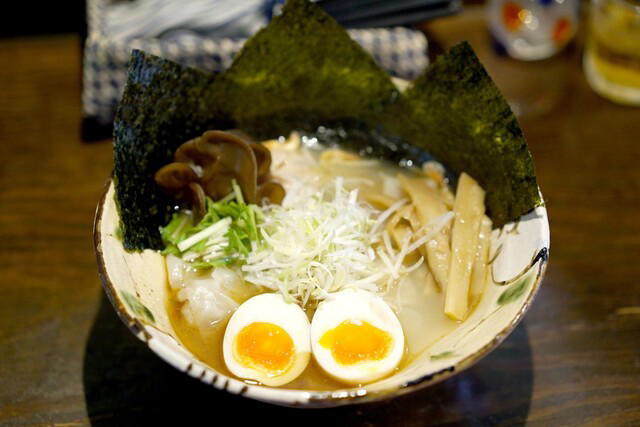
Details
- Elegant
- Intimate
- Sophisticated
- Quiet
- Date Night
- Special Occasion
- Business Dinner
- Open Kitchen
- Standalone
- Extensive Wine List
- Sommelier Led
- Local Sourcing
- Farm To Table
- Tasting Menu
- Prix Fixe
- Wine
- Allergy Accommodating
- Vegetarian Friendly
Current opening hours
- Monday
- Closed
- Tuesday
- 11:30 AM–1:30 PM, 6–8 PM
- Wednesday
- 11:30 AM–1:30 PM, 6–8 PM
- Thursday
- 6–8 PM
- Friday
- 11:30 AM–1:30 PM, 6–8 PM
- Saturday
- 11:30 AM–1:30 PM, 6–8 PM
- Sunday
- 11:30 AM–1:30 PM, 6–8 PM
Hours can change for holidays and private events. Last verified .
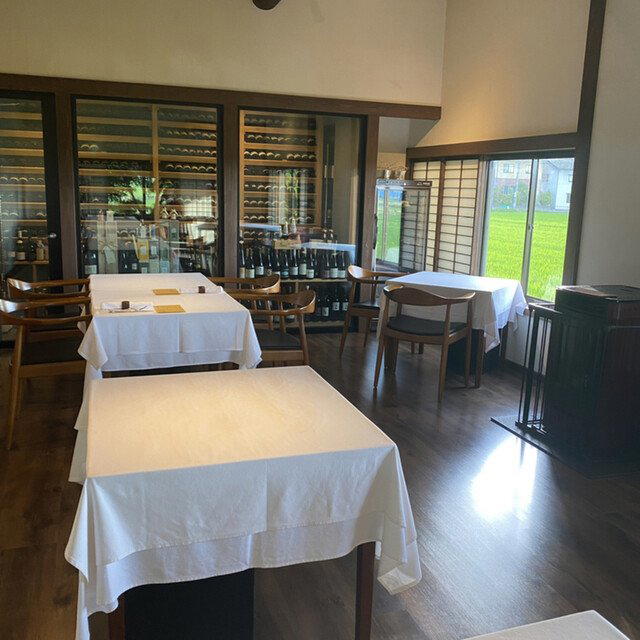
Refined and intimate setting with upscale, minimalist aesthetic befitting a fine dining establishment focused on seasonal French cuisine.