Our verdict
Located in Fukuoka's Haruyoshi district, 白金 にし田 occupies a ground-floor space in Chuo Ward where the city's appetite for precision dining converges with Kyushu's larder. The restaurant draws from a tradition where local ingredients meet disciplined technique, placing it in a tier of Fukuoka addresses that rewards advance planning and close attention.

Pearl is the En Primeur Club membership app — saves, bookings, and concierge access live there. Same editors, same standards.
- Address
- Japan, 〒810-0003 Fukuoka, Chuo Ward, Haruyoshi, 3 Chome−24−10 アーバンテム春吉 1F
- Phone
- +81929828525
- Hours
- Mon ClosedTue 5:30–9:30 PMWed–Sat 12:30–2 PM, 5:30–9:30 PMSun Closed
- Website
- sgnishida.jp
- Directions
- Get directions
- Booking
- Book on TableCheck
Haruyoshi and the Quiet Seriousness of Fukuoka Dining
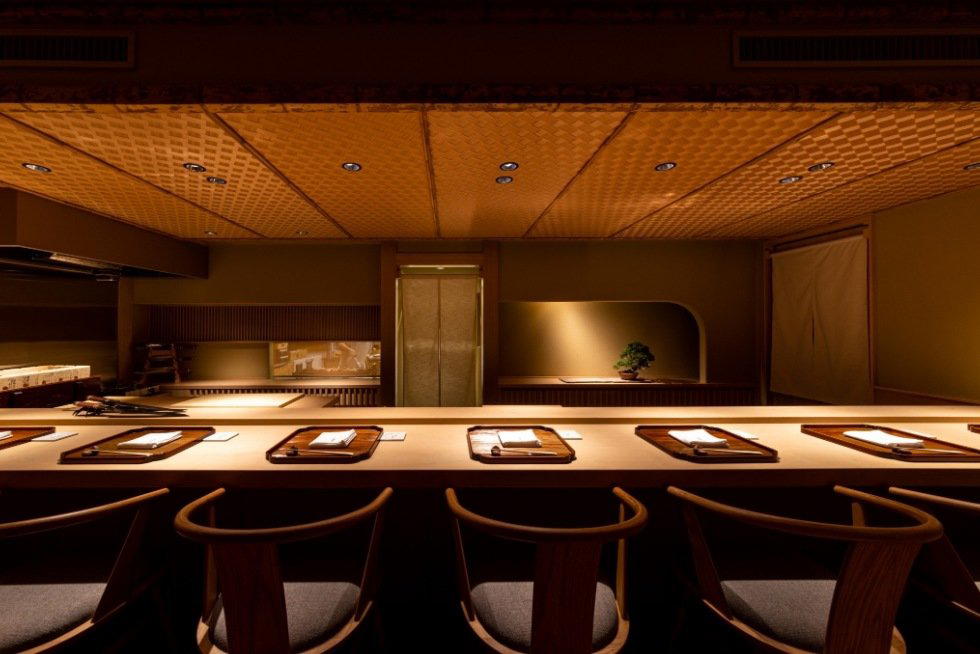
Fukuoka does not announce itself the way Tokyo or Osaka does. Its restaurant culture runs deeper than the ramen-and-yatai shorthand suggests, and nowhere is that more apparent than in Chuo Ward's Haruyoshi district, where a concentration of serious, often unmarked dining rooms occupies the ground floors of residential and mixed-use buildings. 白金 にし田 sits in this precise pocket, at the first floor of Abantem Haruyoshi on a stretch of 3-chome that attracts diners who already know where they are going. The approach is understated in the way that only confident places allow themselves to be.
Haruyoshi is not a destination that rewards wandering. It functions on prior knowledge: you research, you book, you arrive. That filtering mechanism is part of what defines the neighbourhood's dining character. The venues here are not competing for passing foot traffic. They are operating for a clientele that has already decided the meal matters, which shapes everything from pacing to portion architecture to the degree of explanation offered at the table. For visitors building a Fukuoka itinerary, understanding this neighbourhood logic is as important as knowing which dishes to order.
Where Kyushu's Larder Meets Imported Discipline
The editorial angle that applies across Fukuoka's more considered dining rooms is the relationship between ingredient provenance and technical influence. Kyushu offers a larder that few Japanese regions can match for variety: Genkai Sea seafood, Hakata wagyu strains, mountain vegetables from the interior prefectures, and a citrus and produce belt shaped by the island's climate. The question facing any serious kitchen here is not whether the ingredients are available but how much formal structure to impose on them.
The broader movement in Japanese fine dining over the past decade has been toward what might be called disciplined restraint with global literacy: chefs who trained in French kitchens or absorbed kaiseki logic before returning to apply those frameworks to local product. This is the same tension visible at Goh (French) in Fukuoka, where European technique operates directly on Kyushu produce, and at HAJIME in Osaka, where the relationship between imported method and Japanese material has been taken to a more extreme formal conclusion. 白金 にし田 occupies a position in this continuum, grounded in the Haruyoshi neighbourhood rather than in a high-profile commercial district, which tends to keep the format more intimate and the culinary conversation more focused.
Across Japan, the kitchens doing the most interesting work in this space tend to resist easy categorisation. Gion Sasaki in Kyoto applies similar logic through a kaiseki lens; akordu in Nara approaches it from a Spanish-trained vantage. What connects them is a refusal to let technique overwhelm the ingredient, or conversely, to let the ingredient excuse the absence of craft. That is the standard against which Fukuoka's quieter rooms are now being measured.
The Fukuoka Fine Dining Tier in Context
Fukuoka's premium dining tier has expanded significantly over the past fifteen years, driven partly by the city's economic confidence as Kyushu's commercial hub and partly by a younger generation of chefs choosing to stay rather than relocate to Tokyo. The result is a layered market: entry-level omakase and kappo counters at accessible price points, a middle tier of recognised but not internationally profiled rooms, and a smaller upper bracket that competes on ingredient quality and format precision.
Chikamatsu (Sushi) and Asago represent the kind of focused, counter-format dining that has become definitional for the city's serious tier. Beef Taigen (Beef泰元) signals a different emphasis, where Kyushu's beef production becomes the central argument. Bekk operates at the intersection of Japanese sensibility and contemporary European influence. 白金 にし田, situated in the same city fabric, draws from this shared pool of local sourcing while maintaining its own format logic. The full context for these addresses is mapped in our full Fukuoka restaurants guide.
For reference points beyond Fukuoka, the local-global technique dynamic appears in different configurations at Harutaka in Tokyo, where sushi formalism is applied with similar seriousness to seasonal Japanese product, and at Atomix in New York City, where Korean ingredients receive a formally rigorous treatment. The underlying logic travels. Even Le Bernardin in New York City operates on a comparable principle: the technique is the constant, the ingredient is the variable, and the result depends on how honestly the kitchen holds both.
Other Japanese addresses working similar ground include 一本木 高川製 in Nanao, 夕仙山乃 in Sapporo, and 岳羽屋 in Nishikawa Machi, each placing local seasonal product inside a formal structure that reflects the chef's specific training lineage. 湖畔荘庵 in Takashima offers a lakeside variation on the same theme. Across these addresses, the pattern holds: regional specificity is not a limitation but a competitive advantage when paired with real technical command.
Planning a Visit
白金 にし田 is located at 3 Chome-24-10 Haruyoshi, Chuo Ward, Fukuoka, on the ground floor of Abantem Haruyoshi. The Haruyoshi area is walkable from Tenjin and accessible from Nakasu-Kawabata station, making it manageable without a car for visitors staying in the city centre. Given the neighbourhood's character, walk-ins are unlikely to be accommodated at the upper-tier rooms here; advance contact via the venue directly or through a concierge service is the appropriate approach. Booking windows for this tier of Fukuoka dining typically run several weeks out, with peak periods around Golden Week and year-end requiring more lead time. Arriving without a reservation is possible if the format is more casual in practice, but confirmation in advance is the more reliable path.
For broader reference in Fukuoka's serious dining tier, Birdland in Sakai and Bistro Ange in Toyohashi illustrate how regional Japanese cities outside the three major metros are building dining programs that justify destination travel in their own right. Fukuoka has long been in that conversation, and Haruyoshi is where the evidence is most concentrated.
Frequently asked questions
Where do I go for 白金 にし田?
白金 にし田 is located at Japan, 〒810-0003 Fukuoka, Chuo Ward, Haruyoshi, 3 Chome−24−10 アーバンテム春吉 1F, Fukuoka.
Where exactly is 白金 にし田 located, and how do I get there from central Fukuoka?
白金 にし田 is on the ground floor of Abantem Haruyoshi at 3 Chome-24-10 Haruyoshi, Chuo Ward, Fukuoka. The Haruyoshi neighbourhood is walkable from Tenjin, Fukuoka's main commercial centre, making it accessible without a taxi for guests staying centrally. The building entrance is street-level, with no lobby or hotel passage to cross.
What should I order at 白金 にし田?
The kitchen at 白金 にし田 sits within Fukuoka's ingredient-led dining tradition, where the menu follows Kyushu's seasonal larder rather than fixed dishes. Ordering à la carte is unlikely to be the format here — count on a set course structured around what the region is producing at that moment. Confirming the current menu structure directly with the restaurant before your visit is advisable.
How hard is it to get a table at 白金 にし田?
White金 にし田 is located in Haruyoshi, Chuo Ward — a neighbourhood that concentrates some of Fukuoka's more serious dining rooms in a compact, walkable area. Seats at this tier of Fukuoka restaurant tend to fill quickly, particularly on weekends and during peak travel periods. Booking several weeks in advance is a reasonable baseline; contacting the venue directly will give you the clearest picture of current availability.
What is 白金 にし田 known for?
白金 にし田 occupies a position within Fukuoka's considered dining tier — restaurants that treat Kyushu's exceptional produce as the primary argument rather than spectacle or novelty. The Haruyoshi address places it among neighbours that share a similar seriousness about sourcing and technique. Fukuoka's food culture runs considerably deeper than its ramen reputation, and 白金 にし田 represents that quieter, more deliberate register.
Can 白金 にし田 handle vegetarian requests?
Japanese fine dining at this level is typically built around seafood, dashi, and seasonal proteins drawn from Kyushu's coastal and mountain larder, which limits straightforward vegetarian accommodation. That said, kitchens operating in this tradition often have the range to adjust individual courses when given advance notice. Raise dietary requirements clearly when making your reservation — not as an afterthought on the night.
Is a meal at 白金 にし田 worth the investment?
Fukuoka's premium dining tier has matured significantly over the past fifteen years, and restaurants in the Haruyoshi corridor now sit in a peer group that competes credibly with comparable rooms in Osaka. Whether 白金 にし田 justifies the spend depends on what you're after: this is not a destination for theatre or celebrity-chef spectacle, but for the kind of Kyushu ingredient focus that doesn't translate to a lower price point in Tokyo. The ground-floor Abantem Haruyoshi address is low-key by design.
Recognition Snapshot
Comparable venues nearby, for context on price, style, and recognition.
| Venue | Cuisine | Price | Awards | Notes |
|---|---|---|---|---|
| 白金 にし田This venue — the venue you are viewing | Seasonal Kaiseki | $300–500 | Not listed | Not listed |
| 嗣味 | Modern Japanese Omakase | $200–300 | Not listed | Chūō |
| Shin-shin Nishinakasu shop | Traditional Japanese Izakaya | $100–150 | Tabelog 100 #6 | Chūō |
| Aji Dokoro Taro Gen Sougyou ten | Seafood Kaiseki | $50–100 | Tabelog 100 #96 | Hakata |
| Kamoryori Marimo Honten | Duck hot pot & kaiseki-style Japanese | $50–100 | Tabelog 100 #9 | Hakata |
| 明珠ひら緒 | Japanese Fine Dining | $200–300 | Not listed | Chūō |