


La Liste Top Restaurants · Tabelog Bronze #89
Our verdict
A ten-seat counter in Fukuoka's Hirao neighbourhood, Sushi Gyoten has earned Tabelog Silver and Bronze awards continuously since 2017 and holds a La Liste score of 78 points for 2026. Chef Kenji Gyoten runs a reservation-only omakase format priced around JPY 50,000–60,000 per person. Bookings are accepted exclusively through Shokuoku, and the counter seats are frequently committed weeks or months in advance.
Hirao After Dark: Fukuoka's Omakase Geography
Fukuoka's premium sushi scene does not concentrate in a single neighbourhood the way Tokyo's clusters around Ginza or Azabu. Instead, it distributes across the Chuo Ward's residential fringes, where rents run lower and the atmosphere tilts toward regular-clientele intimacy rather than tourist spectacle. The Hirao and Yakuin corridor exemplifies this pattern: a walkable stretch of low-rise buildings, independent restaurants, and quiet evening streets roughly three minutes on foot from Nishitetsu Yakuin Station. Sushi Gyoten occupies the ground floor of a modest building on this stretch, which is precisely where Fukuoka's serious omakase counters tend to situate themselves, away from the illuminated signage of Tenjin and closer to the kind of address that rewards those who have already done the research.
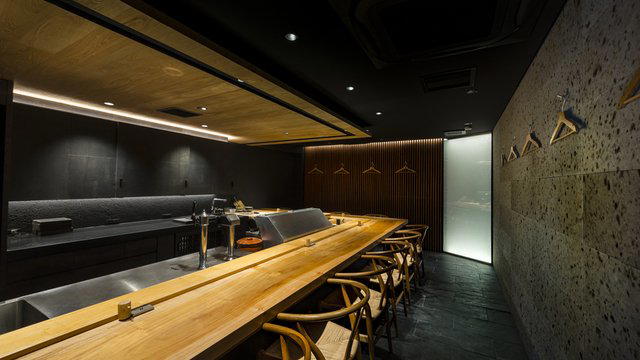
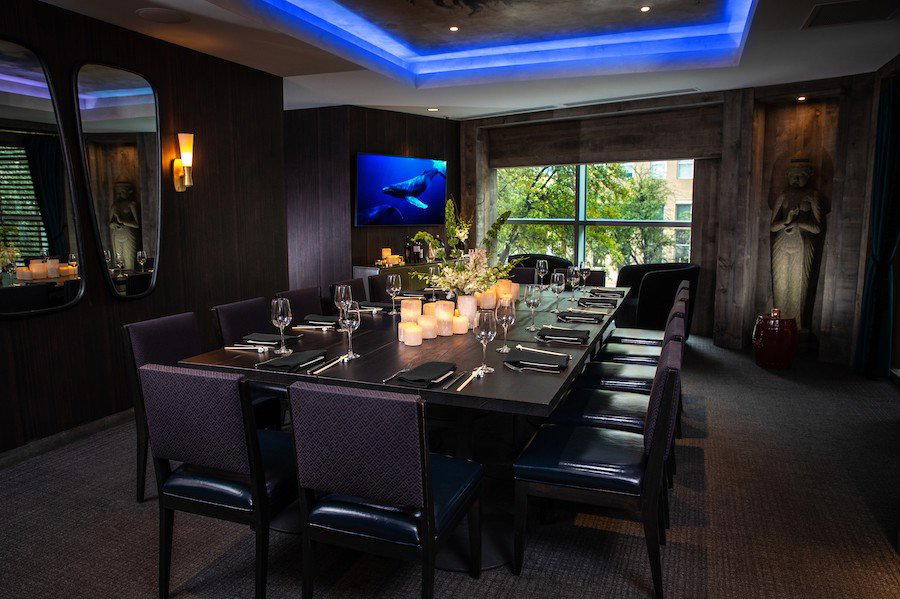
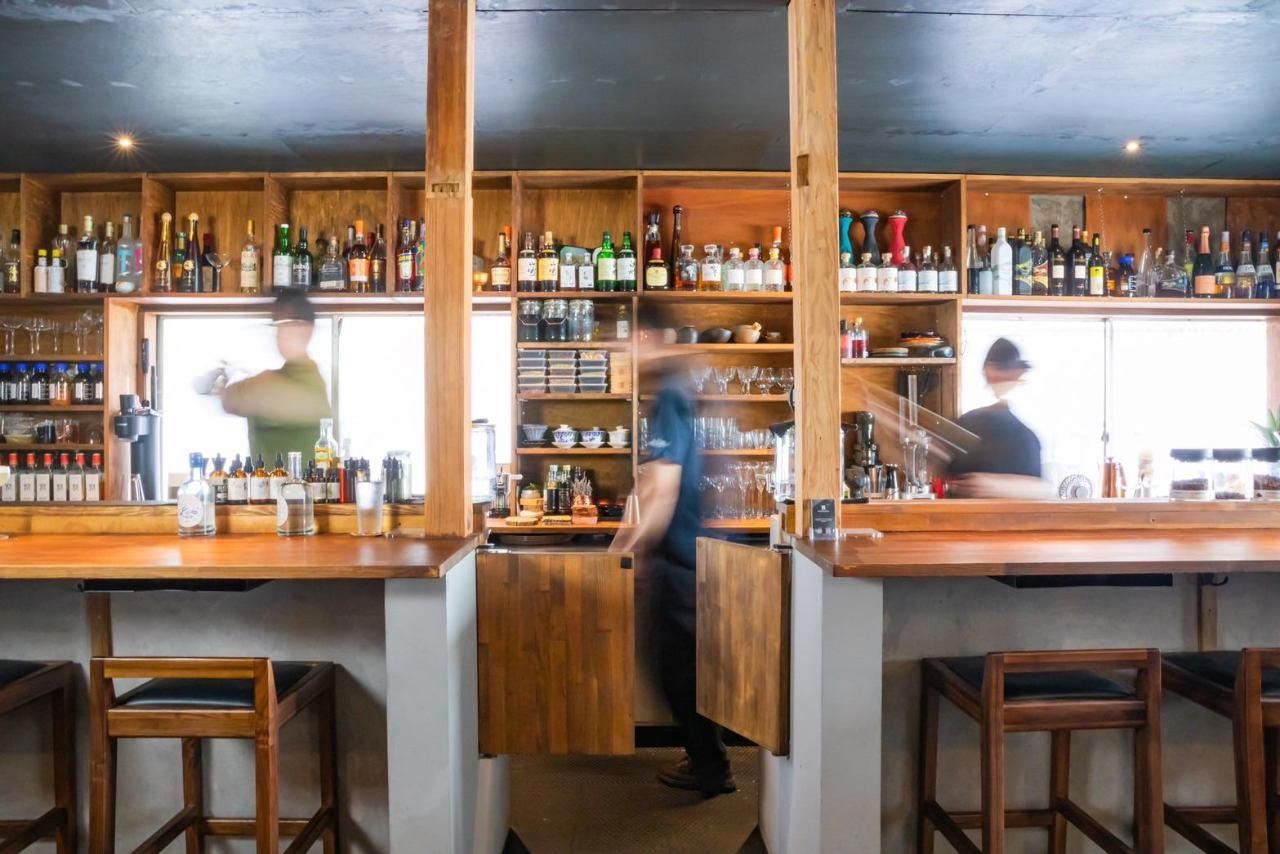
Arriving at the address, there is little to announce the occasion. That restraint is intentional. Counters at this price tier in Japan's second cities consistently favour understatement at the entry point, reserving their formal energy for the room and the plate. The ten-seat counter inside functions as both dining space and theatre in the classical omakase sense: no private rooms, no overflow seating, no distraction from the sequence of service directly in front of you.
The Award Record and What It Signals
Tabelog's annual awards operate as a meaningful barometer for Japan's domestic dining public, drawing on a large volume of verified diner reviews rather than critic discretion alone. A Tabelog Bronze represents the top tier of that system, and Sushi Gyoten has won that designation every year from 2017 through 2026, with Silver upgrades in 2021 and 2025. The 2025 Tabelog score of 4.43 placed the restaurant inside the Tabelog Sushi WEST "100" list, a separate regional category that maps the leading sushi addresses across western Japan, for 2021, 2022, and 2025.
Alongside the Tabelog data, Opinionated About Dining, which aggregates critic and diner scores internationally, ranked Sushi Gyoten at number 309 in Japan for 2024 and number 314 for 2025. La Liste, the Paris-based ranking that synthesises global guide data, scored the restaurant at 80.5 points for 2025 and 78 points for 2026. For comparison, sushi counters operating in this recognition bracket elsewhere in Japan, such as Harutaka in Tokyo, typically command similar price points and equivalent advance booking lead times. The category context holds: a counter with this award consistency in a city the size of Fukuoka occupies a different competitive position than the same awards would imply in central Tokyo.
Milestone Dinners and the Case for Occasion Dining in Fukuoka
The omakase format has become the default structure for high-significance dining across Japan, and for good reason. A fixed sequence controlled by the chef eliminates the negotiation of the menu, removes the anxiety of ordering, and places the evening's pacing in professional hands. For milestone occasions, anniversaries, significant birthdays, professional celebrations, this format functions as a commitment device: the duration is known, the quality ceiling is declared in advance by the award record, and the focus of conversation is freed from logistical distraction.
At a per-person spend of JPY 50,000–60,000 at the stated price (with review-based averages suggesting actual spend sometimes reaches JPY 60,000–79,000), Sushi Gyoten sits toward the upper tier of Fukuoka's omakase market. That price level is notable in the context of Fukuoka specifically. The city's reputation for affordable eating, hakata ramen, motsunabe, mentaiko-forward izakaya, means that a counter at this spend level signals deliberate occasion rather than routine dining. Internationally-travelling visitors who calibrate against comparable Tokyo counters or, further afield, against Sushi Shikon in Hong Kong or Shoukouwa in Singapore, will find the Fukuoka price point competitive for the recognition tier.
The ten-seat format is also relevant to occasion planning. Private use of the full counter is listed as available, which means the space can in principle function as a fully exclusive booking for groups occupying all seats, a different proposition from a large restaurant's private dining room, and one that concentrates the evening's attention on a single party. There are no private rooms within the space itself, so the counter and its direct atmosphere are the full environment.
The Broader Fukuoka Sushi Context
Fukuoka has developed a sushi identity distinct from Tokyo's. Proximity to the waters of the Genkai Sea and the Ariake Sea gives the city access to fish varieties, including horse mackerel, sea bream, and cuttlefish, that appear in local nigiri sequences in ways that differ from the bluefin-dominated omakase of Ginza. Hakata-style sushi has historically favoured lighter rice vinegar seasoning and a broader range of local fish, and the city's leading counters have built on that foundation rather than simply replicating the Tokyo template. Sushi Gyoten, which Tabelog's own description identifies with the concept of "Hakata's three-star cuisine," operates within this tradition.
For visitors exploring Fukuoka's sushi tier more broadly, the EP Club catalogue includes several counters worth placing in comparison: Sushi Karashima, Sushi Osamu, and Tenzushi Kyomachi each represent distinct positions within the city's omakase spectrum. Those planning a longer stay with multiple serious dinners might also consider Chikamatsu and Gahoujin 我逢人 for different cuisine registers. The full picture of what Fukuoka's dining scene offers at this level sits in our full Fukuoka restaurants guide.
Japan's regional omakase map has grown significantly over the past decade, with counters in Kyoto (see Gion Sasaki), Osaka (see HAJIME), Nara (see akordu), and Okinawa (see 6) earning consistent international recognition. Yokohama's 1000 represents a further point on the regional fine dining spectrum. Fukuoka holds its own in this geography, and Sushi Gyoten's decade-long award consistency is the clearest evidence of that position.
Planning the Visit
Reservations at Sushi Gyoten are accepted exclusively through Shokuoku, a Japanese reservation platform, and the counter operates by appointment only. There is no walk-in option and no official standalone website through which to book. International visitors unfamiliar with Shokuoku should account for the platform's interface and, in some cases, the need for a Japanese mobile number or concierge assistance. Major credit cards, Visa, Mastercard, and Amex, are accepted; electronic money and QR code payment are not.
Weekday service runs from 18:00 to 21:00, Monday through Friday. On weekends and public holidays, a lunch service runs from 12:00 to 13:30 in addition to the evening session. The lunch slot on Saturday and Sunday represents an opportunity for occasion dining in daylight hours, a format that suits some celebrations better than an evening sitting and is often slightly easier to book given lower overall demand for lunch at premium omakase counters. The restaurant has no fixed closing day, so schedules should be confirmed when booking.
The ten-seat counter means that any given service holds a small number of parties. Solo dining is flagged as appropriate, and the format suits pairs and small groups equally. Parking is unavailable at the venue; the Nishitetsu Yakuin Station access point, approximately 200 metres away, makes the approach direct without a car. For broader travel planning around the visit, our Fukuoka hotels guide, bars guide, and experiences guide cover the full stay. A Fukuoka wineries guide is also available for those extending into the region's wine scene.
Frequently asked questions
What's Sushi Gyoten's location?
Sushi Gyoten is located at 1 Chome-2-12 Hirao, Chuo Ward, Fukuoka, 810-0014, Japan, Fukuoka.
Who runs the kitchen at Sushi Gyoten?
The chef associated with Sushi Gyoten is Kenji Gyoten.
What do people recommend at Sushi Gyoten?
Tabelog reviewers consistently cite the fish sourcing as the counter's central strength, reflecting the venue's own stated commitment to being "particular about fish." The counter has held Tabelog awards continuously from 2017 through 2026, with Silver-level recognition in 2021 and 2025, which indicates sustained reviewer confidence rather than a single standout season. At JPY 50,000–60,000 per person by listed price (with review-based averages reaching JPY 60,000–79,999), the omakase format places the full progression of the chef's sourcing decisions front and centre.
What are Sushi Gyoten's hours?
Hours at Sushi Gyoten: Hours: Monday 6–9 pm Tuesday 6–9 pm Wednesday 6–9 pm Thursday 6–9 pm Friday 6–9 pm Saturday 12–1:30 pm, 6–9 pm Sunday 12–1:30 pm, 6–9 pm.
Is Sushi Gyoten award-winning?
Sushi Gyoten has received recognition including:
What's the defining dish or idea at Sushi Gyoten?
The counter operates on the principle that Hakata's proximity to the Genkai and Ariake seas produces a distinctly different ingredient base from Tokyo-centric sushi, and the ten-seat format exists to foreground that distinction. Tabelog's description frames the work as "the true skill of Hakata's three-star cuisine," positioning chef Kenji Gyoten's approach within a regional tradition rather than a derivative of Tokyo style. La Liste has recognised the restaurant at 80.5 points (2025) and 78 points (2026), and Opinionated About Dining placed it at #309 in Japan for 2024, both consistent with a counter built around precision sourcing over theatrical gesture.
Cost and Credentials
Comparable venues nearby, for context on price, style, and recognition.
| Venue | Cuisine | Price | Awards | Notes |
|---|---|---|---|---|
| Sushi GyotenThis venue (the venue you are viewing) | 3-Star Michelin Edomae Omakase | Not listed | La Liste Top Restaurants · Tabelog Bronze #89 | Not listed |
| Sushi Karashima | Kyushu-Style Edomae Omakase | $200–300 | Tabelog Bronze #165 | Chūō, Kyushu-Style Edomae Omakase |
| Chikamatsu | Edomae Sushi Omakase | $200–300 | La Liste Top Restaurants · Tabelog Gold #5 | Chūō, Edomae Sushi Omakase |
| Sushi Osamu | Traditional Japanese Omakase Sushi | $150–200 | Tabelog Bronze #342 | Minami, Traditional Japanese Omakase Sushi |
| Imoto | Modern Kyoto Kaiseki | $200–300 | Tabelog Bronze #133 | Chūō, Modern Kyoto Kaiseki |
| Tsugumi | Seasonal Kyushu Omakase | $200–300 | Tabelog Bronze #483 | Hakata, Seasonal Kyushu Omakase |
Recognition history
Dated appearances from independent guides and award organizations, with the underlying list record or original source where available.
La Liste Top Restaurants
La Liste
Opinionated About Dining Top Restaurants in Japan Highly Recommended
Opinionated About Dining
Tabelog Bronze #89
Tabelog
Full recognition history (9 entries)
La Liste Top Restaurants
La Liste
Opinionated About Dining Top Restaurants in Japan Ranked #314
Opinionated About Dining
Tabelog 100 #19 · No. 19
Tabelog · Tabelog 100 - Sushi - WEST - 2025
Tabelog Silver
Tabelog
Opinionated About Dining Top Restaurants in Japan Ranked #309
Opinionated About Dining
Opinionated About Dining Top Restaurants in Japan Highly Recommended
Opinionated About Dining
Continue exploring
More in Fukuoka
Restaurants in Fukuoka
All restaurants in Fukuoka →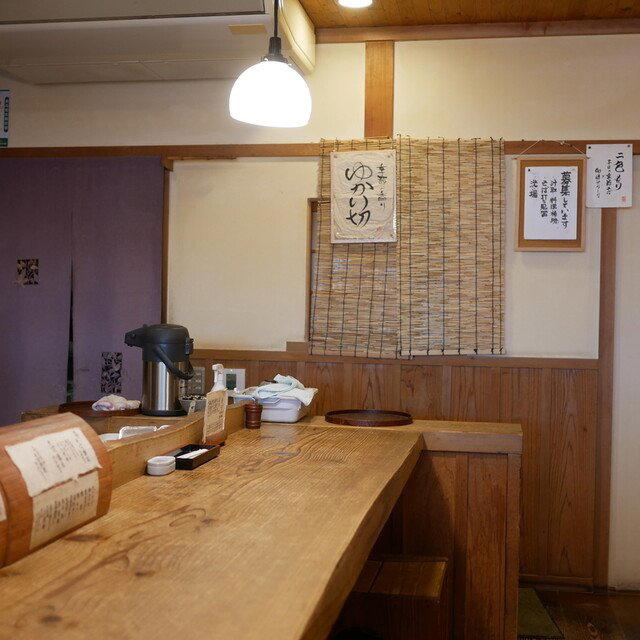
Details
- Elegant
- Sophisticated
- Intimate
- Special Occasion
- Date Night
- Chefs Counter
- Sake Program
- Sustainable Seafood
- Omakase
- Counter Dining
- Sake Program
- Pescatarian Friendly
Current opening hours
- Monday
- 6–9 PM
- Tuesday
- 6–9 PM
- Wednesday
- 6–9 PM
- Thursday
- 6–9 PM
- Friday
- 6–9 PM
- Saturday
- 12–1:30 PM, 6–9 PM
- Sunday
- 12–1:30 PM, 6–9 PM
Hours can change for holidays and private events. Hours as of .
Clean-cut dining room with a relaxing, spacious counter seating atmosphere focused on the chef's craft.