Китайская грамота sits on Sretenka, one of Moscow's most historically layered streets, bringing Chinese cuisine into a city where the format remains a serious editorial talking point. The address places it at the intersection of old Moscow neighbourhoods and a newer dining culture that takes Asian cooking seriously. For context on the broader Moscow scene, see our full restaurants guide.
 Discover on Pearl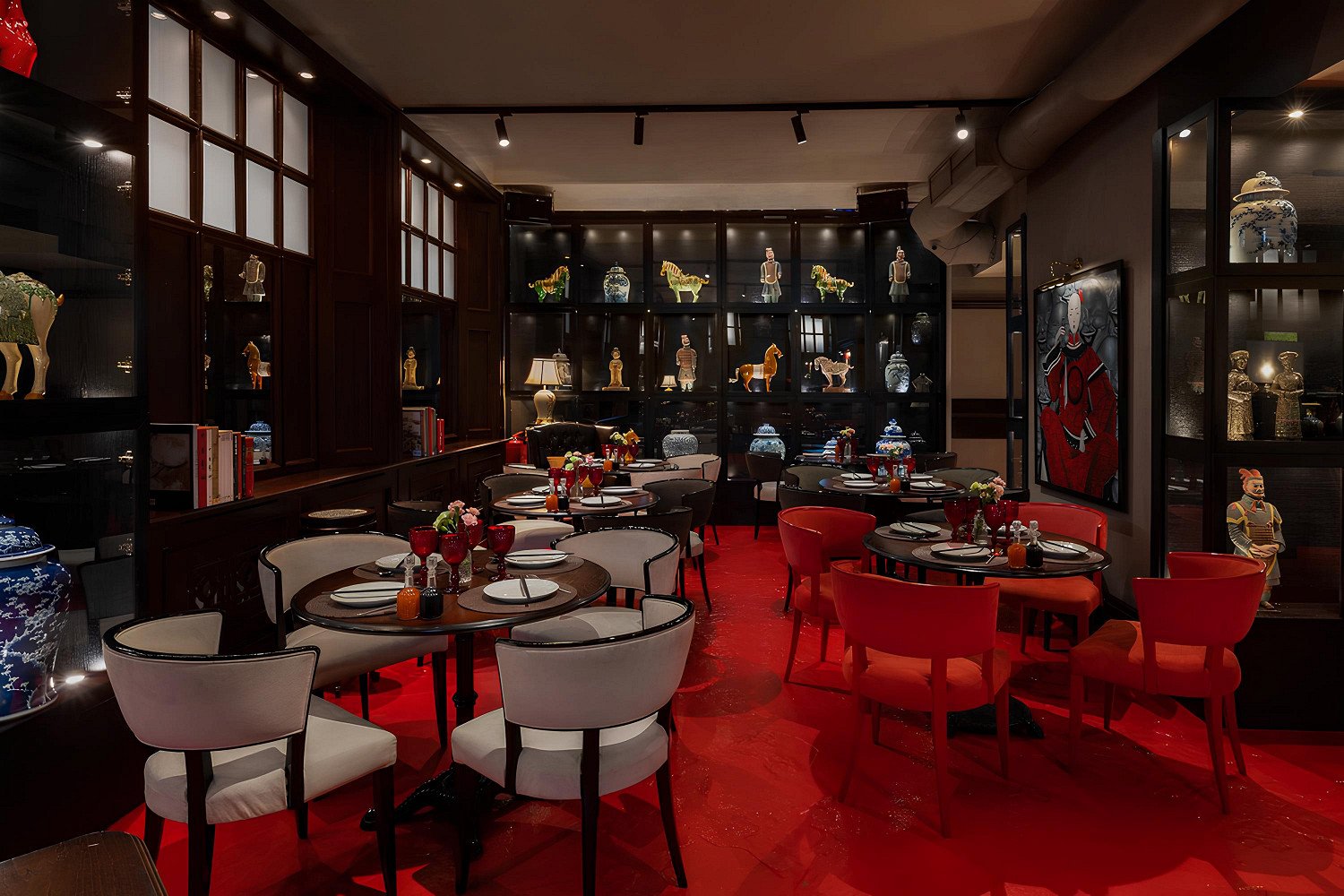
Sretenka and the Chinese Cooking Question in Moscow
Sretenka Street has functioned for decades as one of Moscow's more honest commercial corridors, a stretch that retained neighbourhood texture through the city's various cycles of reinvention. It is not the Patriarch's Ponds, not the Garden Ring, and not Tverskaya. That positioning matters for any restaurant on it: the address signals a certain remove from the aspirational-centre dining cluster where Cafe Pushkin (Кафе Пушкинъ) and venues of that generation planted their flags. Kitayskaya Gramota, at Sretenka 1, occupies a corner that feeds foot traffic from both the boulevard end and the Chistye Prudy direction, which gives it a different catchment than many of its peers.
Chinese cooking in Moscow has always existed in two registers. There is the Chinatown-adjacent, utilitarian tier, and there is the wave of more considered Chinese restaurants that emerged in the 2010s as Moscow's restaurant culture grew more sophisticated. That second wave is where Kitayskaya Gramota belongs. The name itself is an old Russian idiom, meaning something incomprehensible, literally "Chinese script" — the equivalent of saying something is "all Greek to me." The self-aware irony of that naming choice is itself a cultural signal: this is a restaurant that understands it is translating one food culture for another, and that the act of translation carries some weight.
The shortlist, unlocked.
Hard-to-book tables, cellar releases, and concierge-planned trips.
Get Exclusive Access →The broader context here is worth establishing. Moscow has, over the past decade, built a dining culture that can sustain serious ethnic and regional cooking at price points that reward ambition. Venues like Twins Garden in Moscow have demonstrated that the city's dining public responds to disciplined, research-led cooking regardless of whether it is rooted in Russian or international traditions. That environment is precisely what allows a Chinese restaurant on Sretenka to operate at a level removed from the all-you-can-eat buffet tier that dominated earlier periods.
What Chinese Cooking Looks Like When Moscow Takes It Seriously
Regional Chinese cooking is among the world's most internally differentiated culinary traditions. The gap between Cantonese, Sichuan, Shanghainese, and northern Chinese cuisines is not a matter of seasoning preference — it is a structural difference in technique, ingredient philosophy, and the role of heat, fermentation, and preservation. Russian audiences have historically encountered Chinese cooking through a narrow lens, shaped partly by Soviet-era versions of the cuisine and partly by the kind of pan-Chinese menus that prioritised accessibility over fidelity.
Restaurants that operate in the more serious register of this conversation tend to anchor themselves to a specific regional tradition rather than attempting to represent China as an undifferentiated whole. That specificity is where editorial credibility lives. The name Kitayskaya Gramota gestures at the complexity and foreignness of the source material, which suggests an awareness of that editorial responsibility rather than a desire to flatten it.
This mirrors a pattern visible in other Russian cities. Made in China in St. Petersburg represents a comparable attempt to take Chinese cooking seriously in a Russian metropolitan context. The fact that both cities now sustain venues of this type is an indicator of how far the country's dining culture has moved from its mid-2000s baseline, when ethnic cuisine outside Russian, Georgian, and Uzbek traditions occupied a marginal position.
Moscow's Dining Geography and Where Sretenka Fits
Any serious assessment of a Moscow restaurant has to account for the city's dining geography. Moscow is not a city where neighbourhood dining culture distributes evenly. The centre-versus-periphery dynamic is pronounced, and within the centre, specific streets and districts carry distinct hospitality identities. Sretenka, running north from Turgenevskaya metro, has a lower density of headline-attracting restaurants than, say, Patriarch's Ponds or the Bolshoi neighbourhood, which means the venues that do establish themselves there tend to do so on the strength of their cooking rather than their address premium.
For comparison: Kazbek (Казбек) occupies a different part of Moscow's ethnic-cuisine conversation, representing Georgian cooking at a high-intent tier. Both venues participate in a broader shift in how Moscow's dining public approaches cuisine from outside its own tradition. That shift has been documented across the city's restaurant press over the past decade, and it shows no sign of reversal.
For readers building a wider picture of Russian restaurant culture, the geographic spread is worth tracking. 1913 in Saint Petersburg represents a different tradition entirely, as does Kukhterin in Tomsk or Alanskaya Kukhnya in Krasnodar. The point is that sophisticated restaurant culture in Russia is no longer a Moscow-and-Petersburg story only, but Moscow remains the primary market where a concept like Kitayskaya Gramota can find the audience density it requires to operate at its intended level.
Planning a Visit
The venue is located at Sretenka 1, which places it within walking distance of the Chistye Prudy and Turgenevskaya metro stations. Moscow's central dining district is well-served by public transport, and the Sretenka corridor is walkable from several boulevard-ring points. Because specific hours, current pricing, and booking methods are not confirmed in our data, readers should verify current operational details directly with the restaurant before visiting. This is standard practice for any Moscow dining reservation that matters: conditions change, and the gap between a listed phone number and a confirmed table can be significant.
Our full Москва restaurants guide covers the broader dining landscape across price tiers and cuisine categories, and is the more efficient entry point for readers building a Moscow itinerary from scratch rather than seeking a specific address.
Frequently Asked Questions
- What should I eat at Китайская грамота?
- Specific current menu items are not confirmed in our data, and Chinese restaurant menus in Moscow's serious tier tend to rotate with supply and season. The structural recommendation is to focus on whatever dishes anchor the restaurant's regional Chinese identity most clearly, since those will reflect the highest-investment cooking. Ask front-of-house which preparations are specific to the restaurant rather than common across the Moscow Chinese dining scene.
- Should I book Китайская грамота in advance?
- For any Moscow restaurant operating above the casual tier in a central location, advance booking is the standard approach. Sretenka 1 has strong foot traffic, and any restaurant in Moscow's more considered Chinese cooking category will see sustained demand from a relatively small pool of interested diners. Booking windows and methods should be confirmed directly with the venue.
- What's the signature at Китайская грамота?
- Without confirmed dish data in our record, we cannot name a specific signature preparation. What the restaurant's positioning and name suggest is that the identity is built around making Chinese cooking legible and compelling to a Moscow audience, which typically means a menu anchored to a specific regional tradition rather than a pan-Chinese spread. Chinese cuisine carries enormous regional variation , from Sichuan heat-and-fermentation to Cantonese restraint , and the restaurant's direction on that question is the most useful thing to establish before sitting down.
- Do they accommodate allergies at Китайская грамота?
- Allergy accommodation in Moscow's restaurant sector varies considerably by kitchen. Chinese cooking involves complex sauce bases, fermented ingredients, and preparations that can carry multiple allergens in a single dish. If allergies are a factor, contact the restaurant directly before booking. Moscow's dining culture has become more attentive to dietary requirements over the past decade, but the specifics depend on individual kitchen policy, and pre-visit communication is the only reliable approach.
- How does Китайская грамота compare to other Chinese restaurants in Moscow?
- Moscow's Chinese dining scene has a clear split between high-volume, accessible formats and a smaller group of restaurants that take regional specificity seriously. Kitayskaya Gramota's address on Sretenka, its name's self-aware cultural framing, and its positioning in the Moscow dining conversation place it in the more considered tier. Readers who have experienced Chinese cooking at a serious level in Beijing, Shanghai, or cities with established Chinese communities will find the comparison useful: Moscow's top tier is not that peer set, but it is considerably more engaged with the source material than the city's earlier Chinese restaurant generation.
For further context across Russian dining cities, the EP Club editorial archive covers venues from Dzhani Restorani in Nizhny Novgorod and Lev I Ptichka in Saint Petersburg to Grisha in Omsk, Khmeli Suneli in Yekaterinburg, Konditerskaya "Kuzina" in Syktyvkar, Burger Records in Novosibirsk, krevetka in Voronezh, and Knyagininskiy Dvor in Volgograd. For international comparison on what rigorous ethnic-cuisine execution looks like at the highest tier, Le Bernardin in New York City and Atomix in New York City illustrate how a defined cultural tradition translates into a demanding dining market.
Budget Reality Check
A fast peer set for context, pulled from similar venues in our database.
| Venue | Price | Awards | Notes |
|---|---|---|---|
| Китайская грамота | This venue | ||
| White Rabbit | World's 50 Best | Modern Russian | |
| Palkin | Russian | ||
| Selfie | Modern European | ||
| Twins Garden | World's 50 Best | Modern European | |
| Artest | Russian Cuisine |
Need a table?
Our members enjoy priority alerts and concierge-led booking support for the world's most difficult tables.
Get Exclusive AccessThe shortlist, unlocked.
Hard-to-book tables, cellar releases, and concierge-planned trips.
Get Exclusive Access →