On Akademicheskaya Ulitsa in central Volgograd, Knyagininskiy Dvor occupies a position in the city's mid-to-upper dining tier, drawing on the tradition of Russian regional cooking at a time when the country's restaurant culture is pushing back toward its own larder. A address-level destination for visitors wanting to move beyond chain dining, it represents the kind of place where Volgograd's food scene stakes a claim to seriousness.
Pearl is the En Primeur Club membership app — saves, bookings, and concierge access live there. Same editors, same standards.
- Address
- Akademicheskaya Ulitsa, 8, Volgograd, Volgograd Oblast, Russia, 400001
- Phone
- +78442930930
- Website
- kd-vlg.ru
- Directions
- Get directions
 Saves & bookings on Pearl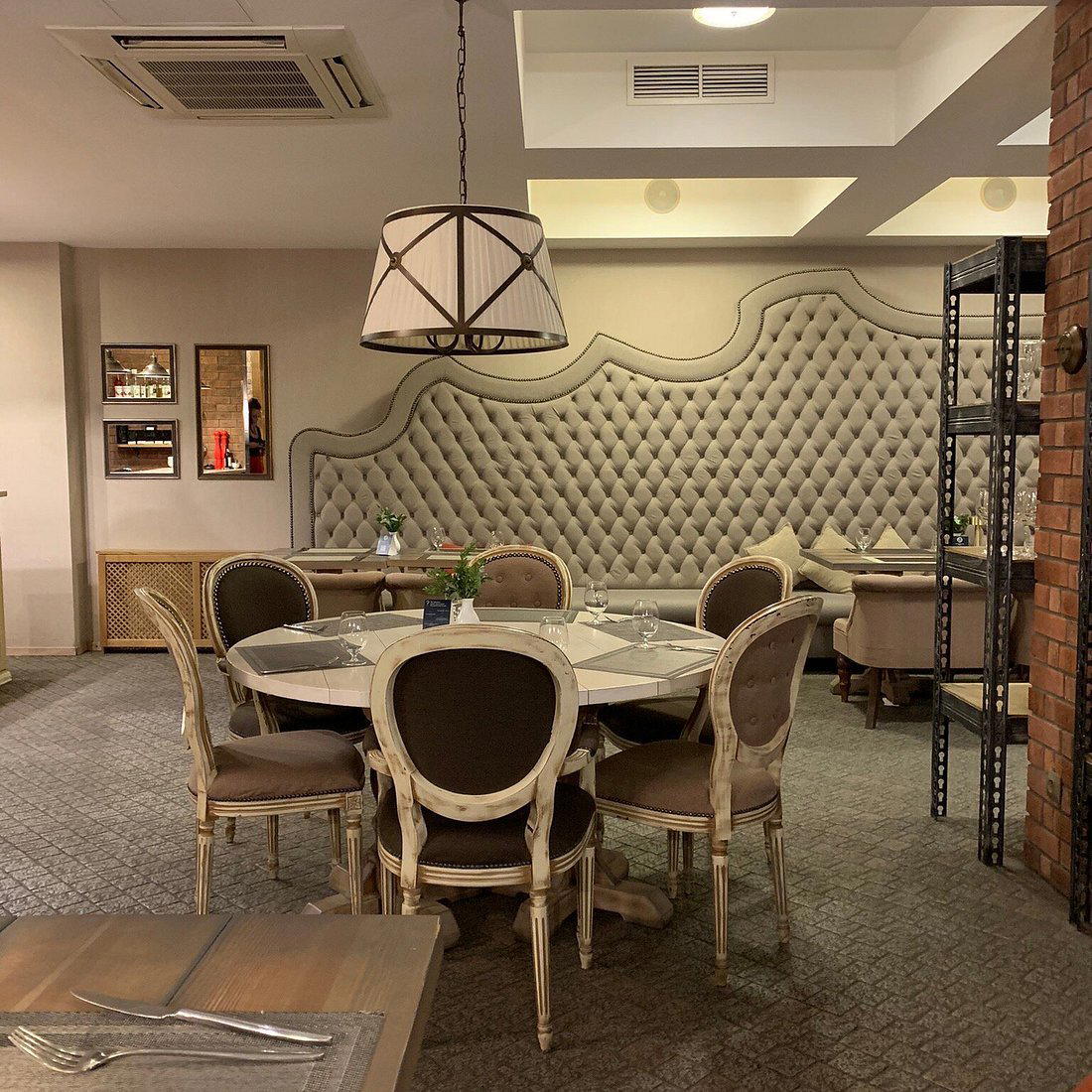
Where Volgograd's Table Meets Its Own Terrain
Akademicheskaya Ulitsa runs through one of Volgograd's more composed central districts, the kind of street where the architecture still carries the weight of Soviet-era civic ambition without overwhelming the pedestrian scale beneath it. Knyagininskiy Dvor sits at number 8 on that street, and the name itself signals an orientation toward Russian tradition: knyaginya means princess, and dvor means courtyard or estate, invoking the manor-house culture that shaped pre-revolutionary Russian hospitality. That framing matters less as decoration and more as a positioning statement about the food philosophy the kitchen is working within.
Volgograd sits at a crossroads of supply chains that most Russian cities would envy. The Volga River corridor has historically been one of the country's most productive agricultural belts, connecting steppe grain production to the north with the fishing grounds of the Caspian basin to the south. Sturgeon, carp, pike-perch, and bream have moved through this stretch of river for centuries, and the Lower Volga region remains one of Russia's principal sources of freshwater fish. Any kitchen in this city that takes ingredient provenance seriously has access to a larder that riverine and steppe geography built over generations.
The Sourcing Logic Behind Russian Regional Cooking
Russia's restaurant scene spent much of the 2000s and early 2010s looking outward, toward European and Asian formats, before a sharper turn toward domestic ingredients began in the mid-2010s. That shift was partly driven by import restrictions following 2014 sanctions, which pushed kitchens to reexamine what Russian soil and water actually produced. The effect in premium venues like Twins Garden in Moscow was a systematic rethinking of the sourcing map, with chefs documenting supplier relationships as carefully as European farm-to-table pioneers had done a decade earlier.
In provincial cities, the dynamic played out differently. Places like Volgograd were less exposed to the import-dependent habits of Moscow and Saint Petersburg fine dining, meaning the pivot back to local sourcing was less a correction and more a continuation. The Lower Volga's fish, the Don steppe's grain and lamb, and the market gardens that supply the city's bazaars represent a relatively unbroken supply relationship between the surrounding land and the local table. A restaurant like Knyagininskiy Dvor operates within that continuity rather than arriving at it through ideological recalibration.
Across Russia's mid-tier cities, the restaurants worth attention tend to be those treating regional ingredients as the default rather than the selling point. The comparison is instructive: at Kukhterin in Tomsk, Siberian game and river fish anchor a menu that reads as a regional document rather than a concept statement. At Alanskaya Kukhnya in Krasnodar, the sourcing logic comes from the North Caucasus corridor, with lamb and dairy front and centre. In Volgograd, the equivalent logic runs through the river and the steppe, and any kitchen working that tradition has material of genuine depth to draw from.
Volgograd's Dining Scene in Context
Volgograd sits below the radar of Russia's restaurant media, which concentrates its attention on Moscow and Saint Petersburg. That concentration is understandable given where the Michelin Guide operates in Russia and where the critical mass of recognised venues sits: restaurants like 1913 in Saint Petersburg or Lev I Ptichka in Saint Petersburg belong to an ecosystem of editorial coverage, food media, and destination dining that provincial cities haven't yet entered at scale.
What Volgograd does have is a city of roughly one million people, a serious historical identity as the site of one of the Second World War's decisive engagements, and a visitor flow tied to memorial tourism centred on the Mamayev Kurgan complex. That last point shapes the hospitality offer in ways that matter for a dining venue: travellers coming specifically to Volgograd tend to be interested in the place, not merely passing through it, which creates an audience receptive to a restaurant that tries to express something local. For those visitors, an address like Akademicheskaya Ulitsa, 8 sits close enough to the city's central civic zone to serve as a practical anchor for an evening.
The city's restaurant culture overall skews toward traditional Russian and post-Soviet hybrid formats, with Georgian cuisine representing, as it does across much of Russia, the dominant non-Russian option. Venues working explicitly Russian regional territory occupy a smaller niche in this market, one that places them closer to the approach of Dzhani Restorani in Nizhny Novgorod or Grisha in Omsk than to anything in the Moscow fine-dining conversation. Those are the relevant peer comparisons for understanding what Knyagininskiy Dvor is doing and what kind of experience it delivers.
Planning Your Visit
The restaurant is a Russian & European restaurant in Volgograd at Akademicheskaya Ulitsa, 8. The address puts it in a walkable position for visitors staying in the central district, though Volgograd's elongated geography along the Volga means orientation matters more here than in a compact city. Volgograd is served by Volgograd International Airport, with connections to Moscow (approximately 90 minutes by air) and limited direct routes to other Russian cities. Arriving visitors should plan around the city's linear layout when choosing accommodation if they intend to dine here without a transfer. The restaurant is open daily from 12 PM to 12 AM, and reservations are recommended.
Khmeli Suneli in Yekaterinburg and, at the capital end of the spectrum, Cafe Pushkin in Moscow, which represents a different but related interpretation of Russian table tradition. Le Bernardin in New York City and Atomix in New York City illustrate how ingredient provenance and sourcing discipline function at the highest levels of the global restaurant conversation.
Fast Comparison
Comparable venues nearby, for context on price, style, and recognition.
| Venue | Cuisine | Price | Notes |
|---|---|---|---|
| Knyagininskiy DvorThis venue — the venue you are viewing | Russian & European | $$ | Not listed |
| Cococo | Modern Russian Fine Dining | $$$ | Admiralteysky |
| Kazbek (Казбек) | Georgian | $$$ | Пресненский |
| Palmenya | Mediterranean Seafood | $$$ | City Center |
| Kazbek | Authentic Georgian | $$ | Presnensky |
| Конек | Авторская европейская с итальянской и японской кухней | $$ | Центр (ул. Максима Горького) |
At a Glance
- Cozy
- Elegant
- Classic
- Family
- Date Night
- Historic Building
- Farm To Table
- Local Sourcing
Current opening hours
- Monday
- 12 PM–12 AM
- Tuesday
- 12 PM–12 AM
- Wednesday
- 12 PM–12 AM
- Thursday
- 12 PM–12 AM
- Friday
- 12 PM–12 AM
- Saturday
- 12 PM–12 AM
- Sunday
- 12 PM–12 AM
Hours can change for holidays and private events. Last verified .
Comfortable and cozy atmosphere with nice interior, author's serving, and historic old Tsaritsyn vibe.