A seafood-focused address on Ulitsa Karla Marksa in central Voronezh, Krevetka taps into the city's growing appetite for ingredient-led cooking at a time when Russian provincial dining is moving decisively past the generic pan-European template. The format centers on shellfish and fish sourced across Russia's diverse coastal and freshwater supply chains, making it an instructive stop for understanding how landlocked cities are renegotiating their relationship with seafood.
Pearl is the En Primeur Club membership app — saves, bookings, and concierge access live there. Same editors, same standards.
- Address
- Ulitsa Karla Marksa, 67/1, Voronezh, Voronezh Oblast, Russia, 394036
- Phone
- +74732100500
- Website
- krevetkarest.ru
- Directions
- Get directions
 Saves & bookings on Pearl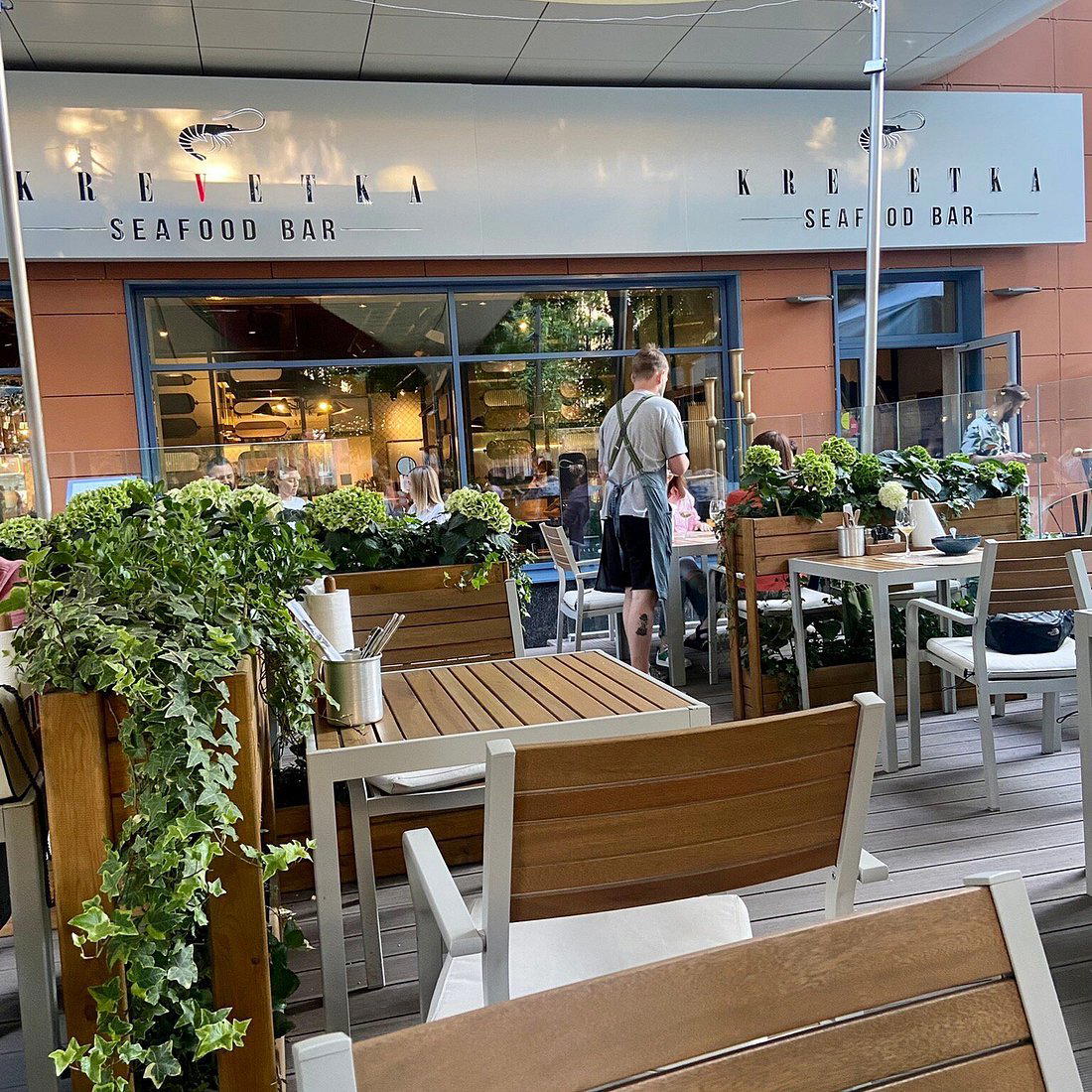
Seafood in a Landlocked City: What Krevetka Signals About Voronezh Dining
Voronezh sits roughly 500 kilometres south of Moscow, well inside the Central Black Earth Region, without a coastline or a navigable river mouth to speak of. For most of its modern restaurant history, that geography translated into menus that treated fish and shellfish as luxury imports, priced accordingly and handled with the caution reserved for ingredients that had traveled far. That equation is shifting. A generation of mid-format restaurants across Russian provincial cities has begun treating seafood not as a prestige gesture but as a daily category, supplied through refrigerated logistics networks that now connect the White Sea, the Far East, and the Black Sea coast to inland kitchens within acceptable lead times. Krevetka, on Ulitsa Karla Marksa in the city centre, is part of that shift.
The address itself, Karl Marx Street, the kind of central artery found in nearly every post-Soviet Russian city, places the restaurant in the commercial and social core of Voronezh rather than in a peripheral dining district. That positioning matters. Restaurants in this tier of Russian provincial city tend to draw a mixed crowd: office workers at lunch, families in the early evening, and a younger, more food-aware demographic later at night. The room is calibrated for that range rather than for a single mood or occasion.
The Sourcing Question at the Centre of the Menu
The name itself, krevetka means prawn or shrimp in Russian, signals a narrow, product-first identity rather than the broad pan-European positioning that still dominates much of the Voronezh mid-market. That specificity is an editorial choice with supply chain implications. A restaurant that builds its identity around shellfish in a landlocked city is making a daily commitment to sourcing logistics that a more generalist kitchen can sidestep.
Russia's seafood supply geography is more complex than outsiders often assume. The country holds extensive fishing rights across the Barents Sea, the Sea of Okhotsk, the Bering Sea, and the Black Sea, and domestic production of crab, shrimp, salmon, and white fish is substantial. The political and logistical question for inland restaurants has always been whether that production reaches them in usable condition at a price point that makes sense for their market. In Voronezh, the answer has historically been intermittent. The restaurants that have made it work tend to operate with tighter, more disciplined supply relationships rather than relying on wholesale distributors carrying mixed-quality stock.
This is the context in which Krevetka's format carries meaning. Specialising in shellfish and seafood in a city like Voronezh is less a marketing position than a logistical commitment. It requires consistent sourcing relationships, kitchen staff trained to handle product in varying condition, and a customer base willing to pay for that reliability. The fact that the restaurant has established itself on one of the city's main commercial streets suggests it has found that customer base.
For comparison, the approach echoes what has happened at ingredient-focused addresses in other Russian cities: Kukhterin in Tomsk and Alanskaya Kukhnya in Krasnodar both demonstrate how provincial Russian restaurants can build coherent identities around specific product categories and regional supply chains rather than defaulting to international template menus. The same dynamic appears at Dzhani Restorani in Nizhny Novgorod and Khmeli Suneli in Yekaterinburg, where regional specificity functions as the primary differentiator in competitive mid-size city markets.
Where Krevetka Sits in the Russian Seafood Dining Spectrum
At the summit of the Russian seafood and modern cooking spectrum, Twins Garden in Moscow operates with farm-to-table sourcing infrastructure that few provincial restaurants can match, while 1913 in Saint Petersburg draws on the city's Baltic and Gulf of Finland proximity. Made in China in St. Petersburg and Lev I Ptichka in Saint Petersburg illustrate how coastal cities develop more layered, category-specific dining ecosystems over time. Internationally, seafood specialists like Le Bernardin in New York City and Atomix in New York City define what rigorous product focus looks like when logistics infrastructure is fully mature.
Krevetka does not operate in that tier, nor does it need to. Its reference points are the mid-format provincial restaurants of Russia's second and third cities, where the competitive question is whether the kitchen has genuine product conviction or is simply riding a seafood-trend wave. The Karl Marx Street address and the longevity implied by an established street-facing presence in a competitive central location both suggest the former. Knyagininskiy Dvor in Volgograd represents a comparable provincial format, as does Grisha in Omsk, where regional identity and consistent product handling define the proposition more than fine-dining ambition.
Planning a Visit: What to Know Before You Go
Krevetka is located at Ulitsa Karla Marksa 67/1 in central Voronezh, within walking distance of the city's main administrative and commercial core. The Karl Marx Street location is accessible on foot from the city's central hotel cluster.
Voronezh's dining scene has expanded noticeably since 2015, with a cluster of independently operated mid-format restaurants on and around Karl Marx Street competing for a customer base that has become more food-literate and more willing to spend on provenance-driven cooking. Cafe Pushkin in Moscow represents the older template of Russian restaurant identity, built on nostalgic imperial aesthetics; the newer provincial wave, which Krevetka is part of, trades that nostalgia for product specificity and a more direct relationship with supply chains. That is the story in Russian dining right now, and Voronezh is one of the cities where it is playing out clearly.
Side-by-Side Snapshot
Comparable venues nearby, for context on price, style, and recognition.
| Venue | Cuisine | Price | Notes |
|---|---|---|---|
| krevetkaThis venue — the venue you are viewing | Russian Seafood | $$ | Not listed |
| Paloma Cantina | Authentic Mexican Cantina | $$ | Nevskiy |
| Korean BBQ гриль | Korean Table-Top BBQ Grill | $$ | Northwestern District |
| Palmenya | Mediterranean Seafood | $$$ | City Center |
| Cococo | Modern Russian Fine Dining | $$$ | Admiralteysky |
| Kazbek (Казбек) | Georgian | $$$ | Пресненский |
At a Glance
- Elegant
- Cozy
- Date Night
- Casual Hangout
- Open Kitchen
- Local Sourcing
Current opening hours
- Monday
- 12–11 PM
- Tuesday
- 12–11 PM
- Wednesday
- 12–11 PM
- Thursday
- 12–11 PM
- Friday
- 12–11 PM
- Saturday
- 12–11 PM
- Sunday
- 12–11 PM
Hours can change for holidays and private events. Last verified .
Beautiful European interior resembling a ship, creating a posh yet cozy atmosphere.