



1 Michelin Key · La Liste Top Hotels · Virtuoso Luxury Hotel Partner
Spread across 15 acres at the foot of the Atlas Mountains, Selman Marrakech is a new-build palace where Jacques Garcia's Art Nouveau and Berber-inflected interiors meet a working stable of Arabian thoroughbreds. With 56 rooms and suites, a 262-foot lap pool, and the Chenot Espace Vitalité spa, it occupies a distinct tier among Marrakech's palatial properties, closer to private estate than resort hotel.

Pearl is the En Primeur Club membership app, where members save venues, book tables and use the concierge.
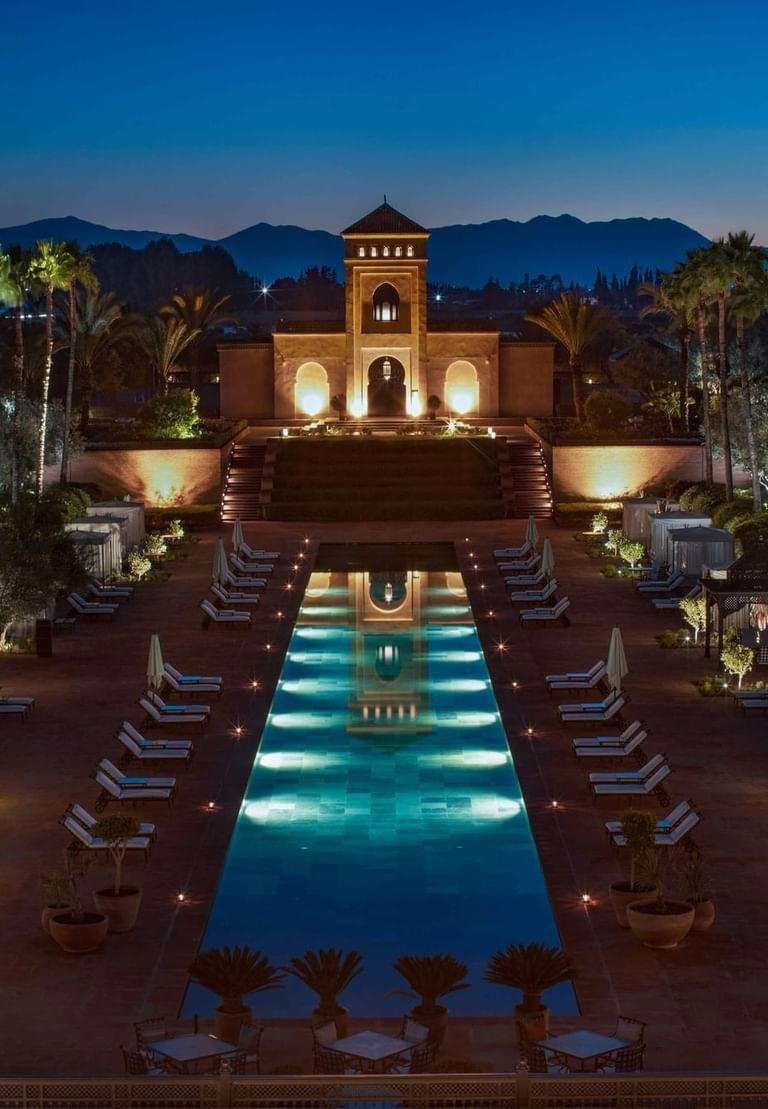
A Palace Built to Be Felt Before It Is Understood
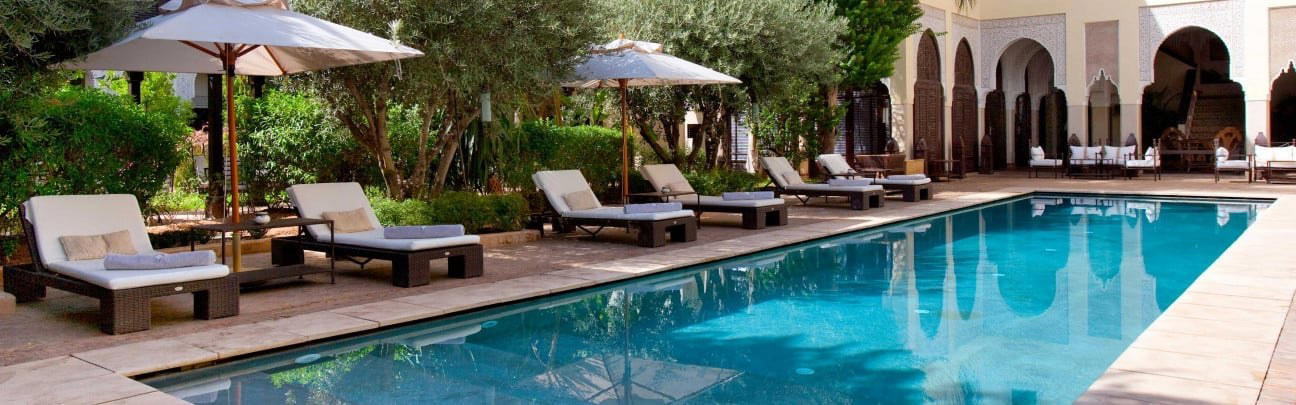
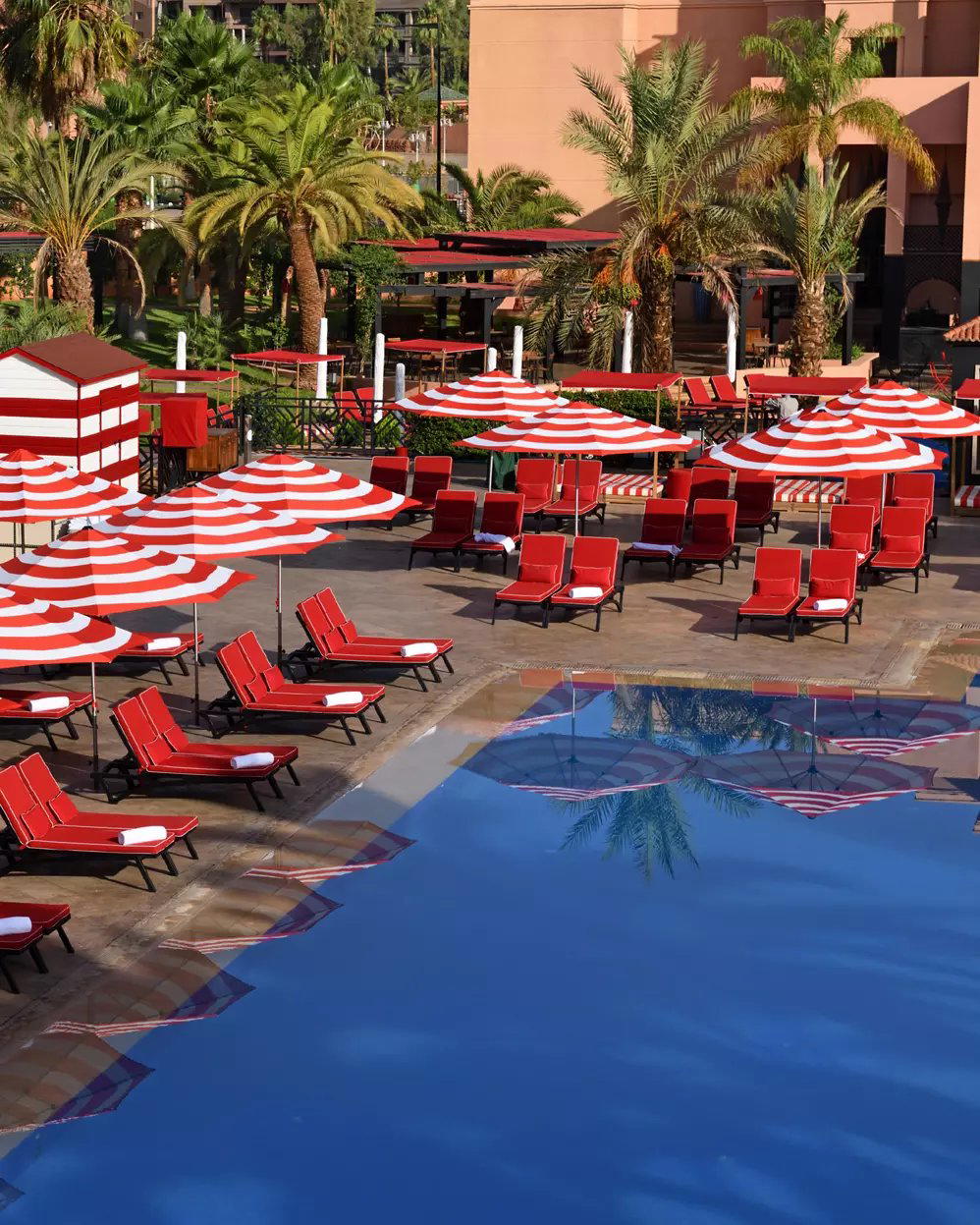
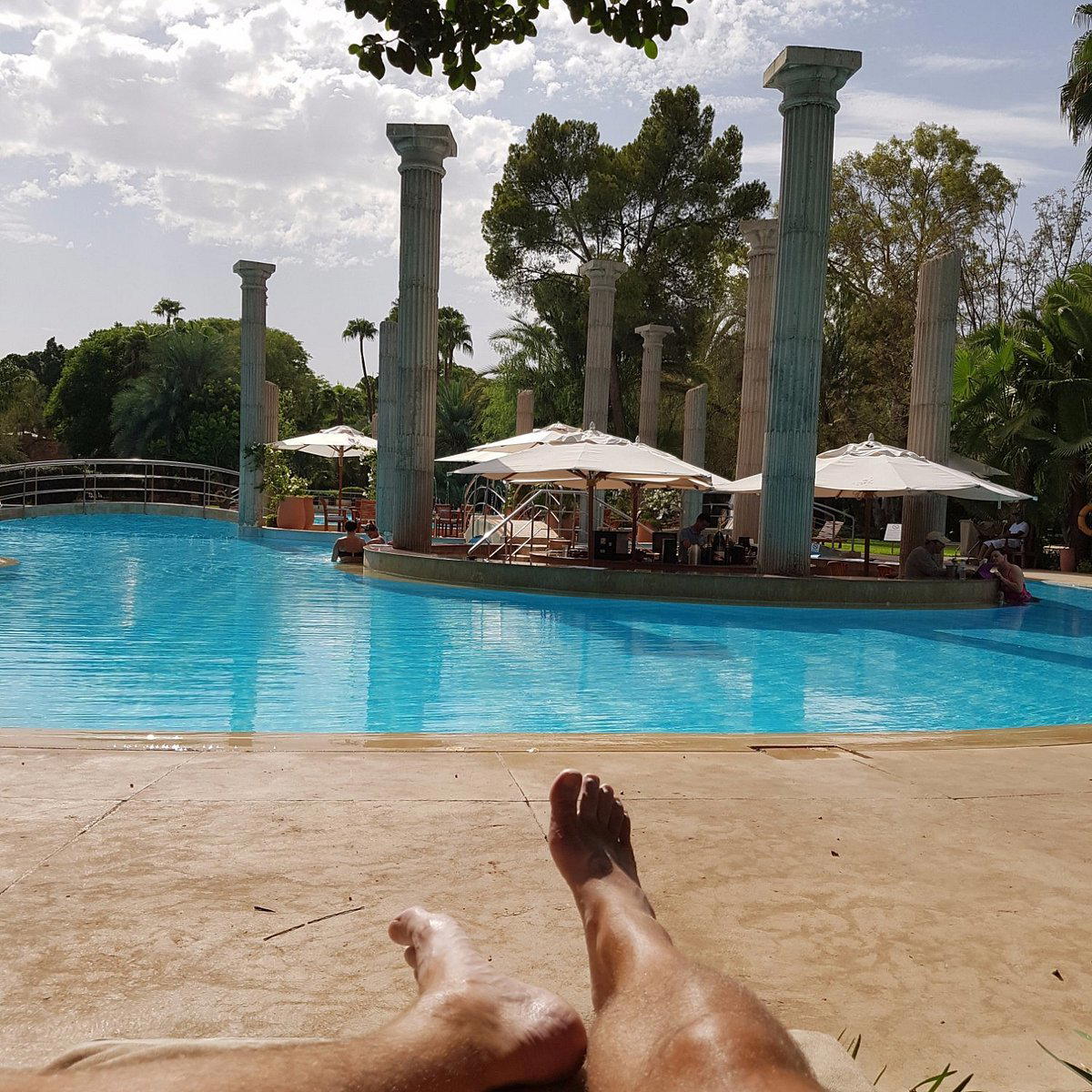
Approaching Selman Marrakech along the Route d'Amizmiz, the city recedes quickly. Within minutes of leaving the medina's traffic, the road narrows and the air shifts. What greets you is not the conventional hotel arrival, a lobby, a desk, a porter with a luggage cart, but fifteen acres of grounds in which Arabian thoroughbreds move freely across open pasture, fountains thread through gardens, and a 262-foot lap pool reflects the Atlas Mountains behind it. The architecture does not announce itself with a grand facade so much as absorb the visitor gradually into its logic. That logic is Jacques Garcia's, and it is deliberate at every scale.
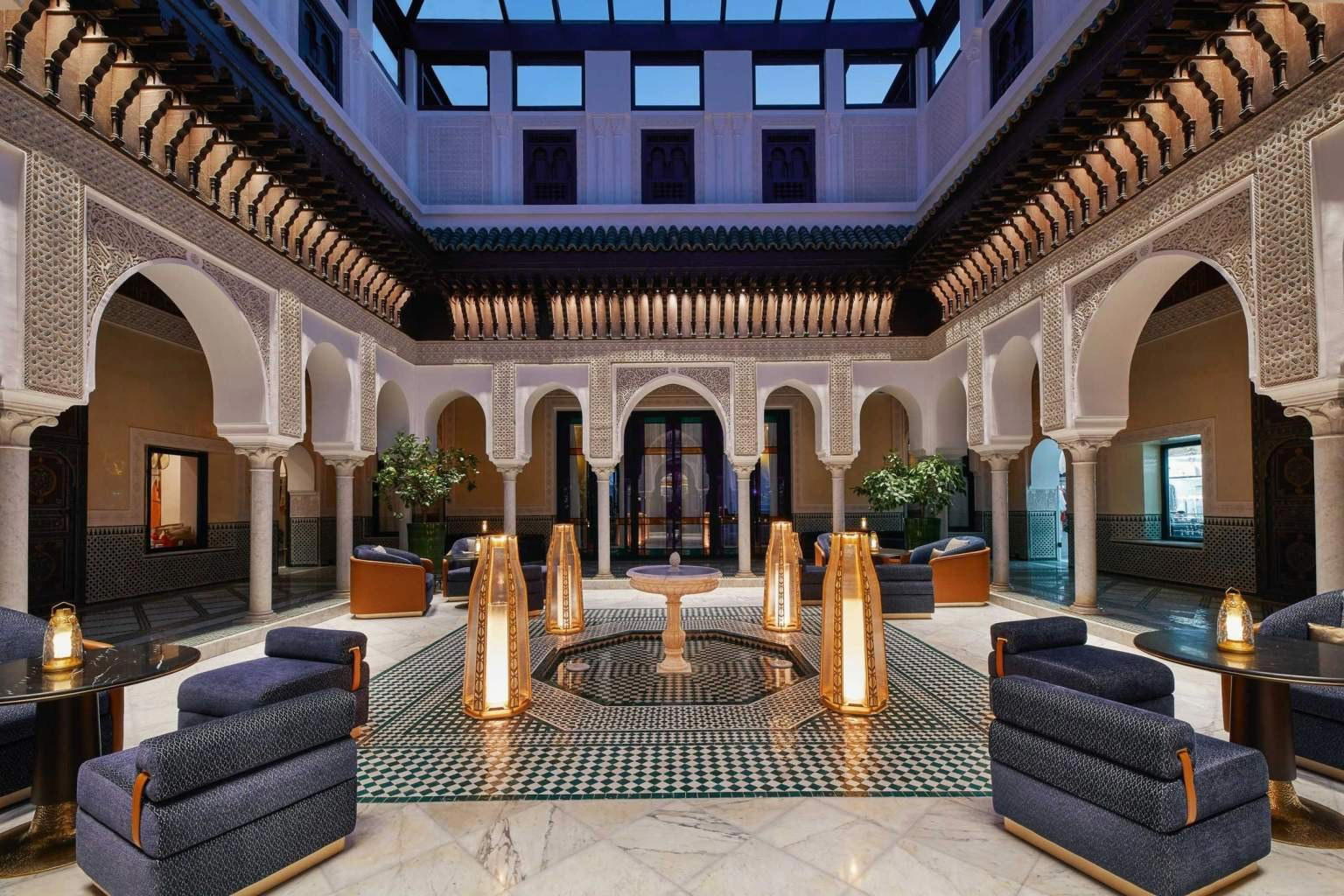
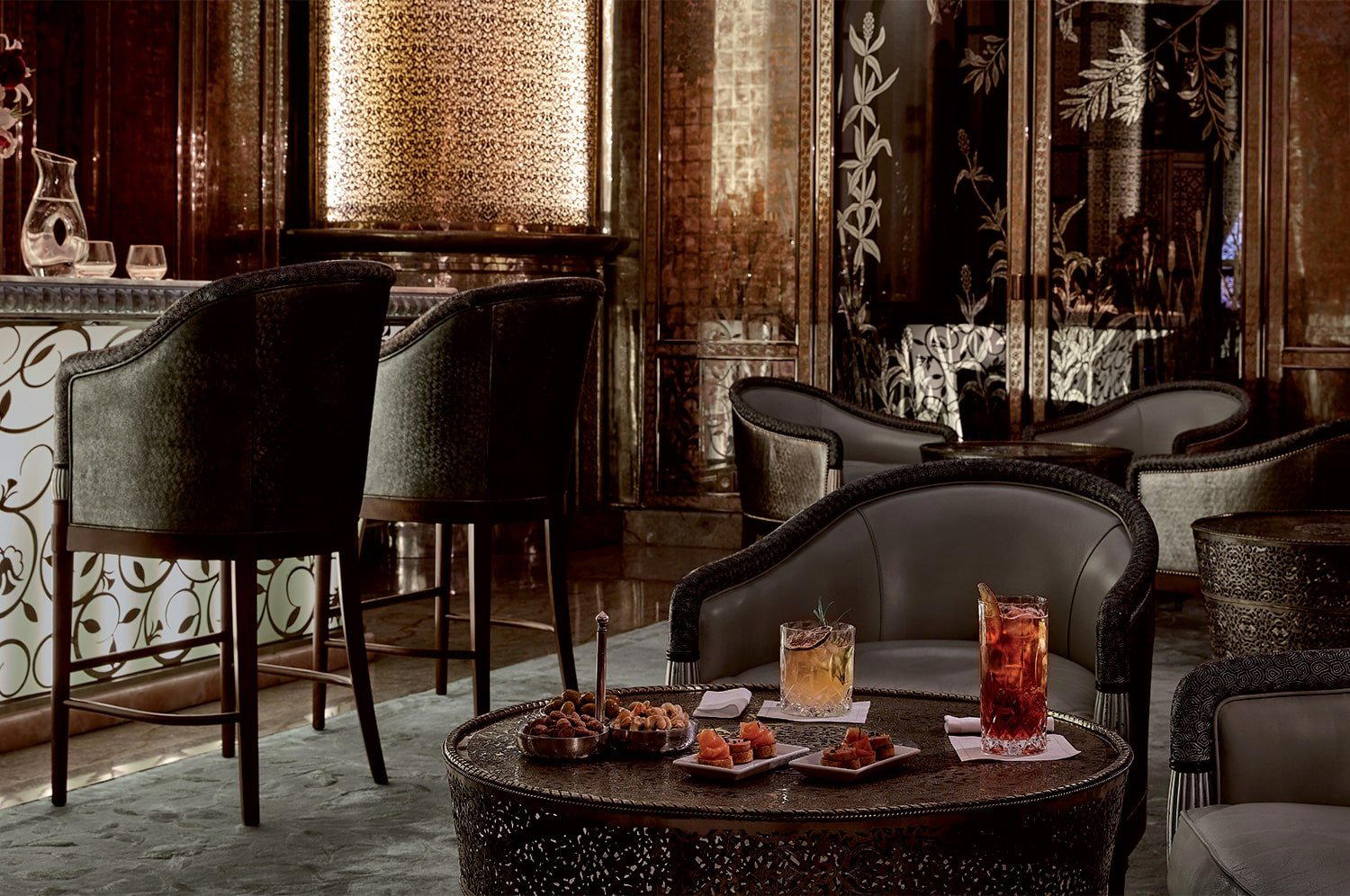
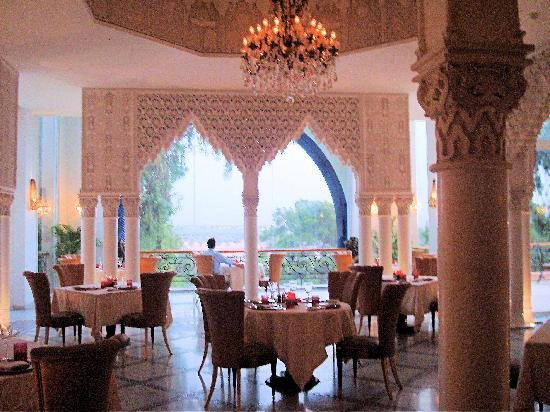
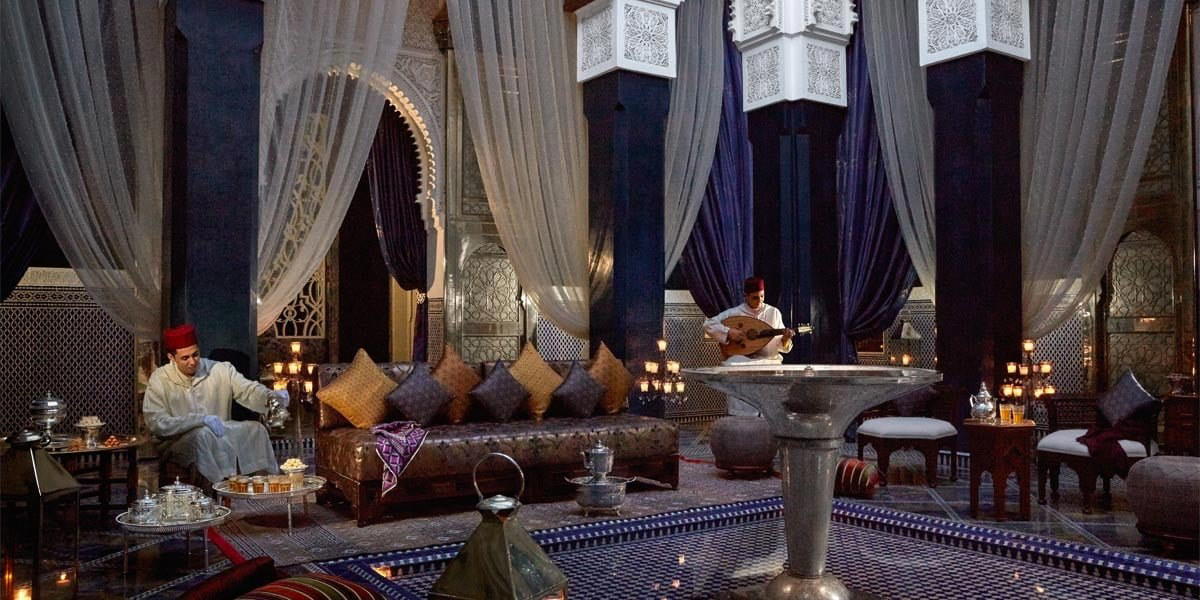
Garcia, renowned for the interiors of Paris's Hôtel Costes and a handful of other properties that trade in theatrical opulence, has here fused two distinct vocabularies: the curvilinear sinuousness of Art Nouveau with the geometry and material richness of Berber and Arab-Andalusian craft tradition. The result reads as neither pastiche nor compromise. Zellige mosaic tiles cover surfaces where European hotels would use marble or plaster. Latticework screens filter light into interior corridors the way a riad's courtyard filters it downward. The woodwork is intricate without being cluttered. What prevents Garcia's interiors from tipping into the overwrought is proportion: the public spaces are genuinely grand, the sunken central salon is the hotel's physical and social anchor, but the scale never flattens the intimacy that makes the property feel residential rather than institutional.
What the Design Is Actually Doing
Marrakech's premium hotel tier has, over the past decade, bifurcated in recognisable ways. On one side sit the grand urban properties, La Mamounia and Royal Mansour, whose identities are inseparable from their position within or adjacent to the medina. On the other side are properties that use distance from the city centre as a design argument for seclusion: Amanjena, Fairmont Royal Palm Marrakech, and Selman itself, located approximately five kilometres south along the Amizmiz road. The spatial logic of these properties differs from their medina counterparts in important ways: rooms are larger, grounds more extensive, and the design language shifts from the compressed sensory richness of riad architecture toward something more expansive and horizon-focused.
Within that second category, Selman occupies a specific position. Unlike the international-chain properties, Four Seasons Resort Marrakech included, it operates with a limited key count of 56 rooms and suites plus five villas, which positions it closer to the boutique-estate model than to a resort. The comparison set is therefore less about amenity breadth and more about spatial atmosphere and design coherence. By that measure, the Garcia interiors are the hotel's primary competitive argument. Every accommodation category carries the same design sensibility, zellige tubs beneath Arabic-style windows, curved furniture, terraces overlooking either the gardens or pool, while the suites and villas add volume: living rooms, dining areas, and in the case of the villas, private pools within over 6,200 square feet of space.
The Stables as Architecture
The Arabian horses are not a branding exercise grafted onto a pre-existing hotel concept. They are, architecturally and experientially, integral to what Selman Marrakech is. Garcia designed the stables to reference Indian and Andalusian palace architecture, which means the non-human residents occupy some of the most considered buildings on the property. This says something about the design philosophy's consistency: the commitment to craft and historical reference extends beyond the guest rooms and public spaces to the entire fifteen-acre estate.
For guests, the horses function as living context. Seeing a thoroughbred cross the pasture at dusk reframes the scale of the grounds and grounds the architectural theatrics in something organic. The Sunday brunch at Le Pavillon includes a live horse show alongside the main spread, which pairs two of the hotel's distinct experiential registers in a single programmed event. Stable visits and horse-drawn carriage rides are available as structured activities, and the hotel operates a children's programme that centres on these interactions, a signal that the equestrian dimension is designed for sustained engagement rather than photographic novelty.
Dining and Wellness in the Same Register
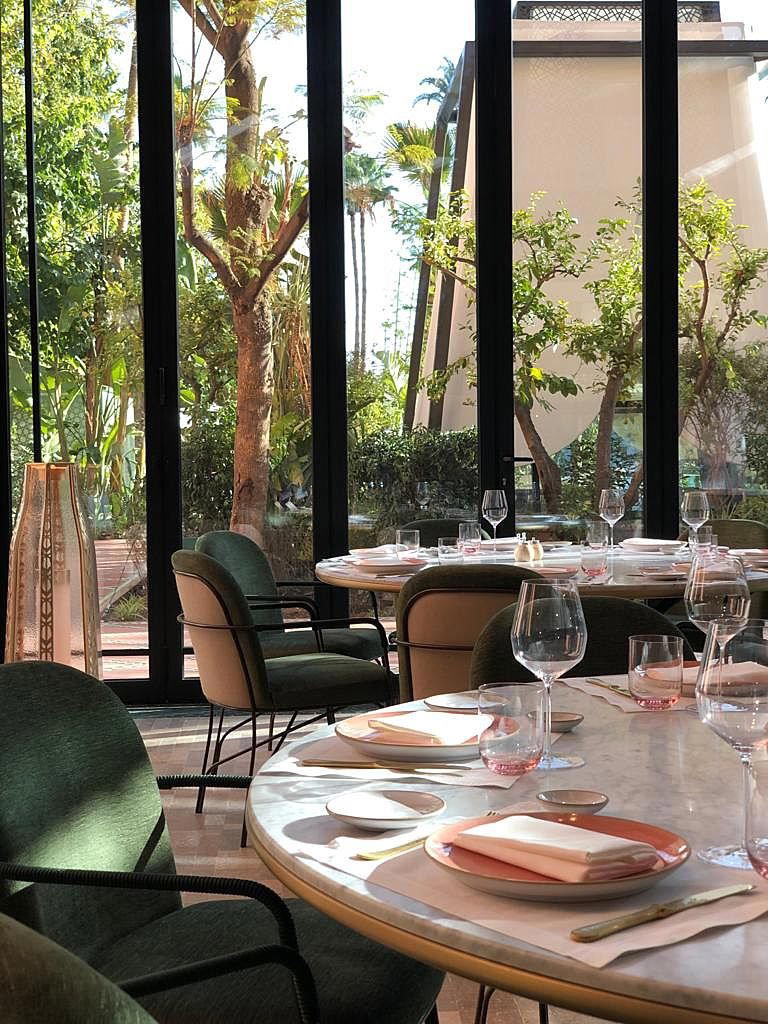
The food and wellness programmes at Selman operate at a level that reinforces rather than merely accompanies the design investment. Multi-starred chef Jean-François Piège is the culinary collaborator behind the kitchen output, which means the food sits within a French fine-dining tradition applied to a Moroccan-influenced context. The six bars and restaurants span poolside service through to formal dining, giving the property enough variety to hold guests across a multi-day stay without repetition.
The spa is the Espace Vitalité Chenot, a branded wellness system with its own proprietary methodology focused on what Chenot describes as biontology: a detoxification-led approach to longevity rather than conventional relaxation treatments. The Selman location is identified as the only Chenot spa of this type in Africa and the Middle East, which positions it as a substantive wellness destination rather than an amenity supplement. Two heated outdoor pools within the spa complex provide privacy for guests who find the main 262-foot pool, however architecturally spectacular, too social a space for recovery.
Peer Context and Competitive Position
La Liste ranked Selman Marrakech at 90 points in its 2026 Leading Hotels edition, placing it within a recognisable tier of internationally credentialed luxury properties.
For context among Marrakech's top-tier properties: Ksar Char-Bagh and El Fenn occupy different points on the design-authenticity spectrum; IZZA Marrakech and Jnane Tamsna in Marrakech represent the smaller garden-riad category. Selman sits apart from all of them in scale and design ambition, closer in spirit to Aman New York or Aman Venice in terms of the relationship between architectural seriousness and limited key count, though the Moroccan property has more programmatic breadth than Aman's typically pared-back format.
For those exploring Morocco beyond Marrakech, the broader range of considered properties includes Hotel Sahrai, an SLH Hotel in Fes, Dar Ahlam in Ouarzazate, Dar al Hossoun in Taroudant, Dar Maya in Essaouira, Banyan Tree Tamouda Bay in Fnideq, Fairmont Tazi Palace Tangier, Fairmont La Marina Rabat Salé Hotel And Residences, Hyatt Regency Casablanca, Fes Marriott Jnan Palace, Hilton Taghazout Bay Beach Resort & Spa in Taghazout, and Château Roslane for wine-country context. See also our full Marrakesh restaurants guide for dining beyond the hotel.
Planning Your Stay
Selman Marrakech sits at Km 5 on the Route d'Amizmiz, roughly three miles from Marrakech-Menara Airport (RAK), making transfers short, under ten minutes in most conditions. The distance from the medina is sufficient to insulate the property from city noise without making day trips impractical. Published rates start from approximately $748 per night for standard rooms, with villas commanding a meaningful premium above that for the private pool and butler service. The property runs 56 rooms and suites across the main building plus five villas, so availability compresses during high season (October to April, when the Atlas backdrop is at its clearest). The Hotel Sahrai in Fez and The Fifth Avenue Hotel in New York City offer points of comparison for guests calibrating design-led, limited-key luxury across different geographies.
A Quick Peer Check
Comparable venues nearby, for context on price, style, and recognition.
| Venue | Cuisine | Price | Awards | Notes |
|---|---|---|---|---|
| Selman MarrakechThis venue (the venue you are viewing) | Arab-Moorish palace with timeless Moroccan heritage | $1,000–1,500 | 1 Michelin Key · La Liste Top Hotels | Not listed |
| Ksar Char-Bagh | Moorish palace riad in palm grove | $300–500 | 1 Michelin Key · Small Luxury Hotels of the World Member | Annakhil |
| IZZA Marrakech | Modern Moroccan riad with personalized luxury. | Not listed | 1 Michelin Key | Marrakech-Médina |
| Palais Ronsard | Ornate Moroccan palace with classic luxury positioning amid lush gardens. | Not listed | 1 Michelin Key · Relais Chateaux Award | Annakhil |
| Riad Due | Modern Moroccan riad with intimate luxury | $300–500 | 1 Michelin Key | Marrakech-Médina |
| La Sultana Marrakech | Restored traditional Moroccan riads with contemporary luxury integration, positioned as a boutique heritage property within Small Luxury Hotels of the World collection. | $1,500–2,500 | 1 Michelin Key · La Liste Top Hotels | Méchouar-Kasba |
Recognition history
Dated appearances from independent guides and award organizations, with the underlying list record or original source where available.
Michelin 1 Key
Michelin
La Liste Top Hotels
La Liste
Forbes Recommended
Forbes
Virtuoso Luxury Hotel Partner
Virtuoso
Full recognition history (6 entries)
Forbes Recommended
Forbes
Michelin 1 Key
Michelin
Continue exploring
More in Marrakech
Hotels in Marrakech
All hotels in Marrakech →
Bars in Marrakech
All bars in Marrakech →
Restaurants in Marrakech
All restaurants in Marrakech →
Wineries in Marrakech
Browse all →
Details
- Elegant
- Ornate
- Sophisticated
- Romantic
- Scenic
- Honeymoon
- Romantic Getaway
- Wellness Retreat
- Anniversary
- Destination Wedding
- Infinity Pool
- Private Villa
- Butler Service
- Rooftop Pool
- Destination Spa
- Golf Course
- Garden
- Terrace
- Historic Building
- Panoramic View
- Wi Fi
- Pool
- Spa
- Fitness Center
- Room Service
- Concierge
- Valet Parking
- Kids Club
- Golf Course
- Garden
- Wheelchair Accessible
- Elevator
- Step Free Entrance
- Accessible Parking
Luxurious Moroccan elegance with ornate decor, serene gardens, and warm attentive service.