

Nobu Hotel Marrakech sits at the intersection of two distinct design traditions, Moroccan craftsmanship and Japanese minimalism, within the city's Golden Triangle, a short walk from Djemaa el-Fna. The Nobu brand's global reputation for precision cooking translates here into a context shaped by riads, souks, and the medina's medieval street grid. For travellers weighing international-brand consistency against local character, this address offers both in a single building.
Pearl is the En Primeur Club membership app — saves, bookings, and concierge access live there. Same editors, same standards.
- Address
- Av. Echouhada et, Rue du Temple, Marrakesh 40000
- Phone
- +212 5 24 42 42 42
- Website
- marrakech.nobuhotels.com
- Directions
- Get directions
 Saves & bookings on Pearl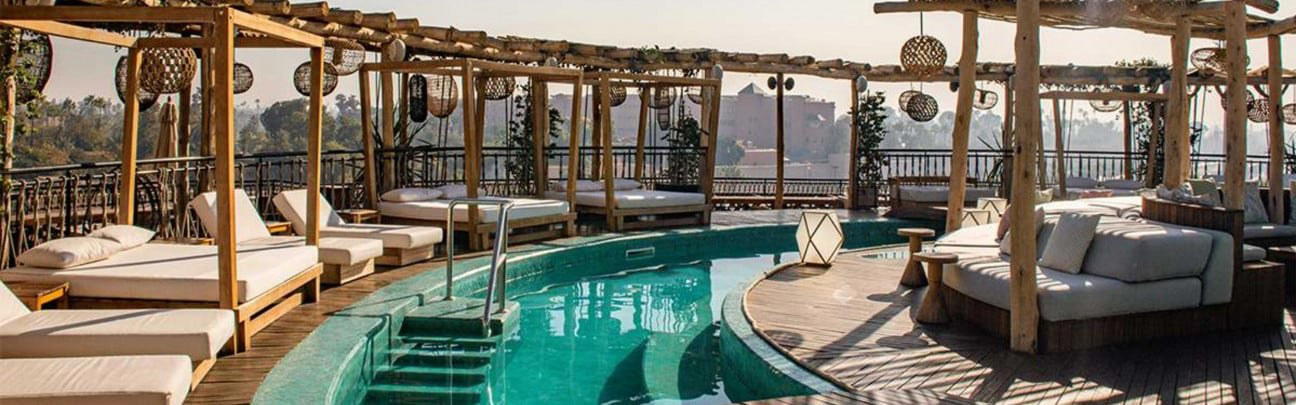
Where the Medina Meets the Nobu Network
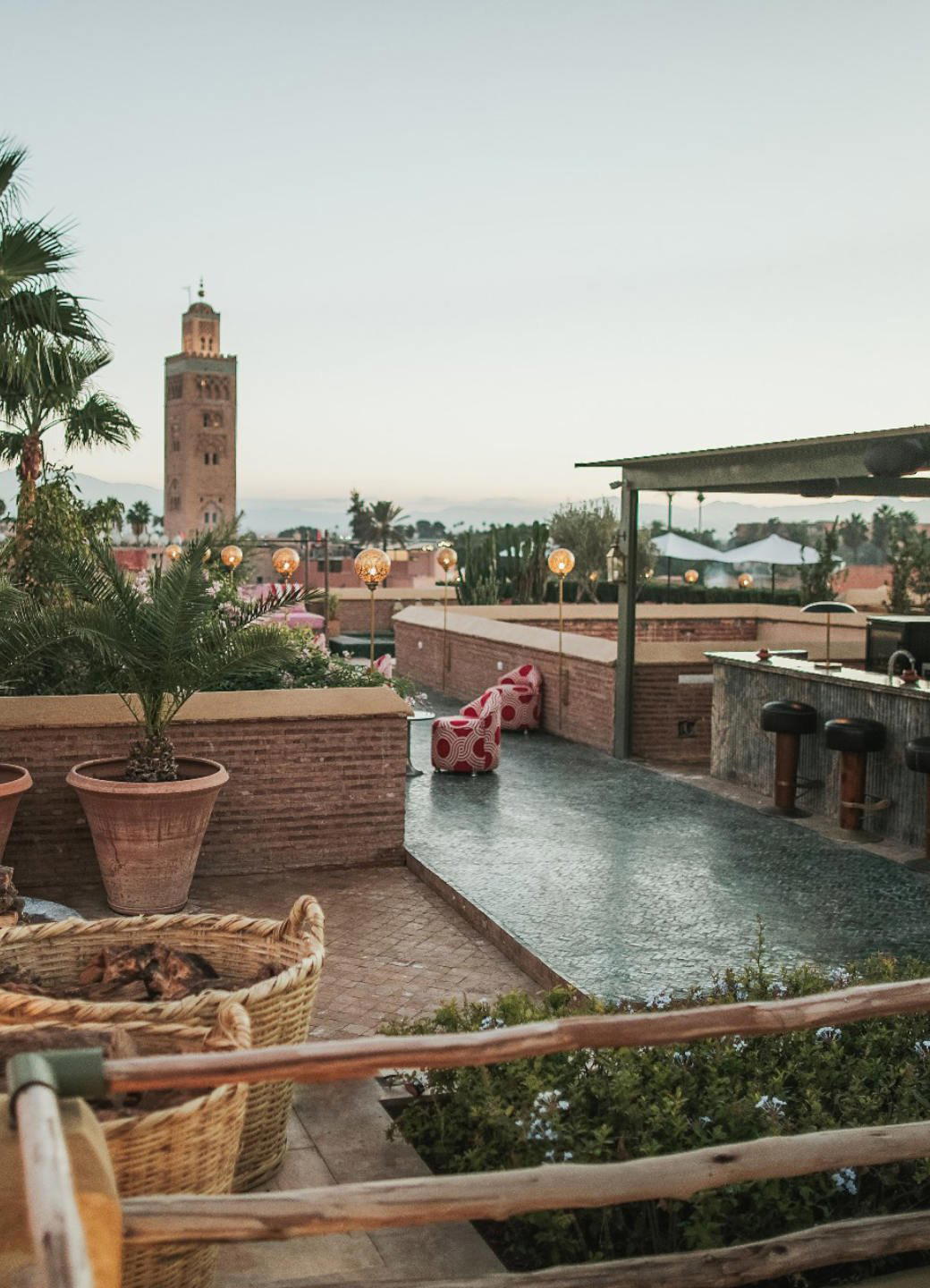
Step toward the entrance of Nobu Hotel Marrakech along Avenue Echouhada and the city asserts itself before the lobby does. Minarets interrupt the roofline to the east, the ambient noise of Djemaa el-Fna carries from the medina's edge, and the warm terracotta palette of the surrounding Hivernage district establishes where you are before a single interior detail registers. The building's position in the Golden Triangle, the compact premium zone bounded by the medina, the Menara gardens approach, and the main luxury hotel corridor, means the city is a constant presence rather than a backdrop to be filtered out.
The Nobu brand occupies a specific and well-documented position in the international hotel market. Originating in the restaurant group built around chef Nobu Matsuhisa's Japanese-Peruvian cuisine, the hotel extension carries that culinary identity into its lodging properties globally. Cities where the brand has planted flags, London, Los Angeles, Barcelona, Warsaw, tend to share a profile: high-footfall luxury markets where the restaurant's recognition functions as a trust signal for the hotel. Marrakech fits that pattern. The city has grown steadily as a premium short-haul destination for European travellers, and the Golden Triangle addresses compete on brand legibility as much as on physical product.
A Design Conversation Between Two Traditions
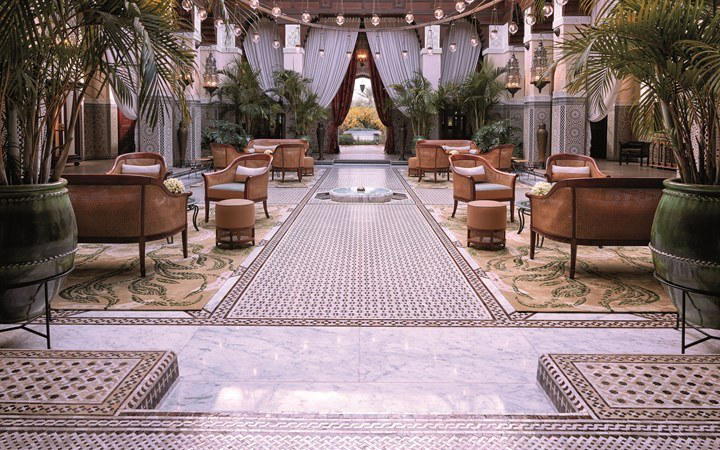
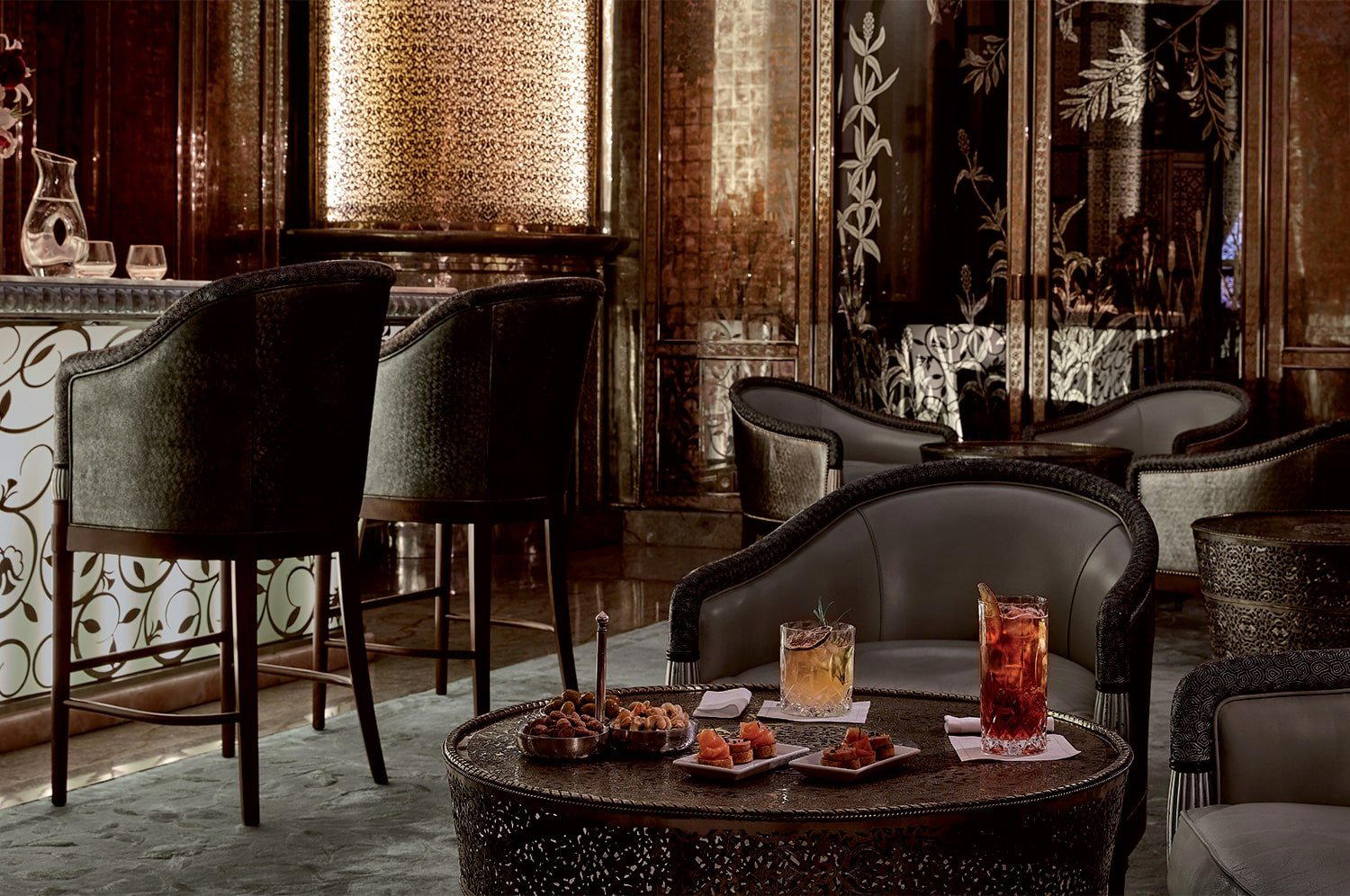
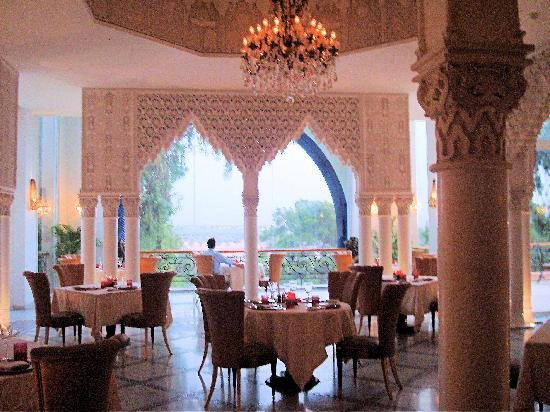
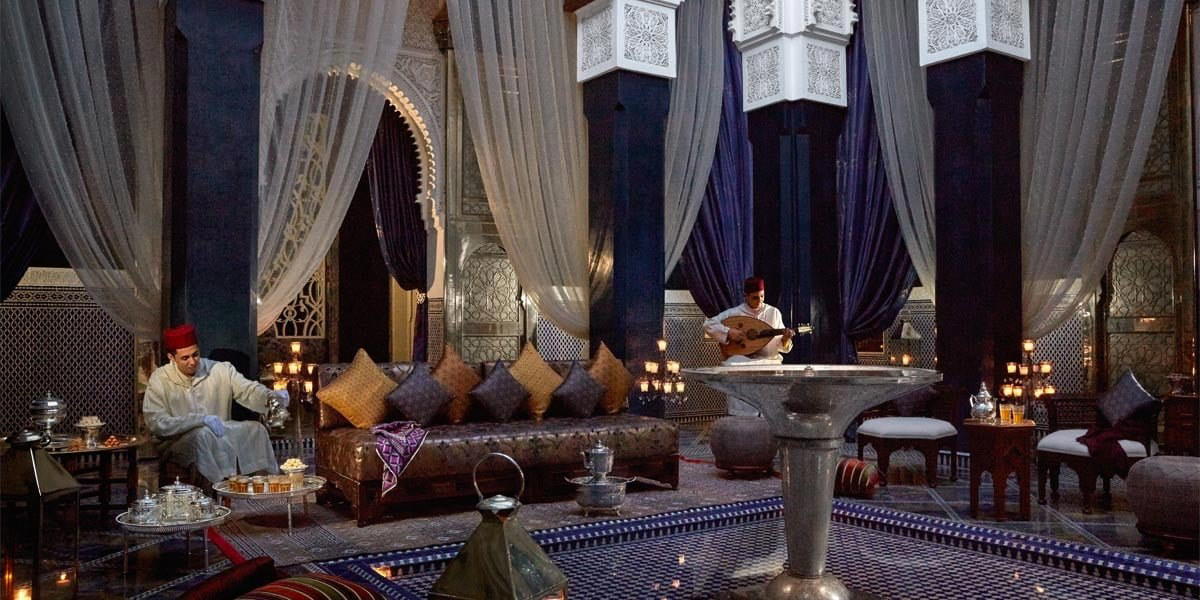
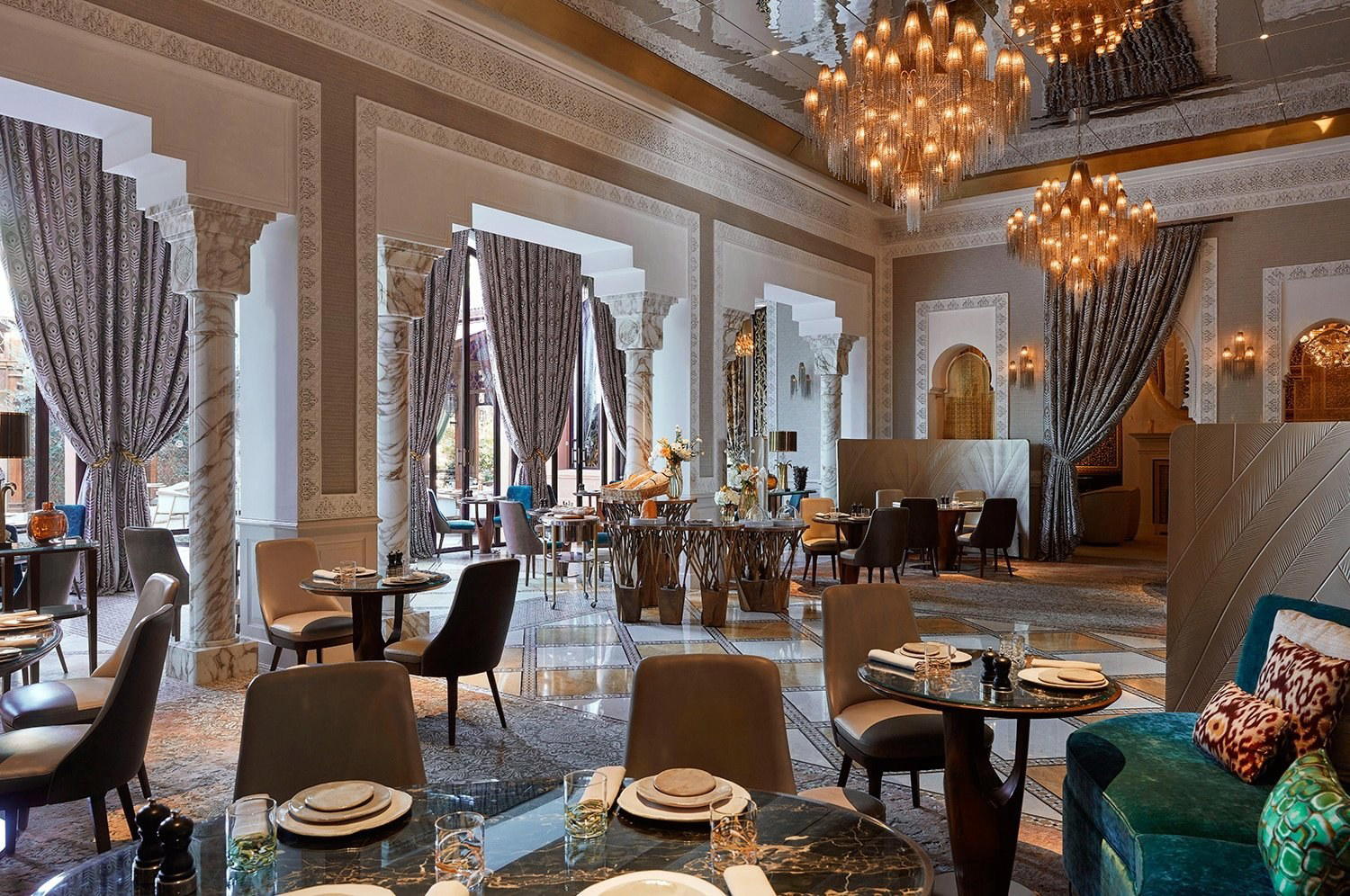
The design premise at Nobu Hotel Marrakech is the dialogue between Moroccan craft vocabulary and Japanese spatial restraint. Moroccan interiors at their most formal are dense with geometry, zellige tilework, carved stucco, cedar lattice, and that density is precisely what Japanese minimalism tends to subtract. The result here is a negotiated middle: the materials and motifs are Moroccan in origin, but the temperature of each space reads cooler and less maximalist than a traditional riad interior. Whether that balance holds across all rooms and public spaces is a matter of personal register, but the editorial intent is legible throughout.
That design approach places Nobu Hotel Marrakech in a different tier from the city's medina riads, which tend to operate on intimacy and authentic historic fabric. Properties like AnaYela, Dar Housnia, Dar Les Cigognes, and Dar Rhizlane draw their authority from the medina's physical fabric, courtyard proportions, centuries of architectural layering, the sense of having arrived somewhere the city built rather than something the market installed. The hotel is a different proposition: it offers international-brand consistency and the restaurant's global reputation as its primary credentials, with local craft deployed as atmosphere rather than as the founding logic of the building.
The comparison with Es Saadi Palace and La Mamounia is more instructive. Both operate in the Golden Triangle tier and carry decades of accumulated reputation in the Marrakech luxury market. La Mamounia in particular functions as the city's reference point for a certain kind of grand-hotel formality. The hotel enters that conversation with a younger brand identity and a cuisine-forward positioning that neither of those properties can replicate. For a traveller whose decision starts with where to eat rather than where to sleep, that distinction matters.
The Restaurant as Anchor
In any Nobu property, the restaurant is the organizational spine of the guest experience. The brand's cuisine, rooted in Japanese technique applied to global ingredients, with South American influence carried through decades of the group's evolution, has generated consistent critical recognition across its portfolio. That recognition travels with the brand to Marrakech, where the local dining scene offers strong Moroccan and French-inflected options but relatively few addresses in the Japanese or Japanese-fusion register.
Hotel La Maison Arabe remains a reference for traditional Moroccan cooking within a hotel setting, while BELDI COUNTRY CLUB offers a different register again, garden-estate dining at a remove from the city centre. The hotel's restaurant occupies a separate lane from all of them, which is partly the point.
Location and the Golden Triangle Logic
The Golden Triangle designation describes a premium hotel and retail concentration that sits at the margin between the French-era Guéliz district and the historic medina. The address on Avenue Echouhada places guests within walking distance of Djemaa el-Fna, which remains kinetically charged public space in North Africa, a Unesco-recognised cultural gathering point where food stalls, musicians, and street performers operate across a vast open square from late afternoon into the night. That proximity is a genuine practical asset. Most Golden Triangle properties offer it, but it is not incidental: Marrakech's medina is the reason most travellers come, and not having to negotiate significant transport to reach it changes the texture of a stay.
For travellers extending through Morocco, the broader network includes Hotel Sahrai in Fes, Hyatt Regency Casablanca, Banyan Tree Tamouda Bay on the northern coast, and the winery estate Château Roslane in the Meknès region. Deeper into the south, Dar Ahlam in Ouarzazate and Dar al Hossoun in Taroudant represent the smaller, design-led riad tier at its most considered. On the Atlantic coast, Dar Maya in Essaouira occupies an entirely different atmospheric register from Marrakech's inland intensity. The north's imperial city circuit connects through Hotel Sahrai in Fez and the Fes Marriott Jnan Palace. For coastal Atlantic access from Rabat, the Fairmont La Marina in Salé and Fairmont Tazi Palace in Tangier extend the premium corridor to the Strait of Gibraltar. The surf-coast option sits at Hilton Taghazout Bay.
Aman Venice similarly occupies the international tier where brand authority and physical setting negotiate constantly. INARA CAMP in the Marrakech outskirts represents the opposite end of the local scale spectrum: minimal keys, wilderness framing, no brand infrastructure at all.
Cuisine and Recognition
Comparable venues nearby, for context on price, style, and recognition.
| Venue | Cuisine | Price | Awards | Notes |
|---|---|---|---|---|
| Nobu Hotel MarrakechThis venue — the venue you are viewing | Design-forward luxury with Japanese-Moroccan fusion | $$$$ | 5-Star | Not listed |
| Four Seasons Resort Marrakech | Moorish garden resort | $$$$ | 5-Star | Gueliz |
| Park Hyatt Marrakech | Contemporary luxury resort blending modern elegance with Moroccan heritage | $$$$ | 5-Star | Annakhil |
| Sofitel Marrakech Lounge & Spa | Contemporary Andalusian luxury resort in lush gardens | $$$$ | 5-Star | Hivernage |
| Palais Namaskar | luxury palace resort with Feng Shui design | $$$$ | 5-Star | Palmeraie |
| Es Saadi palace | Beaux Arts palace with Moroccan craftsmanship heritage, blending colonial luxury with contemporary resort amenities in a lush garden setting. | $$$$ | 5-Star | Gueliz |
Recognition history
Dated appearances from independent guides and award organizations, with the underlying list record or original source where available.
Mr & Mrs Smith Smith Seal of Approval
Mr & Mrs Smith
Virtuoso Luxury Hotel Partner
Virtuoso
Michelin Selected
Michelin
Small Luxury Hotels of the World Member
Small Luxury Hotels of the World
Continue exploring
More in Marrakech
Hotels in Marrakech
Browse all →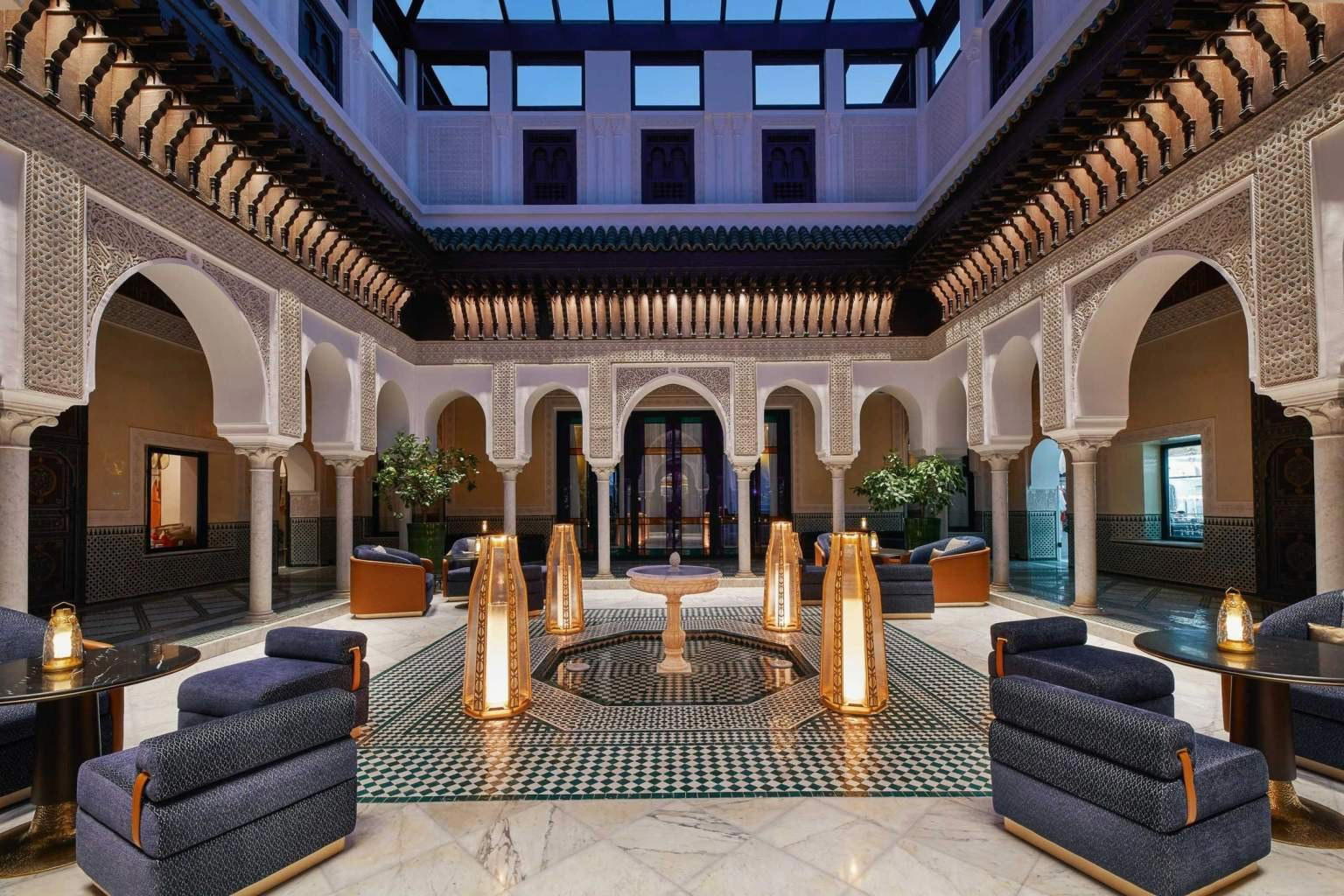
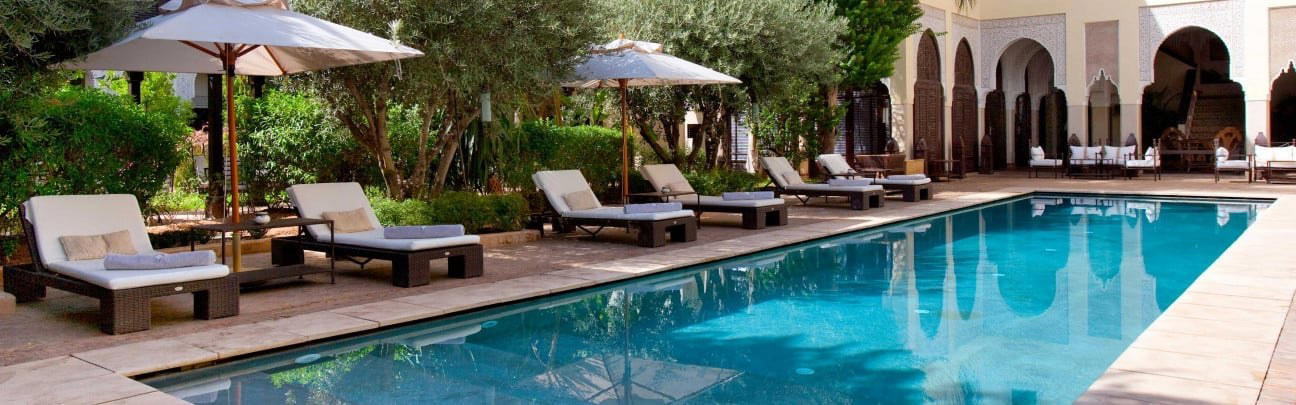
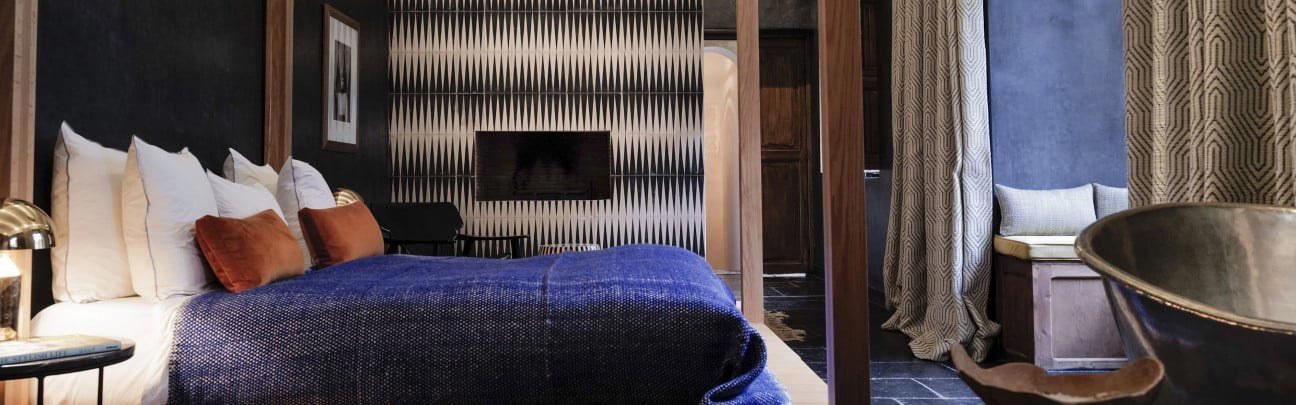
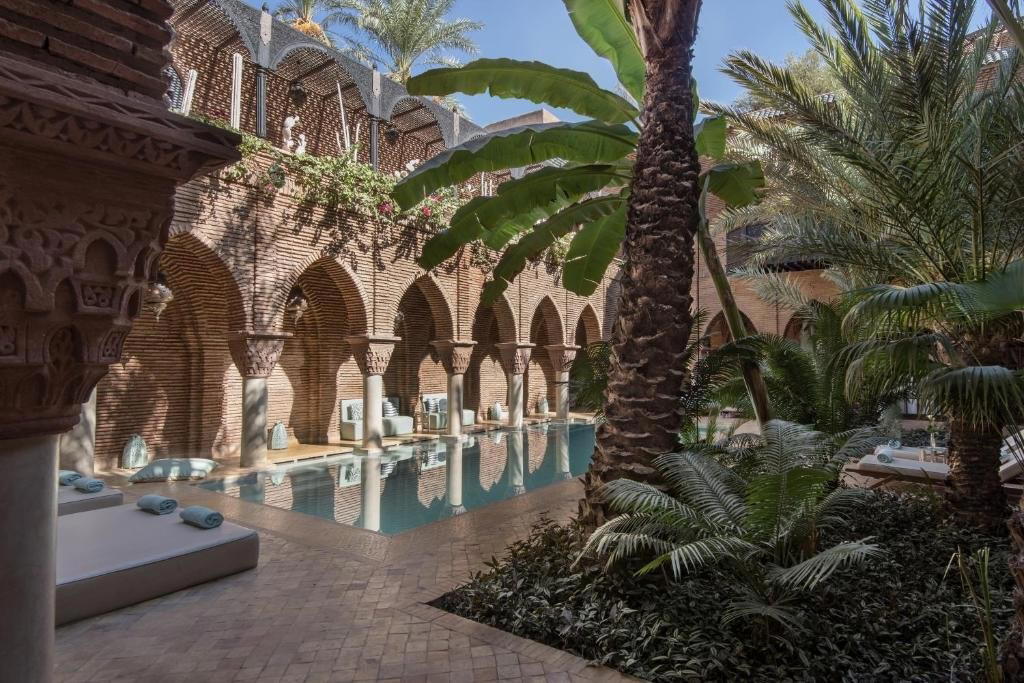
Bars in Marrakech
Browse all →
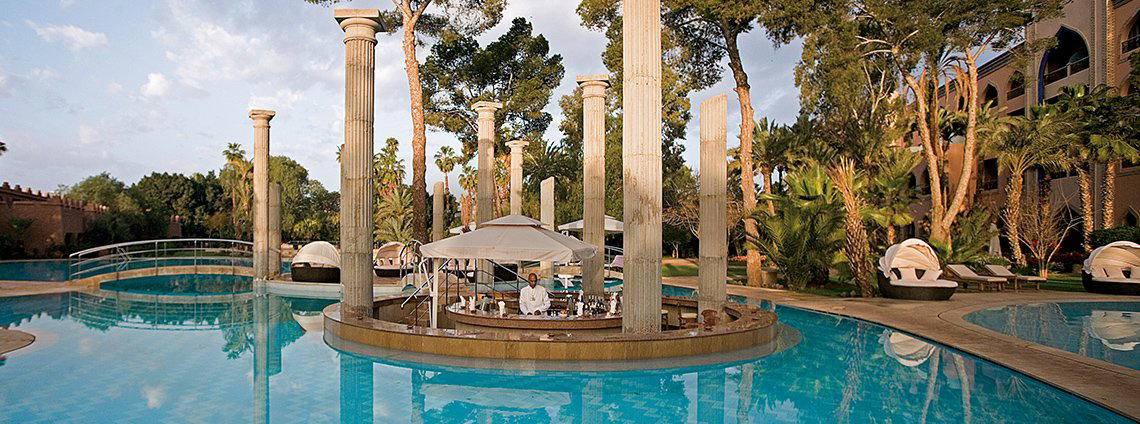
Restaurants in Marrakech
Browse all →
Wineries in Marrakech
Browse all →
At a Glance
- Sophisticated
- Elegant
- Modern
- Lively
- Romantic Getaway
- Wellness Retreat
- Celebration
- Rooftop Pool
- Garden
- Terrace
- Panoramic View
- Wi Fi
- Pool
- Spa
- Fitness Center
- Room Service
- Concierge
- Business Center
- Valet Parking
- Skyline
- Garden
- Wi Fi
- Pool
- Spa
- Fitness Center
- Room Service
- Concierge
- Business Center
- Valet Parking
Sophisticated and lively atmosphere with lively rooftop entertainment, DJ sets, and dramatic city views, balanced by serene spa and poolside relaxation.