
El Fenn occupies a restored riad compound in the heart of Marrakesh's medina, at Derb Moulay Abdullah Ben Hezzian. Long associated with the city's creative and arts-minded traveller set, it sits in a distinct tier of boutique medina properties that prioritise atmosphere and cultural specificity over international hotel-group scale. For those who find the grand palace hotels too removed from the medina's grain, El Fenn offers a closer engagement with the old city.
Pearl is the En Primeur Club membership app — saves, bookings, and concierge access live there. Same editors, same standards.
- Address
- Derb Moulay Abdullah Ben Hezzian, 2, Marrakesh 40000
- Phone
- +212 5 24 44 12 10
- Website
- el-fenn.com
- Directions
- Get directions
 Saves & bookings on Pearl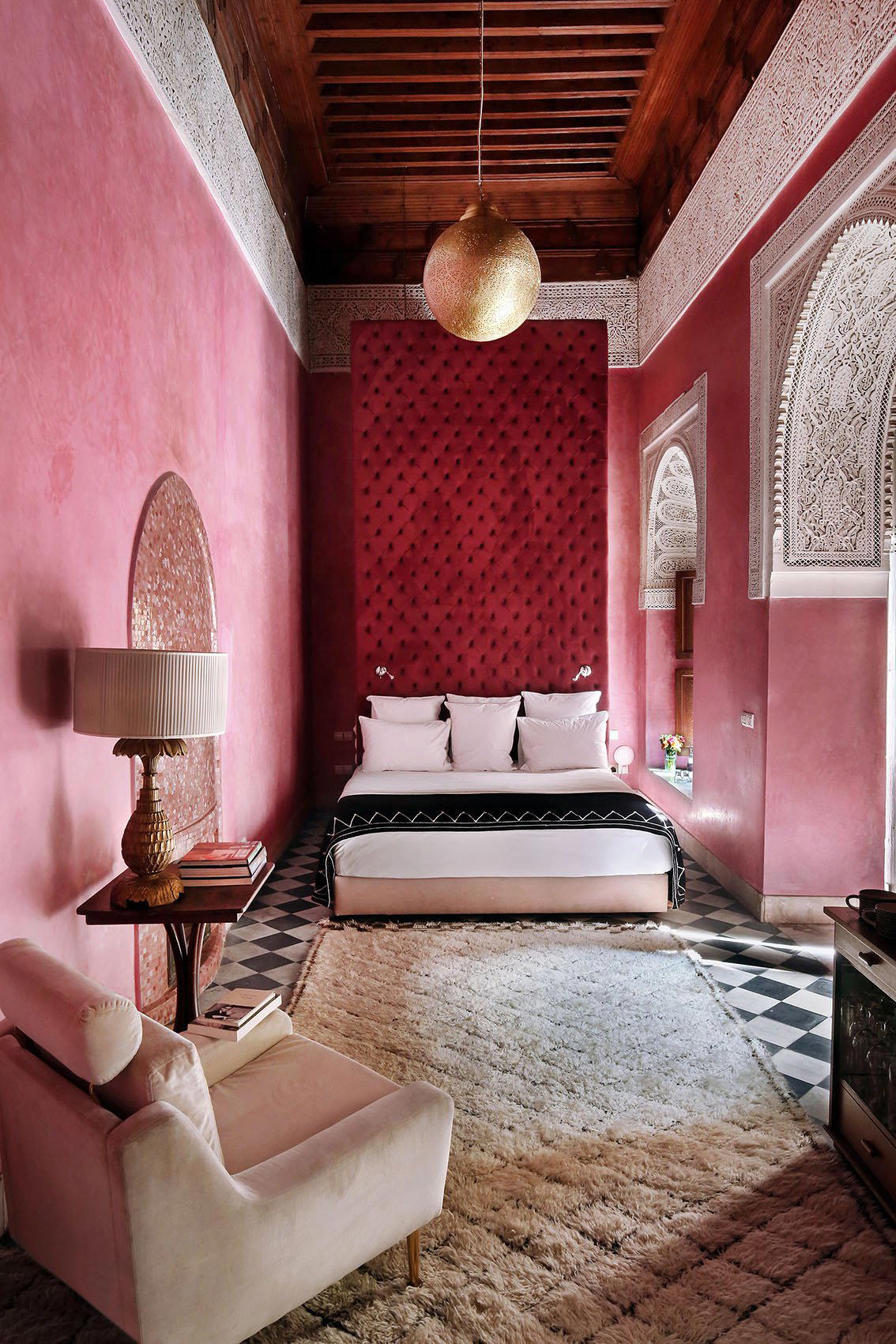
Inside the Medina's Boutique Tier
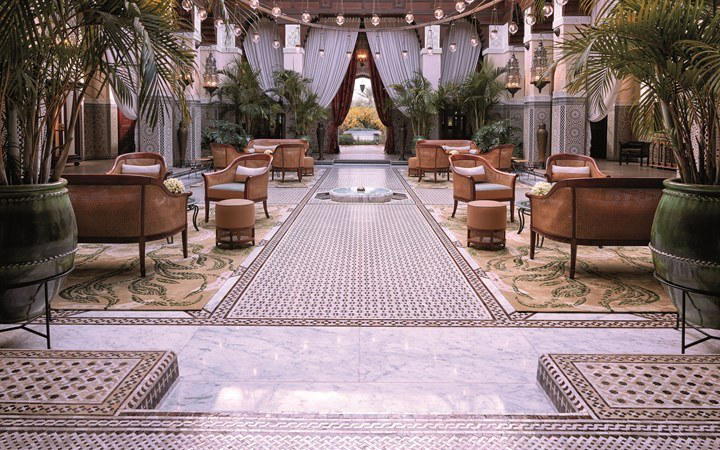
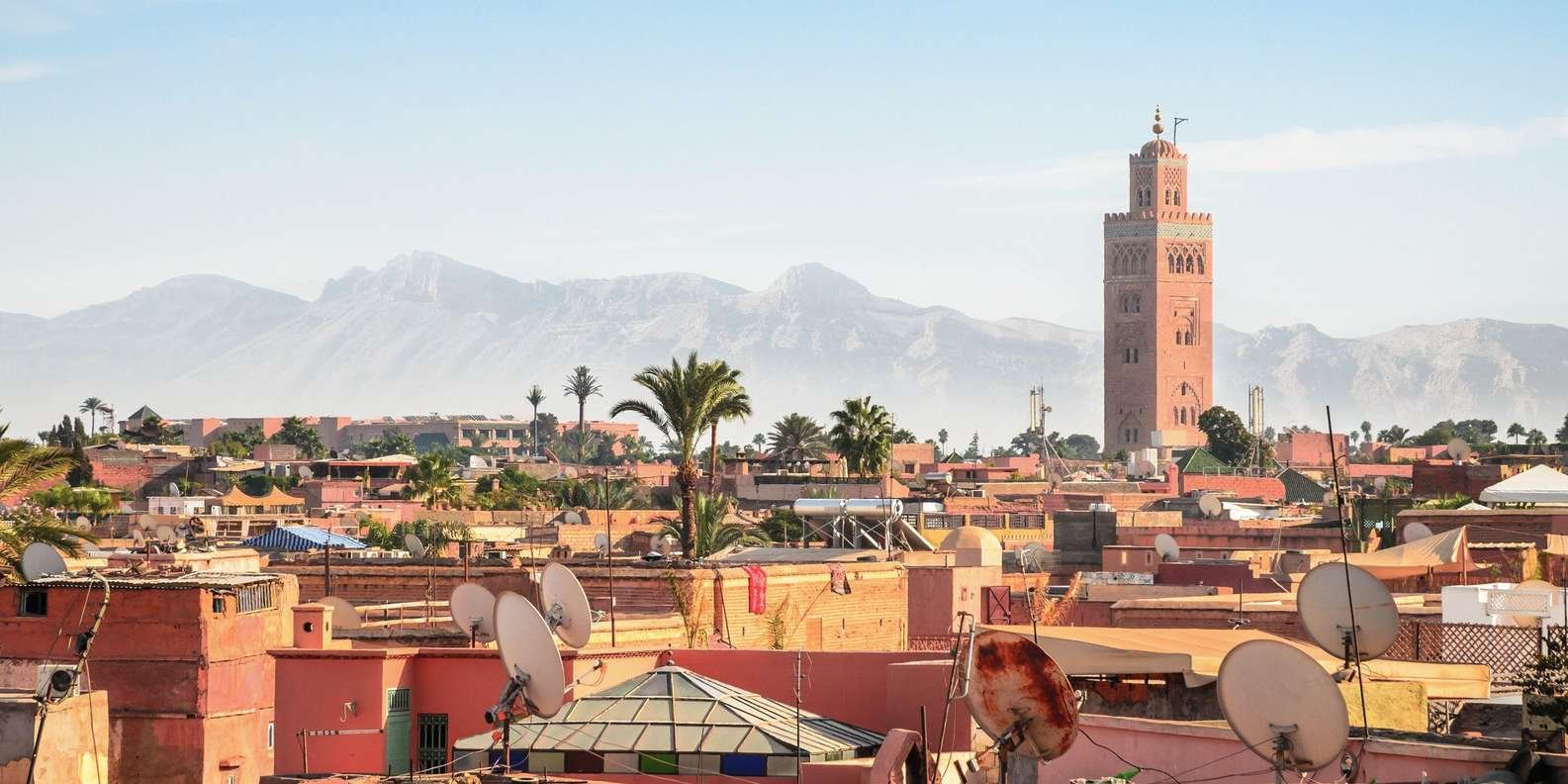
Marrakesh's accommodation market has fractured into two distinct registers over the past two decades. On one side sit the grand palace properties: La Mamounia, Royal Mansour, and Amanjena operate at a scale and polish that places them in an international luxury conversation. On the other sit a smaller cohort of riad-format properties that have converted historic medina compounds into intimate stays, trading footprint for specificity. El Fenn belongs firmly to the latter group. Its address in Derb Moulay Abdullah Ben Hezzian places it deep inside the medina's residential fabric, reached via the kind of narrow lane that large-scale hotel infrastructure simply cannot occupy.
That positioning is not incidental. The boutique medina tier has attracted a particular traveller profile: those who want the old city's sensory density without forfeiting comfort, and who find the perimeter-located palace hotels — however accomplished — too insulated from the medina's actual character. Properties like IZZA Marrakech, Ksar Char-Bagh, and La Sultana Marrakech share this positioning in varying degrees. El Fenn has historically distinguished itself within this set through a leaning toward the arts, functioning as a crossroads for the creative travellers and Marrakesh-based artists who have made the medina their reference point.
Approaching the Property
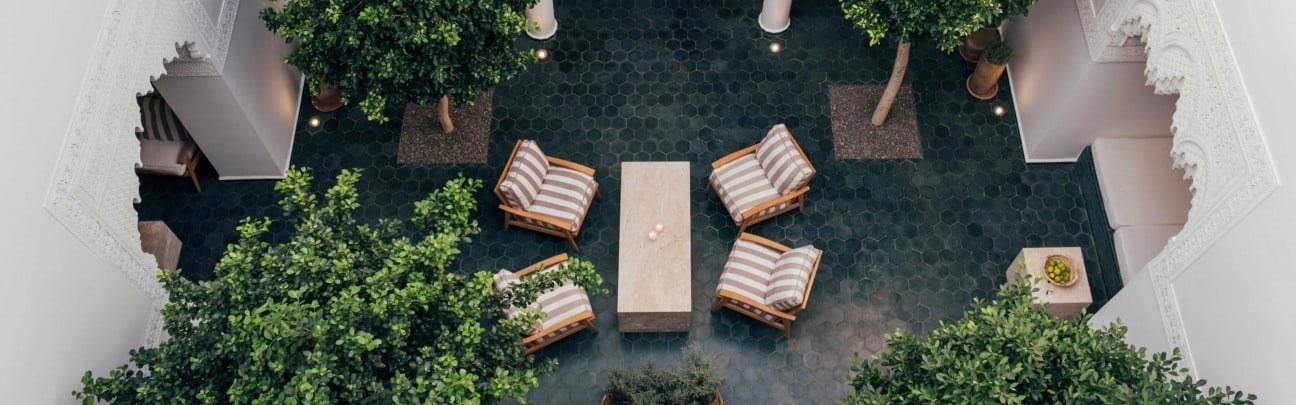
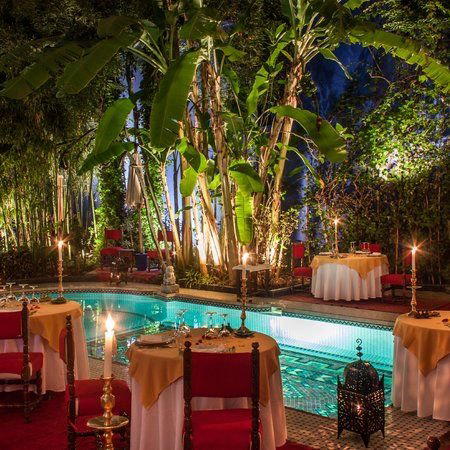
Arriving at El Fenn requires accepting that a medina address is not a hotel address in any conventional sense. The approach on foot through the derb, the semi-private residential alleyways that branch off the main souks, delivers you to an unmarked door that opens into a compound structured around traditional riad logic: blank exterior walls giving way to internal courtyards, shade, and water. The contrast between the controlled noise of the lanes and the calm that greets you inside is not a design trick; it is a structural feature of Moroccan domestic architecture that these properties inherit and, in El Fenn's case, amplify through considered restoration.
The compound spans multiple connecting riads, which gives the property a layered quality unusual in this category. Guests move between spaces, rooftop terraces, shaded courtyards, reception rooms lined with contemporary art, rather than occupying a single contained space. This spatial variety is part of what the property is known for, and it aligns El Fenn with a type of boutique property found more often in cities like Jaipur or Cartagena than in conventional luxury hotel circuits. For parallel context elsewhere in Morocco, Dar Ahlam in Ouarzazate and Dar Maya in Essaouira work within the same riad-conversion tradition, each adapting historic domestic architecture to contemporary hospitality standards.
The Food and Drink Programme
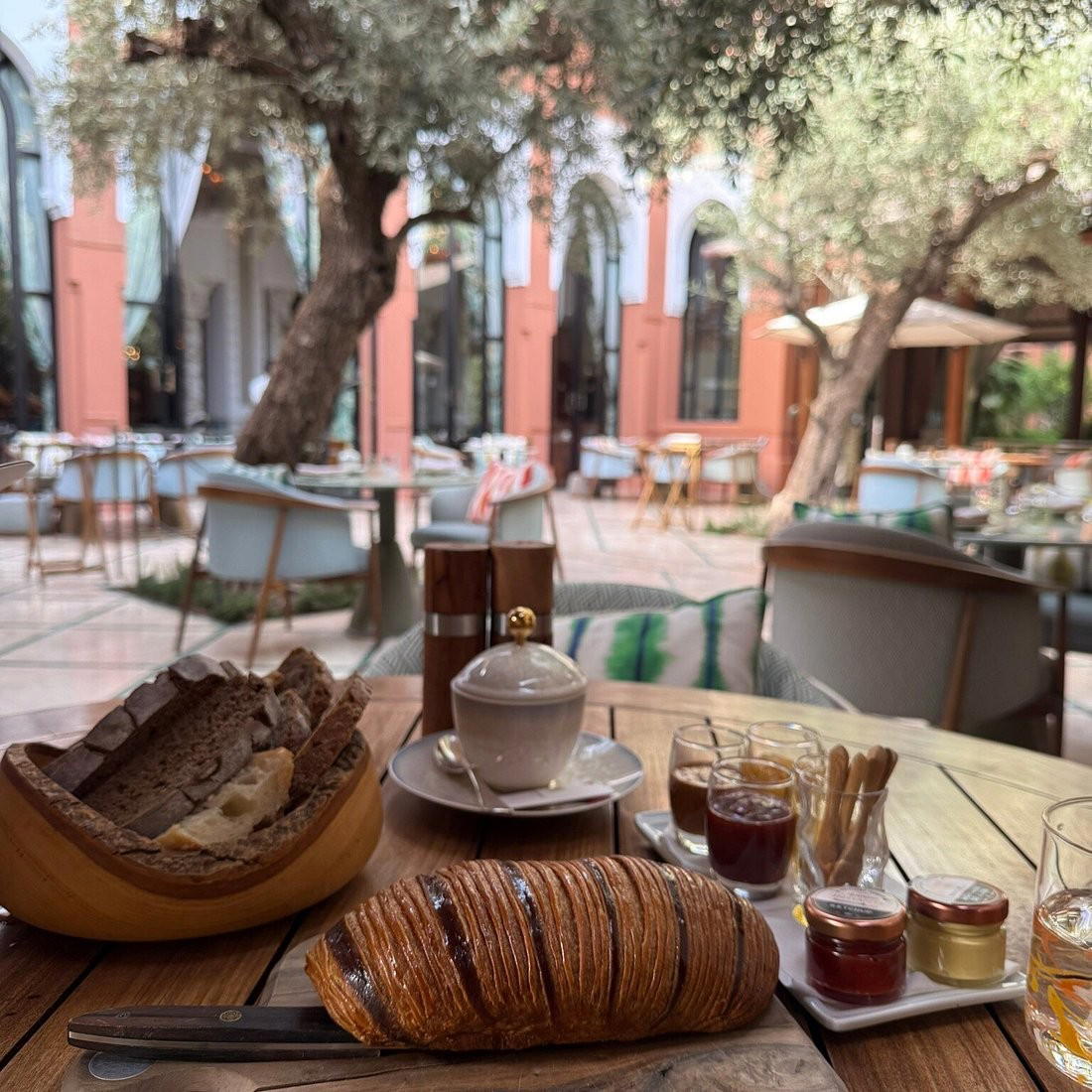
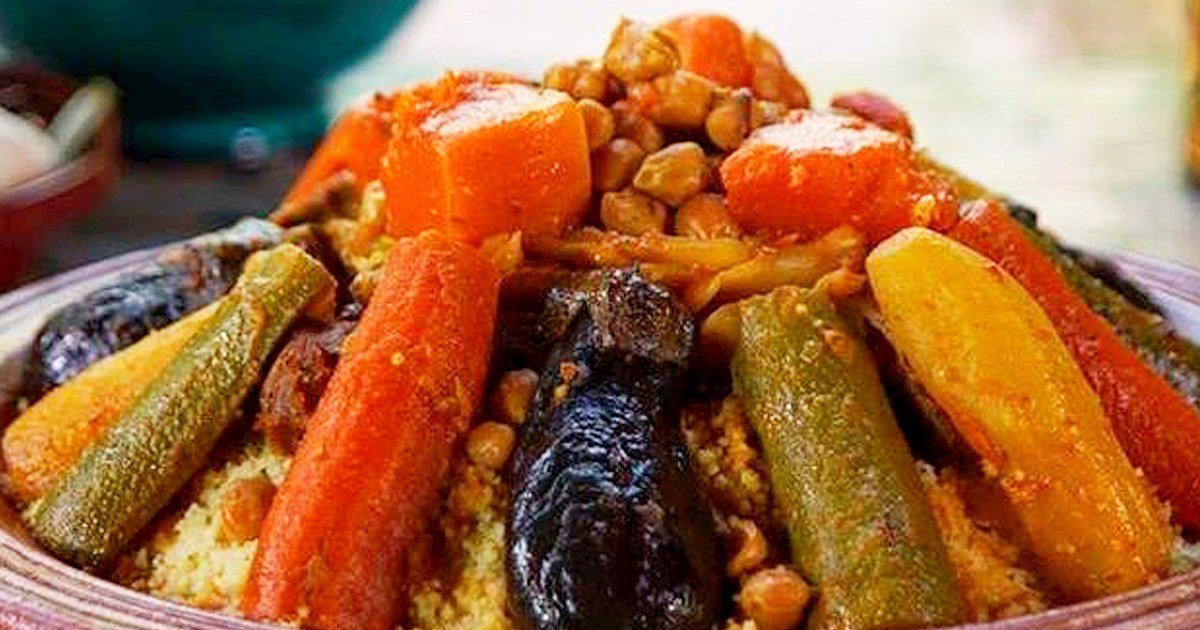
In medina boutique hotels, the food and drink offer tends to define the stay as much as the rooms, partly because the scale and setting lend themselves to an immersive quality that larger hotels struggle to achieve. Moroccan culinary tradition is well-suited to this format: slow-cooked tagines, preserved lemon, chermoula-dressed fish, and pastilla in its savoury and sweet registers are dishes that emerge leading from domestic kitchen contexts rather than high-output hotel kitchens.
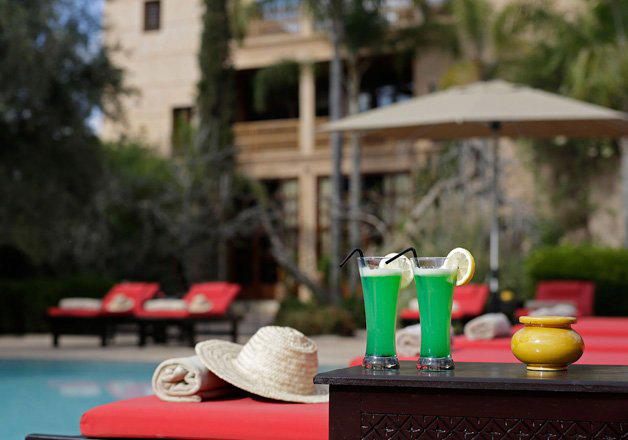
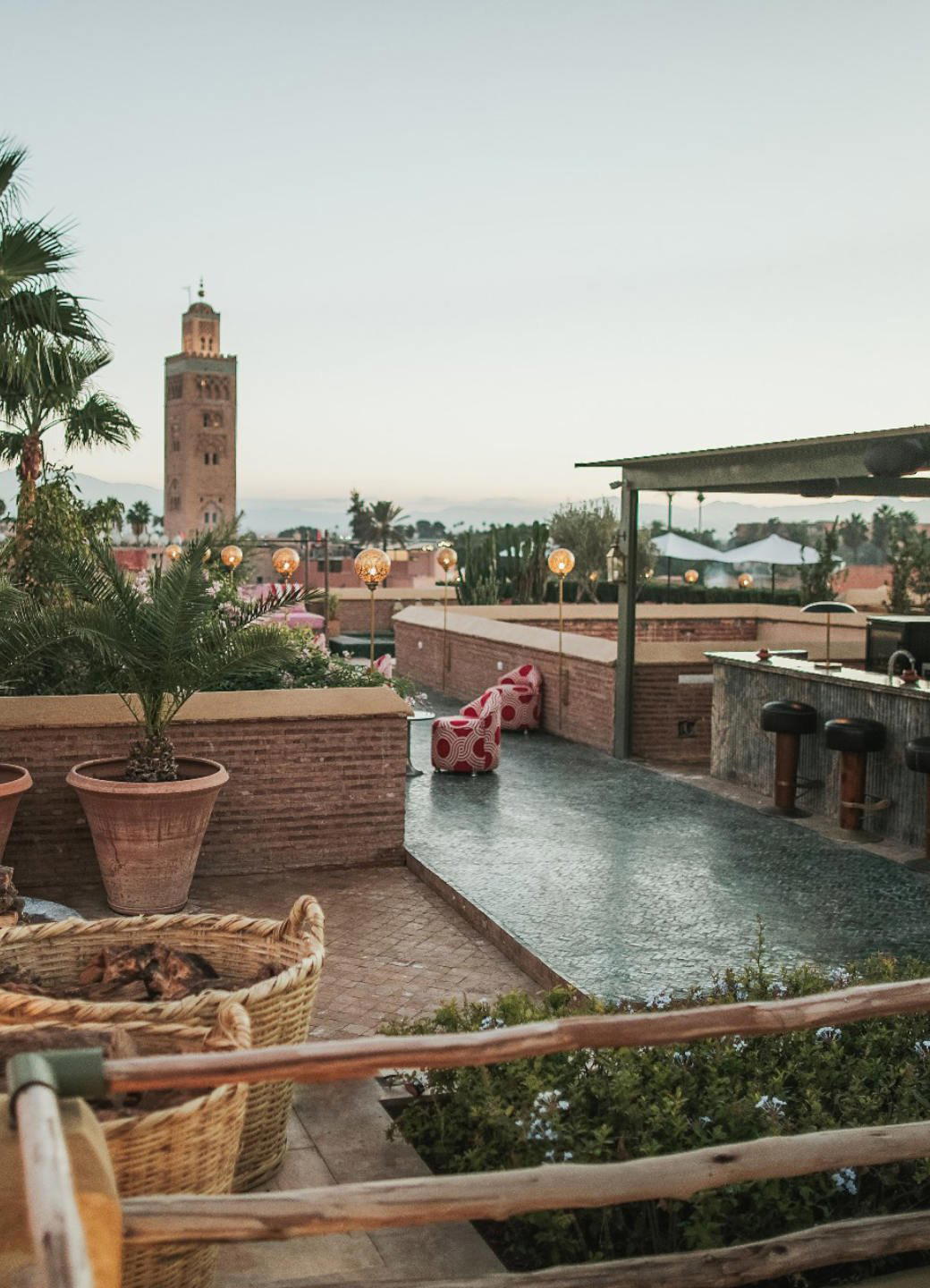
El Fenn's rooftop pool terrace and bar position it as one of the more sociable medina properties, with a drinks and food programme that extends beyond room service into something more deliberately public-facing. The rooftop in particular has functioned as a gathering point for the overlap between Marrakesh's resident creative community and visiting guests, a role that properties in the boutique medina tier are better placed to play than the self-contained palace hotels. At Royal Mansour, the food programme is anchored by high-profile culinary appointments and multi-course tasting formats; at El Fenn, the register is different, oriented more toward an extended afternoon on a terrace with views across the medina's roofline than toward a formal dining sequence.
Across Morocco's boutique property tier, this kind of informal but well-considered food and drink identity is increasingly the distinguishing feature. Jnane Tamsna in Marrakech operates a similar garden-anchored food ethos, while Hotel Sahrai in Fes has developed a rooftop offer with comparable cross-community appeal. The pattern across these properties points to a broader truth: in medina and medina-adjacent settings, the most memorable food experiences tend to be atmospheric rather than technically ambitious, timed to the light and the city's rhythm rather than to a tasting menu clock.
Art and the Physical Environment
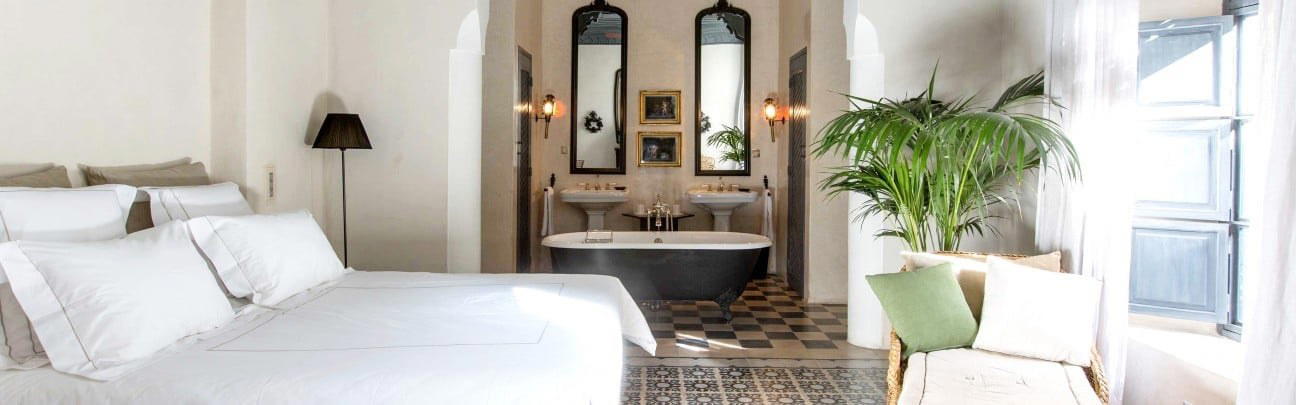
El Fenn's association with contemporary art gives it a specific visual identity within the Marrakesh boutique tier. The medina has historically attracted artists and collectors, and the annual 1-54 Contemporary African Art Fair held in Marrakesh has reinforced the city's position within the contemporary art calendar. Properties that actively engage with this scene occupy a different position from those that deploy decorative Moroccan craft traditions as atmospheric dressing. El Fenn's art holdings, works positioned throughout the public spaces and rooms, represent a curatorial decision that aligns the property with the former rather than the latter.
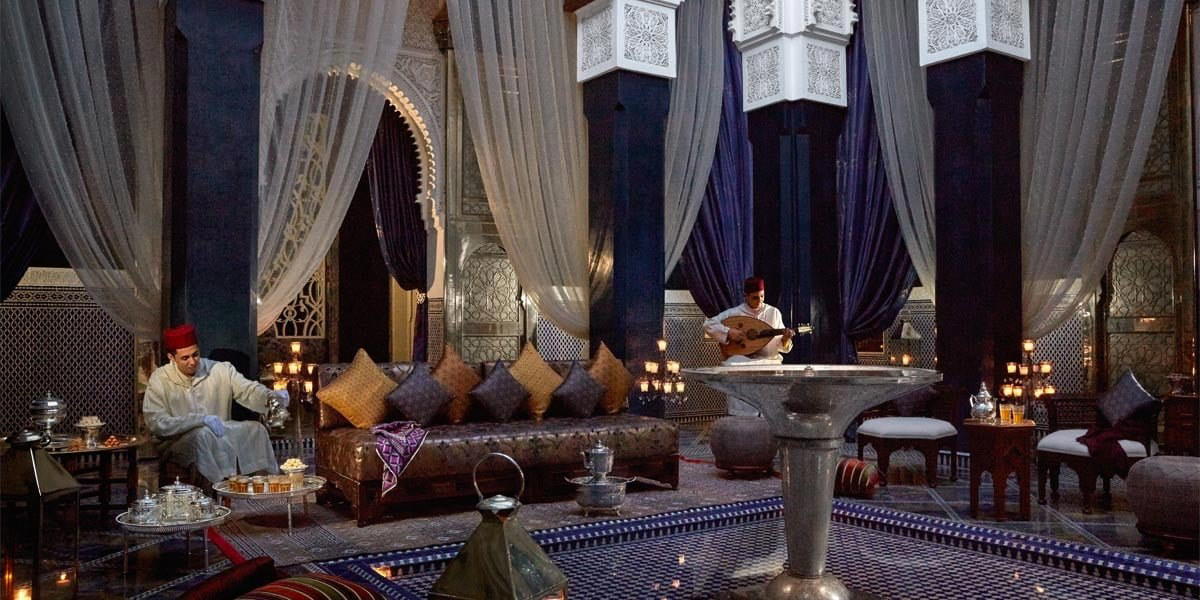
This distinguishes it meaningfully from properties at the luxury end that treat Moroccan aesthetics as decor: the zellij tilework, brass lanterns, and hand-knotted rugs are present but sit alongside contemporary pieces rather than dominating as period reconstruction. For travellers whose reference points include design-led properties in other markets, the parallel is closer to a hotel like The Fifth Avenue Hotel in New York City than to a grand heritage palace, despite the evident differences in geography and format.
Planning Your Stay
El Fenn sits at Derb Moulay Abdullah Ben Hezzian, 2, Marrakesh 40000, in the medina proper. The address is navigable by taxi to the nearest accessible street, after which the final approach is on foot through the derb. This is not a complication to work around but part of the experience: arriving and departing through the medina on foot, past the souks and the residential alleyways, is the closest most visitors get to the city's daily texture.
Marrakesh's medina operates differently across the calendar. The cooler months from October through March offer the most comfortable conditions for extended time outdoors, which matters considerably given how much of the El Fenn experience is organised around terraces, courtyards, and rooftop space. Summer temperatures in July and August regularly exceed 38°C, which shifts the optimal hours for outdoor time to early morning and evening. Spring and autumn represent the period when the property's outdoor areas are most fully usable across the full day.
For those extending beyond Marrakesh, the broader Morocco boutique circuit offers well-considered alternatives: Fairmont Tazi Palace Tangier in the north, Banyan Tree Tamouda Bay in Fnideq on the Mediterranean coast, Hilton Taghazout Bay in Taghazout for Atlantic-facing resort stays, and Dar al Hossoun in Taroudant for a smaller-scale southern equivalent. Fairmont La Marina in Rabat-Salé and Hyatt Regency Casablanca anchor the urban business-and-leisure end. The Fes Marriott Jnan Palace and Hotel Sahrai in Fez provide the medina-adjacent option for travellers routing through the imperial cities. For a wider view of Marrakesh dining and accommodation, the EP Club Marrakesh guide maps the full tier structure across the city.
How El Fenn Marrakech compares with similar nearby venues.
| Venue | Awards |
|---|---|
| El Fenn | Fodor's Most Incredible Hotels in the World (2026) |
Recognition history
Dated appearances from independent guides and award organizations, with the underlying list record or original source where available.
Fodor's Most Incredible Hotels in the World
Fodor's
Continue exploring
More in Marrakech
Hotels in Marrakech
Browse all →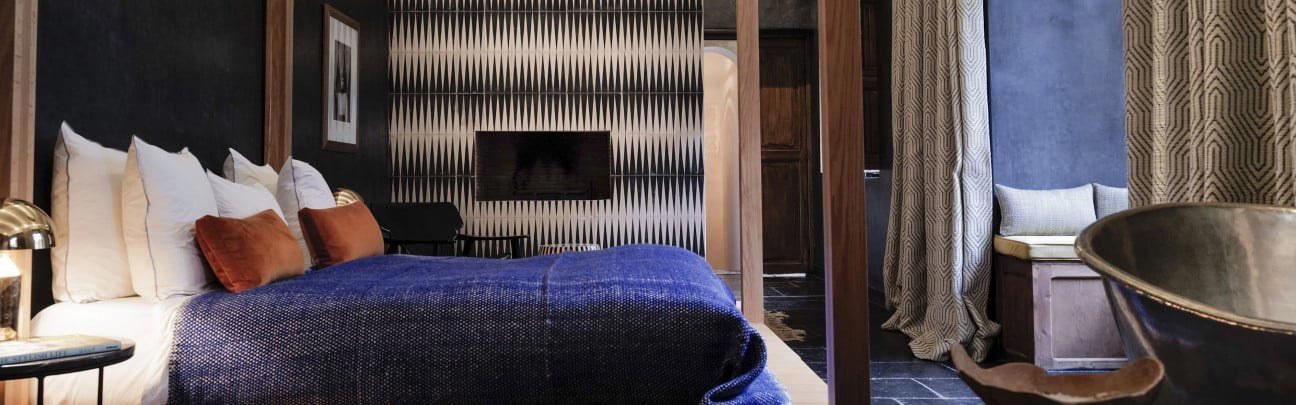
Bars in Marrakech
Browse all →
Restaurants in Marrakech
Browse all →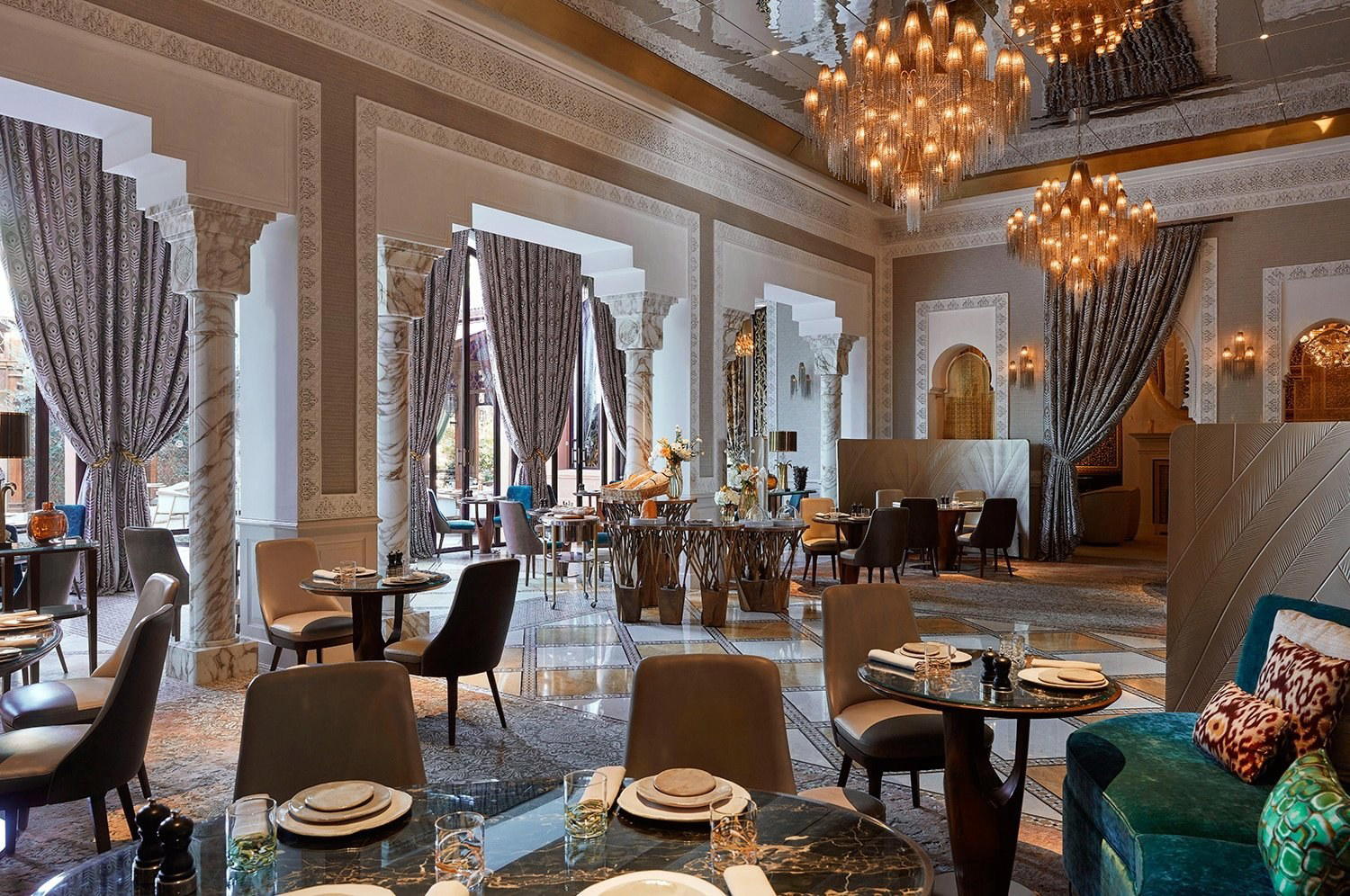
Wineries in Marrakech
Browse all →
At a Glance
- Elegant
- Sophisticated
- Trendy
- Bohemian
- Intimate
- Romantic Getaway
- Honeymoon
- Weekend Escape
- Rooftop Pool
- Terrace
- Historic Building
- Pool
- Spa
- Wi Fi
- Room Service
- Concierge
- Restaurant
- Bar
- Garden
- Pool
- Spa
- Wi Fi
- Room Service
- Concierge
- Restaurant
- Bar
Relaxed chic with artistic Moroccan-modern fusion, sensually lit courtyards, and serene poolside lounging.
Know Before You Go
- Getting there
- Derb Moulay Abdullah Ben Hezzian, 2, Marrakesh 40000