
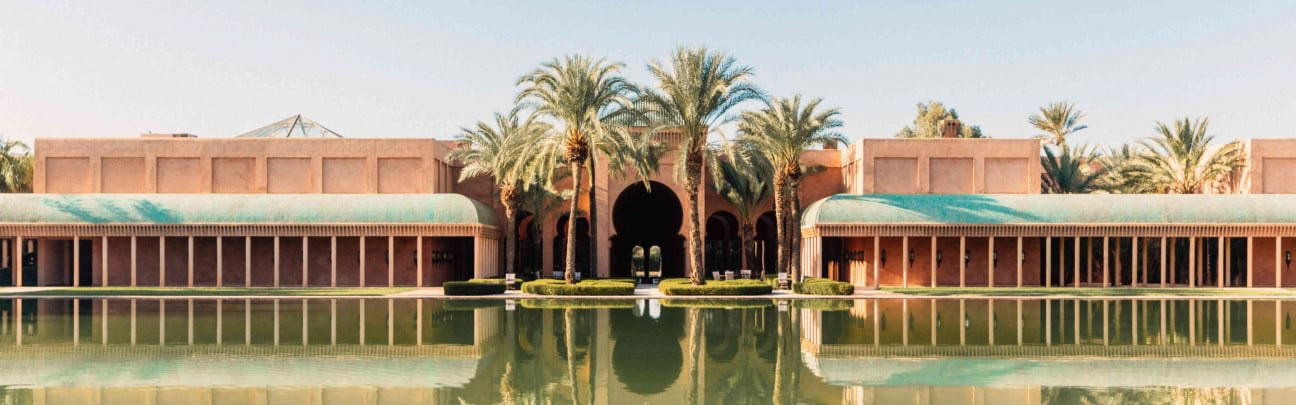
Set in the Palmeraie, Marrakesh's ancient palm-grove district fifteen minutes from the medina, Ksar Char-Bagh occupies a 25-suite mini-palace that draws on centuries of Moorish residential architecture. The suites, called Harims in reference to private palace apartments, combine open-plan proportions with spare contemporary furniture, private gardens, and fireplaces. It sits in a distinct tier of intimate riad-palace properties that prioritise seclusion over scale.
Pearl is the En Primeur Club membership app — saves, bookings, and concierge access live there. Same editors, same standards.
- Address
- LA Palmeraie, Route De Fez, Marrakech 40000
- Phone
- +212 5 24 32 92 44
- Website
- hotelksarcharbagh.com
- Directions
- Get directions
 Saves & bookings on Pearl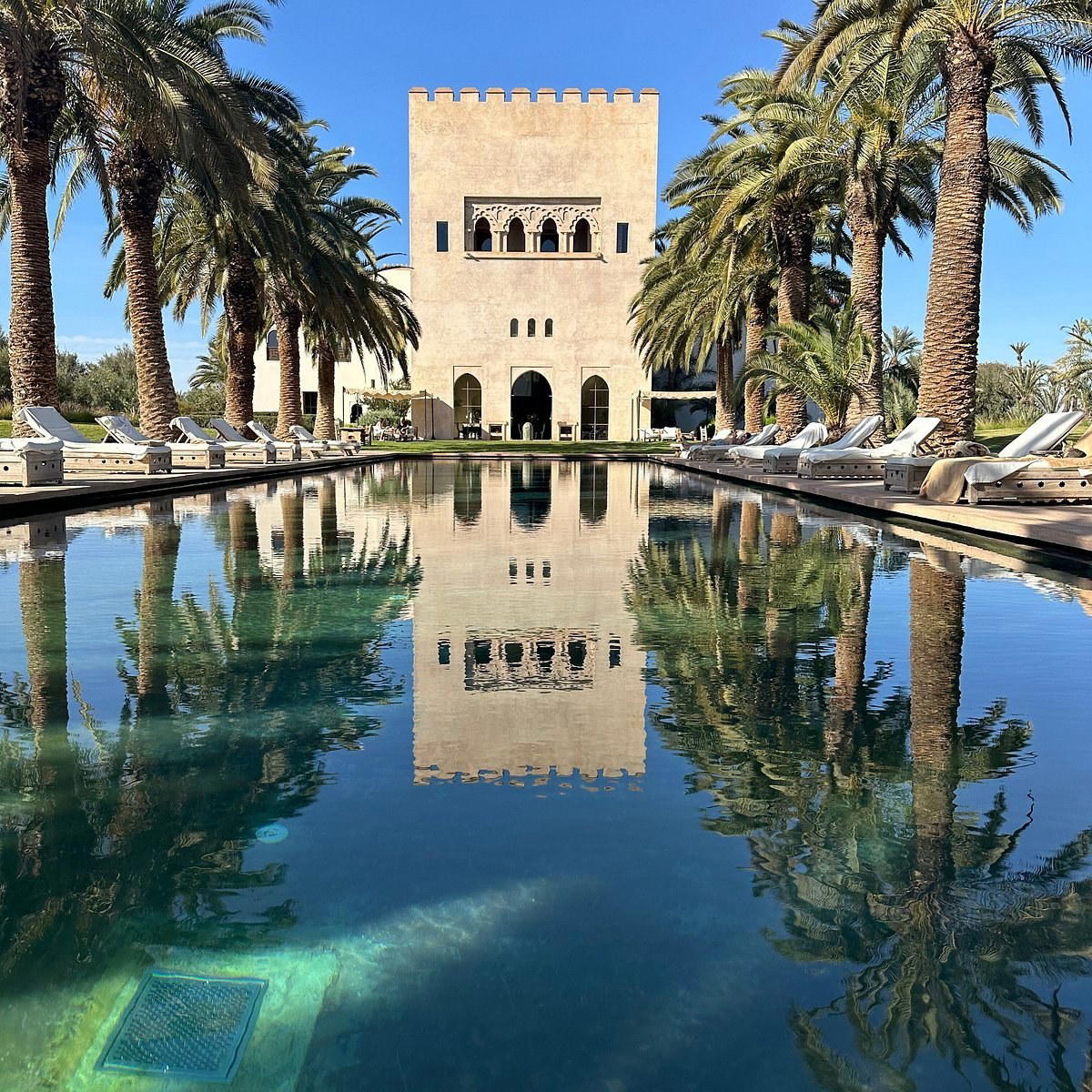
The Palmeraie and the Palace Tradition
The Palmeraie has been Marrakesh's aristocratic outskirts for roughly a thousand years. This palm-grove belt on the northern edge of the city, stretching toward the Route de Fez, served as a retreat from the medina's density long before the first French protectorate villas arrived. Today, it is the address of choice for a specific category of Marrakesh accommodation: small, privately owned properties that draw architectural vocabulary from Moroccan palace construction — the riad scaled up to mansion proportions, with fountains, enclosed courtyards, and room volumes that owe more to 14th-century residential design than to hotel convention. Ksar Char-Bagh sits within this tradition, and within this postcode, as one of the more considered expressions of the form.
The broader Marrakesh hotel market has split clearly along scale lines. At one end sit the grand international addresses: La Mamounia, Royal Mansour, and Four Seasons Resort Marrakech, each operating at high key counts with the infrastructure that implies. At the other end, properties like El Fenn, IZZA Marrakech, and Jnane Tamsna in Marrakech operate with deliberately limited room counts, prioritising atmosphere and seclusion. Ksar Char-Bagh belongs to this second category, with 25 suites, a configuration that keeps the public spaces quiet and the ratio of staff to guests high.
Architecture as Argument
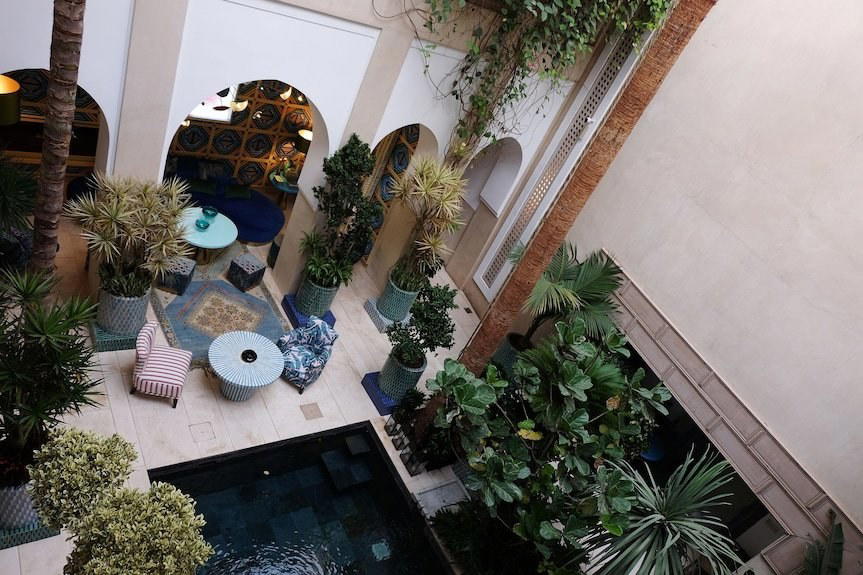
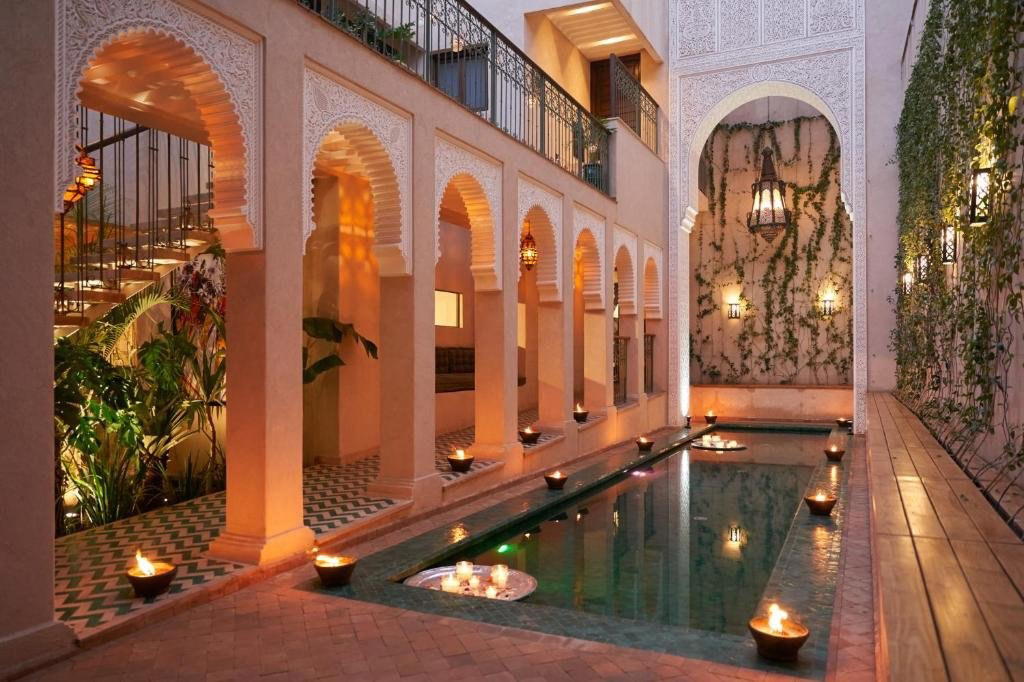
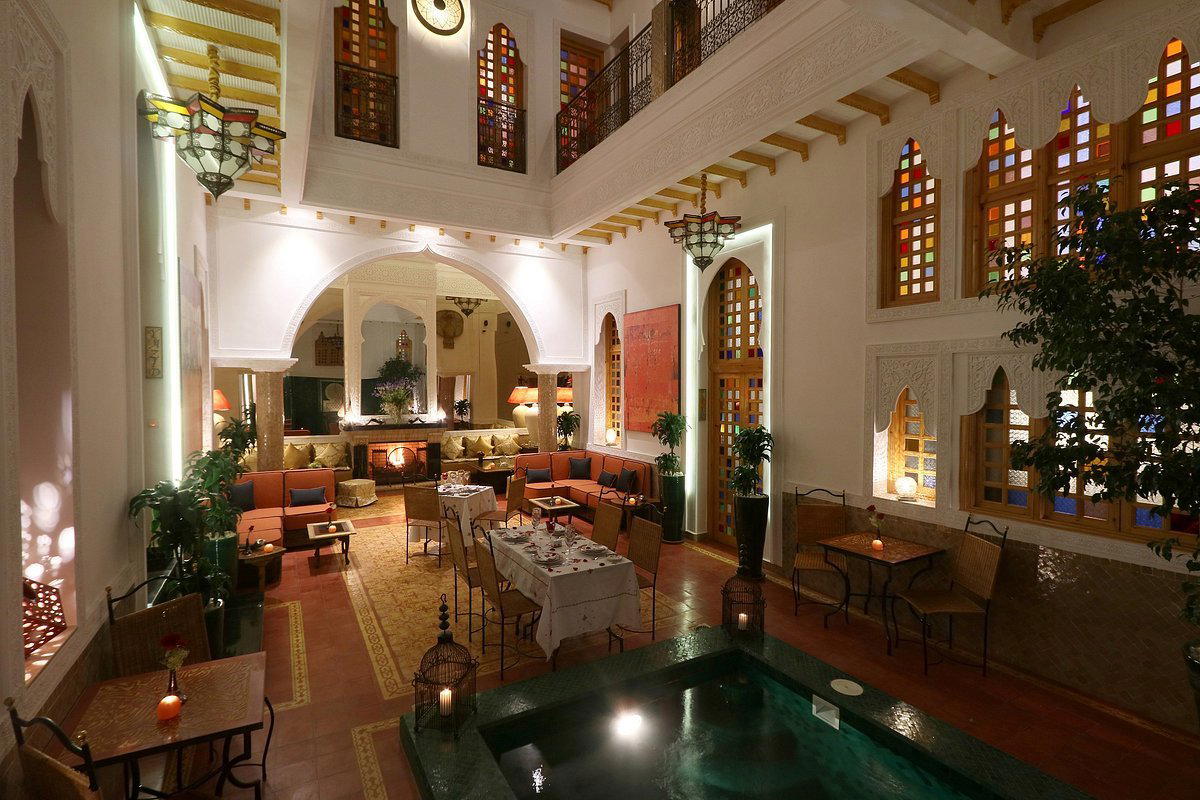
Design approach at properties of this type in the Palmeraie tends to resolve in one of two directions: faithful reproduction of historical Moroccan craft, or a hybridised aesthetic that layers contemporary minimalism over traditional structural forms. Ksar Char-Bagh has taken the second path. The courtyard — with its formal pond and fountains, follows the symmetry of classical Moroccan garden design, a tradition rooted in Andalusian and Moorish spatial philosophy, where water and geometry are used to anchor enclosed space. The surrounding architecture reads as a coherent response to that courtyard rather than a departure from it, with high windows and generous volumes that recall the proportions of a medina palace without reproducing its surface ornament directly.
Suites are designated Harims, the Arabic term for a private apartment within a palace complex, and the label carries spatial implications. These are not hotel rooms reconceived as suites; they are rooms designed from the outset around domestic scale. Fireplaces, home theatre systems, private gardens or terraces, and in at least one case a private pool of its own, the suite programme covers the range of amenities expected at the top of the Marrakesh market, delivered within room volumes that feel genuinely residential rather than hospitality-industry residential.
The Palmeraie's Particular Character
Fifteen minutes from Marrakesh-Menara Airport and approximately the same distance from the Djemaa el-Fna, the Palmeraie occupies an intermediate geography that defines the guest experience here. It is close enough to the medina that day visits are direct, far enough that the property operates as a self-contained world. The palm canopy, which has defined this landscape for centuries and provided the topographical backdrop for Paul Bowles's description of the Moroccan desert in fiction, filters the light and muffles the city's ambient noise in a way that medina-based riads cannot replicate regardless of their courtyard depth.
Ksar Char-Bagh offers private airport transfers in its own London black cabs, a detail that speaks to the property's understanding of its guest profile. The choice signals a dry wit about its own positioning: the vehicle is immediately readable as a luxury transfer cue without the anonymity of a generic saloon. It also resolves the logistics of the Palmeraie's distance from both the airport and the city in a way that removes friction from arrival without requiring guests to think about it.
Dining and the French-Moroccan Kitchen
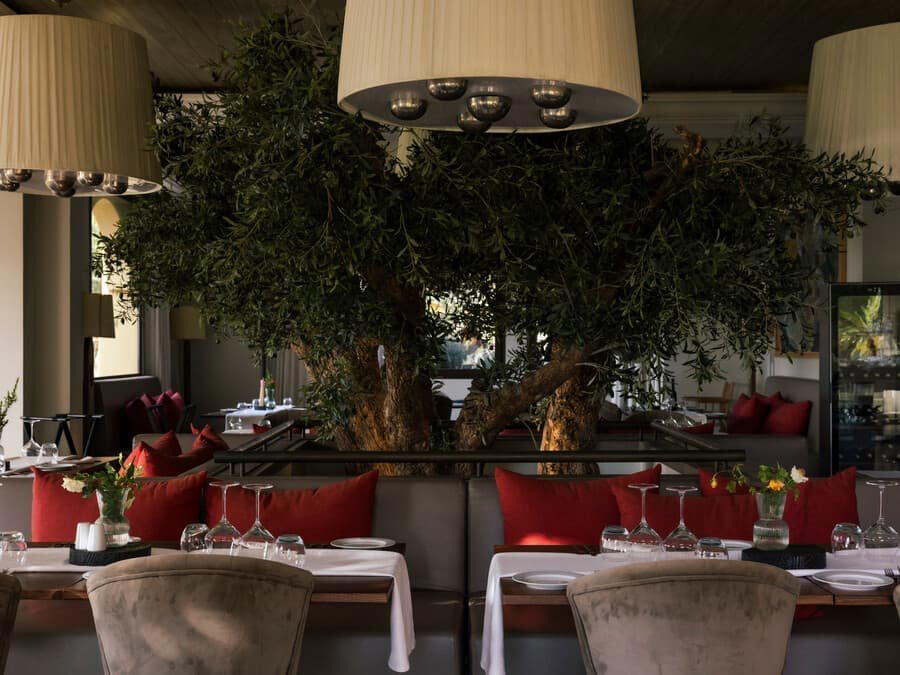
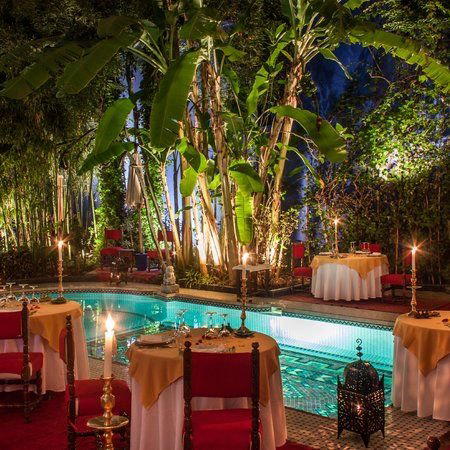
The dining tradition in Moroccan palace hotels has historically moved between two poles: the all-Moroccan ceremonial feast, designed to produce a theatrical impression of local culture, and the hybrid kitchen that takes French technique as its grammar while working with Moroccan ingredients and structural forms. The latter approach has produced more interesting food in general, and it is the approach at Ksar Char-Bagh, where the kitchen is led by a French-trained chef working a menu that crosses Moroccan and Continental territory. The dining room, lit through high windows, opens toward the floodlit pool and its fringe of palms, which gives the evening meal a visual backdrop that more urban properties cannot offer. For a deeper look at where Marrakesh's restaurant scene sits today, our full Marrakesh restaurants guide maps the current field.
The Spa and the Vault
Hammam and spa culture in Moroccan palace hotels carries a specific architectural logic: the treatment rooms are traditionally placed below grade, in vaulted spaces that use the building's mass to maintain temperature and create a sensory shift from the world above. Ksar Char-Bagh uses its vault in this way, with treatments administered in the subterranean space as well as in an open-air setting behind the pool, giving guests the choice between the enclosed atmospheric version and the garden alternative. This dual format is less common than either option alone and reflects the same attention to detail that runs through the suite programme.
How Ksar Char-Bagh Compares in the Marrakesh Field
By scale, it competes with the city's other intimate palace properties rather than with Fairmont Royal Palm Marrakech or Amanjena. By aesthetic, the contemporary-Moorish hybrid places it in a narrower niche than either the heritage-restoration model of La Sultana Marrakech or the fashion-forward design approach of El Fenn. For Morocco more broadly, the Palmeraie mini-palace format is specific to Marrakesh; elsewhere in the country, the luxury positioning takes different forms, from the medina-embedded logic of Hotel Sahrai, an SLH Hotel in Fes to the desert-scale proposition of Dar Ahlam in Ouarzazate, and the coastal alternatives at Dar Maya in Essaouira, Banyan Tree Tamouda Bay in Fnideq, and Hilton Taghazout Bay Beach Resort and Spa in Taghazout. Those planning a wider Moroccan itinerary might also consider Fairmont Tazi Palace Tangier in Tangier, Fairmont La Marina Rabat Salé Hotel and Residences in Salé, Fes Marriott Jnan Palace in Fès, Dar al Hossoun in Taroudant, or Hyatt Regency Casablanca in Casablanca. For those whose travel extends to other Aman properties for comparison, Aman Venice in Venice and Aman New York in New York City offer instructive contrasts in how the low-key-count luxury model translates across cultural contexts.
Planning Your Stay
Ksar Char-Bagh sits on the Route de Fez in the Palmeraie district, approximately 20 minutes from Marrakesh-Menara Airport by car, with private transfers available in the hotel's own vehicles. The property runs 25 suites across a range of categories, each designated as a Harim, with configurations that include private gardens, terraces, fireplaces, and home theatre systems. Room availability should be confirmed directly with the property, as the low room count means peak-season availability closes quickly. The winter months, when daytime temperatures in Marrakesh sit comfortably in the mid-teens Celsius and the palms hold their colour, represent the period when the Palmeraie's outdoor spaces and floodlit pool backdrop are most atmospheric for evening dining. The cigar selection and library are available to all guests, as are the billiards room and sitting rooms designed for lingering between the suite and the public courtyard.
How Ksar Char-Bagh Marrakech compares with similar nearby venues.
| Venue | Awards |
|---|---|
| Ksar Char-Bagh | Michelin 1 Key |
Recognition history
Dated appearances from independent guides and award organizations, with the underlying list record or original source where available.
Michelin 1 Key
Michelin
Small Luxury Hotels of the World Member
Small Luxury Hotels of the World
Continue exploring
More in Marrakech
Hotels in Marrakech
Browse all →
Bars in Marrakech
Browse all →
Restaurants in Marrakech
Browse all →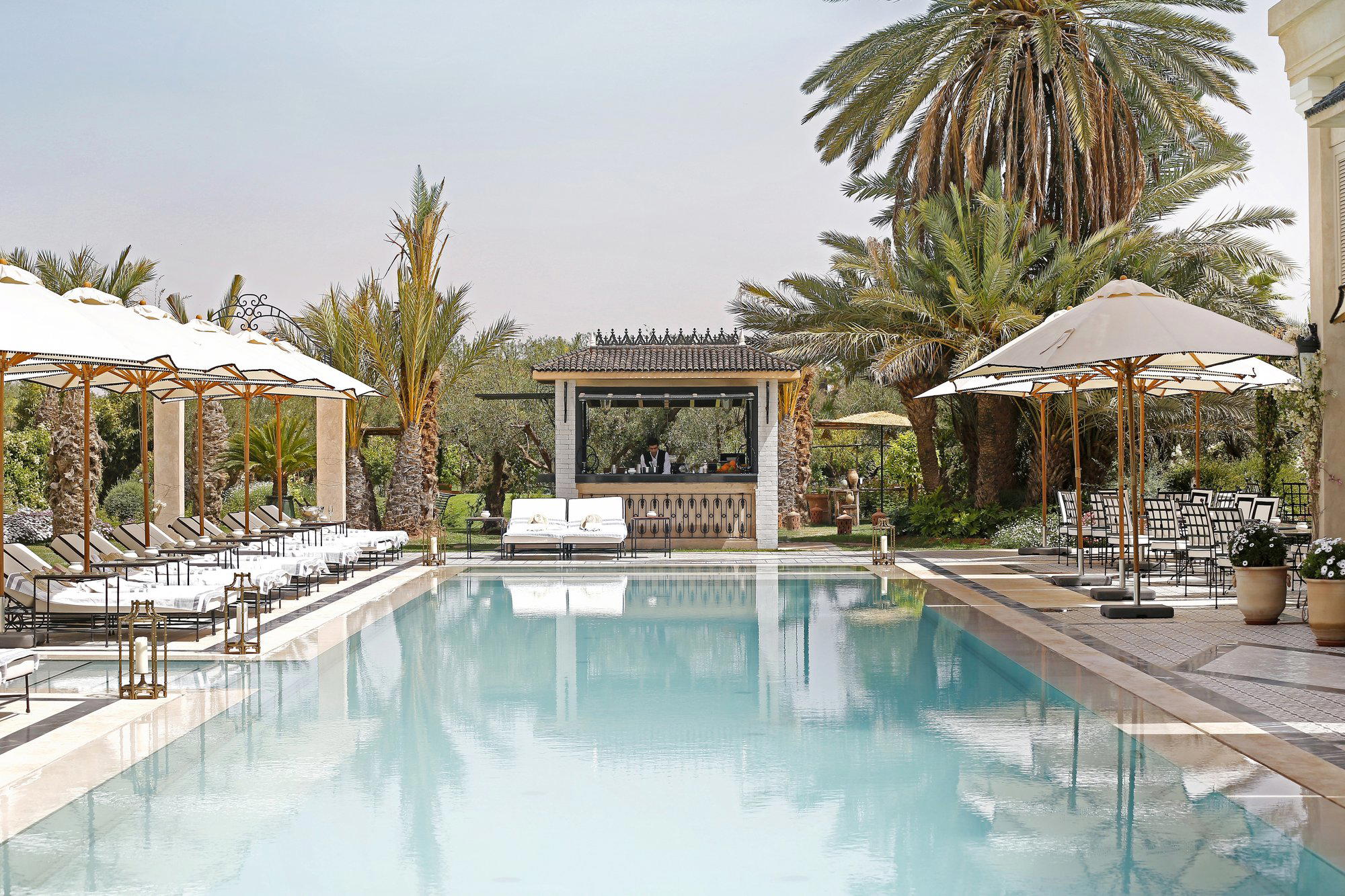
Wineries in Marrakech
Browse all →
At a Glance
- Elegant
- Ornate
- Romantic
- Sophisticated
- Intimate
- Honeymoon
- Romantic Getaway
- Anniversary
- Wellness Retreat
- Garden
- Terrace
- Historic Building
- Pool
- Spa
- Room Service
- Concierge
- Fitness Center
- Airport Transfer
- Wi Fi
- Tennis Court
- Garden
- Mountain
- Pool
- Spa
- Room Service
- Concierge
- Fitness Center
- Airport Transfer
- Wi Fi
- Tennis Court
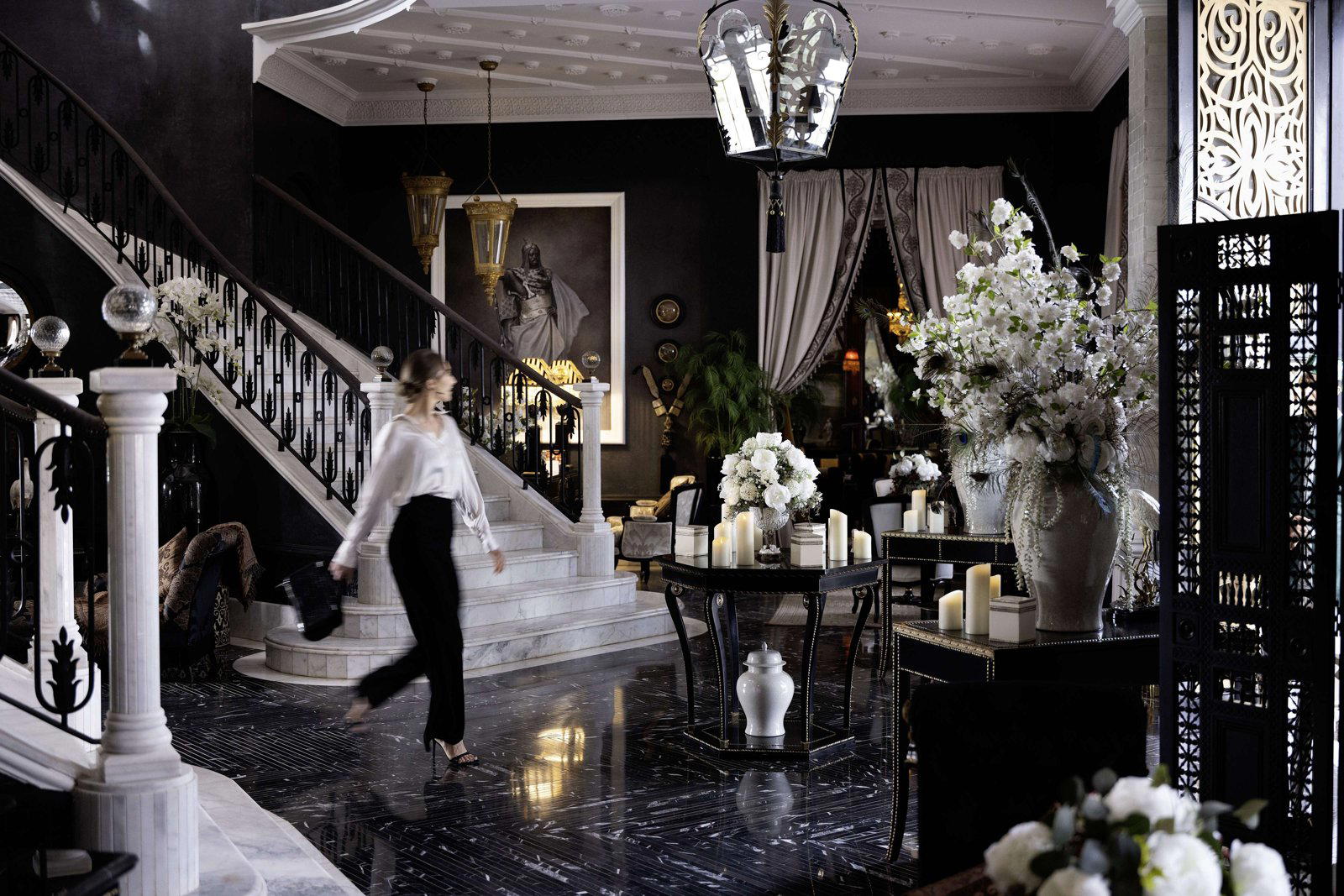
Serene and ornate with lantern-lit gardens, fragrant fig and olive trees, Moorish arches, and a peaceful poolside atmosphere blending traditional grandeur and modern minimalism.
Know Before You Go
- Getting there
- LA Palmeraie, Route De Fez, Marrakech 40000