Château Roslane

Relais Chateaux Award
Château Roslane is a wine estate and hotel outside Meknès where Hispano-Moorish architecture meets Atlas Mountain terrain. Rates from US$298 per night place it in Morocco's premium rural tier, drawing guests who want vineyard immersion rather than medina spectacle.

Pearl is the En Primeur Club membership app, where members save venues, book tables and use the concierge.
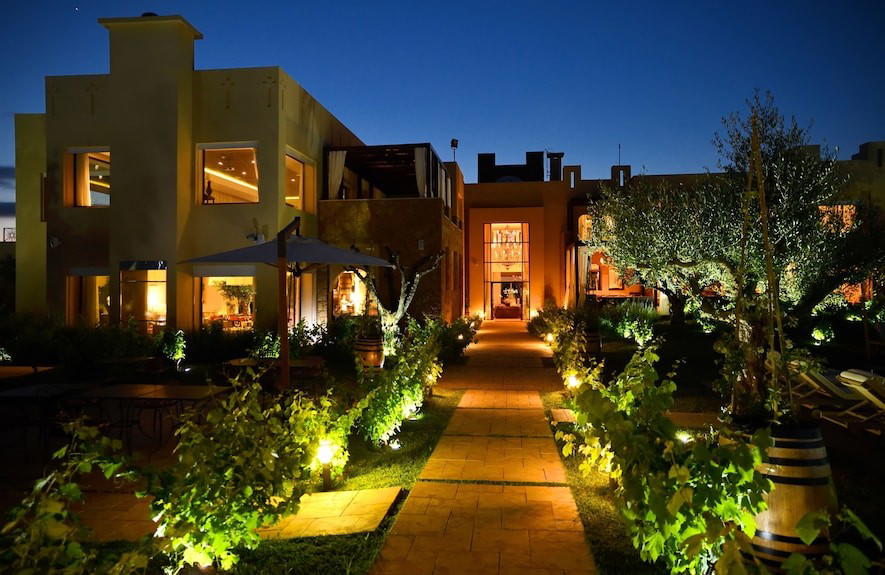
Where Andalusian Form Meets Atlas Light
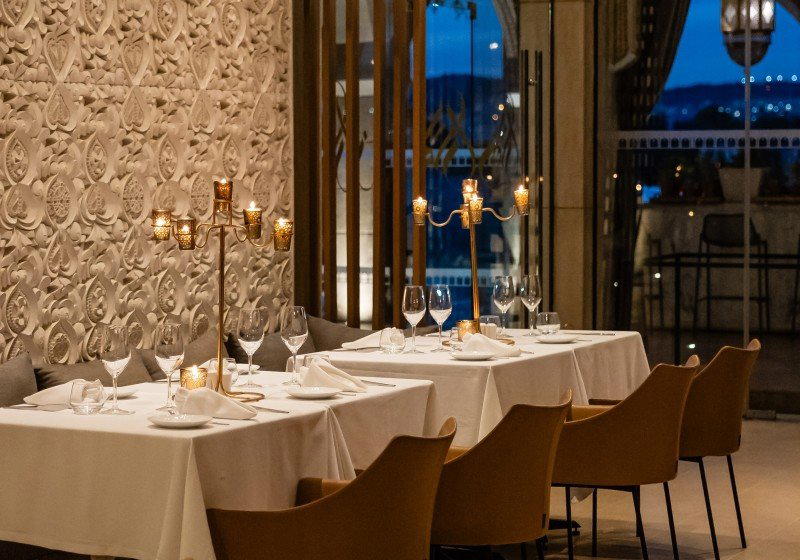
The approach to Château Roslane sets the register before you reach the door. The Meknès plateau opens wide in this part of Morocco's Middle Atlas foothills, and the estate's Hispano-Moorish structure arrives against that backdrop as something between a fortified country house and an Andalusian cortijo, neither the riad geometry of Marrakech nor the anonymous resort block that has spread along the Atlantic coast. The arched colonnades, the ochre rendering, the proportions drawn from a tradition that passed between southern Spain and northern Morocco across centuries of shared culture: these are architectural signals that position Château Roslane firmly outside the mainstream of Moroccan luxury hospitality, which tends to cluster around medina renovation or beachfront scale.
Morocco's premium hotel market has consolidated around a handful of dominant formats. The grand palatial property, exemplified by La Mamounia in Marrakesh, deploys Moorish craft at monumental scale. The design-led riad, represented by properties like Hotel Sahrai in Fes, works through intimacy and contemporary editorial restraint. Château Roslane occupies a third position: the working wine estate as destination, where the physical architecture of viticulture, the cellars, the vineyard rows, the processing buildings, the domaine house itself, forms the experiential frame. That category remains genuinely thin in Morocco, which makes the Meknès wine region a compositional outlier in North African hospitality.
The Hispano-Moorish Tradition and What It Means Here
Hispano-Moorish architecture is not a decorative style applied to a building, it is a structural vocabulary with specific grammar. The horseshoe arch, the zellige tilework, the carved stucco frieze, the courtyard as organisational spine: these elements derive from a tradition developed across Al-Andalus and refined in the imperial cities of Morocco, particularly Fes and Meknès, across several centuries. Meknès itself was developed as an imperial capital under Sultan Moulay Ismail in the late seventeenth century, and its built environment carries traces of that ambition, monumental gates, broad walls, a scale that distinguishes it from Fes's more intricate medina character.
Château Roslane's architecture sits within that regional lineage while adapting it to the functional demands of a working estate. Wine estates in southern Spain, in Jerez, in the Condado de Huelva, in Ronda's newer mountain appellation, often occupy similar hybridised buildings: Moorish structural logic underneath a Spanish agricultural overlay. Here, the inversion is approximate: a Moroccan estate drawing on Andalusian formal references, mediated by the French colonial period that established much of Morocco's wine infrastructure in the early twentieth century. The result is a building that reads as historically grounded rather than theme-styled, which is not something every Moroccan property achieves.
Views from the estate extend toward the Middle Atlas ridgeline, and the relationship between architecture and terrain is part of the experience. The Atlas light in this region shifts noticeably through the day, harder and more direct at midday, amber and lateral by late afternoon, and the estate's orientation appears to account for this. Properties that work with natural light rather than compensating for it through interior design tend to age better, and Château Roslane's physical setting provides a quality that no renovation budget can manufacture.
Wine Country as Context
Meknès is the centre of Morocco's most serious wine production. The region's elevation, continental climate, and diurnal temperature variation create conditions that distinguish its wines from coastal Moroccan production, and from the broader Mediterranean wine template that dominates North African winemaking. Several significant estates operate in the area, and the category has attracted increasing attention from European wine professionals over the past decade as Moroccan wine has moved beyond the domestic and francophone market.
For guests at Château Roslane, the estate context means that wine is not an amenity added to a hospitality product, it is the reason the buildings exist in their current form. The domaine architecture, the cellar infrastructure, the relationship between the vineyards and the house: these are features of a working production site that happens to accommodate guests, which is a fundamentally different proposition from a hotel that lists a wine list as a selling point. Properties in established European wine regions, Burgundy, Tuscany, the Douro valley, have long operated on this model, and the Meknès iteration carries comparable logic.
Placing Château Roslane in Morocco's Wider Hotel Context
Morocco's premium hospitality offer has expanded considerably in recent years. International brands have established footholds in the major cities and resort corridors: the Hyatt Regency Casablanca and Fairmont La Marina in Salé anchor the Atlantic urban corridor, while Banyan Tree Tamouda Bay and Fairmont Tazi Palace in Tangier serve the northern coast. Further south, properties like Dar Ahlam in Ouarzazate, Kasbah Tamadot in Asni, and Dar al Hossoun in Taroudant represent the design-led rural category. Coastal and island alternatives, La Sultana Oualidia, Dar Maya in Essaouira, Rebali Riads in Sidi Kaouki, and Hilton Taghazout Bay, cover the Atlantic leisure segment. The Michlifen Resort in Ifrane addresses the Atlas mountain leisure market most directly.
Within this topology, Château Roslane occupies a position that none of these properties shares: the agricultural estate in Morocco's principal wine region, with architecture that references the specific Hispano-Moorish heritage of the Meknès imperial zone. That is part of the point. For a broader view of the region's options, our full Icr Iqaddar guide maps the competitive context in detail.
Planning Your Stay
Château Roslane sits approximately 60 kilometres from Fès-Saïss International Airport, making it accessible by car in under an hour from the nearest major hub. By road, the estate is reached via the Meknès Est motorway exit, then the fast road toward El Hajeb, the GPS coordinates (33.7581, -5.4331) will confirm the final approach. Meknès itself is served by train, and the estate is reachable by taxi from the station for guests arriving without a vehicle. Rates begin at US$298 per night, which places it at the lower end of Morocco's premium rural tier, below the bespoke per-night rates of properties like Jnane Tamsna in Marrakech or Villa Mabrouka in Al Hoceima, and considerably below the palatial Marrakech tier. The estate's location between Meknès and the Atlas foothills means the surrounding terrain is worth factoring into itinerary planning: the drive toward El Hajeb and onward into the Atlas provides one of the more direct transitions from agricultural lowland to mountain terrain in northern Morocco.
At-a-Glance Comparison
Comparable venues nearby, for context on price, style, and recognition.
| Venue | Cuisine | Price | Awards | Notes |
|---|---|---|---|---|
| Château RoslaneThis venue (the venue you are viewing) | Intimate boutique hotel in a historic winery estate encircled by luxuriant gardens. | Not listed | Relais Chateaux Award | Not listed |
| Karawan Riad | Luxury boutique riad in a 17th-century building renovated in 2014 with traditional Moroccan architecture. | Not listed | 1 Michelin Key | Fes El Bali |
| GreenLife Marrakech | Luxurious eco-resort combining traditional Moroccan architecture with contemporary eco-friendly practices in a rural mountain setting. | Not listed | Michelin Selected | Ourika Valley |
| Riad Nyla Wellness & Spa | Luxury wellness riad blending traditional Moroccan architecture with contemporary sophistication. | Not listed | Michelin Selected | Dar el Bacha |
| Palais AMANI | Historic riad palace with central garden oasis | Not listed | Michelin Selected | Medina |
| Riad Jaaneman | Elegant boutique riad with Italian-Moroccan fusion in the medina. | $200–300 | Michelin Selected · Mr & Mrs Smith Seal of Approval | Marrakech-Médina |
Recognition history
Dated appearances from independent guides and award organizations, with the underlying list record or original source where available.
Relais Chateaux Award
Relais Chateaux
Full recognition history (2 entries)
Relais Chateaux Award
Relais Chateaux
Continue exploring
More in Icr Iqaddar
Hotels in Icr Iqaddar
All hotels in Icr Iqaddar →
Bars in Icr Iqaddar
Browse all →
Restaurants in Icr Iqaddar
All restaurants in Icr Iqaddar →
Wineries in Icr Iqaddar
Browse all →
Details
- Romantic
- Elegant
- Scenic
- Intimate
- Sophisticated
- Romantic Getaway
- Honeymoon
- Wellness Retreat
- Weekend Escape
- Panoramic View
- Garden
- Terrace
- Historic Building
- Wi Fi
- Pool
- Spa
- Fitness Center
- Room Service
- Concierge
- Restaurant
- Tennis
- Mountain
- Garden
- Vineyard
- Elevator
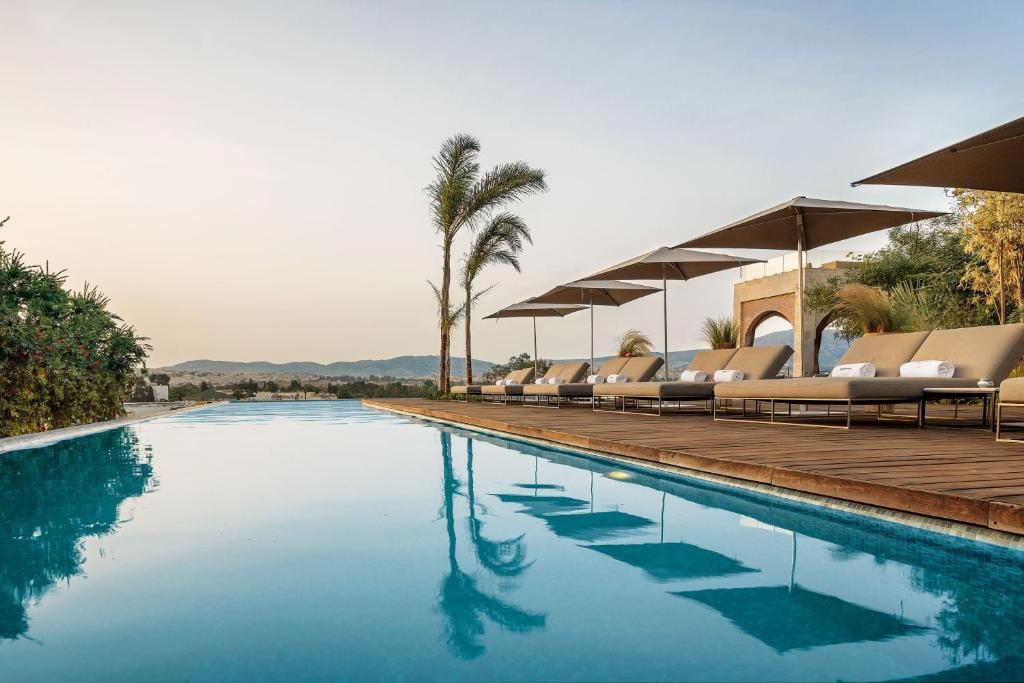
Luminous rooms blending contemporary decor with Spanish-Moorish architecture, overlooking mountains, vineyards, and lavender fields in a peaceful vineyard setting.