
Set in the Palmeraie district north of the medina, Jnane Tamsna is a garden estate that operates at a remove from Marrakech's more theatrical luxury. The property reads as a serious design proposition: organic gardens, Moroccan craft traditions, and a quieter residential rhythm that places it in a distinct tier among the city's maison-style retreats.
Pearl is the En Primeur Club membership app — saves, bookings, and concierge access live there. Same editors, same standards.
- Address
- Douar Abiad, Palmeraie, Marrakesh 40000, Morocco
- Phone
- +212 5243 28484
- Website
- jnanetamsna.com
- Directions
- Get directions
 Saves & bookings on Pearl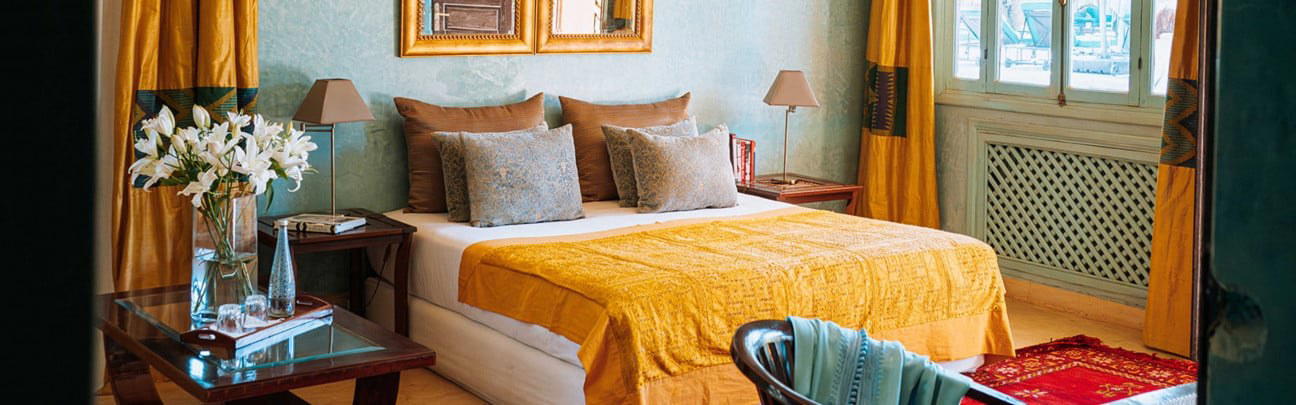
The Palmeraie Approach
The road into Douar Abiad, the village quarter that forms the northern edge of Marrakech's Palmeraie, thins quickly from asphalt to a packed-earth track lined with palms and pink-orange garden walls. The shift from the medina's compressed energy to this open, agricultural calm is the first thing Jnane Tamsna does before you even reach the gates. That sequence is not accidental. Properties in the Palmeraie have long traded on their separation from the city, but they do so in broadly different ways: resort complexes with golf courses and conference facilities at one end, and smaller, garden-centred maisons with a residential quality at the other. Jnane Tamsna occupies the latter position, alongside a smaller cohort that includes BELDI COUNTRY CLUB in placing the working garden at the structural centre of the property rather than as decorative backdrop.
Architecture Built from the Ground Up
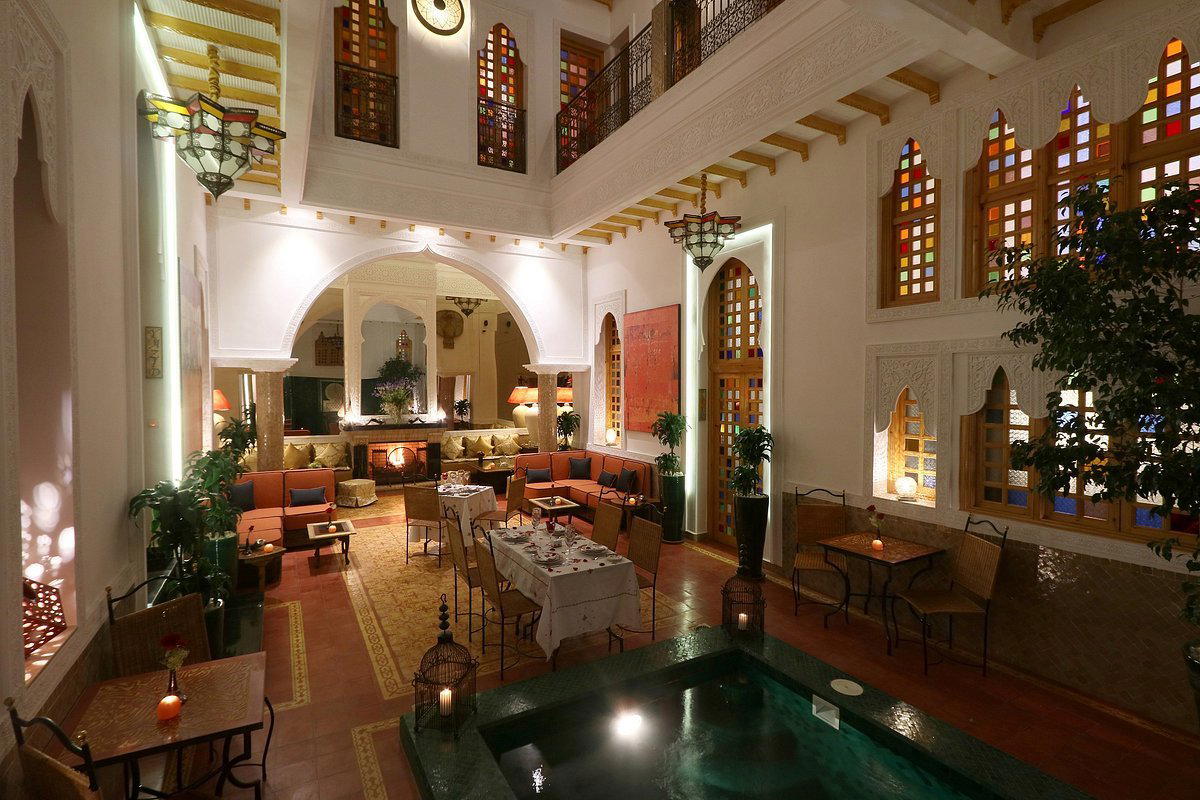
Moroccan riad tradition in the medina typically works inward: blank exterior walls, a central courtyard, rooms that face in rather than out. Jnane Tamsna inverts that logic for its Palmeraie setting, opening onto the gardens rather than folding around a single internal courtyard. The design language draws from Moroccan craft vocabulary — zellige tilework, hand-applied tadelakt plaster, carved plasterwork — but assembles it in a villa compound format rather than a traditional urban riad plan. The result reads less like a heritage property frozen in time and more like a considered commission: materials chosen for their regional authenticity, arranged to a contemporary spatial programme.
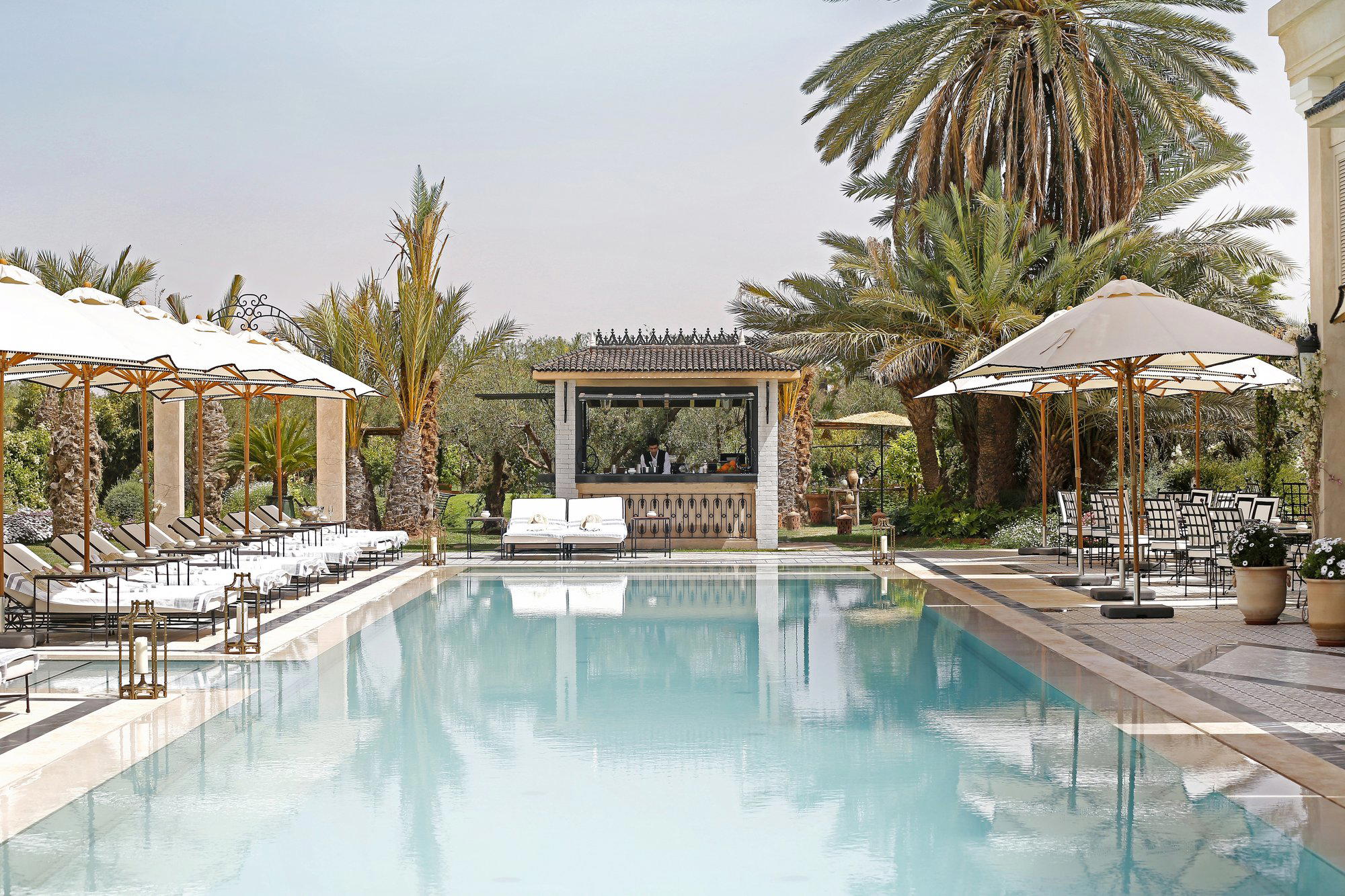
This puts it in a different design category from the medina's high-end riads, which are often contained within historic urban structures. Properties like Dar Les Cigognes and Dar Rhizlane work within the formal constraints of medina architecture, which produces a different spatial experience: narrower, more vertical, defined by the riad plan. Jnane Tamsna's compound in the Palmeraie can spread horizontally, allowing for multiple garden zones, a sequence of pools, and distinct villa structures that create a sense of territory unusual in the city's more compressed accommodation tier. Among medina-based alternatives, AnaYela and Dar Housnia represent the classic riad format well, but they operate within fundamentally different spatial constraints.
The Garden as Architecture
Organic gardens in Moroccan luxury accommodation have become a recurring claim, often functioning more as branding than practice. At Jnane Tamsna, the kitchen gardens and planted grounds are legible as functional spaces: the property has maintained an organic growing programme across its plots, and the visual language of the garden reflects that commitment to productive planting rather than purely ornamental landscaping. Herbs, vegetables, and fruit trees sit alongside more formal planting, which gives the grounds a layered, working quality that distinguishes them from the clipped resort green of properties like Es Saadi Palace.
The comparison matters because it explains the property's positioning in the market. Jnane Tamsna is not offering the grand-hotel experience of La Mamounia in Marrakesh, nor the camp-and-wilderness register of INARA CAMP. It sits in a category where the primary product is a certain quality of immersive domestic calm, expressed through garden depth, spatial generosity, and material craft. Elsewhere in Morocco, properties like Dar al Hossoun in Taroudant and Dar Ahlam in Ouarzazate pursue comparable garden-and-craft formulas in different regional contexts, which gives a sense of where Jnane Tamsna sits within a wider Moroccan hospitality tradition rather than as an isolated proposition.
Rooms and the Question of Scale
Palmeraie properties offer more spatial flexibility than their medina counterparts, and that difference is felt most directly at the room level. The choice between a Palmeraie estate like this and a medina riad is, in part, a spatial decision: the riad format prioritises intimacy and courtyard focus; the garden compound prioritises territory and outdoor living.
For those weighing options, Hotel La Maison Arabe represents the medina's cooking-school-and-courtyard model, which appeals to a different kind of visitor than Jnane Tamsna's garden retreat. The decision comes down to whether the medina's proximity is an asset or a distraction, and whether a garden compound's relative distance from the souks is read as seclusion or inconvenience.
Dining and the Organic Kitchen
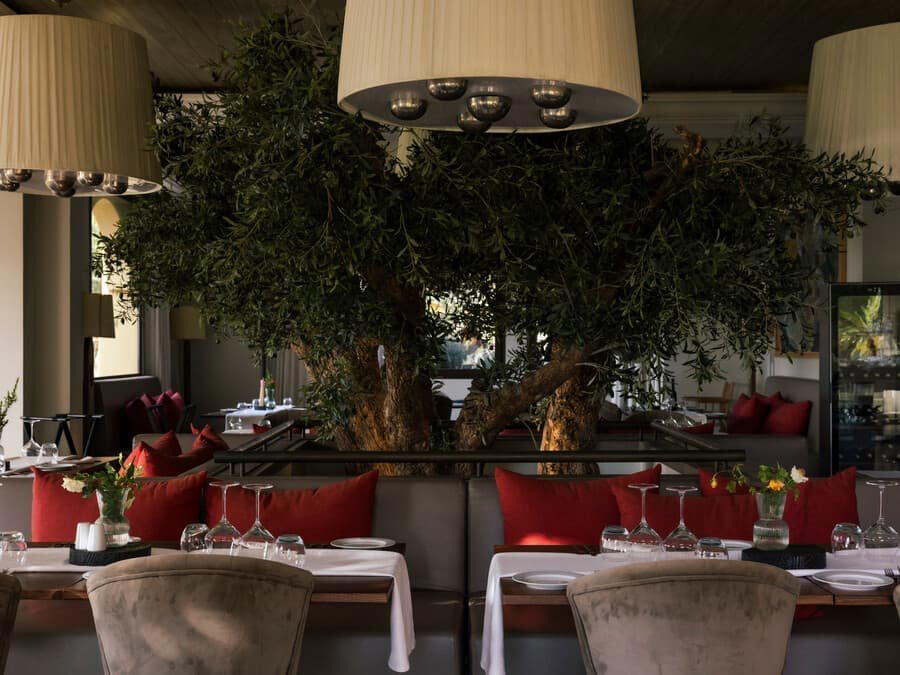
Dining at Palmeraie estates of this type typically centres on produce grown on-site or sourced locally, and the kitchen garden's role as supplier distinguishes the food programme from hotels that use organic sourcing as a marketing note rather than a structural kitchen input. Moroccan cooking at this level draws from a deep tradition of slow-cooked tagines, preserved lemons, argan oil, and spice blends that take years to develop properly, and the proximity of fresh garden produce matters to that kind of cooking in ways it might not to a more international menu. The full Marrakech restaurants guide covers the city's dining range more broadly for those wanting to cross-reference against restaurant options in the medina and beyond.
Planning a Stay
The Palmeraie sits roughly six kilometres north of the medina's Djemaa el-Fna, which means most guests rely on the property's own transport arrangements or hire a driver for medina visits. Marrakech Menara Airport is approximately twelve kilometres south of the Palmeraie, making airport transfers reasonably direct. Peak season runs from October through April, when temperatures are moderate and Marrakech receives the majority of its international visitors. Summer months from June through August bring significant heat to the Palmeraie, where shade and pool access become the primary daytime programme. Booking ahead for peak-season dates is advisable at properties of this scale and format, and direct contact through the property's own channels tends to be the most reliable route for villa-specific room requests. For context on Morocco's broader accommodation range, comparison properties elsewhere in the country include Hotel Sahrai in Fes, Dar Maya in Essaouira, Fairmont Tazi Palace Tangier, Fairmont La Marina Rabat Salé, Fes Marriott Jnan Palace, Banyan Tree Tamouda Bay, Hilton Taghazout Bay, Château Roslane, and Hotel Sahrai in Fez.
Recognition history
Dated appearances from independent guides and award organizations, with the underlying list record or original source where available.
Mr & Mrs Smith Smith Seal of Approval
Mr & Mrs Smith
Michelin Selected
Michelin
Continue exploring
More in Marrakech
Hotels in Marrakech
Browse all →
Bars in Marrakech
Browse all →
Restaurants in Marrakech
Browse all →
Wineries in Marrakech
Browse all →
At a Glance
- Bohemian
- Elegant
- Rustic
- Romantic
- Intimate
- Scenic
- Romantic Getaway
- Family Vacation
- Wellness Retreat
- Group Retreat
- Destination Wedding
- Garden
- Private Villa
- Panoramic View
- Pool
- Tennis Court
- Spa
- Wi Fi
- Restaurant
- Concierge
- Garden
- Pool
- Tennis Court
- Spa
- Wi Fi
- Restaurant
- Concierge
Serene and light-filled oasis with a warm, lived-in Moroccan bohemian atmosphere, evoking timeless cultural dialogue through art, textiles, and lush gardens.
Know Before You Go
- Getting there
- Douar Abiad, Palmeraie, Marrakesh 40000, Morocco