

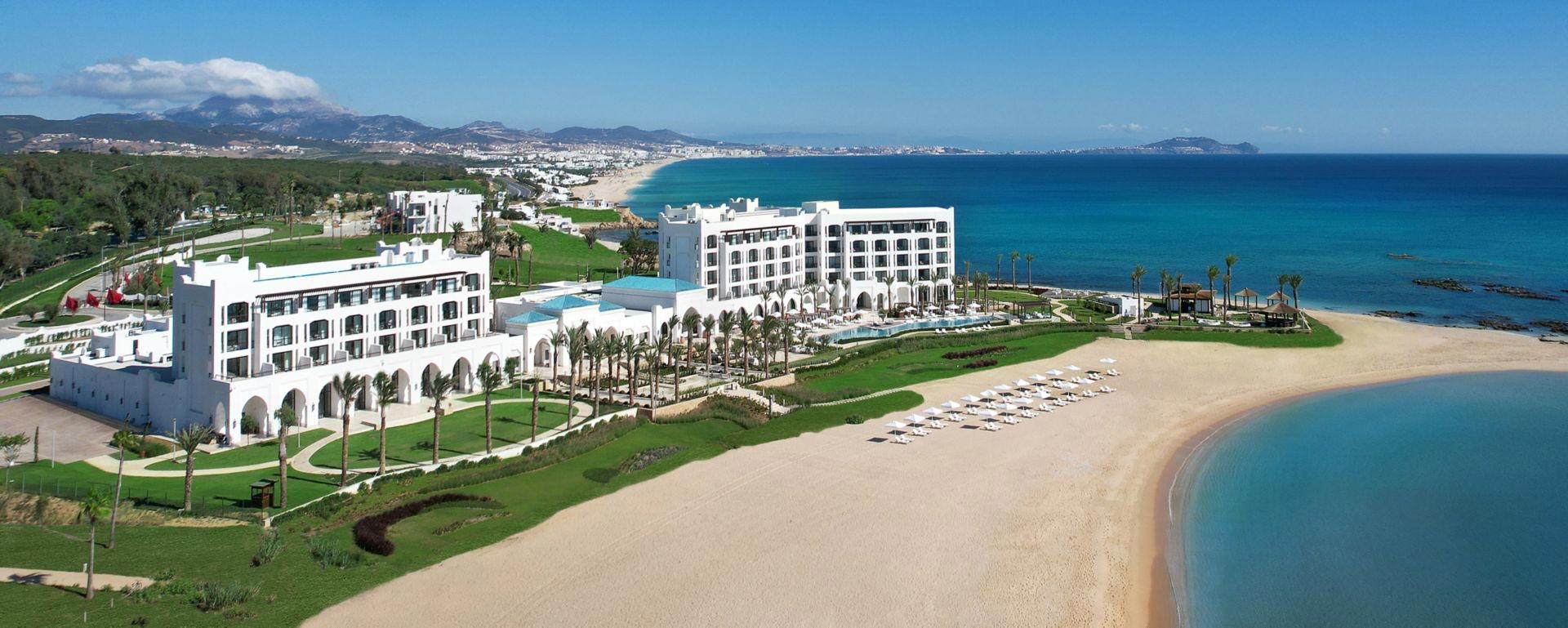
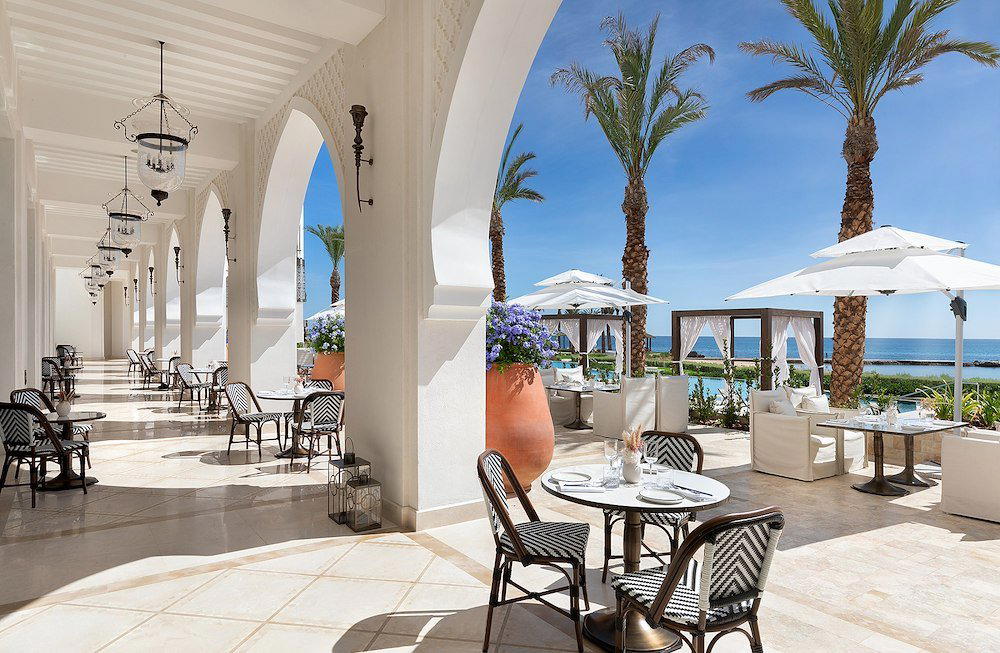
Banyan Tree Tamouda Bay sits on Morocco's northern Mediterranean coast, translating the brand's signature all-pool villa format into an Andalusian-Moorish framework. With 92 villas, a 2,000 sqm spa, and three restaurants, it positions itself as a base for exploring Tetouan, Tangier, and Chefchaouen rather than a self-contained resort bubble.
Pearl is the En Primeur Club membership app — saves, bookings, and concierge access live there. Same editors, same standards.
- Address
- Route Nationale 13, Oued Negro, QJXW+92
- Directions
- Get directions
 Saves & bookings on Pearl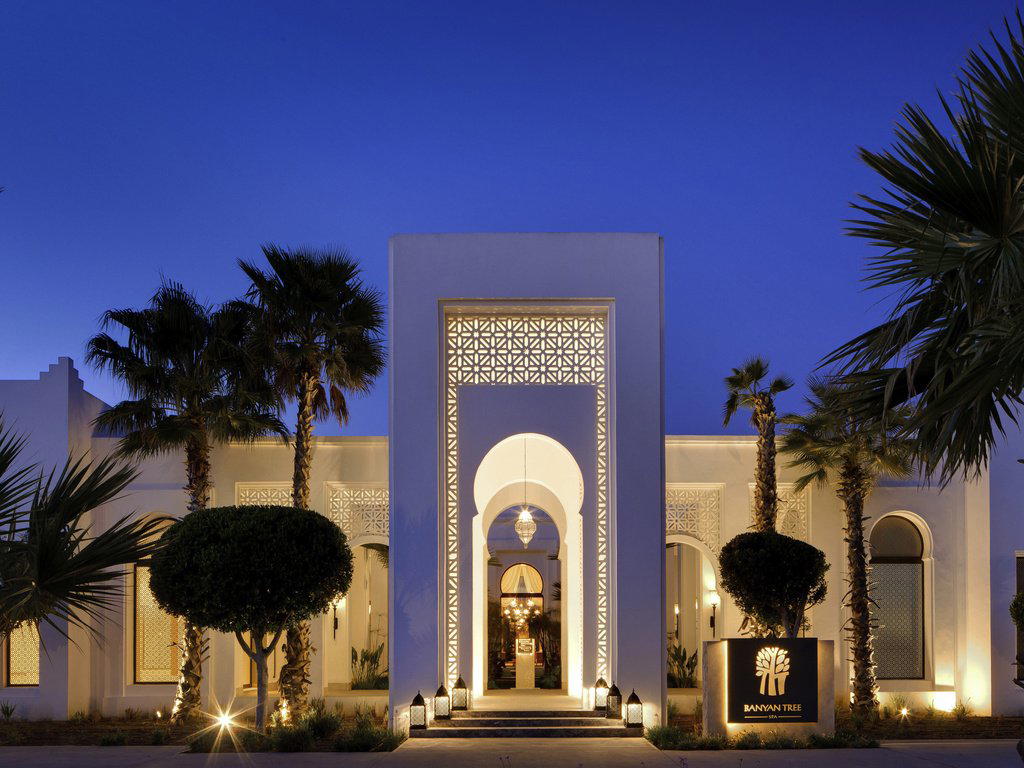
Where the Mediterranean Coast Meets Moorish Architecture
Northern Morocco's hospitality offer has long lagged behind the country's more celebrated imperial cities. Marrakesh attracts the international design hotels, Fes draws the medina riads, and the Atlantic coast commands the surf-and-wellness crowd. The northern Mediterranean strip, running between Fnideq and Tangier, has historically been a transit zone rather than a destination in its own right. Banyan Tree Tamouda Bay occupies a different position in that geography: a resort built to slow you down in a region most visitors pass through.
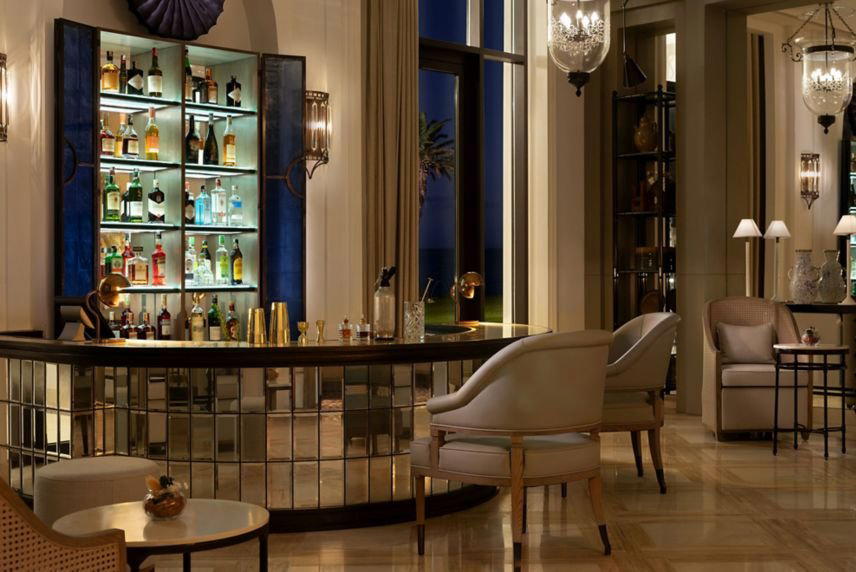
The physical approach to the property sets its design register immediately. The architecture draws from two historically intertwined traditions: Andalusian and Moorish. That pairing is not decorative shorthand here. The northern tip of Morocco, particularly the Tetouan area, functioned for centuries as the principal cultural corridor between the Iberian Peninsula and North Africa. After the Reconquista, Andalusian refugees resettled in Tetouan and Chefchaouen in large numbers, leaving an architectural legacy that still shapes both cities' medinas today. Banyan Tree's design team has used that local history as a structural reference, not merely an aesthetic mood board.
92 Villas, All with Private Pools
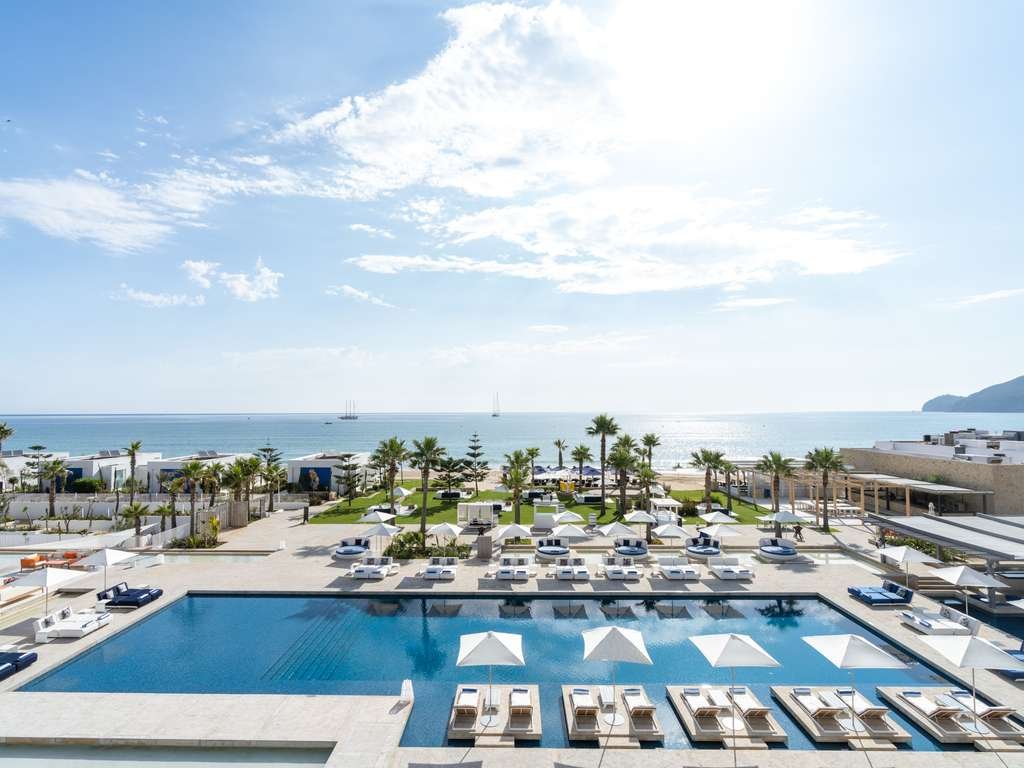
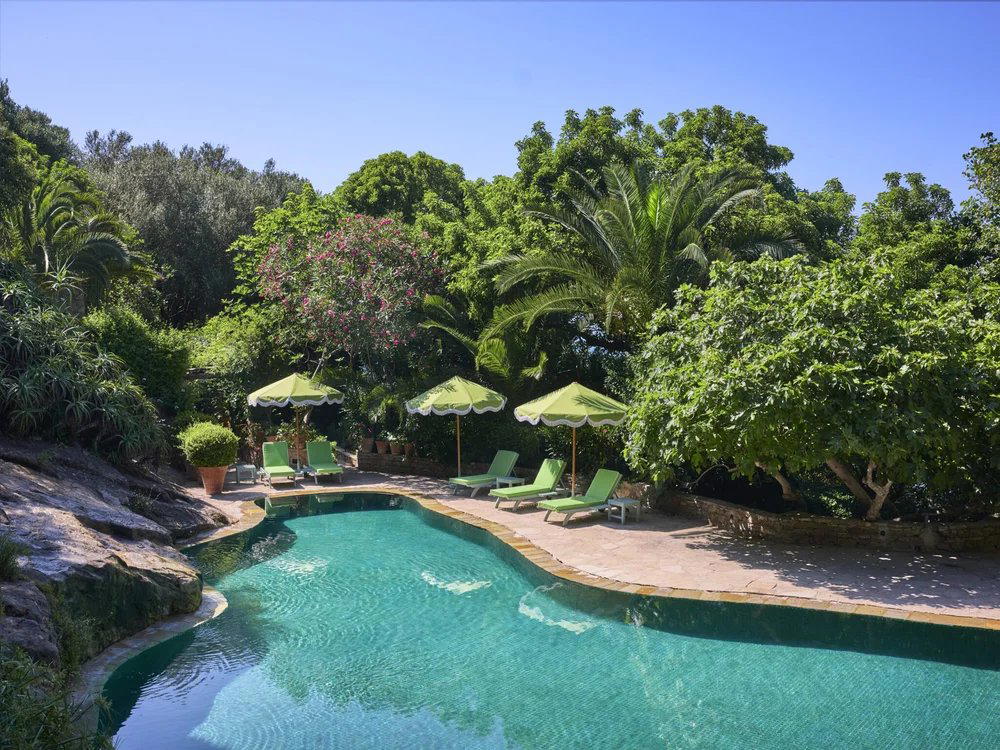
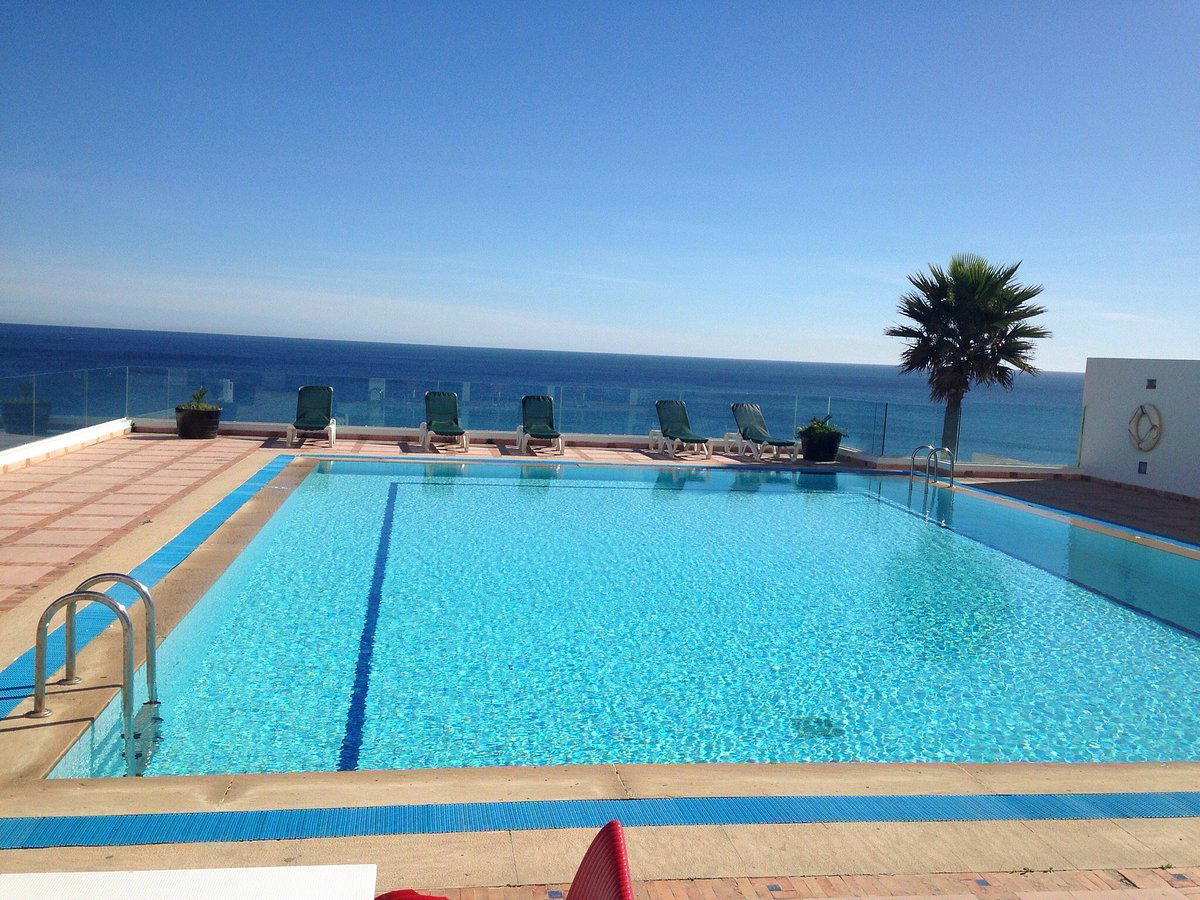
The all-pool villa format, which Banyan Tree pioneered across its Southeast Asian properties in the 1990s, translates with reasonable coherence to the Moroccan north. The 92 villas give the resort a mid-scale footprint: large enough to operate three distinct restaurants and a full-scale spa, compact enough to avoid the anonymous quality that undermines many large beach resorts. The Banyan Tree brand built its global identity around the private-pool villa as a unit of experience, and in the Tamouda Bay context, that format means direct access to Mediterranean views without shared-pool choreography.
For travellers comparing the northern Morocco resort circuit, context matters. Properties like Fairmont Tazi Palace in Tangier operate within an urban, historically loaded setting where the hotel building is itself part of the attraction. Banyan Tree Tamouda Bay sits outside that category entirely, functioning as a coastal retreat from which day excursions radiate. The question for any guest is whether the resort's design coherence and spa infrastructure justify the base-camp model, especially given the density of day-trip options within an hour's drive.
The Spa as a Structural Anchor
At 2,000 square metres, the Banyan Tree Spa is not an amenity bolted onto the resort as an afterthought. Across Banyan Tree properties globally, the spa program functions as a core differentiator and the Tamouda Bay version follows that same logic. The brand's spa identity draws from Asian wellness traditions, which creates an interesting tension in a Moroccan context: hammam culture is embedded in everyday life across the country, and the traditional hammam experience is one of the more accessible and authentic things a visitor can seek out in any Moroccan medina. The resort spa sits in a different register, offering a curated, high-specification wellness environment for guests who want controlled conditions rather than the sensory unpredictability of a medina hammam visit.
The wellness offer complements rather than replicates what guests can find offsite. That distinction matters when assessing value. Travellers already planning medina excursions to Tetouan or Chefchaouen can treat the spa as a recovery and decompression tool, returning to the resort after the heat and density of the medina with a structured wellness itinerary waiting for them.
Three Restaurants and a Bar: The Dining Architecture
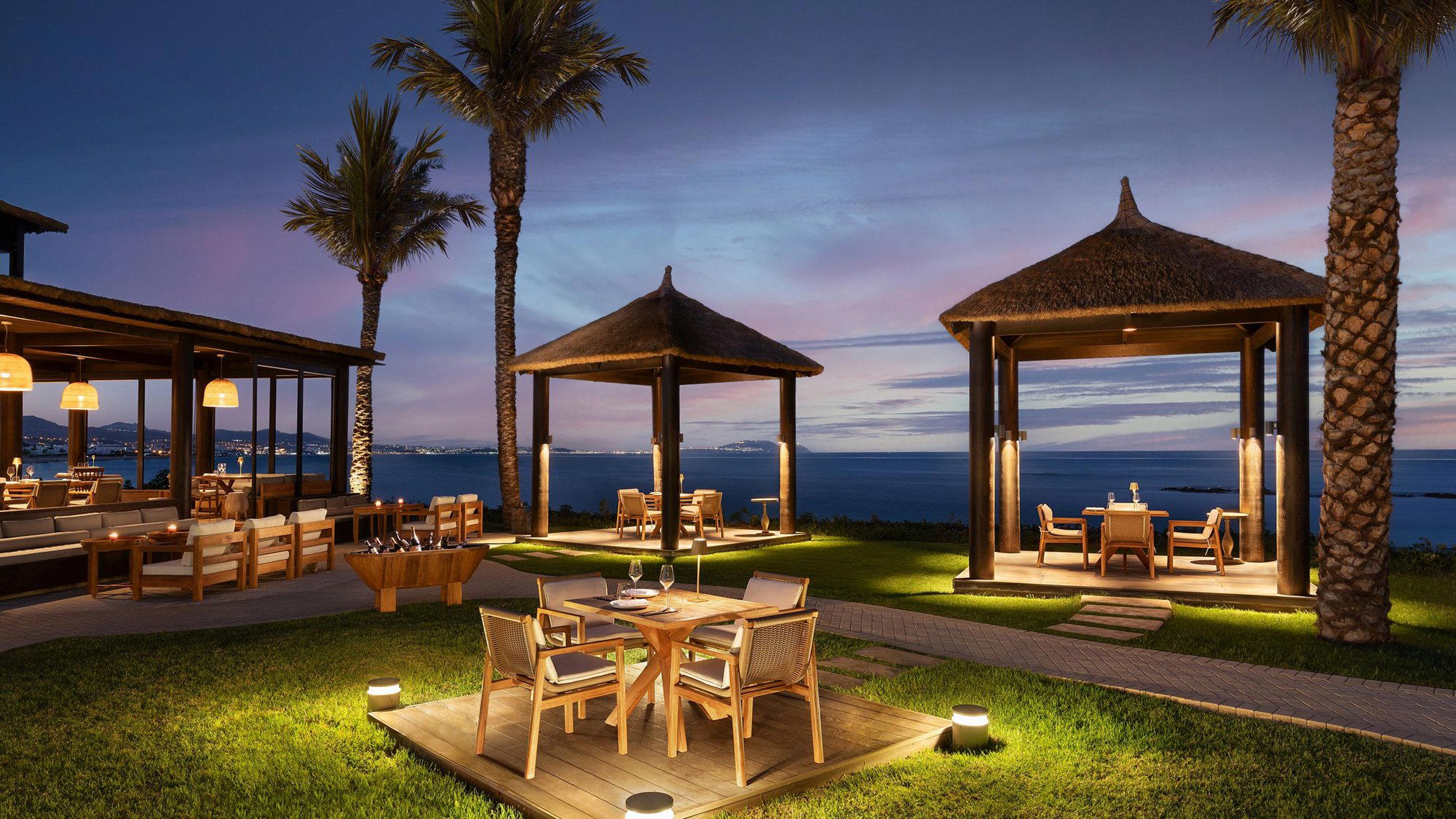
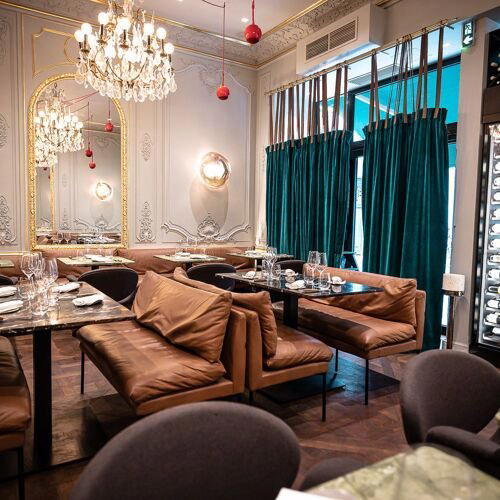
Three restaurants and a bar represent a dining structure designed to keep guests on-property across most meals without repeating the same format. The specifics of each restaurant's cuisine and format are not disclosed in available records, but the three-outlet configuration is a standard response to the all-inclusive resort challenge: diversify enough to prevent menu fatigue across a multi-night stay. For a resort in a region with serious food culture within reach, the relative pull of the onsite restaurants versus the dining options in Tetouan's medina or in Tangier will depend entirely on execution quality.
Morocco's northern coast does not have the established restaurant scene of Marrakesh, where international visitors have driven a restaurant culture that can support comparison with La Mamounia and its peers. In Fnideq and Tetouan, local food is the draw, and any hotel restaurant competing with that context needs to be compelling on its own terms rather than relying on captive audience logic.
The Excursion Geography: What Places This Resort on the Map
The surrounding region is the strongest argument for the resort's location. Tetouan's medina holds UNESCO World Heritage status, recognised specifically for its role as the primary architectural and cultural bridge between Moroccan and Andalusian traditions during the eighth century and beyond. The medina's whitewashed facades, Spanish-Moroccan hybrid buildings, and craft workshops are accessible from the resort within a short drive, making it one of the more architecturally coherent day-trip destinations in the country.
Tangier, roughly an hour west, sits in a different category altogether. The city's literary mythology, its mid-century international zone history, and its position at the confluence of the Atlantic and Mediterranean have made it a reference point in travel writing for over a century. The Hercules Caves, located near Cap Spartel just outside the city, add a geological and mythological dimension to any day visit. The Fairmont Tazi Palace in Tangier sits within the city itself for those who want to base there instead.
Chefchaouen, the blue-painted mountain town roughly 100 kilometres southeast of Tamouda Bay, runs on a different clock entirely. The town's Andalusian-Moroccan heritage, visible in its blue-washed medina walls and tiered hillside architecture, makes it one of the more photographed places in Africa. The drive into the Rif Mountains is part of the experience, and the town's local markets and artisan production give it a day-trip profile that complements rather than duplicates Tetouan.
Planning and Positioning
For travellers already exploring Morocco's broader hotel circuit, Banyan Tree Tamouda Bay occupies a specific position. It is not the medina riad experience offered by properties like Hotel Sahrai in Fes or the desert edge retreats like Dar Ahlam in Ouarzazate. It does not attempt the Atlantic coast surf positioning of Hilton Taghazout Bay or the lagoon specificity of La Sultana Oualidia. Its position is Mediterranean-coast resort with serious cultural excursion options, serving guests who want both the architecture and infrastructure of a full-scale branded resort and access to one of Morocco's less visited but historically dense regions.
The resort sits on Route Nationale 13 along the Oued Negro section of the Tamouda Bay coastline. Tetouan is the nearest city with an airport, and the ferry crossing at Ceuta, the Spanish enclave on Morocco's northern tip, provides an alternative entry point for travellers arriving from southern Spain. Booking runs through Banyan Tree's global reservations platform. See our full Fnideq guide for the broader regional context.
How Banyan Tree Tamouda Bay Fnideq compares with similar nearby venues.
| Venue | Awards |
|---|---|
| Banyan Tree Tamouda Bay | Virtuoso Luxury Hotel Partner (2026) |
Recognition history
Dated appearances from independent guides and award organizations, with the underlying list record or original source where available.
Virtuoso Luxury Hotel Partner
Virtuoso
World Spa Awards Morocco's Best Wellness Retreat 2026 Nominee
World Spa Awards
World Spa Awards Morocco's Best Wellness Retreat 2025 Nominee
World Spa Awards
At a Glance
- Romantic
- Elegant
- Scenic
- Sophisticated
- Ornate
- Honeymoon
- Romantic Getaway
- Family Vacation
- Wellness Retreat
- Beachfront
- Infinity Pool
- Private Villa
- Destination Spa
- Wi Fi
- Pool
- Spa
- Fitness Center
- Room Service
- Concierge
- Business Center
- Valet Parking
- Kids Club
- Beach Access
- Waterfront
- Wi Fi
- Pool
- Spa
- Fitness Center
- Room Service
- Concierge
- Business Center
- Valet Parking
- Kids Club
- Beach Access
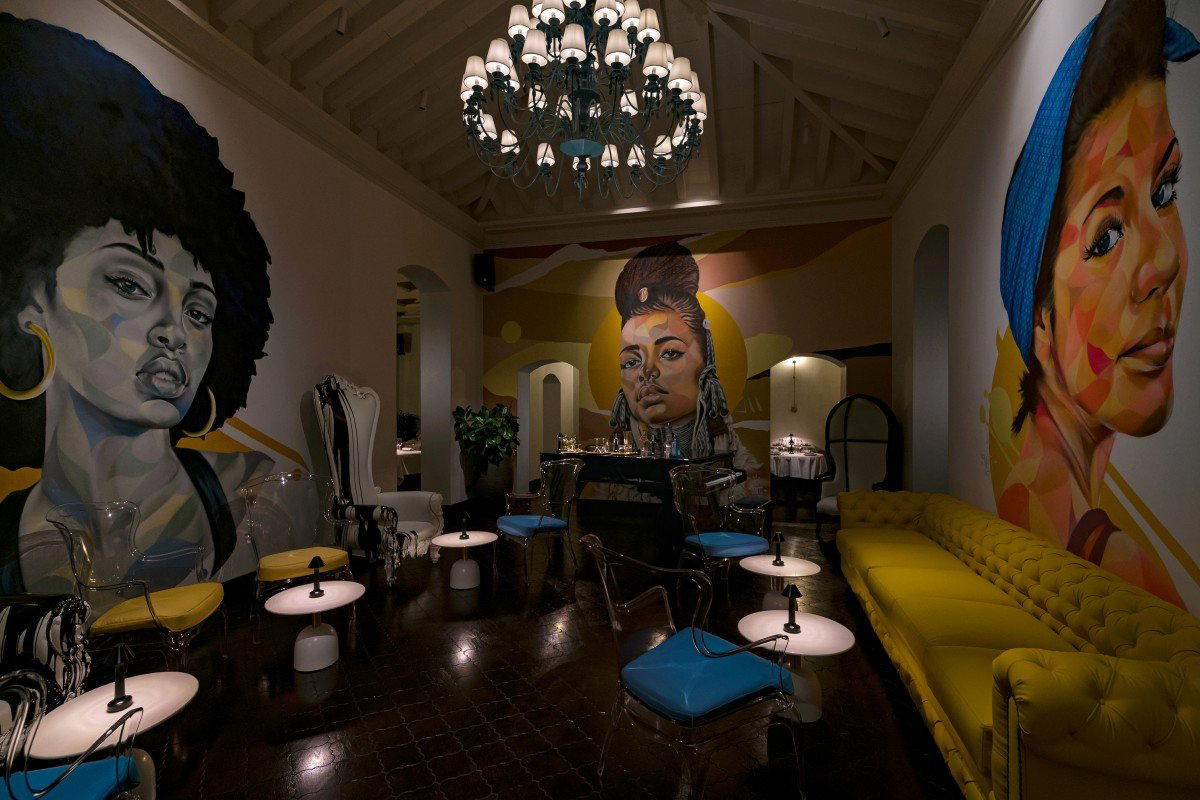
Serene and tranquil with Moroccan-inspired decor, high ceilings, private courtyards, and relaxing spa atmosphere praised in guest reviews.
Know Before You Go
- Getting there
- Route Nationale 13, Oued Negro, QJXW+92