
2 Michelin Keys
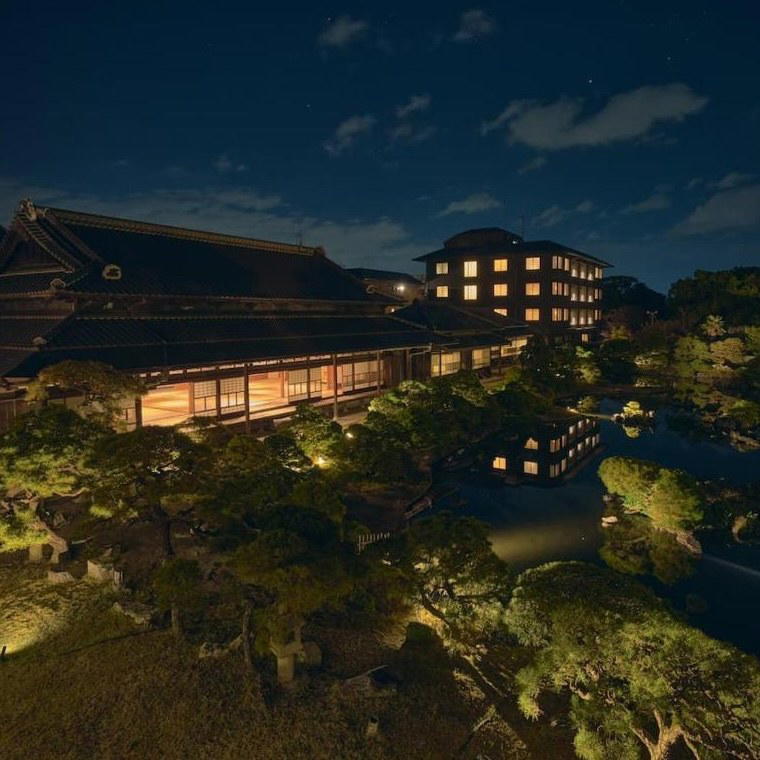
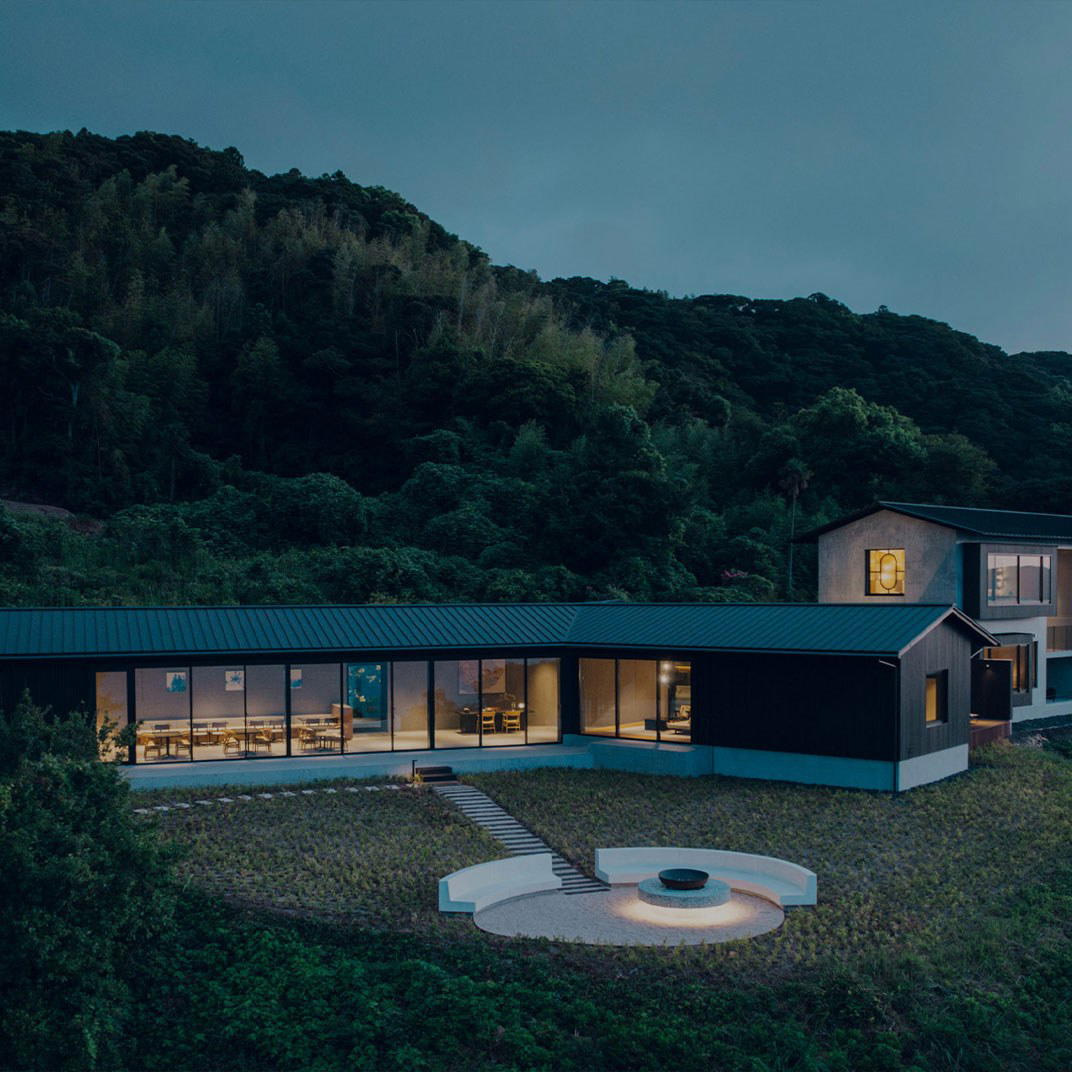
Onyado Chikurintei sits at the base of Mount Mifune in Takeo, Saga Prefecture, with just 11 suites spread across grounds that border the historic Mifuneyama Rakuen garden. Rooms open onto bamboo groves, flowering trees, and mountain views, with some offering private baths and dedicated garden paths. The property operates at a pace defined by its forest setting rather than any programmed itinerary.

Pearl is the En Primeur Club membership app — saves, bookings, and concierge access live there. Same editors, same standards.
- Address
- 〒843-0022 Saga, Takeo, 武雄町4100
- Phone
- +81 954-23-0210
- Website
- chikurintei.jp
- Directions
- Get directions
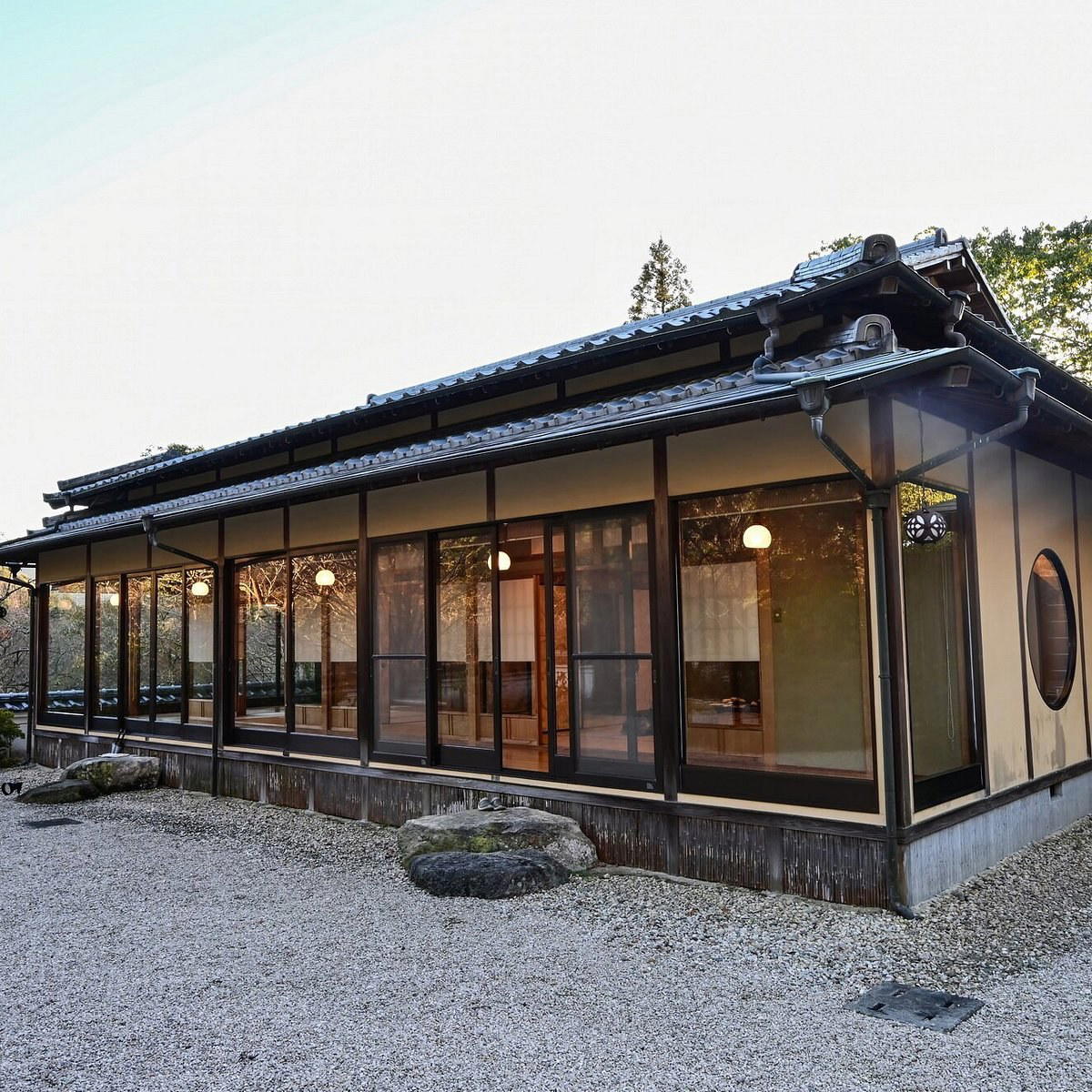
Where Forest and Architecture Meet at Mifuneyama
There is a particular type of Japanese inn that earns its reputation not through spectacle but through the quality of its silence. Onyado Chikurintei, positioned at the base of Mount Mifune in Takeo, Saga Prefecture, belongs to that category. The approach to the property signals what follows: dense forest canopy, the ambient presence of Mifuneyama Rakuen garden, and a stillness that separates the site from the rhythms of the town below. The architecture does not announce itself. It draws you inward.
Takeo is a spa town with a long history in Saga Prefecture, known for its thermal waters and a castle gate that dates to the Edo period. It sits roughly 90 minutes from Fukuoka by road, and the opening of the Nishi-Kyushu Shinkansen in 2022 placed it more firmly on the regional travel circuit, shortening journey times from Nagasaki and improving connections from the north. Even so, Takeo retains a quieter register than better-publicised hot spring destinations in Kyushu. For a property like Onyado Chikurintei, that relative obscurity is part of the value proposition. See our full Takeo restaurants guide for broader context on the town's food and leisure scene.
Eleven Suites, One Coherent Design Logic
Japan's premium ryokan tier has increasingly fragmented into two recognisable camps: larger heritage inns that operate closer to hotel scale, and small-footprint properties that treat limited capacity as a deliberate editorial choice. At 11 suites across expansive grounds, Onyado Chikurintei sits firmly in the latter group. The low room count is not a matter of historical accident but of spatial philosophy. With rooms distributed across a site large enough to absorb the Mifuneyama Rakuen garden as its effective backdrop, the suite-to-land ratio produces a density that feels closer to a private residence than an inn.
The interiors follow a logic rooted in material honesty: traditional construction methods, natural textures, and a spatial relationship between room and garden that refuses to draw a hard line between inside and outside. Some suites open directly onto bamboo groves; others frame mountain views or connect to private garden paths. The design language is not one of visual drama but of calibrated framing, each room positioned to make the changing seasonal conditions outside the primary aesthetic event. This approach places Chikurintei in a lineage of Japanese architecture that treats the garden as interior decoration and the built structure as a secondary frame around landscape.
Properties that operate with a similar spatial philosophy, where natural setting functions as the primary design element rather than a backdrop, include Amanemu in Mie, Zaborin in Kutchan, and Asaba in Izu. Each uses a low-key count and site-integrated design to shift the guest's attention from the property itself toward its environment. Chikurintei's specific advantage is the Mifuneyama Rakuen context: a garden that spans roughly 500,000 square metres and was established in the mid-19th century, providing a setting with genuine historical and horticultural depth rather than a manicured modern landscape.
The Mifuneyama Rakuen Factor
In Japanese hospitality design, borrowed scenery, or shakkei, is a technique with centuries of precedent: a garden is planned to incorporate distant hills, trees, or structures as if they were part of the composition, dissolving the boundary between contained and expansive. Onyado Chikurintei deploys this at an unusual scale. The Mifuneyama Rakuen garden, which borders the property, transforms substantially across the year, from spring wisteria and azalea bloom to summer green, autumn maple colour, and winter quiet. A stay at Chikurintei is therefore calibrated differently depending on when it happens. The most-visited season for the garden tends to be spring, when azaleas across the hillsides create a spectacle that draws visitors across Kyushu, but autumn offers arguably more intimate conditions, when the crowds thin and the maple canopy turns in relative quiet.
That seasonal specificity is worth factoring into planning. Unlike urban properties such as Bvlgari Hotel Tokyo or HOTEL THE MITSUI KYOTO, where the urban surroundings offer consistent programming across seasons, Chikurintei's character shifts meaningfully with the calendar. The design of the property is built to make those seasonal shifts legible from inside the suites themselves.
How Chikurintei Sits in Japan's Broader Ryokan Spectrum
Japan's finest traditional inns span a wide register, from the celebrated grand ryokan of Kinosaki and Kaga, where heritage and service formality are the primary draw, to newer design-forward properties that reinterpret the form for a contemporary audience. Nishimuraya Honkan in Kinosaki-cho, Araya Totoan in Kaga, and Gora Kadan in Hakone each represent the ceremonial end of that spectrum, with deep service programmes and formal kaiseki traditions. Chikurintei operates at a different register: quieter, more spatially focused, and less structured around ritual performance. It occupies a position closer to properties like Benesse House in Naoshima, where the guest's relationship to a specific site is the primary offer.
Elsewhere in Kyushu, ENOWA Yufu in Yufu and ANA InterContinental Beppu Resort and Spa in Beppu represent contrasting approaches to the region's hot spring hospitality, with larger footprints and more international service framing. Chikurintei's appeal is more interior in character: the value lies in what the property withholds as much as what it provides.
Planning a Stay
Takeo is accessible from Fukuoka via the Nishi-Kyushu Shinkansen corridor, with connections that make a two- or three-night stay practical from either Fukuoka or Nagasaki. The property operates 11 suites and, given the low capacity, advance planning is advisable, particularly for spring and autumn when the Mifuneyama Rakuen garden is at its most active seasonally. Reservations for Onyado Chikurintei are not currently available through EP Club platforms, so direct inquiry through the property or a specialist travel agent is the appropriate route. Those building a longer Kyushu itinerary might consider pairing a stay here with time in Beppu or Nagasaki, both within manageable distance.
For comparison against other properties operating at similar scale and tone across Japan, Bettei Otozure in Nagato, Bettei Senjuan in Minakami, Beniya Kofuyuden in Awara, Sekitei in Hatsukaichi-shi, Atami Izusan Karaku in Atami, Azumi Setoda in Onomichi, Fufu Kawaguchiko in Fujikawaguchiko, Fufu Nikko in Nikko, Halekulani Okinawa, and Jusandi in Ishigaki each warrant consideration depending on the season and specific setting you are after.
A Quick Peer Check
| Venue | Awards |
|---|---|
| Onyado ChikurinteiThis venue — the venue you are viewing | 2 Michelin Keys |
| Bvlgari Hotel Tokyo | 3 Michelin Keys · World's 50 Best #24 |
| Aman Kyoto | 2 Michelin Keys · World's 50 Best #74 |
| Aman Tokyo | 2 Michelin Keys · World's 50 Best #11 |
| Amanemu | 3 Michelin Keys · La Liste Top Hotels |
| Four Seasons Hotel Tokyo at Otemachi | 3 Michelin Keys · La Liste Top Hotels |
Recognition history
Dated appearances from independent guides and award organizations, with the underlying list record or original source where available.
Michelin 2 Keys
Michelin
Full recognition history (2 entries)
Michelin 2 Keys
Michelin
Details
- Quiet
- Scenic
- Elegant
- Romantic
- Intimate
- Romantic Getaway
- Honeymoon
- Anniversary
- Wellness Retreat
- Private Villa
- Panoramic View
- Garden
- Historic Building
- Wi Fi
- Room Service
- Public Bath
- Garden
- Mountain
- Wheelchair Accessible
Serene and deeply still atmosphere with traditional interiors connected to lush gardens, bamboo groves, seasonal nature, and mountain views, fostering relaxation and healing.