

Michelin Selected · Tablet Hotels Best New Hotel Designs (Asia)
A Michelin Selected property in the historic castle town of Hirado, Nagasaki Prefecture, Kikka Hirado sits within a category of small-scale Japanese accommodations that prioritise spatial character and regional specificity over international-brand polish. The address, on the quieter western edge of Kyushu, positions it inside a peer group of destination ryokan where the surrounding landscape and architecture do the work that a lobby bar would elsewhere.

Pearl is the En Primeur Club membership app — saves, bookings, and concierge access live there. Same editors, same standards.
- Address
- 323-2 Akenokawachicho, Hirado, Nagasaki 859-5122, Japan
- Phone
- +81 950-22-7056
- Website
- kikka-hirado.com
- Directions
- Get directions
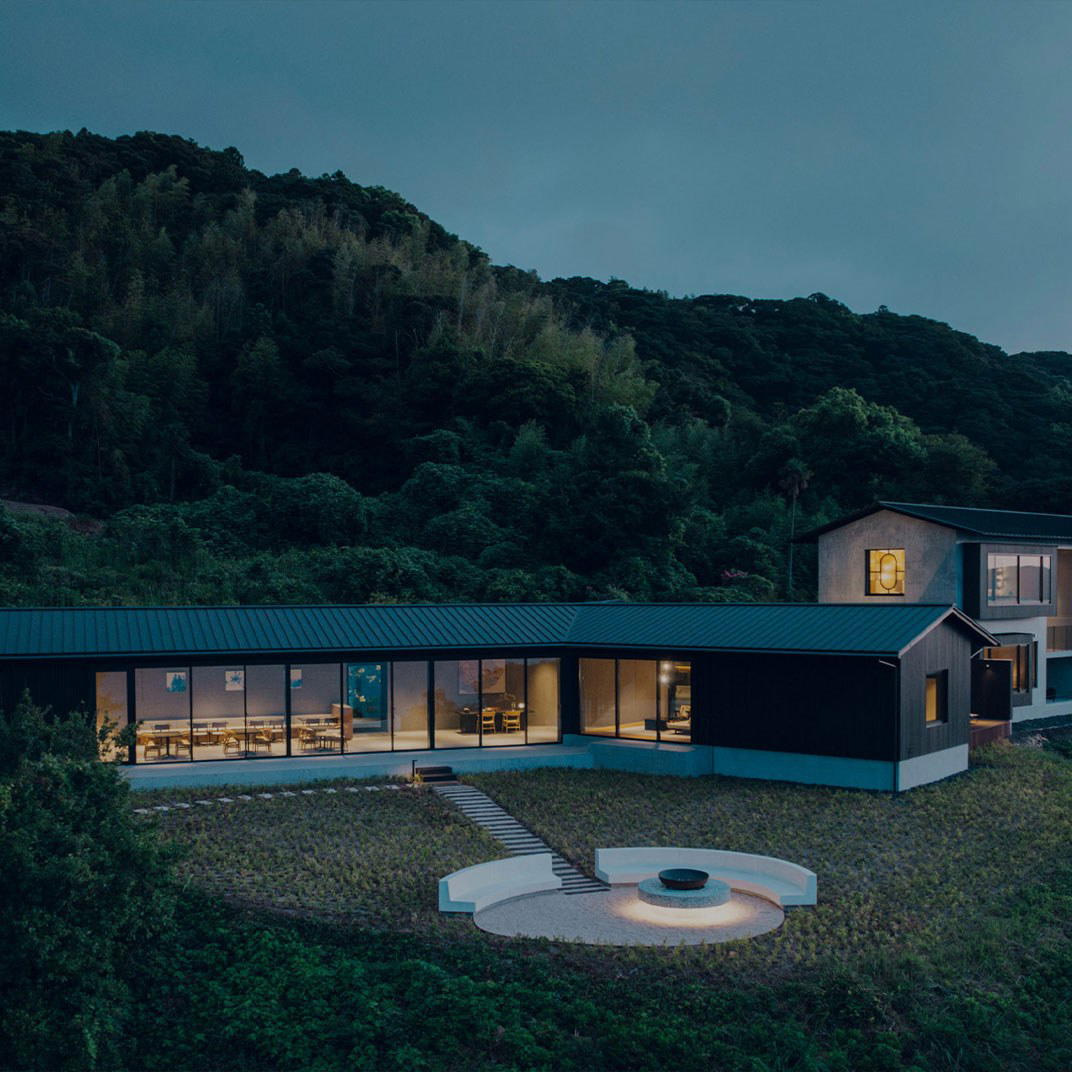
Stone Walls, Silence, and the Architecture of Arrival
Hirado is not a city that announces itself. The town on the northwestern tip of Nagasaki Prefecture occupies an island connected to the Kyushu mainland by a single bridge, and the road in passes rice paddies, Portuguese-era stone walls, and the refined silhouette of Hirado Castle before it reaches anything resembling a commercial strip. This is not incidental backdrop. It is the context against which accommodation choices here are measured, and it sets the register for what Kikka Hirado is trying to do.
Small-scale Japanese properties in historically layered towns tend to fall into two broad architectural modes: the renovated machiya or merchant house that performs intimacy through age and patina, and the purpose-built ryokan that performs restraint through proportion and material selection. Kikka Hirado, addressed at 323-2 Aza Umeyashiki in Akenokawachicho, occupies terrain where those two modes can blur. The Akenokawachicho district sits at the quieter residential edge of town, away from the main tourist drag near the castle approach, which signals a deliberate withdrawal from spectacle in favour of stillness.
What Michelin Selection Signals in This Category
Kikka Hirado holds a MICHELIN Selected designation in the Michelin Hotels & Stays guide for 2025, which places it in a specific tier of Japan's accommodation offer. The Michelin hotel program does not use stars in the same numeric fashion as its restaurant guide. Instead, MICHELIN Selected represents the baseline recognition tier: properties that clear a threshold of quality, comfort, and character sufficient to be recommended to a Michelin readership, but are not yet in the upper bands of the program. Within Japan's hospitality market, that still means something. The country's selection pool is dense and the inspectors are exacting about details that other markets treat as optional.
For comparison, the broader Michelin Hotels Japan selection covers properties ranging from internationally branded flagships like Bvlgari Hotel Tokyo down to deeply regional properties where the local character is itself the credential. Kikka Hirado sits toward the latter end of that spectrum. In this, it has more in common with properties like Kamenoi Besso in Yufu or Nishimuraya Honkan in Kinosaki-cho than with urban hotel towers. The Michelin mark here functions as a quality filter, confirming that the property meets standards that casual guesthouses nearby may not, while the location and scale do the differentiation work that brand affiliation does elsewhere.
Hirado as Architectural and Historical Frame
Understanding what a stay at Kikka Hirado involves requires understanding what Hirado is. The town was Japan's primary window to overseas trade for more than a century before Nagasaki's artificial island of Dejima took over that function in 1641. Dutch and Portuguese merchants, Chinese traders, and early English visitors all operated here, and the architectural residue of those encounters still reads in the town's streetscape. Dutch Trading House ruins, a Catholic church visible from a Buddhist temple on the same hillside, and castle grounds that predate the Edo period form the texture of the walking environment around the property.
This historical density is not a museum piece. It is the reason people travel to Hirado at all, and properties in this town succeed or fail partly on how well they connect guests to that texture rather than insulating them from it. The address in Akenokawachicho is close enough to the historical core to make the town walkable, yet positioned outside the main sightseeing circuit, which provides a quieter arrival experience than properties directly on the tourist route. For the type of traveller drawn to Western Kyushu for its pace and patina, that positioning matters as much as the room itself.
Nagasaki Prefecture as a whole has developed a secondary circuit of destination properties, with the offshore islands attracting accommodation investment alongside the prefecture capital. The nearby GOTO RETREAT by Onko Chishin in Goto, on the Goto Island chain roughly an hour by high-speed ferry from Nagasaki city, represents a comparable commitment to regional specificity in a similarly remote setting. Both properties make an argument that Kyushu's western fringe, long overshadowed by the inland onsen circuits of Beppu and Yufu, holds its own as a destination for considered slow travel.
Japan's range of design-conscious small properties is extensive. The ryokan tradition has produced a category of accommodation that international hotel chains spend considerable effort trying to approximate, generally without success. The Michelin hotel program's Japan selection includes several properties that represent different expressions of that tradition: Gora Kadan in Hakone and Asaba in Izu both sit within classic onsen-town frameworks, where the thermal water program anchors the guest experience. Zaborin in Kutchan moves that model to Hokkaido, where the architecture responds to snow-load and forest rather than volcanic topography. Amanemu in Mie applies international luxury infrastructure to a similar premise of thermal water and Japanese spatial language.
Kikka Hirado occupies none of those frameworks exactly. Hirado lacks the concentrated onsen identity of Hakone or Beppu. What it offers instead is historical and maritime specificity: a town that reads differently from any other in Japan, and a surrounding sea that shapes both the local food supply and the quality of light. For guests calibrated to that register, the absence of a thermal water program is not a deficit.
See our full Hirado restaurants guide for dining context across the town.
Planning a Visit
Hirado is reached by road from Sasebo, which connects to Hakata (Fukuoka) via the Kamome limited express train in approximately 90 minutes. From Sasebo, Hirado is around 40 minutes by bus or car across the Hirado Bridge. The island has no rail service. Given the limited accommodation stock in this tier, advance booking is advisable, particularly for autumn foliage season and the spring period when the castle grounds are at their most visually composed. Pricing and room configuration are not publicly listed in available data.
In Context: Similar Options
Comparable venues nearby, for context on price, style, and recognition.
| Venue | Cuisine | Price | Awards | Notes |
|---|---|---|---|---|
| Kikka HiradoThis venue — the venue you are viewing | thoroughly modern boutique retreat | $500–750 | Michelin Selected · Tablet Hotels Best New Hotel Designs (Asia) | Not listed |
| onsen garden 湯本庵 清姫 | Detached private onsen villas in garden setting | Not listed | Not listed | 日当山温泉 |
| THE HIRAMATSU HOTELS & RESORTS Ginoza | villa-style resort with private pools | $500–750 | 1 Michelin Key | Ginoza-son |
| Yawn Yard | Private villa resort integrated with nature | Not listed | Michelin Selected | Kouri Island |
| Yama no Chaya (山の茶屋) | Traditional Japanese ryokan built into mountainside surrounded by bamboo and river gorge. | Not listed | Not listed | Tonosawa |
| Private Resort Hotel Renn | Stilted futuristic boutique resort | Not listed | Michelin Selected | Gurikubetomori |
Recognition history
Dated appearances from independent guides and award organizations, with the underlying list record or original source where available.
Michelin Selected
Michelin
Tablet Hotels Best New Hotel Designs (Asia)
Tablet Hotels · Tablet Hotels Design Awards 2026: Best New Hotel Designs (Asia)
Continue exploring
More in Hirado

Details
- Modern
- Quiet
- Scenic
- Elegant
- Intimate
- Romantic Getaway
- Wellness Retreat
- Weekend Escape
- Waterfront
- Panoramic View
- Wi Fi
- Sauna
- Restaurant
- Room Service
- Waterfront
- Step Free Entrance
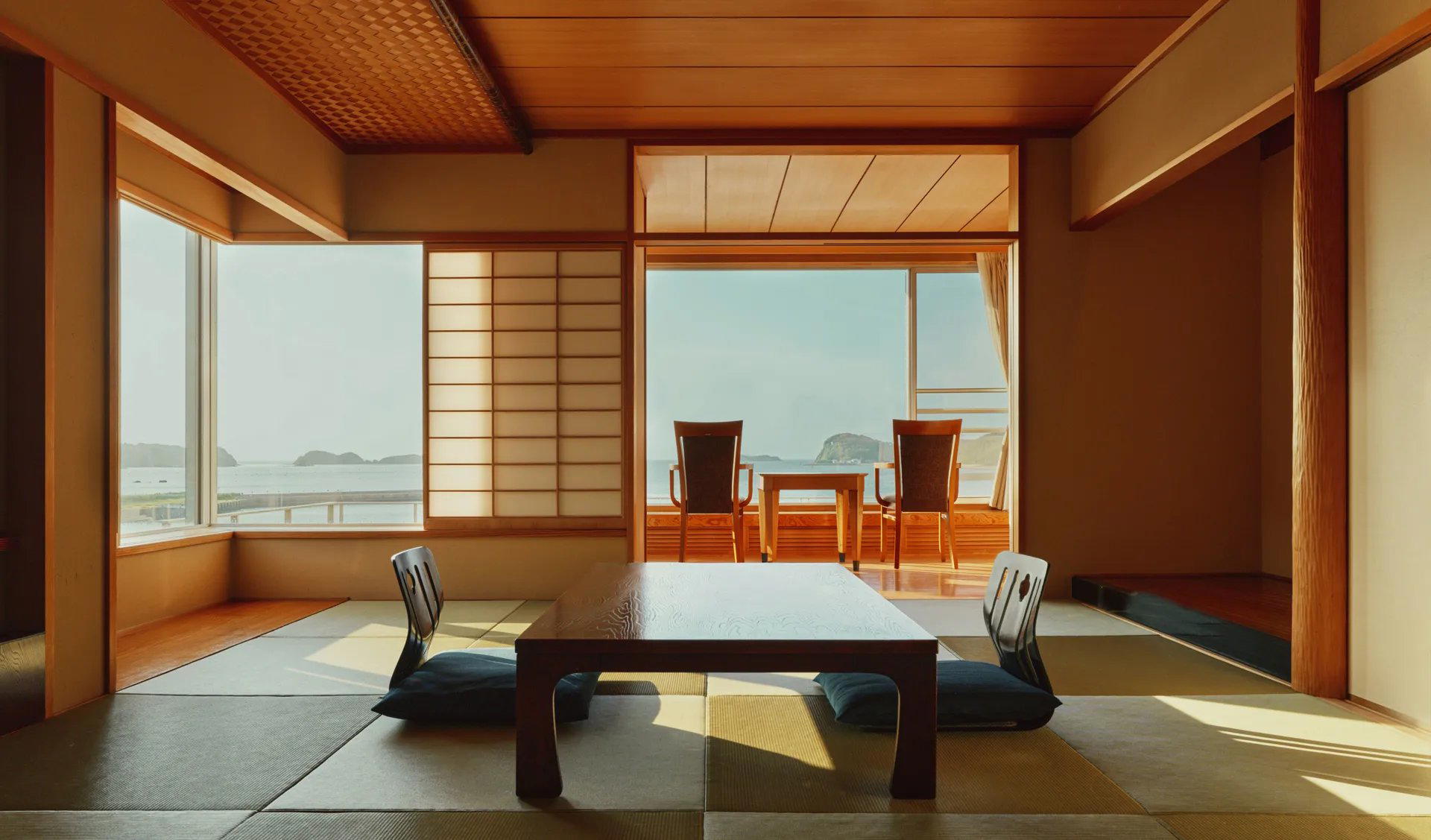
Contemporary clean design with harmonious relaxing atmosphere enhanced by dramatic ocean views from rooms, restaurant, and sauna.