

Tabelog Silver #51
Our verdict
A five-seat chef's counter in rural Saga prefecture, Kate cuore has earned consecutive Tabelog Silver Awards from 2022 through 2026 and a place on the Tabelog Italian WEST 100 list, scoring 4.54 against peers in Japan's most competitive western-region Italian ranking. The kitchen works around self-raised beef and course-format cooking that runs approximately four hours per sitting, at JPY 30,000–39,999 per head.

Pearl is the En Primeur Club membership app — saves, bookings, and concierge access live there. Same editors, same standards.
- Address
- 3997-4 Tachibanacho, Imari, Saga 848-0027, Japan
- Phone
- +81 955-23-1110
- Website
- tabelog.com
- Directions
- Get directions
- Booking
- Book on Omakase
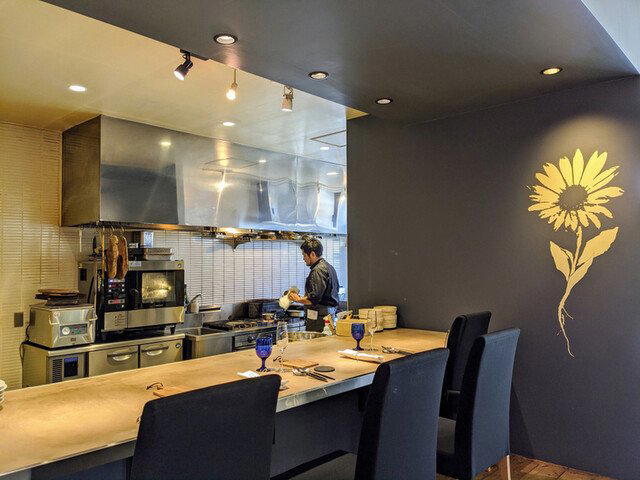
Imari is not a city most people associate with Italian cuisine at the JPY 30,000–50,000 level. The port town in northwestern Saga prefecture is known internationally for its porcelain tradition, the blue-and-white Imari ware that shaped European ceramic taste from the seventeenth century onward. Fine dining, in the competitive Tabelog sense, is not what draws visitors here. That context makes the position of Kate cuore on Japan's Italian restaurant rankings genuinely interesting rather than merely surprising.
Italian Cooking in the Japanese Regional Register
The arc of Italian cuisine in Japan follows a well-documented pattern. The major metropolitan markets — Tokyo's Minami-Aoyama and Nishi-Azabu corridors, Osaka's Kitashinchi, Kyoto's Nakagyo ward — absorbed the first wave of Italian-trained Japanese chefs from the 1990s onward and remain the heaviest concentration of serious Italian tables. cenci in Kyoto represents that metropolitan approach: a chef with extended Italian formation, a menu that reads through a Japanese ingredient lens, and a location within reach of a deep urban dining population. 8 1/2 Otto e Mezzo Bombana in Hong Kong sits at the international end of that same axis, Italian in name, Asian in address, cosmopolitan in audience.
The second, less discussed tier is the regional Italian table: operations outside Japan's major city clusters that have nonetheless built enough sustained quality to register on national platforms. These restaurants typically serve smaller weekly covers, draw dedicated guests willing to travel significant distances, and operate on course formats that make each sitting economically viable despite the limited seat count. Kate cuore, opened in November 2015 in Tachibanacho, Imari, belongs squarely in that second tier, and it has accumulated the credentials to place it at the upper end of it.
What the Award Record Tells You
Tabelog's Silver Award, which Kate cuore has held continuously from 2022 through 2026, sits one tier below the platform's Gold and is typically associated with restaurants scoring above 4.5 in a system where scores above 4.0 already represent a narrow percentile of listed venues. Kate cuore's current score of 4.54 and its ranking at position 256 in Tabelog's 2025 national ranking for leading restaurants confirm it as one of the more consistently reviewed Italian addresses in western Japan. Separate from the annual Silver Awards, the restaurant appears on the Tabelog Italian WEST 100 list in both 2023 and 2025, a regional selection that pulls from Kansai, Chugoku, Shikoku, and Kyushu, where the competition pool for Italian at this level is substantial.
For comparison, the national Japanese restaurant ranking at that score band typically includes addresses like HAJIME in Osaka at the Michelin three-star level and Harutaka in Tokyo in the sushi category. Kate cuore operates without a Michelin listing, Michelin's Saga prefecture coverage is limited, which means its Tabelog recognition is the primary independent signal of quality available to the market. That matters: Tabelog's review base for a restaurant of this type in a rural prefecture tends to consist of committed, often well-travelled diners rather than casual visitors, which weights the score differently than it would for a high-traffic urban address.
The Counter Format and What It Demands of the Diner
Counter-format Italian at this price level occupies a narrow space in Japan's dining scene. The model borrows structural logic from omakase: a fixed course, chef-directed progression, no à la carte optionality, and an intimacy of service that puts the kitchen's choices at the center of the meal. What distinguishes Italian counter formats from their kaiseki or sushi equivalents is the absence of a codified regional grammar. A kaiseki counter in Kyoto, like Gion Sasaki, operates within a set of understood seasonal and aesthetic conventions. An Italian counter in rural Saga does not. The chef determines both the ingredient framework and the culinary tradition it references, which creates more interpretive latitude and, correspondingly, more risk.
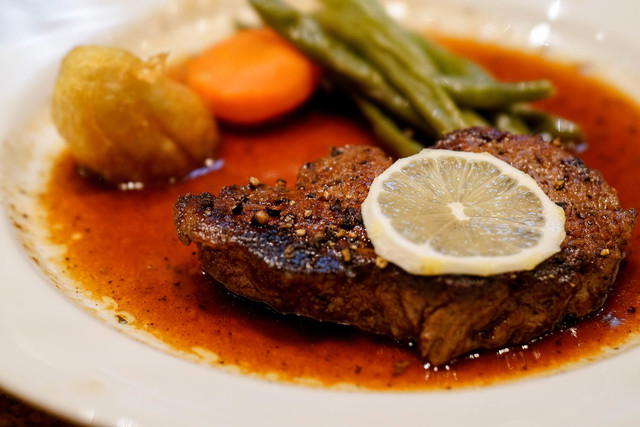
Kate cuore's documented approach centers on self-raised beef, an ingredient sourcing model that implies direct control over the supply chain and a cooking orientation toward the primary product rather than supplementary technique. Course meals run approximately four hours, which is on the longer end even for Japanese premium counter formats. The five-seat chef's counter defines the core experience; private rooms are available on request, accommodating parties up to four. The maximum party size at the counter itself is four. Children are not admitted, and the dress code excludes extremely casual clothing, both consistent with the format's positioning.
Getting There and Planning the Visit
Imari Station is approximately ten minutes on foot from the restaurant. The access note in Kate cuore's listing is direct about the constraints: public transport to and from Imari is limited, and diners are advised to check timetables carefully before booking. By car, the route via the Nishikyushu Expressway runs approximately one hour from Fukuoka direction. Buses to Imari run from Fukuoka Airport and Hakata Station's express terminal, which is the more practical option for visitors arriving by air. The four-hour course sitting, combined with limited late transport options, makes this a destination that rewards staying nearby rather than attempting a same-day return from Fukuoka. See our full Imari hotels guide for accommodation options in the area.
Reservations are taken by phone only, between 10:30 and 11:30 on weekdays. The listing notes that phone lines can be difficult to reach during that window. The cancellation policy is firm: changes from seven days prior incur a 50% course fee charge, and cancellations within three days are charged at 100%. At JPY 30,000–39,999 per cover before the 10% service charge, that exposure is material, factor it into travel planning. Review-reported spend reaches JPY 50,000–59,999 per head at dinner, suggesting wine pairings or premium course options push the total above the listed range. Credit cards are accepted (Visa, Mastercard, JCB, Amex, Diners). Parking is available on site.
Kate cuore in the Wider Kyushu Context
Kyushu's serious dining scene sits largely in Fukuoka, which has both the population density and the transport connectivity to sustain multiple high-end formats. Goh in Fukuoka represents the kind of chef-driven ambition the city supports. Imari operates in a different register, a smaller local dining economy, lower ambient visibility, and a clientele that self-selects more deliberately. What Kate cuore demonstrates is that the sustained-quality regional Italian model, when executed at award-level consistency over five or more years, can hold a national ranking position even from a town with no other restaurants in its peer tier.
That pattern repeats elsewhere in Japan. affetto akita in Akita and Aji Arai in Oita operate in comparable regional isolation at comparable commitment levels. akordu in Nara offers a related comparison: European-trained cooking at serious price points in a city better known for temples than for Italian cuisine. The geography is not the obstacle it once was, provided the format is disciplined enough to justify the journey, which, for Kate cuore's Tabelog score and award consistency, the evidence suggests it does.
For further dining, drinking, and activities in the area, see our full Imari restaurants guide, our full Imari bars guide, our full Imari wineries guide, and our full Imari experiences guide.
Frequently asked questions
Is Kate cuore child-friendly?
No. The restaurant does not admit children, a firm policy consistent with a four-hour counter format priced at JPY 30,000–39,999 per head in Imari.
How would you describe the vibe at Kate cuore?
If you are comfortable with the format, reservation-only, counter seating, a four-hour course, no à la carte, no children, dress code enforced, then the intimacy of a five-seat counter with five consecutive Tabelog Silver Awards creates a meal with real stakes and close attention. If you are visiting Imari primarily for the porcelain history and want a casual dinner, this is not that. The price point and the award record together place it in the same disciplined register as the serious urban Italian counters that dominate the national rankings.
What's the must-try dish at Kate cuore?
What the Tabelog record consistently references is the self-raised beef as the kitchen's central ingredient commitment, the element that distinguishes Kate cuore's approach from Italian restaurants working with conventional supply chains. For a course format at the 4.54 Tabelog score level, the beef preparation, in whatever form chef Junya Minato presents it within the current course, is the documented anchor of the experience. See also 1000 in Yokohama, 6 in Okinawa, and Ajidocoro in Yubari District for further reference points across Japan's regional fine dining scene. Abon in Ashiya offers a comparable regional counter format outside the major city clusters.
Comparison Snapshot
Comparable venues nearby, for context on price, style, and recognition.
| Venue | Cuisine | Price | Awards | Notes |
|---|---|---|---|---|
| Kate cuoreThis venue — the venue you are viewing | Exquisite Farm-to-Table Italian | $500+ | Tabelog Silver #51 | Not listed |
| Restaurant Chimney | Imari beef steak & hamburger restaurant | $20–30 | Tabelog 100 #75 | Imari |
| Lion | Teppanyaki steakhouse featuring Imari beef | $30–50 | Tabelog 100 #6 | / Niricho Ozato Otsu |
| Drive-in Tori Imari ten | Traditional Japanese chicken grill & yakitori | $20–30 | Tabelog 100 #58 | Otsubocho, Imari |
| ベッキ | Modern Italian Omakase | $100–150 | Tabelog 100 #100 | Chūō |
| Ristorante Da Nino | Authentic Sicilian | $100–150 | Gambero Rosso 2 Forchette | Minami-Aoyama / Nogizaka |
Recognition history
Dated appearances from independent guides and award organizations, with the underlying list record or original source where available.
Opinionated About Dining Top Restaurants in Japan Highly Recommended
Opinionated About Dining
Tabelog Silver #51
Tabelog
Full recognition history (5 entries)
Opinionated About Dining Top Restaurants in Japan Ranked #256
Opinionated About Dining
Tabelog Silver
Tabelog
Tabelog 100 #20 · No. 20
Tabelog · Tabelog 100 - Italian - WEST - 2025
Continue exploring
More in Imari
Restaurants in Imari
Browse all →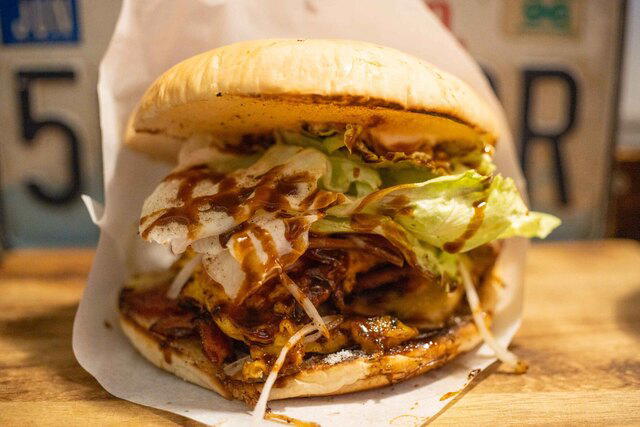
Details
- Intimate
- Elegant
- Sophisticated
- Special Occasion
- Date Night
- Chefs Counter
- Open Kitchen
- Local Sourcing
- Farm To Table
- Tasting Menu
- Counter Dining
Theatre-esque intimate counter seating for 5-6 with focused chef performance in a stylish Italian-inspired space.