
Michelin Selected
Michelin Selected in 2025 and located in Uwajima's old Honmachi merchant district, Kiya Ryokan is the reference traditional accommodation for a city that sits well outside Japan's primary tourism circuits. It offers the structural experience of a genuine ryokan stay, tatami rooms, traditional spatial logic, omotenashi hospitality, embedded in a working Shikoku city with its own pace and character.

Pearl is the En Primeur Club membership app, where members save venues, book tables and use the concierge.
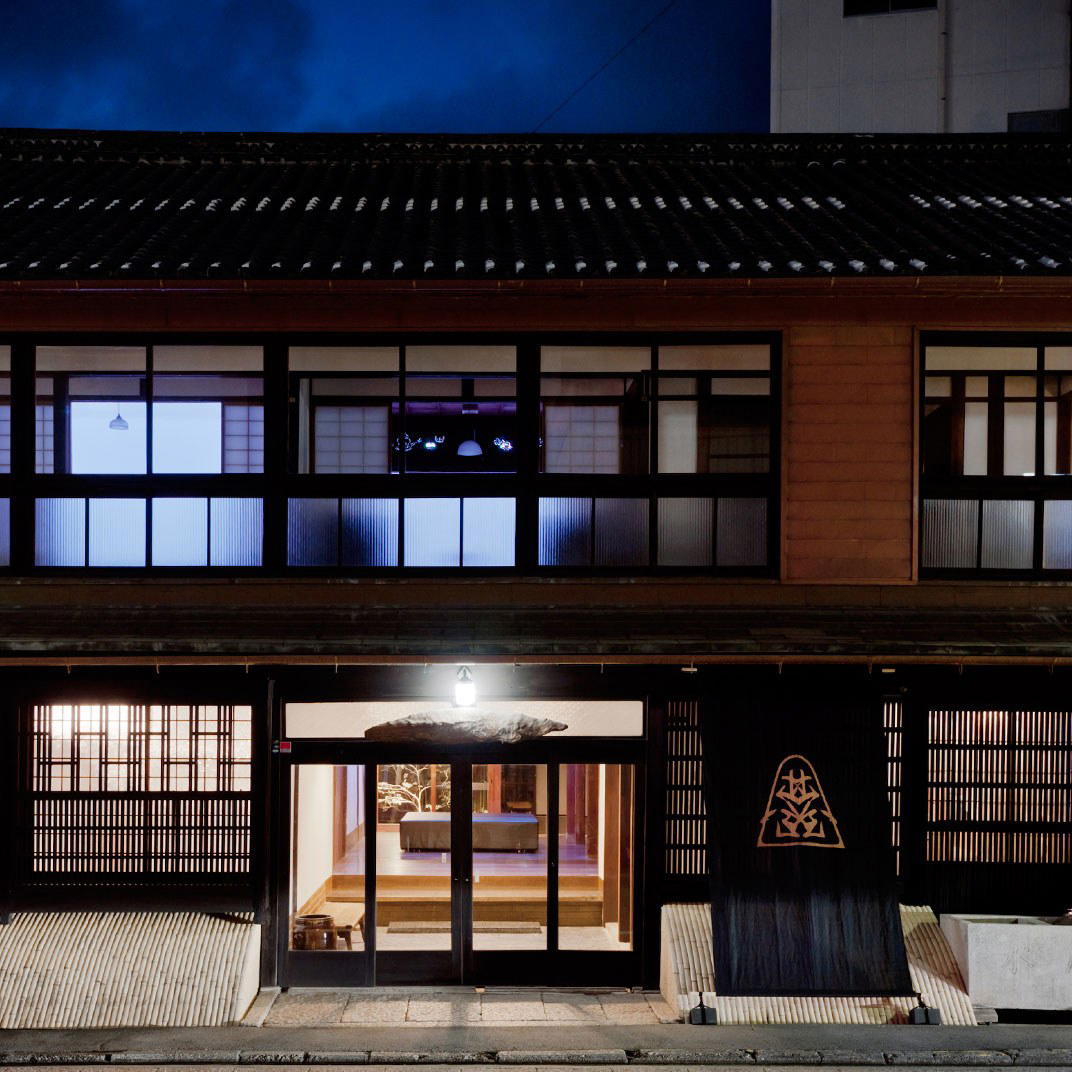
A Ryokan in the Old Merchant Quarter
Uwajima sits at the southwestern tip of Ehime Prefecture on Shikoku, a city better known for its bullfighting tradition, pearl cultivation, and a castle that dates to the early Edo period than for drawing international travellers. That relative obscurity is precisely what gives lodgings like Kiya Ryokan their particular weight. The address, 2-8-2 Hommachiote, places the property in the Honmachi district, the old merchant heart of Uwajima, where the built environment still carries traces of the town's feudal commercial past. Arriving here, you are not entering a resort corridor engineered for tourism but a neighbourhood that has always had its own rhythm, indifferent to trend cycles.
Michelin's hotel selection programme, which informs the 2025 guide, placed Kiya Ryokan in its list, a distinction that carries meaningful signal in Japan's accommodation tier. Michelin Selected status, unlike a star distinction, recognises properties that meet the guide's baseline criteria for quality across hospitality, comfort, and contextual authenticity. In a country with thousands of ryokan, appearing in that list at all narrows the competitive set considerably. For Uwajima specifically, it positions Kiya Ryokan as the reference point for the city's traditional accommodation offer, rather than simply a local option among many. See our full Uwajima restaurants and hotels guide for broader context on what the city offers.
The Architecture of a Traditional Ryokan Space
The ryokan form carries its own architectural grammar: tatami-floored rooms, fusuma sliding panels that restructure interior space rather than dividing it with fixed walls, engawa corridors that mediate between interior and garden, and an overall spatial logic derived from shoin-zukuri design principles that have governed elite Japanese residential architecture since the Muromachi period. Kiya Ryokan, operating from a building in the Honmachi district, operates within this tradition rather than as a contemporary interpretation of it.
What distinguishes a well-maintained traditional ryokan from a merely functional one is precisely the quality of that built fabric: the precision of joinery, the texture of washi paper on shoji screens, the acoustic properties of wood and tatami that absorb sound differently from hard-surface environments, and the way natural light shifts through paper screens over the course of a day. These are not decorative choices but structural ones that shape how guests experience time inside the property. A ryokan that has preserved its original construction logic offers something that no amount of contemporary reproduction can replicate: the sense that the building itself has absorbed the habits of previous generations of guests.
Japan's premium traditional accommodation sector has increasingly split between properties that pursue contemporary design alongside ritual hospitality, and those that maintain closer fidelity to their original built form. Gora Kadan in Hakone and Asaba in Izu represent properties where the architecture and landscape carry the experience as much as the service programming does. Kiya Ryokan in Uwajima occupies a comparable position within Shikoku's accommodation hierarchy, without the ambient tourism infrastructure that surrounds better-known hot-spring resort towns.
Omotenashi Without the Resort Apparatus
The ryokan model is built around omotenashi, the practice of anticipatory hospitality where guest needs are addressed before they are articulated. In resort-format properties, this often translates into a staffed programme of services: concierge, activity coordination, structured meal sequences. In a smaller, town-based ryokan, the same sensibility expresses itself differently, through attentiveness to individual guest rhythms, the calibration of meals to time and season, and the kind of unhurried engagement that larger properties find difficult to sustain at volume.
Town-based ryokan like Kiya Ryokan also function as access points to a city rather than as self-contained retreats from one. Uwajima's morning fish market, the Taga-jinja shrine complex (notable for its fertility museum), the reconstructed Uwajima Castle, and the working harbour are all within reach of the Honmachi address. For travellers interested in understanding a Japanese city at ground level, a ryokan situated in the merchant quarter is a structurally better base than a hotel positioned for maximum comfort insulation from local life.
Japan's more spatially isolated traditional properties, properties like Zaborin in Kutchan or Amanemu in Mie, are designed to generate self-sufficiency, where the landscape and facilities are the proposition. Kiya Ryokan's proposition is different in kind: the city is part of the experience, and the ryokan functions as an anchor into it.
Placing Kiya Ryokan in Japan's Ryokan Tier
Japan's traditional accommodation category operates across a broad spectrum. At one end, high-end kaiseki ryokan in destinations like Kyoto, Hakone, and Kinosaki command rates comparable to premium international hotels, with meal sequences that function as serious dining events in their own right. Properties like Nishimuraya Honkan in Kinosaki-cho and Kamenoi Besso in Yufu occupy that upper segment, drawing guests who plan travel around the accommodation itself.
At the other end, budget minshuku offer functional versions of the tatami-and-breakfast format. The middle tier, where a Michelin Selected property in a secondary city operates, represents something more considered than convenience accommodation but pitched for guests who value the ryokan form without necessarily seeking resort-level programming. This is the tier that rewards travellers who have moved past the most trafficked routes and are looking for what Shikoku specifically offers: a quieter, less mediated version of traditional Japanese life.
For reference across Japan's wider luxury accommodation offer, HOTEL THE MITSUI KYOTO and Bvlgari Hotel Tokyo represent the international-luxury end of the Japanese accommodation range. Benesse House in Naoshima and Sekitei in Hatsukaichi-shi show how properties in secondary destinations can build a specific proposition around art, landscape, or regional distinctiveness. Kiya Ryokan's case is built on the latter logic: Uwajima is the proposition, and the ryokan is the appropriate means of inhabiting it.
Other Michelin Selected properties that operate in less-trafficked Japanese destinations offer a useful comparison set. Satoyama-Jujo in Niigata, Nasu Mukunone in Nasu, and Fufu Nikko in Nikko each sit in towns that reward travellers willing to move beyond the primary heritage circuit. Kiya Ryokan belongs to that same cohort.
Planning a Stay in Uwajima
Uwajima is accessible by limited-express train from Matsuyama, Shikoku's largest city, in roughly two hours, or from Kochi with a longer journey through the island's interior. The city is not a day-trip proposition from any major hub; staying overnight is the functional minimum for understanding it, and a two-night base allows time for both the city's core sites and a day excursion to the Uwa basin's terraced agricultural land or the Sada peninsula's coastal scenery. Shikoku's position outside the standard Kyoto-Tokyo-Osaka tourist axis means room availability at quality properties tends to be more accessible than in primary destinations, though advance inquiry remains advisable for peak spring and autumn travel periods.
For travellers constructing a broader Japan itinerary that incorporates traditional accommodation properties, useful reference points include Fufu Kawaguchiko in Fujikawaguchiko, Fufu Kyu-Karuizawa Restful Forest in Karuizawa, Atami Izusan Karaku in Atami, and Halekulani Okinawa for the southern island arc. Those extending to the Okinawan islands might also consider Jusandi in Ishigaki. For Kyushu routes that connect naturally to Shikoku via ferry, GOTO RETREAT by Onko Chishin in Goto and The Hiramatsu Hotels and Resorts Ginoza in Ginoza complete a compelling western Japan arc. Those planning ski itineraries around the same trip might note Higashiyama Niseko Village, a Ritz-Carlton Reserve in Niseko for the northern counterpart.
In Context: Similar Options
Comparable venues nearby, for context on price, style, and recognition.
| Venue | Cuisine | Price | Awards | Notes |
|---|---|---|---|---|
| Kiya RyokanThis venue (the venue you are viewing) | Restored historic hatago-style ryokan with modern updates | $200–300 | Michelin Selected | Not listed |
| THE HIRAMATSU HOTELS & RESORTS Ginoza | villa-style resort with private pools | $500–750 | 1 Michelin Key | Ginoza-son |
| Snow Peak Field Suite Spa Headquarters | glamping-inspired resort complex integrated with brand headquarters | $750–1,000 | Michelin Selected | Sanjo |
| KAI Miyajima | Luxury oceanfront onsen ryokan showcasing Miyajima and Itsukushima Shrine from the opposite shore. | $200–300 | Not listed | Miyajimaguchinishi, Hatsukaichi |
| Namyu The Place | exclusive private villa resort | Not listed | Michelin Selected | Gusukubebora |
| Yama no Chaya (山の茶屋) | Traditional Japanese ryokan built into mountainside surrounded by bamboo and river gorge. | Not listed | Not listed | Tonosawa |
Recognition history
Dated appearances from independent guides and award organizations, with the underlying list record or original source where available.
Michelin Selected
Michelin
Continue exploring
More in Uwajima
Details
- Quiet
- Elegant
- Intimate
- Scenic
- Classic
- Romantic Getaway
- Anniversary
- Weekend Escape
- Historic Building
- Wi Fi
- Air Conditioning
Clean, pared-down design blending traditional Japanese elements with modern furnishings and innovative lighting in a comfortable, sophisticated atmosphere.