Camptong Forest
Camptong Forest sits in the forested hills of Gapyeong-gun, Gyeonggi-do, positioning itself within a growing tier of nature-integrated retreats that have drawn Seoul weekenders away from the capital's urban hotel circuit. The property's address on Jajam-ro in Seorak-myeon places it deep in the valley corridor where the North Han River bends through pine and oak canopy. For travellers calibrating between city proximity and genuine natural immersion, Gapyeong delivers both.
Pearl is the En Primeur Club membership app — saves, bookings, and concierge access live there. Same editors, same standards.
- Address
- 377 Jajam-ro, Seorak-myeon, Gapyeong-gun, Gyeonggi-do, South Korea
- Phone
- +82 31 584 6000
- Website
- camptongforest.com
- Directions
- Get directions
 Saves & bookings on Pearl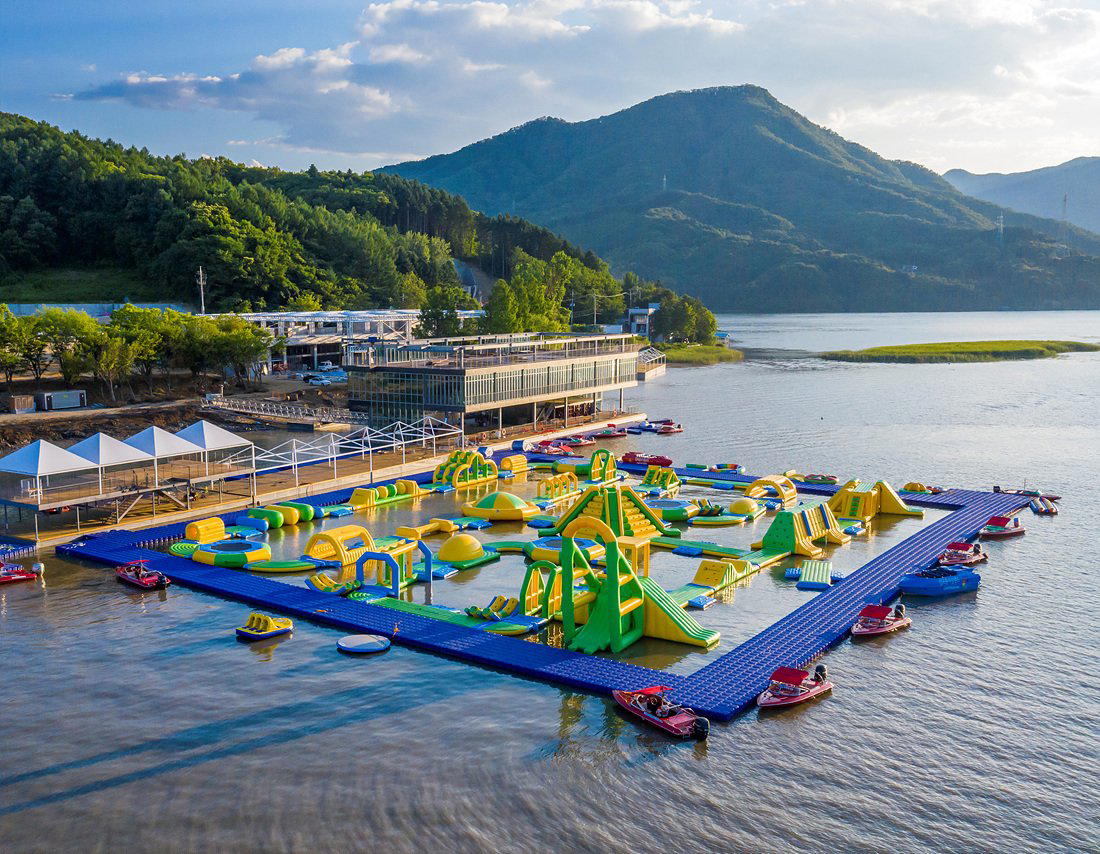
Where Seoul's Periphery Meets Forest Architecture
The drive from Seoul to Gapyeong takes roughly ninety minutes by road. Gapyeong-gun sits at a point where urban density gives way to river valley, pine ridge, and quiet. Camptong Forest, at 377 Jajam-ro in Seorak-myeon, sits within that zone. The approach along Jajam-ro narrows as it climbs, with the canopy closing overhead and the sound shifting from traffic to water and wind through conifers.
The Design Logic of Forest Integration
Across South Korea's premium retreat sector, a coherent design philosophy has emerged over the past decade: rather than imposing architecture on landscape, the more considered properties have sought to make their structures legible extensions of the terrain they occupy. This sits in contrast to the convention-hotel model that dominates Seoul's luxury tier, where properties like the Casino Hotel Seoul or the capital's major international flagships compete on scale, floor count, and amenity density. The forest retreat operates by an entirely different set of values: material honesty, sightline management, and the calibration of indoor-outdoor thresholds.
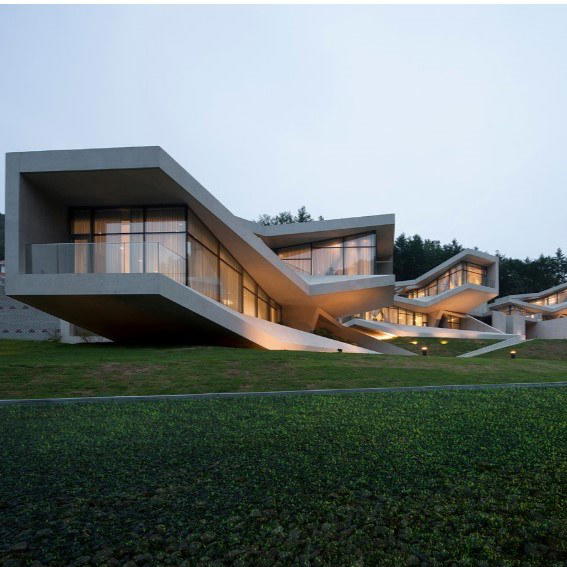
Camptong Forest's position in Seorak-myeon places it within Gyeonggi-do's forested sub-district, where the land itself dictates terms. Properties in this corridor that have earned repeat visitor loyalty typically do so through architecture that treats the surrounding woodland not as backdrop but as primary environment. The structures that work in this context tend toward low profiles, natural material palettes, and fenestration designed to bring the forest inside rather than frame it at a distance. Whether through timber framing, stone foundations drawn from local geology, or the orientation of sleeping quarters toward tree canopy rather than mountain summit, the design grammar of successful Gapyeong retreats shares a common vocabulary.
Gapyeong's Position in Korea's Nature-Retreat Tier
Korea's domestic weekend-travel market has diversified substantially since the mid-2010s. Jeju remains the volume destination, anchored by large-scale resort infrastructure including properties like the Grand Hyatt Jeju, the Haevichi Hotel and Resort, and the JW Marriott Jeju Resort and Spa. The east coast has its own corridor, with Gangneung attracting travellers who want coastal access alongside forest proximity, exemplified by Oakwood Lagoon Town Gangneung. Further north, the Seoraksan area around Sokcho supports a different register again, with properties like the Kensington Hotel Seorak positioning against alpine scenery rather than river valley.
Gapyeong fills a distinct gap in this geography. Its proximity to Seoul, combined with the North Han River and the Gyeonggi-do pine forest corridor, makes it a regular choice for capital residents seeking natural immersion without a full travel day on either side. The weekender profile here differs from Jeju tourism: shorter stays, higher return-visit frequency, and a stronger preference for properties that offer intimacy over facilities volume. Camptong Forest's location in Seorak-myeon, one of Gapyeong-gun's more sparsely populated sub-districts, positions it toward the quieter end of that market rather than near the more commercial Gapyeong station cluster.
The Regional Context: Forest Retreats Across Korea
Comparable nature-integration models appear across Korea's more remote terrain. Gangwon-do in Hongcheon operates within a similar woodland framework, as does the more isolated KOSMOS ULLEUNGDO in Ulleung-gun, where the design conversation shifts from forest canopy to volcanic cliff face. The Ananti at Busan Cove represents a coastal variant of the same design-led retreat logic. Internationally, the principle finds expression in properties as varied as Amangiri in Canyon Point, where desert geology becomes the architectural material, or Castello di Reschio in Lisciano Niccone, where Umbrian landscape sets the terms. In each case, particularly successful properties share a commitment to letting terrain dictate form rather than imposing a universal hospitality template.
What distinguishes the Korean forest retreat tier from many international equivalents is the density of weekender demand relative to property supply. Seoul's population and its concentration in the capital region create sustained pressure on the Gapyeong corridor, particularly on Friday evenings and holiday weekends. Properties that manage that demand through limited capacity and controlled booking windows tend to hold their positioning more reliably than those that scale to meet volume. For travellers accustomed to similar retreat markets, the Gapyeong market follows familiar rhythms: early booking correlates directly with particularly sought-after dates.
Planning a Stay: Practical Orientation
Gapyeong is accessible by the ITX-Cheongchun train from Seoul's Cheongnyangni Station, with the journey running approximately seventy minutes to Gapyeong Station. From there, reaching Seorak-myeon requires onward road transfer; the district sits beyond the station's immediate walking radius, making a taxi or private vehicle the practical choice for the final leg. Travellers arriving from Seoul's Gangnam side may find the drive via the Gyeongchun Expressway marginally more direct than routing through the city centre. For those combining a Gapyeong stay with broader Gyeonggi-do or Gangwon-do travel, the corridor toward Hongcheon and Chuncheon opens naturally from the same road network. Travellers based in Seoul before or after should note that the capital's hotel tier ranges from the Dormy Inn Seoul Gangnam at the accessible end through to the full international luxury circuit.
Quick Comparison
Comparable venues nearby, for context on price, style, and recognition.
| Venue | Cuisine | Price | Awards | Notes |
|---|---|---|---|---|
| Camptong ForestThis venue — the venue you are viewing | rustic forest pension | $$ | Not listed | Not listed |
| Hyatt Place Gwangju | Contemporary mixed-use hotel tower | $$ | Not listed | Nongseong-dong, Seo-gu |
| Oakwood Lagoon Town Gangneung | resort-led development | $$$ | Not listed | Cultural |
| Soi Hanok Stay (소이 한옥스테이) | Traditional Korean hanok converted into a luxury guesthouse with contemporary comfort amenities; heritage property in a preserved historic village. | $$ | 2-Star | 황리단길 (Hwangridangil), 경주시 황남동 |
| Gangwon-do | family resort with golf focus | $$ | Not listed | Seo-myeon |
| Lexington Busan | Hotel | Not listed | Not listed | Busan |


At a Glance
- Rustic
- Scenic
- Cozy
- Quiet
- Romantic Getaway
- Weekend Escape
- Garden
- Terrace
- Wi Fi
- Mountain
- Garden
- Wi Fi
Serene forest atmosphere with natural scents, moist air, and peaceful surroundings ideal for healing.