Dormy Inn Seoul Gangnam (도미인 서울강남)
Dormy Inn Seoul Gangnam sits on Bongeunsa-ro in the heart of Gangnam-gu, placing guests within reach of the district's business corridors, upscale dining, and Bongeunsa Temple. The brand's compact, high-utility format fits a distinct tier in Seoul's accommodation market: efficient by design, positioned below the grand international flagships but above generic business hotels. A practical base for navigating one of Seoul's most commercially dense neighbourhoods.
 Discover on Pearl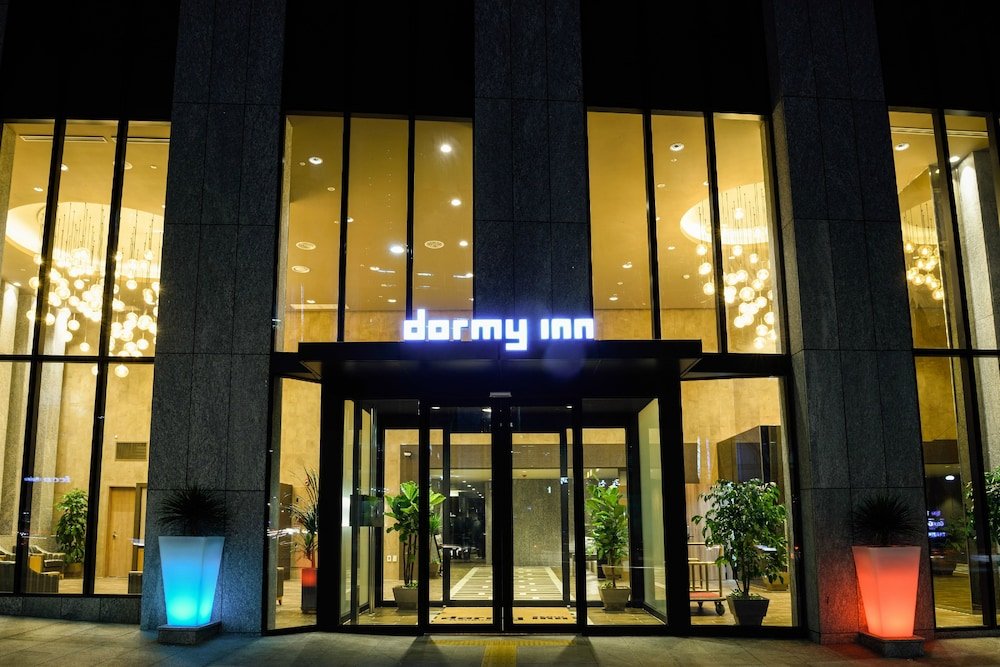
Where Gangnam's Grid Meets Compact Hotel Design
Gangnam-gu is one of Seoul's most legible districts for the first-time visitor: wide arterial roads, a dense retail and dining corridor along Apgujeong and Garosu-gil, and a business core that runs through Teheran-ro toward Yeoksam. Bongeunsa-ro, where Dormy Inn Seoul Gangnam is addressed at number 134, cuts through the residential and commercial fabric of Yeoksam-dong, sitting between the temple precinct of Bongeunsa to the north and the COEX convention complex a short walk south. That positioning is deliberate. The street carries less traffic noise than the main arterials and gives the hotel a semi-residential character that contrasts with the more theatrical addresses of the international flagships clustered around Teheran-ro.
The Dormy Inn brand, operated out of Japan by Kyoritsu Maintenance, built its reputation on a specific design proposition: compact rooms calibrated for single and double occupancy, natural hot spring baths (天然温泉, or tennen onsen) where the local water supply permits, and late-night ramen service as a complimentary amenity. That formula has expanded across Japanese cities and into a handful of Korean locations. At the Gangnam property, the brand brings that same structural logic to a neighbourhood where the competing accommodation set runs from mid-scale business chains to the full-service grandeur of properties like the Grand InterContinental Seoul Parnas and the Josun Palace, a Luxury Collection Hotel. Dormy Inn occupies a clearly different tier — tighter in footprint, lower in price ceiling, and unapologetic about trading ceremony for efficiency.
The shortlist, unlocked.
Hard-to-book tables, cellar releases, and concierge-planned trips.
Get Exclusive Access →The Physical Logic of the Space
Japanese business hotel design at the Dormy Inn level follows a well-documented grammar. Room modules are small by Western standards, often in the 18-to-22 square metre range, and every centimetre is engineered rather than decorated. Surfaces tend toward neutral palettes, storage is recessed or wall-mounted to preserve floor clearance, and bathrooms are typically prefabricated wet-room units. The aesthetic is less minimalism as philosophy and more minimalism as spatial necessity — the discipline that comes from building for urban density rather than from any particular design ideology.
Where the brand differentiates itself within that constrained format is in the communal facilities. The onsen floor, a signature feature of Dormy Inn properties, shifts the spatial emphasis away from the individual room and toward shared bathing culture. In Japan, this is unremarkable; in Seoul, where sauna and jjimjilbang culture is already deeply embedded, the format finds a natural audience. The bath facility typically separates by gender and operates on extended hours, allowing guests to use it post-late dinner or early before business meetings , a practical detail that matters in a district where evening client entertainment often runs past midnight.
The late-night ramen service, offered gratis to guests at most Dormy Inn properties, is another structural feature worth noting for what it says about the brand's positioning. It is not fine dining appended to a hotel; it is a functional amenity designed around the reality of business travel, where dinner schedules are irregular and room service at 11pm carries a premium. The gesture is small but telling: the brand is optimising for the working traveller, not the leisure guest.
Gangnam as a Base: What the Neighbourhood Delivers
For the traveller using this property as a Seoul base, the district's character shapes daily logistics more than the hotel itself. Gangnam-gu's dining scene has moved well beyond its reputation as an expense-account district. Garosu-gil and the streets around Sinsa station carry a current generation of chef-driven restaurants working across Korean contemporary, French-influenced, and East Asian formats. Bongeunsa Temple, a ten-minute walk north on Bongeunsa-ro, offers one of the few quiet green spaces in this part of the city , a useful counterpoint to the commercial density. COEX, with its underground mall, Starfield Library, and aquarium, sits within easy walking distance for those with conference commitments or an afternoon to fill.
Seoul's transport connectivity from Gangnam is strong. The Yeoksam metro station on Line 2 connects to central Seoul, Hongdae, and Sindorim without a transfer. For longer itineraries that extend beyond the city, Korea's rail network makes day trips or extensions feasible: the coast at Gangneung is accessible in under two hours from Seoul Station, and travellers who want a contrast of scale and pace sometimes extend to coastal properties like Oakwood Lagoon Town Gangneung in Gangneung. Mountain retreats in the Gangwon-do region, such as properties around Hongcheon, provide a further counterpoint to the urban density of Gangnam.
Within Seoul, the hotel's Gangnam address places it at some distance from the older cultural nodes of Jongno and Insadong, which sit north of the Han River. That is not a disadvantage for guests whose primary purpose is business or Gangnam-specific dining , but travellers who want to move freely across both banks of the river should factor in the forty-minute metro commute to Gyeongbokgung or the Bukchon hanok village.
Where It Sits in the Seoul Hotel Market
Seoul's accommodation market has a clearly stratified upper tier. Properties like the Four Seasons Hotel Seoul and the Conrad hold the brand-equity positions that drive corporate travel accounts and aspirational leisure bookings. Below that, mid-scale international chains and domestic Korean brands compete on price and location. Dormy Inn Seoul Gangnam operates in a bracket that prioritises spatial efficiency and functional amenities over lobby scale or F&B; prestige. For travellers who plan to spend their Seoul hours outside the hotel , eating at neighbourhood restaurants, working from offices, visiting Coex or Bongeunsa , the trade-off is rational. For those who weight in-room space or hotel F&B; in their decision, the international flagships remain the reference set.
Korean domestic hotel alternatives in the Gangnam area tend toward similar compact formats, particularly around Yeoksam and Seocho. What the Dormy Inn brand adds relative to generic Korean business hotels is the onsen culture, a brand consistency across properties, and the late-night ramen amenity that has built genuine loyalty among repeat guests. Those details are not marketing propositions; they are structural features that change daily routines in small but measurable ways.
For those building a South Korea itinerary that extends beyond Seoul, the country's diversity of hotel formats is worth considering. Resort options range from coastal properties like Ananti at Busan Cove and Haevichi Hotel and Resort Jeju to design-focused addresses such as Art Paradiso Hotel in Incheon. For Jeju specifically, Grand Hyatt Jeju and JW Marriott Jeju Resort and Spa represent the upper tier of the island's resort market. Our full Seoul restaurants guide covers the Gangnam dining scene in greater depth for those building an itinerary around the city's food calendar.
Planning Your Stay
The hotel sits at 134 Bongeunsa-ro, Yeoksam-dong, Gangnam-gu, Seoul 06124. Yeoksam station on Metro Line 2 is the nearest public transport connection, and the line's coverage makes most of the city accessible from this point. Booking is handled through the standard Dormy Inn reservation channels. Gangnam's peak periods track with major COEX trade events and Korea's national holiday calendars, particularly Chuseok and Lunar New Year, when room availability across the district tightens. Travellers with fixed Seoul dates around those periods should confirm accommodation well in advance.
The shortlist, unlocked.
Hard-to-book tables, cellar releases, and concierge-planned trips.
Get Exclusive Access →Frequently Asked Questions
At-a-Glance Comparison
These are the closest comparables we have in our database for quick context.
Preferential Rates?
Our members enjoy concierge-led booking support and priority upgrades at the world's finest hotels.
Get Exclusive AccessThe shortlist, unlocked.
Hard-to-book tables, cellar releases, and concierge-planned trips.
Get Exclusive Access →