South Cape Owners Club
South Cape Owners Club sits on the southern tip of Namhae Island in South Gyeongsang Province, where the Korean coastline breaks into a series of pine-covered ridges dropping toward open water. The property occupies a members-oriented residential resort format that places it outside the conventional hotel tier, making it one of the more architecturally deliberate retreats in provincial South Korea.
Pearl is the En Primeur Club membership app — saves, bookings, and concierge access live there. Same editors, same standards.
- Address
- 41 Jindong-ri, Changseon-myeon, Namhae-gun, Gyeongsangnam-do, South Korea
- Website
- southcape.co.kr
- Directions
- Get directions
 Saves & bookings on Pearl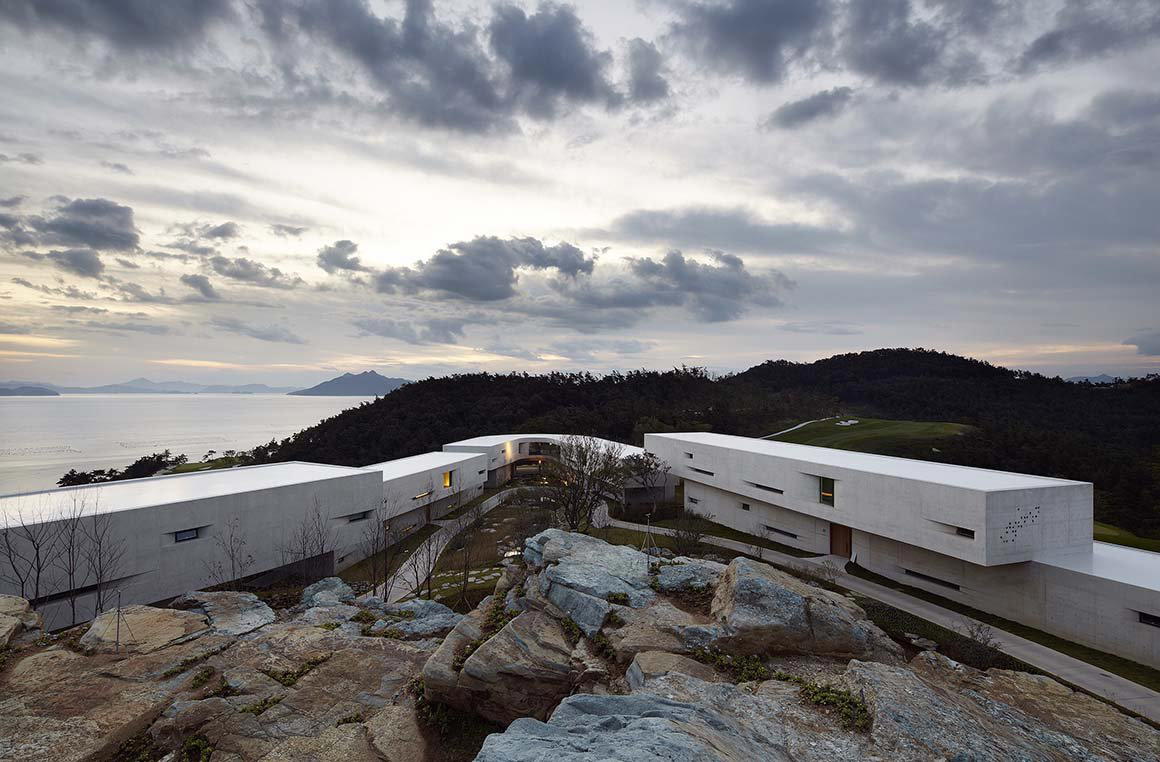
Where the Southern Coast Meets Considered Design
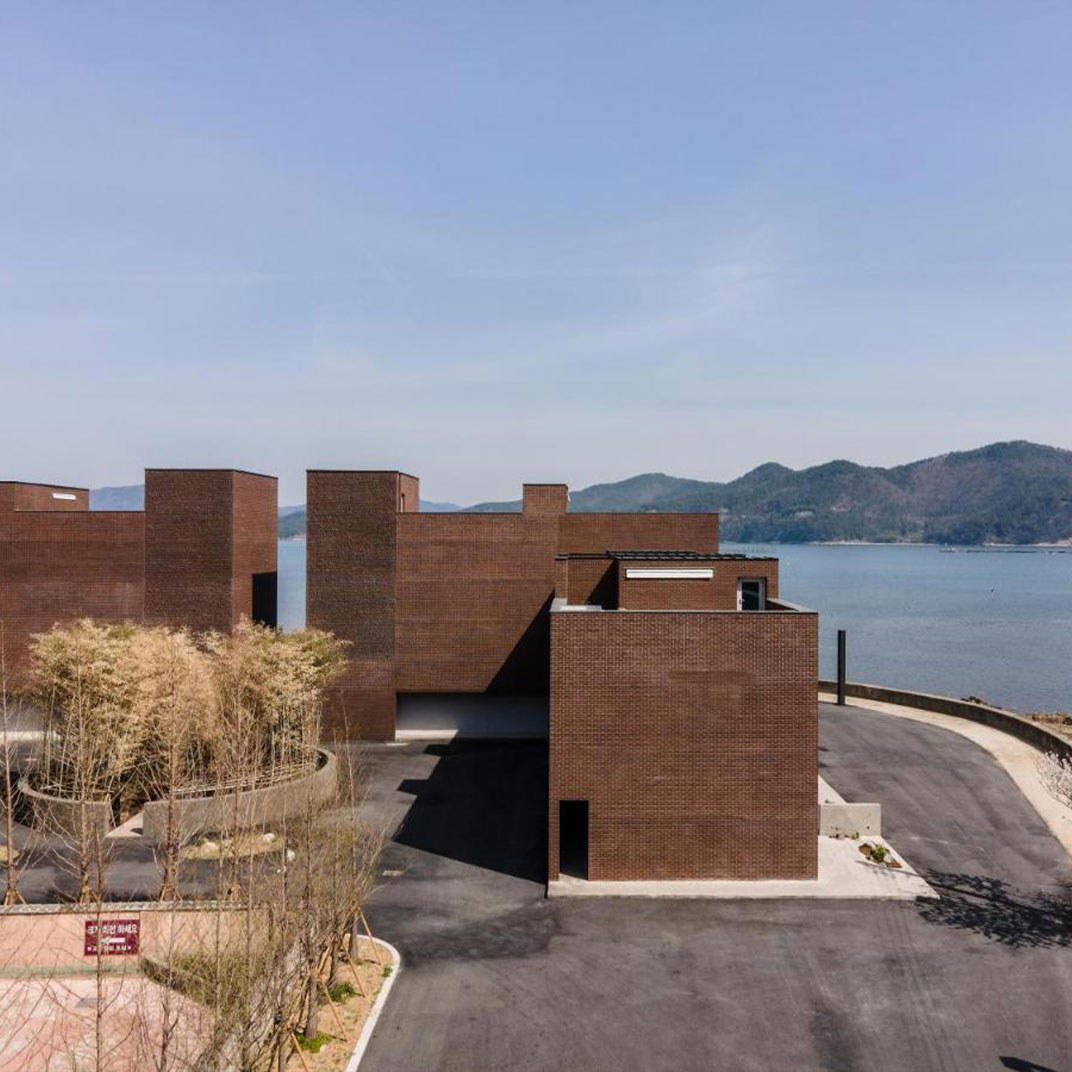
Arriving at the Changseon peninsula on Namhae Island, the dominant sensation is vertical: steep forested slopes descend sharply toward a coastline that faces the Korea Strait, and the built environment here has to negotiate that terrain rather than flatten it. South Cape Owners Club, addressed at 41 Jindong-ri, responds to the site by working with the topography rather than against it, a design posture that separates it from the flat-pad resort typology common to Korean beach destinations further north along the east coast.
Namhae County has spent the better part of two decades positioning itself as a destination for design-conscious domestic travelers who find Jeju overexposed and the east coast resorts at places like Gangneung too amenity-driven to feel considered. The island sits in the far south of Gyeongsangnam-do, connected to the mainland at Noryang and to Sacheon by two suspension bridges, and its topography, a mix of terraced hillside agriculture, coastal pine, and small fishing harbors, has attracted a particular strand of architectural tourism that values restraint and site-sensitivity over spectacle.
The Architecture of Restraint
South Cape is one of a small number of Korean resort properties associated with a distinct architectural identity rather than a brand flag. Korean residential resort developments of this type typically commission architecture that responds to a specific landscape rather than applying a global design template, and the result tends to read as more rooted than properties affiliated with international chains. The comparison set here is not Conrad Seoul or the Four Seasons in Gangnam; it is a narrower tier of low-density, site-specific retreats that have emerged across coastal South Korea over the past fifteen years as an alternative to urban luxury.
This design-led positioning is increasingly legible to a regional audience that has spent enough time at international properties, including the kind found at Aman New York, Cheval Blanc Paris, or Bvlgari Hotel Tokyo, to understand what sets considered site-response apart from generic resort programming. South Cape reads into that sensibility domestically, drawing visitors who approach a stay as an architectural experience rather than a leisure transaction.
Properties that occupy this niche in Korea tend to succeed or fail on two variables: how well the built environment uses the given site, and how consistently the programmatic experience, the quality of common spaces, the outdoor circulation, the relationship between private accommodation and shared landscape, holds together once you are inside. At South Cape, the site itself does considerable work. The peninsula setting means that water is present on multiple orientations, and the pine coverage provides both acoustic insulation and a visual framework that changes with light and season.
Namhae in the South Korean Resort Context
Understanding South Cape requires understanding what Namhae represents at a national scale. The island sits well outside the standard Korean domestic tourism circuit anchored by Jeju, the east coast, and the Gangwon highlands. Travelers choosing Namhae are generally making a deliberate geographic decision, accepting a longer transfer in exchange for lower visitor density and a landscape that has not been fully optimized for tourism infrastructure. That self-selection shapes the visitor profile: fewer large-group packages, more couples and small parties traveling for the environment itself.
The contrast with Jeju is instructive. Jeju carries the density burden of South Korea's most visited domestic destination, with properties ranging from the Grand Hyatt Jeju to the JW Marriott Jeju Resort and Spa and the Haevichi Hotel and Resort competing at the summit of the market. Namhae's proposition is quieter: fewer options, more considered choices, and a landscape that rewards visitors who arrive oriented toward the place rather than toward the amenity list.
Within Namhae's small resort tier, South Cape's owners-club format is a deliberate market position. Residential membership structures allow the property to maintain a level of occupancy control and guest-profile consistency that a conventional hotel cannot engineer through pricing alone. It is a model that appears across premium coastal Asia, from Japanese resort membership clubs to private villa communities in Southeast Asia, and it signals an intent to remain a specific kind of place rather than scale toward volume.
Getting There and Planning a Stay
Namhae is most commonly reached by car from Busan, the nearest major city, via the Namhae Expressway. Travelers flying into Gimhae International Airport in Busan can expect roughly an hour and a half to two hours of drive time depending on traffic. For those arriving from Seoul, the journey is longer, running approximately four hours by KTX to Jinju followed by a road transfer, which means Namhae works most naturally as a multi-night stay rather than a day excursion. Visitors spending time on the broader south coast circuit sometimes pair Namhae with a night in Busan, where Ananti at Busan Cove occupies a comparable design-resort position on the city's eastern headland.
Given the members-club format, prospective guests should verify access and availability directly before planning a trip. The property does not appear to operate through standard online travel agency channels, which is consistent with residential resort models elsewhere in Korea. Seasonal timing matters on Namhae: the spring period from April through early June brings mild temperatures and clear water views, while late summer humidity and the possibility of typhoon-adjacent weather in August make that window less reliable. Autumn, from mid-September through November, is widely considered one stable period for the southern Korean coast. For context on how other design-oriented properties across the country handle seasonality, the guides covering Gangwon-do in Hongcheon and Camptong Forest in Gapyeong offer useful reference points for the inland mountain tier.
Our full Namhae restaurants and travel guide covers the island's dining context, from the haemul pajeon and raw fish markets around Noryang port to the small number of destination-quality restaurants that have opened in the county over the past five years as visitor numbers have grown among the design-travel segment.
Fast Comparison
Comparable venues nearby, for context on price, style, and recognition.
| Venue | Cuisine | Price | Awards | Notes |
|---|---|---|---|---|
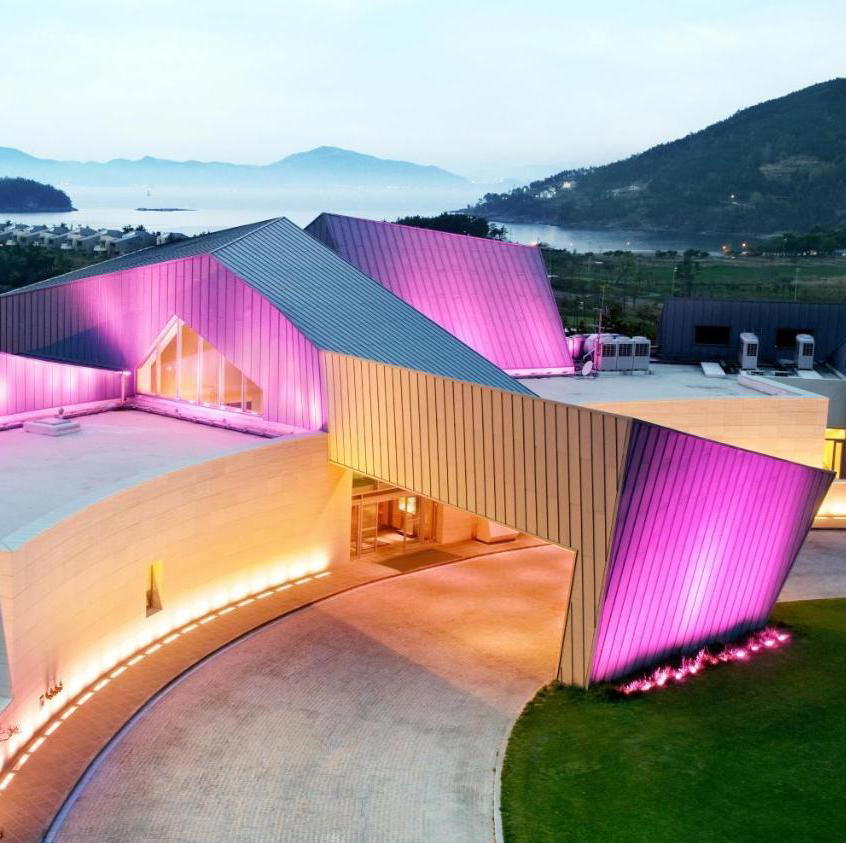
| South Cape Owners ClubThis venue — the venue you are viewing | Modern luxury resort with dynamic wave-inspired architecture | $$$$ | Not listed | Not listed |
| YOUONEJAE | Modern Korean hot-spring hotel inspired by traditional inns with village-like landscape design | $$$$ | Not listed | Suanbo-myeon |
| RakKoJae (락고재) | Traditional hanok village hotel | $$$$ | 2-Star | Bukchon Hanok Village |
| Oakwood Lagoon Town Gangneung | resort-led development | $$$ | Not listed | Cultural |
| Camptong Forest | rustic forest pension | $$ | Not listed | Gapyeong-gun |
| Lexington Busan | Hotel | Not listed | Not listed | Busan |
At a Glance
- Scenic
- Elegant
- Quiet
- Romantic Getaway
- Wellness Retreat
- Weekend Escape
- Golf Course
- Waterfront
- Panoramic View
- Spa
- Pool
- Restaurant
- Golf Course
- Waterfront
- Spa
- Pool
- Restaurant
- Golf Course
Sophisticated and relaxing atmosphere with high-end furnishings, artwork, pianos, and sea-facing luxury suites.