에버리움펜션
에버리움펜션 sits in Pogok-eup, Cheoin-gu, on the southern edge of Gyeonggi-do, where the pension format, South Korea's private-villa accommodation style, meets the quieter, forested corridor between Yongin and the broader Gyeonggi countryside. For travellers seeking distance from Seoul's hotel density without venturing as far as the coast or Jeju, this part of Cheoin represents a practical and scenically grounded middle ground.
 Discover on Pearl
Pearl is the En Primeur Club membership app — saves, bookings, and concierge access live there. Same editors, same standards.
- Address
- 354-1 Gokhyeon-ro, Pogok-eup, Cheoin-gu, Yongin-si, Gyeonggi-do, South Korea
- Phone
- +82 10 9839 6226
- Website
- everleeum.co.kr
The Pension Format and Where Cheoin Fits In
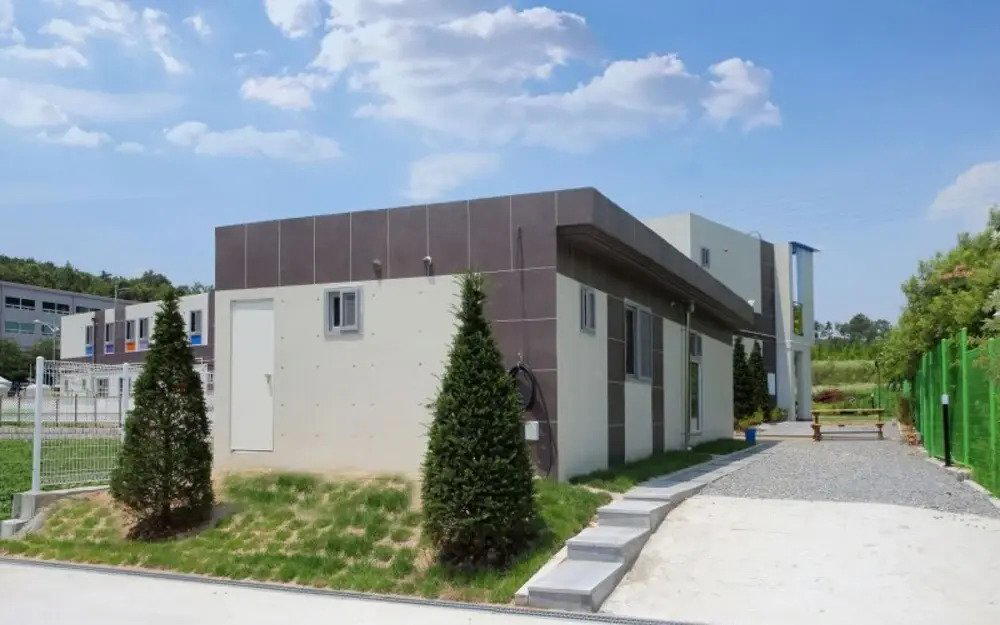
에버리움펜션 is a 3-star pension in Yongin-si, Gyeonggi-do, located at 354-1 Gokhyeon-ro, Pogok-eup. Unlike the urban hotel chains that define Seoul's premium tier, properties such as those represented by Casino Hotel Seoul or the Gangnam corridor's business-oriented addresses like Dormy Inn Seoul Gangnam, the pension format is built around private, self-contained units set within natural or semi-rural surroundings. Guests book a villa or cabin-style structure rather than a hotel room, typically for weekend stays, and the draw is separation from urban density rather than proximity to amenity clusters. Cheoin-gu, the southernmost district of Yongin-si in Gyeonggi-do, sits at the edge of this logic: close enough to Seoul's southern suburbs to be reached in under an hour by car, far enough into the Gyeonggi countryside to deliver the quiet that the format promises.
에버리움펜션, addressed at 354-1 Gokhyeon-ro in Pogok-eup, occupies this corridor. Pogok-eup is a township within Cheoin-gu known more for its forested residential character than for tourism infrastructure, which places this property in the category of pensions that trade on environmental setting rather than proximity to major attractions. That is a deliberate positioning. The pension traveller from Seoul's southern districts is not looking for a hotel lobby or a concierge desk, they are looking for a gate, a private yard, and the absence of neighbours audible through a wall.
Design Logic of the Korean Pension
The architectural identity of the pension category in South Korea has shifted considerably over the past decade. Early-generation pensions leaned on log-cabin vernacular, borrowing visual codes from European mountain lodges without much structural coherence. The more recent tier, particularly properties developed after 2015 in the Gyeonggi and Gangwon corridors, has moved toward a cleaner residential aesthetic: flat or low-pitched roofs, board-form or exposed concrete exteriors, large glazed sections oriented toward private garden or forest views, and interiors that prioritise warm material contrast over decorative density. This is the design grammar that defines the competitive comparable set for a property like 에버리움펜션, where the physical environment is the primary editorial proposition.
For comparison, properties operating in adjacent nature-adjacent formats across South Korea, such as Camptong Forest in Gapyeong, where the forest-immersion format is explicit in the product, or Gangwon-do in Hongcheon, which positions itself within the mountain-corridor leisure belt, demonstrate how Korean leisure accommodation increasingly differentiates on setting specificity rather than service breadth. The pension at Pogok-eup is working within that same axis.
Situating the Property: Gokhyeon-ro and Pogok-eup
Pogok-eup is not a destination in the conventional sense. It does not have the coastal drama of Gangneung's lagoon-adjacent accommodation or the island logic that makes properties like Grand Hyatt Jeju or Haevichi Hotel and Resort Jeju coherent as destination stays. What it has is a quiet road network, green hillside topography, and the logistical convenience of sitting within Gyeonggi-do, South Korea's most populated province, where weekend escape demand from Seoul is consistent year-round. The Gokhyeon-ro address places 에버리움펜션 on a secondary road that connects the township's residential zones, a setting that signals privacy over foot-traffic proximity.
For visitors arriving from Seoul, the Gyeonggi pension corridor, stretching from Gapyeong in the north through Yangpyeong, Icheon, and into Cheoin in the south, represents an increasingly well-organised leisure circuit. Weekends from late spring through early autumn draw the heaviest traffic, with autumn foliage and spring blossom periods creating predictable demand spikes. Planning around those peaks, or deliberately targeting weekday availability, is the primary logistical variable for a property in this category. Booking windows for well-regarded pensions in this zone typically extend two to four weeks in advance during peak weekends.
The Wider Korean Accommodation Context
It is worth understanding where the pension sits in South Korea's full accommodation taxonomy before committing to the format. At the urban end, Seoul's premium hotel tier, represented by addresses like Casino Hotel Seoul or the Gangnam luxury corridor, offers full-service infrastructure, F&B; programming, and spa access. Resort properties in coastal or island settings, such as Ananti at Busan Cove or South Cape Owners Club in Namhae, deliver landscape drama alongside refined amenity sets. The pension occupies a third register entirely: self-catered, private, and oriented toward domestic leisure patterns rather than international travel infrastructure.
Internationally, the closest analogue might be the agriturismo in rural Italy or the gîte format in provincial France, private-use properties within agricultural or forested landscapes, booked by the night or the weekend, where the value is the setting and the autonomy rather than the service model. Properties like Castello di Reschio in Lisciano Niccone operate at the far premium end of that European tradition. The Korean pension sits in a more accessible price register, though the underlying logic, temporary occupation of a private space within a natural context, is structurally similar.
For travellers more accustomed to full-service international properties, Aman New York, Cheval Blanc Paris, or Bvlgari Hotel Tokyo, the pension format requires a recalibration of expectations. There is no room service, no bellhop, no concierge. What replaces those elements is space, quiet, and the specific pleasure of a private outdoor area after dark in Gyeonggi's countryside air.
Planning a Stay
에버리움펜션 is located at 354-1 Gokhyeon-ro, Pogok-eup, Cheoin-gu, Yongin-si, Gyeonggi-do. Car access from Seoul's southern districts is the practical approach, as Pogok-eup sits outside the subway network's reach and rural road connections make public transit combinations less efficient for a leisure stay. Booking is handled directly through Korean pension reservation platforms, Naver, Yapen, or the property's own channels, and availability is leading checked four to six weeks ahead for spring and autumn weekend dates.
In Context: Similar Options
Comparable venues nearby, for context on price, style, and recognition.
| Venue | Cuisine | Price | Awards | Notes |
|---|---|---|---|---|
| 에버리움펜션This venue — the venue you are viewing | Casual family pension with modern amenities and outdoor leisure focus. | $$ | 3-Star | |
| Dormy Inn Seoul Gangnam (도미인 서울강남) | Modern Japanese business hotel with onsen facilities | $$ | 3-Star | Gangnam-gu |
| La Casa Hotel Seoul | Lifestyle design hotel in fashion and culture hub | $$$ | 3-Star | 한남동 |
| Andaz Seoul Gangnam | Luxury lifestyle boutique hotel blending contemporary design with local Korean cultural heritage, positioned as a design destination in Seoul's most fashionable district. | $$$$ | 4-Star | 압구정동 |
| Soi Hanok Stay (소이 한옥스테이) | Traditional Korean hanok converted into a luxury guesthouse with contemporary comfort amenities; heritage property in a preserved historic village. | $$ | 2-Star | 황리단길 (Hwangridangil), 경주시 황남동 |
| Mondrian Seoul Itaewon | Modern lifestyle hotel with bold, sculptural design capturing vibrant city culture. | $$$$ | 5-Star | 이태원동 |
At a Glance
- Cozy
- Rustic
- Family Vacation
- Weekend Escape
- Group Retreat
- Garden
- Terrace
- Private Villa
- Bbq Facilities
- Terrace
- Lawn Garden
- Free Parking
- Garden
Casual, family-oriented atmosphere with outdoor leisure spaces designed for relaxation and group activities.