Ishigaki Hills

Michelin Selected
A Michelin Selected property on Ishigaki Island, Ishigaki Hills sits at the quieter, more residential end of the island's accommodation spectrum. The address at Aza Miyarahamakawahara places it away from the port-town bustle, orienting guests toward the slower rhythms that make the Yaeyama Islands worth the journey in the first place. Practical for extended stays and those prioritising stillness over resort programming.

Pearl is the En Primeur Club membership app — saves, bookings, and concierge access live there. Same editors, same standards.
- Address
- 1022-1 Aza Miyarahamakawahara, Ishigaki Island, Japan
- Phone
- 06-7713-1349
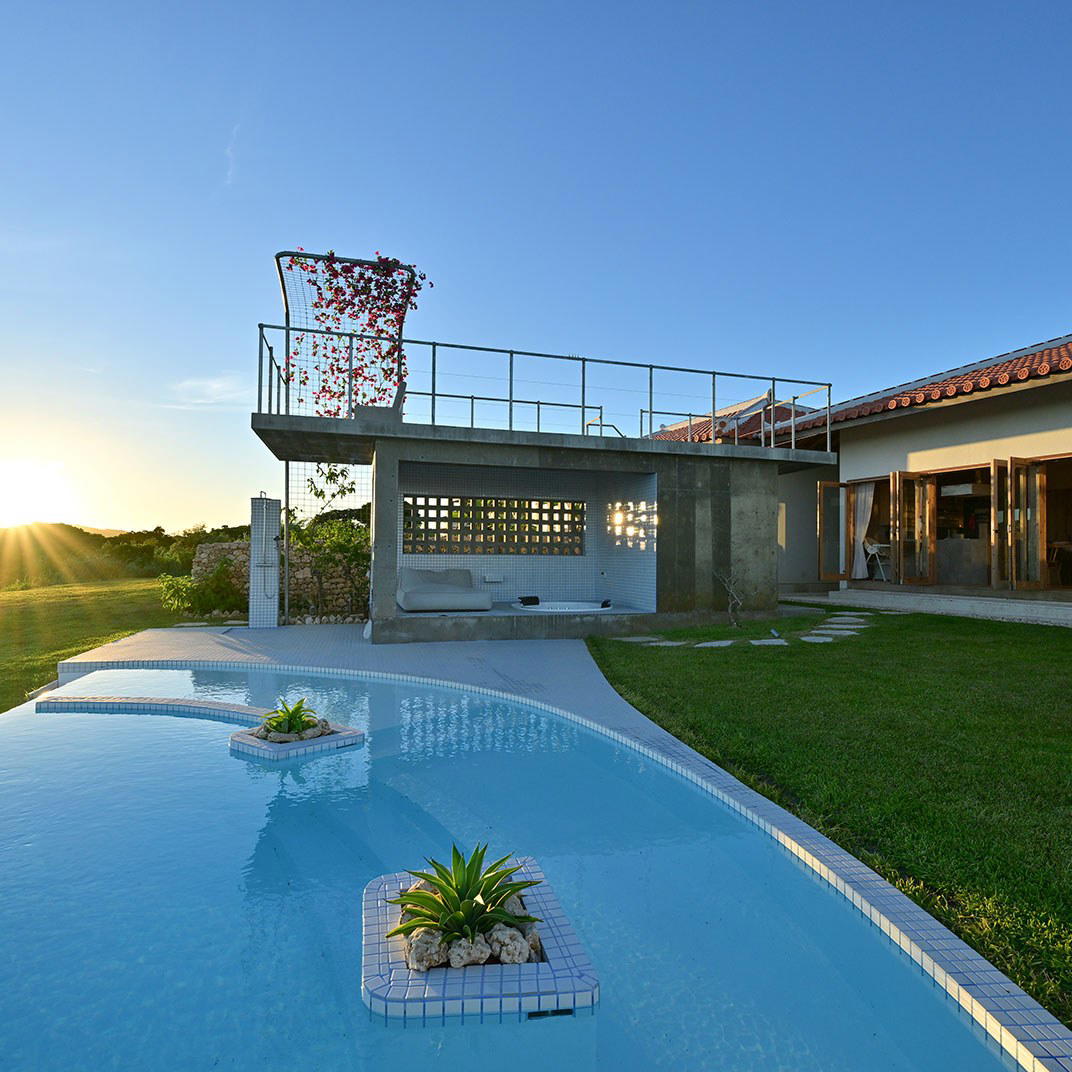
The Yaeyama Quietude Problem
Ishigaki Island sits at the southwestern edge of the Japanese archipelago, closer to Taiwan than to Tokyo, and that geographical remove shapes what travellers arrive expecting. Most come for the coral reefs, the Kabira Bay light in the late afternoon, and a version of Japan that hasn't been smoothed into international resort format. The accommodation market has responded in two directions: large resort complexes oriented around beach access and pool infrastructure (properties like Fusaki Beach Resort Hotel & Villas occupy this category), and smaller, lower-profile properties that trade volume for proximity to the island's quieter character. Ishigaki Hills belongs firmly to the second group.
The address — 1022-1 Aza Miyarahamakawahara — places the property in a part of the island that doesn't appear on most tourist itineraries. That positioning is, in itself, an editorial signal: the property isn't competing for guests who want animation and organised activity. Its 2025 Michelin Selected designation confirms it has earned independent editorial recognition within that quieter tier, placing it alongside a small cohort of Japanese properties that Michelin's hotel arm has flagged for consistent quality without the apparatus of a five-star resort brand behind them.
What Michelin Selection Means in This Context
The Michelin Selected designation for hotels operates differently from the restaurant star system. It doesn't rank; it identifies. A property earns inclusion by demonstrating consistent quality across accommodation, service, and setting, the Michelin editors are looking for places they'd send a trusted reader, not venues competing for a podium position. On Ishigaki Island, where the broader hospitality offer ranges from basic guesthouses to full resort complexes, appearing on the 2025 Michelin Selected Hotels list positions Ishigaki Hills in a specific tier: properties worth the attention of a traveller who reads hotel lists carefully and books accordingly.
For comparison, other Michelin Selected properties across Japan's more established ryokan and boutique hotel circuits, Gora Kadan in Hakone, Asaba in Izu, Nishimuraya Honkan in Kinosaki-cho, tend to share certain qualities: attentive, low-ratio staffing; a physical setting that does meaningful work; and a service register that reads as considered rather than procedural.
Service Register on a Remote Island
Remote island hospitality in Japan operates under particular constraints. Supply chains are slower, staff recruitment draws from a smaller local pool, and guests often arrive after long travel sequences, the flight from Tokyo's Haneda airport to New Chitose is roughly the same duration as Haneda to Ishigaki, but the psychological weight of the Okinawa-Yaeyama leg feels heavier because the island is genuinely at the edge of the map. Properties that manage this context well tend to do so through service philosophy rather than infrastructure: anticipating what a guest needs after a journey of that kind, rather than defaulting to the check-list hospitality of a larger branded property.
This is the tier where Ishigaki Hills operates. The Michelin Selected nod implies that the guest experience holds up under scrutiny, that whatever the staffing model and physical format, the overall impression is of a property that takes its guests seriously. In Japan's smaller accommodation sector, that often means a degree of personalisation that larger properties can't structurally deliver: a host who knows which room suits which guest, an awareness of dietary preferences before they need to be stated, a breakfast timing that doesn't require negotiation.
On Ishigaki Island specifically, the properties that tend to earn this kind of recognition share an orientation toward the landscape and the local rather than the resort amenity list. Seven x Seven Ishigaki and Jusandi occupy adjacent territory on the island's smaller-scale accommodation spectrum. Each makes a different trade-off between design, service depth, and access to the island's natural assets.
The Broader Japan Context
Japan's boutique and ryokan accommodation circuit is one of the most developed in the world for service philosophy. Properties like Zaborin in Kutchan, Kamenoi Besso in Yufu, and Satoyama-Jujo in Niigata have established a reference point for what Japan-specific hospitality can deliver: omotenashi as operational reality rather than marketing phrase, rooted in genuine attention to the guest's state rather than a service script. At the high-design end, properties like Benesse House in Naoshima and HOTEL THE MITSUI KYOTO in Kyoto demonstrate what happens when serious investment meets a coherent design idea.
Ishigaki Hills sits within this broader national conversation about what Japanese hospitality means, but it does so from the southwestern periphery rather than the established circuits of Kyoto, Hakone, or Hokkaido. That peripheral position is both its limitation and its argument: guests who find their way to the Yaeyama Islands are, by definition, not taking the most obvious path. A property that has earned Michelin recognition in this context has done so without the advantage of high-traffic location or established pilgrimage status.
For travellers who want a contrast to the larger resort format on Okinawa's main island, the Halekulani Okinawa or The Hiramatsu Hotels & Resorts Ginoza represent that end of the Okinawan spectrum, Ishigaki Hills offers a different premise entirely. The island itself does most of the work; the property's role is to not interrupt it.
Planning a Stay
Ishigaki is accessible by direct flight from Tokyo (Haneda and Narita), Osaka, and several other Japanese cities, with flight times of approximately three to three and a half hours from the capital. The island's peak season runs from late spring through summer, when water visibility and beach conditions are at their clearest, though the typhoon window from July through September carries real disruption risk that any travel plan should account for. The quieter shoulder months of April to May and October to November offer the island in a more considered register, with smaller visitor numbers and more stable conditions for reef exploration and hiking.
Booking approach and room availability for Ishigaki Hills are not detailed in the available record. Given the Michelin Selected designation and the general principle that smaller, recognised properties on remote islands fill quickly during peak windows, advance planning is advisable. The address at Miyarahamakawahara is not in the island's central commercial district, so guests should factor in transport to Ishigaki City's restaurants and the ferry terminals for day trips to Taketomi and Iriomote. For a fuller picture of the island's dining and hospitality options, the EP Club Ishigaki Island guide covers the broader scene in detail.
Those calibrating Ishigaki Hills against Japan's wider luxury accommodation offer, or considering it as a remote-island counterpart to a mainland stay at Amanemu in Mie or Fufu Nikko, should treat it as a different category of proposition. It is not competing on amenity depth or brand architecture. It is competing on the quality of a quieter, more particular experience at the edge of the Japanese map.
What It’s Closest To
Comparable venues nearby, for context on price, style, and recognition.
| Venue | Cuisine | Price | Awards | Notes |
|---|---|---|---|---|
| Ishigaki HillsThis venue — the venue you are viewing | Modern villas blending architecture with nature for immersive island retreats | $500–750 | Michelin Selected | Not listed |
| Fusaki Beach Resort Hotel & Villas | Contemporary resort with traditional Ryukyu cultural elements, featuring red-tiled roofs and warm earthy materials integrated into a sprawling oceanfront village layout. | $200–300 | Michelin Selected · World Luxury Hotel Awards WLHA Regional Winner | Arakawa, Ishigaki Island |
| seven x seven Ishigaki | Self-hospitality luxury resort with low-touch service and high-end comforts. | Not listed | Michelin Selected | Maezato |
| Hoshinoya Okinawa | Oceanfront resort styled as a Ryukyu Kingdom gusuku village with standalone villas and suites along pristine white beaches. | Not listed | 1 Michelin Key | Yomitan |
| Hyatt Regency Tokyo (ハイアットリージェンシー東京) | Contemporary urban luxury with Shinjuku-inspired reinvention | $300–500 | Not listed | Nishi-Shinjuku |
| Hotel Okura Kyoto Okazaki Bettei | Small luxury hideaway reminiscent of a mountain lodge in Higashiyama culture | $300–500 | Michelin Selected | Sakyō |
Recognition history
Dated appearances from independent guides and award organizations, with the underlying list record or original source where available.
Michelin Selected
Michelin
Continue exploring
More in Ishigaki Island
Hotels in Ishigaki Island
Browse all →
Details
- Quiet
- Scenic
- Modern
- Cozy
- Romantic Getaway
- Weekend Escape
- Group Retreat
- Infinity Pool
- Panoramic View
- Terrace
- Pool
- Hot Tub
- Wi Fi
Contemporary classic and quiet atmosphere with open-plan living areas, thoughtful details, garden loungers, and decks for stargazing.