
Tabelog 100 #80
Our verdict
Teuchi Kamiyo Soba is a Matsue soba address for travelers who care about regional buckwheat traditions rather than ceremony for its own sake. Its repeated Tabelog 100 Soba selections place it in the serious western Japan soba conversation, while the low-key house-restaurant format keeps the experience grounded in local eating habits.

Pearl is the En Primeur Club membership app — saves, bookings, and concierge access live there. Same editors, same standards.
- Address
- 324-5 Okudanicho, Matsue, Shimane 690-0872, Japan
- Phone
- +81 852-21-4866
- Hours
- Mon–Tue 11 AM–2 PMWed ClosedThu–Sun 11 AM–2 PM
- Website
- facebook.com
- Directions
- Get directions
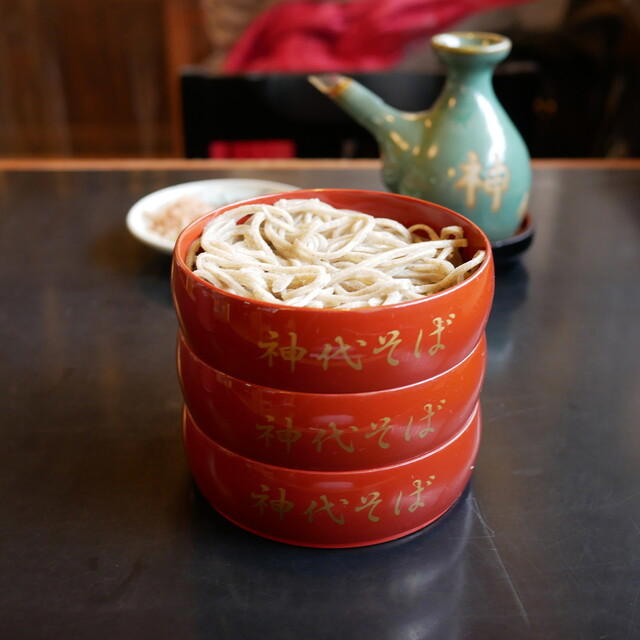
Approaching a soba house in Matsue is not the same proposition as hunting a counter seat in Tokyo or Kyoto. The city’s rhythm is slower, the meal is shorter, and the point is often the grain itself: buckwheat treated as a regional staple rather than a luxury performance. Teuchi Kamiyo Soba belongs to that register, a local soba setting where the draw is soba, not theatrical plating or a chef-driven tasting format.
Matsue sits inside a wider soba culture, where buckwheat noodles can be a concise local meal rather than a formal restaurant occasion. That matters for travelers: the appeal is not refinement in the sushi-counter sense, but a grain-forward expression with enough structure to carry dipping sauce, condiments, and a focused meal.
Izumo soba makes buckwheat the point, not the garnish
Japanese soba is often flattened in travel writing into a single category, but regional habits and service customs can change the meal. In Shimane, soba is closely associated with everyday specialist shops as well as local food culture. The better rooms in this category tend to resist overcomplication. They win by keeping the noodle texture, broth balance, and portion rhythm in focus.
Teuchi Kamiyo Soba’s selection for Tabelog 100 Soba WEST 2025 gives it a measurable credential in a category where national visitors can otherwise struggle to separate routine lunch shops from serious specialists. That recognition is useful because it places the restaurant inside a focused soba field rather than a general-purpose restaurant ranking, giving travelers a clearer signal about why the stop matters.
The sourcing angle here is buckwheat rather than luxury produce. Soba is a cuisine where ingredient decisions show quickly because there are few places to hide. Flour character, water absorption, and cut width all affect the final bowl or tray. Even without a formal chef narrative, the format tells readers what to watch for: aroma before sauce, elasticity before softness, and the way the noodle holds its line after the first few bites.
That makes this a useful counterpoint to Matsue dining that leans into broader restaurant cooking. China Sanchi Soba Kobo Funatsu sits in the same city conversation for soba-focused eating, while Mosoro and オマッジオ ダ コニシ point toward different local dining moods. For a wider read, the broader Matsue restaurant spread helps keep each meal in its own category.
A local room suits a short, serious lunch
The format places it closer to a neighborhood specialist than a destination counter. That distinction matters. Soba shops with this kind of focus usually reward decisiveness: arrive with the intention to eat noodles, not to turn lunch into a long multi-course sitting. The mood is better understood as practical and communal rather than ceremonial.
The local soba format shapes expectations in useful ways. This is not a polished urban room built around international luxury cues. It is a Matsue address where the strongest argument is the category itself: buckwheat noodles in a city where soba has cultural weight. The experience is therefore better read against regional noodle craft than against fine dining. A Tabelog score of 3.75 reinforces that it has traction with Japan-based diners, but the more persuasive signal is its soba-category recognition.
Planning details also affect how to frame the meal, though the editorial takeaway is simple: this is an inexpensive soba stop rather than a flexible all-day restaurant. The listed lunch budget sits at JPY 1,000 - JPY 1,999, making it especially suited to travelers building a Matsue day around cultural stops, lake views, and a concise noodle meal rather than a late-evening dining anchor.
For readers mapping a fuller trip, the practical ecosystem around Matsue matters as much as the single meal. Matsue’s hotels, bars, and experiences help place a soba lunch within the city’s broader travel pattern.
How to read it against Japan's casual specialist dining
Teuchi Kamiyo Soba is part of a Japanese dining tier that can be easy to underrate from abroad: inexpensive, specific, and technically narrow. The appeal is not breadth. It is repetition, restraint, and a product category honed over many services. Travelers comparing it with flashier rooms should ask a different question: does the shop clarify what this region does with buckwheat?
That lens also helps when comparing it with other focused casual restaurants across Japan. Different specialist addresses may occupy very different culinary lanes, but each depends on a narrow promise being executed with clarity. For Teuchi Kamiyo Soba, that promise is not a sprawling menu or elaborate service ritual; it is the directness of soba as a regional staple.
The same principle runs through smaller-format dining more broadly: the best examples do not need to imitate fine dining in order to matter. A shop can be memorable because it gives one product category enough attention, context, and consistency. In Matsue, that makes the comparison less about glamour and more about whether the meal communicates local food culture clearly.
The editorial verdict is narrow by design: come for soba as a regional food with technical stakes, not for a long-format restaurant occasion. In Matsue, that makes Teuchi Kamiyo Soba a useful meal for travelers who want the city’s food culture at lunch scale, with enough recognition to justify seeking it out and enough simplicity to keep the focus where it belongs: buckwheat, texture, and local habit.
Frequently asked questions
Is Teuchi Kamiyo Soba child-friendly?
The setup is practical for a straightforward family meal in Matsue, especially for travelers looking for an inexpensive soba stop rather than a long formal restaurant occasion.
What's the vibe at Teuchi Kamiyo Soba?
Expect a compact soba specialist rather than a formal dining room. The Tabelog 100 Soba WEST 2025 selection points to a focused local soba restaurant in Matsue.
What does dinner at Teuchi Kamiyo Soba typically cost?
A dinner budget is not listed; the listed lunch budget is JPY 1,000 - JPY 1,999.
What is Teuchi Kamiyo Soba known for?
Teuchi Kamiyo Soba is known for soba in Matsue, with Tabelog 100 Soba WEST 2025 recognition.
In Context: Similar Options
Comparable venues by cuisine and price in the same metro.
| Venue | Cuisine | Price | Awards | Notes |
|---|---|---|---|---|
| Teuchi Kamiyo SobaThis venue — the venue you are viewing | Traditional handmade soba (Izumo-style) | $10–20 | Tabelog 100 #80 | Not listed |
| China Sanchi Soba Kobo Funatsu | Japanese Soba | $1–10 | Tabelog 100 #65 | Gotsu/Nakahara area |
| KARLY tonomachi | Japanese Spice Curry | $10–20 | Not listed | Tonomachi |
| オマッジオ ダ コニシ | Modern Italian with Local Shimane Ingredients | $50–100 | Not listed | Higashi Asahi-cho |
| Sukesama (ぎょうざ処 亮昌) | Kyoto Gyoza Specialist | $10–20 | Not listed | Gion |
| 首里そば | Okinawan Soba | $1–10 | Not listed | Shuri |
Recognition history
Dated appearances from independent guides and award organizations, with the underlying list record or original source where available.
Tabelog 100 #80 · No. 80
Tabelog · Tabelog 100 - Soba - WEST - 2025
Continue exploring
More in Matsue
Restaurants in Matsue
Browse all →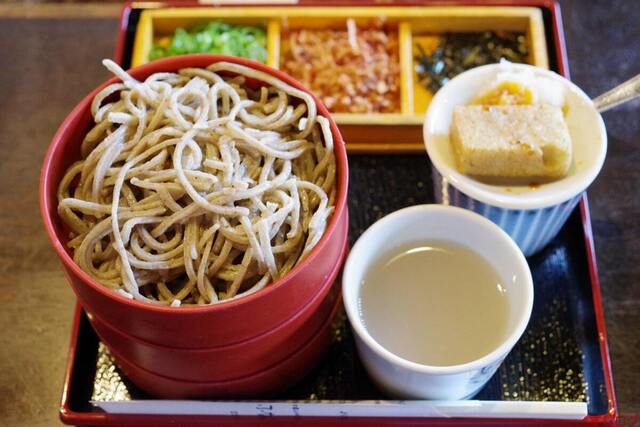

Details
- Classic
- Cozy
- Solo
- Casual Hangout
- Family
- Group Dining
- Standalone
- Historic Building
- Sake Program
- A La Carte
- Sake
- Beer
Current opening hours
- Monday
- 11 AM–2 PM
- Tuesday
- 11 AM–2 PM
- Wednesday
- Closed
- Thursday
- 11 AM–2 PM
- Friday
- 11 AM–2 PM
- Saturday
- 11 AM–2 PM
- Sunday
- 11 AM–2 PM
Hours can change for holidays and private events. Last verified .
A modest, house-converted soba shop with a traditional, no-frills interior; tatami seating and small tables create an unpretentious, cozy atmosphere with a steady, conversational buzz during meal times.