
Tabelog 100 #71
Our verdict
Kenjo Soba Haneya Honten places Izumo soba in its proper setting: a regional noodle tradition where buckwheat character, local habit, and old-house dining matter more than ceremony. The main store’s Tabelog 100 Soba WEST 2025 selection, 80-seat scale, private rooms, and accessible JPY 1,000–1,999 range make it a serious stop without turning lunch into a performance.

Pearl is the En Primeur Club membership app — saves, bookings, and concierge access live there. Same editors, same standards.
- Address
- Japan, 〒693-0001 Shimane, Izumo, Imaichicho, 本町549
- Phone
- +81 853-21-0058
- Hours
- Daily 11 AM–3 PM, 5–7 PM
- Website
- kenjosoba-haneya.com
- Directions
- Get directions
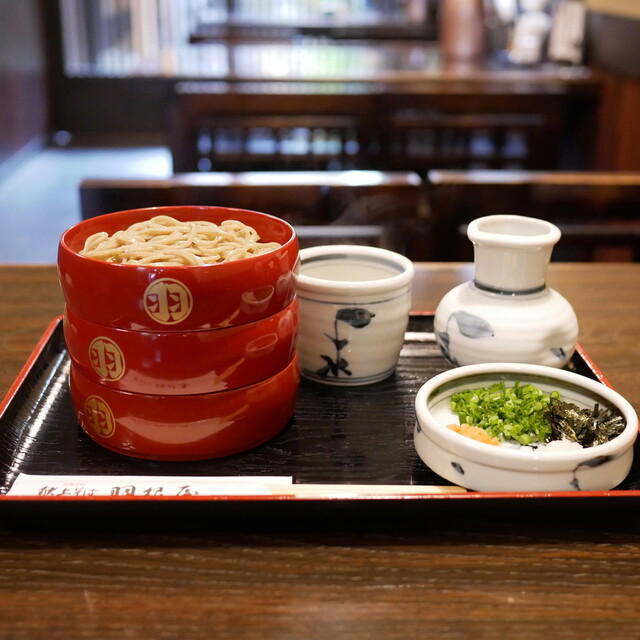
The menu
What to order
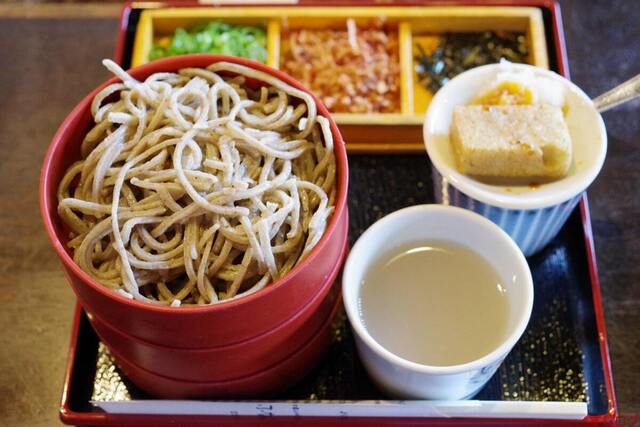
- Wariko soba (multi-tiered buckwheat noodles)
- Kama-age soba
- Izumo soba
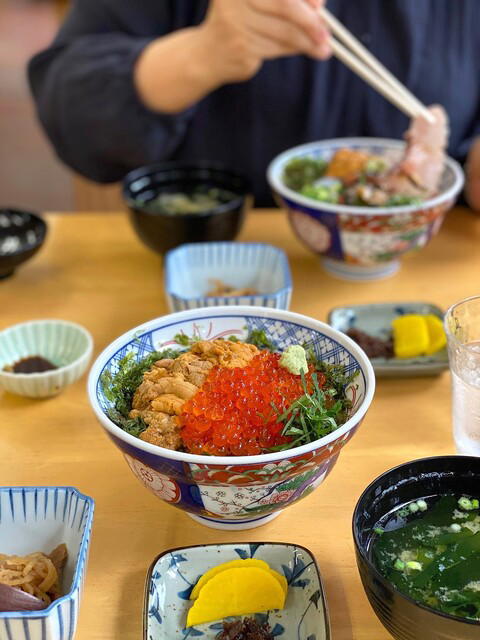
- Oyako-don (limited availability)
In Izumo, soba is not treated as a rarefied tasting-counter exercise. It belongs to everyday movement: travellers, families at lunch, and locals who understand that buckwheat noodles can carry a region’s identity without ceremony. Kenjo Soba Haneya Honten fits that register. The setting reads as a grounded local restaurant rather than a polished urban dining room, and that matters in Izumo, where the point is not spectacle but continuity.
Izumo soba has a different gravity from more minimalist soba styles elsewhere in Japan. The regional style is often associated with darker, more aromatic noodles made with more of the buckwheat husk, a trait that gives the category its earthier profile. That ingredient emphasis is the reason this Izumo restaurant deserves attention: the bowl is less about invention than about how buckwheat, water, and local serving habits create a recognizable regional language.
Izumo soba belongs to the grain, not the garnish
The stronger buckwheat identity of Izumo soba changes the reader’s expectations. In some Japanese noodle traditions, broth or topping carries the memory of the meal; here, the noodle itself has to do more of the work. That is why established soba restaurants in Izumo are judged less like fashion-driven restaurants and more like custodians of technique. Consistency and restraint matter because there are fewer distractions to hide behind.
Kenjo Soba Haneya Honten’s selection for Tabelog Hyakumeiten 2025 places it within a vetted soba group rather than simply within Izumo’s tourist circuit. In practical editorial terms, that recognition matters because it measures this kind of restaurant against soba peers, not against generic destination dining. Its Tabelog score is listed at 3.65, which gives readers a useful external marker without turning the meal into a trophy hunt.
The menu frame is also broader than a single noodle identity: the public category listing includes soba and udon. That combination reads as a working Japanese noodle restaurant rather than a narrow tasting format. The core argument remains the same: buckwheat is the anchor, and the kitchen’s value lies in not blurring the regional character that draws diners to Izumo soba in the first place.
A main store with a local, everyday role
Heritage can become empty theatre in established restaurants, so the more useful way to read Kenjo Soba Haneya Honten is through its local function. It is a soba address in Izumo, a city where food culture and travel culture often overlap. The appeal is not that the room performs luxury; it is that the meal feels connected to an established local way of eating.
That everyday role is important for travellers. Many serious soba restaurants in Japan can feel intimidating because their appeal is wrapped in scarcity, but this address is easier to understand as a practical noodle stop with regional meaning. It suits diners who want a focused meal rather than a long formal sequence, and it keeps the emphasis on soba and udon rather than on elaborate restaurant theatre.
Within Izumo, the comparison is instructive. Suna Ya, Hanafusa, China Sanchi Soba Kobo Funatsu, and Teuchi Kamiyo Soba help frame how much local noodle culture matters across the city. For a wider city read, Our full Izumo restaurants guide maps the broader dining field, while Our full Izumo hotels guide, Our full Izumo bars guide, Our full Izumo wineries guide, and Our full Izumo experiences guide place the meal inside the larger trip.
How to read the room before ordering
The better way to approach Kenjo Soba Haneya Honten is to think like a regional eater rather than a trophy hunter. The Tabelog score of 3.65 and 2025 Hyakumeiten recognition provide enough external validation; the real question is whether the diner wants a local soba meal shaped by place rather than a destination restaurant engineered around scarcity. The listed price range is JPY 1,000 - JPY 1,999, with lunch also shown in that same band.
The editorial draw is the food tradition. Izumo soba is a lesson in how a single grain can define a city’s table, and Kenjo Soba Haneya Honten makes sense for travellers who want that lesson in a straightforward setting. The restaurant’s value is clearest when treated not as a spectacle, but as a grounded stop for soba and udon in Izumo.
For readers comparing Japanese dining styles across regions, the contrast with other EP Club entries is useful in a general sense: some restaurants lean into set-piece dining, others into cafés, bars, or non-Japanese cuisines. Kenjo Soba Haneya Honten belongs to the more local register: a soba and udon address whose appeal comes from regional identity, accessible pricing, and a recognized place within the 2025 Tabelog Hyakumeiten soba field.
Frequently asked questions
Is Kenjo Soba Haneya Honten a family-friendly restaurant?
Kenjo Soba Haneya Honten is a soba and udon restaurant in Izumo. Check the venue's official channels for the latest details on seating, children, and visit conditions.
What should I expect atmosphere-wise at Kenjo Soba Haneya Honten?
Expect a straightforward Izumo noodle restaurant rather than a long formal meal. The public category listing identifies soba and udon, so the focus is on a regional noodle stop.
What does dinner at Kenjo Soba Haneya Honten typically cost?
Pricing at Kenjo Soba Haneya Honten is listed as JPY 1,000 - JPY 1,999.
What days is Kenjo Soba Haneya Honten closed?
Check the venue's official channels for current opening days and hours before visiting.
How do I find Kenjo Soba Haneya Honten?
Izumo.
What is Kenjo Soba Haneya Honten known for?
It is known as an Izumo soba and udon restaurant with Tabelog Hyakumeiten 2025 recognition in the soba field. Check the venue's official channels for the latest details.
Comparison Snapshot
Comparable venues by cuisine and price in the same metro.
| Venue | Cuisine | Price | Awards | Notes |
|---|---|---|---|---|
| Kenjo Soba Haneya HontenThis venue — the venue you are viewing | Traditional Izumo soba | $10–20 | Tabelog 100 #71 | Not listed |
| Suna Ya | Traditional Japanese Soba | $10–20 | Tabelog 100 #52 | Taishacho Kizuki Minami |
| Hanafusa | Traditional Japanese Seafood & Kaisendon | $20–30 | Tabelog 100 #31 | Hinomisaki |
| 菊屋 | Traditional Japanese Noodles (Chanpon & Udon) | Not listed | Not listed | 中央町 (Chuo-cho) |
| Arry 8Bites | Japanese Small Bites | Not listed | Not listed | Tokyo |
| Nakakooriten Kakigori | Japanese Kakigori | $1–10 | Not listed | Shingu |
Recognition history
Dated appearances from independent guides and award organizations, with the underlying list record or original source where available.
Tabelog 100 #71 · No. 71
Tabelog · Tabelog 100 - Soba - WEST - 2025
Continue exploring
More in Izumo
Restaurants in Izumo
Browse all →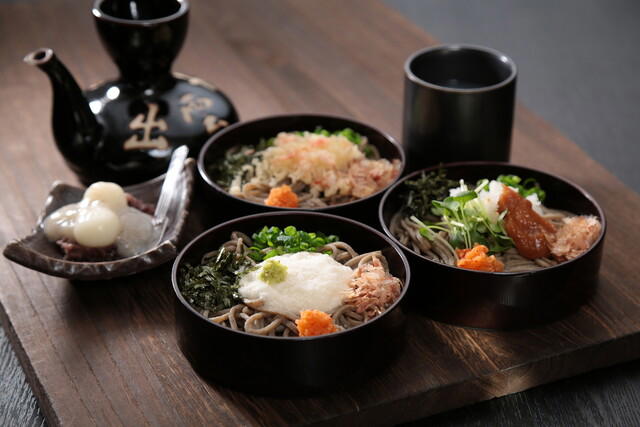

Details
- Classic
- Cozy
- Rustic
- Scenic
- Well Known
- Family
- Group Dining
- Casual Hangout
- Solo
- Historic Building
- Standalone
- Garden
- Local Sourcing
- Garden
- A La Carte
- Tea
- Soft Drinks
Current opening hours
- Monday
- 11 AM–3 PM, 5–7 PM
- Tuesday
- 11 AM–3 PM, 5–7 PM
- Wednesday
- 11 AM–3 PM, 5–7 PM
- Thursday
- 11 AM–3 PM, 5–7 PM
- Friday
- 11 AM–3 PM, 5–7 PM
- Saturday
- 11 AM–3 PM, 5–7 PM
- Sunday
- 11 AM–3 PM, 5–7 PM
Hours can change for holidays and private events. Last verified .
A traditional Japanese soba house in a renovated house-style building, with tatami rooms, low lighting, and views of a small garden that create a calm, classic atmosphere suited to relaxed lunches and family meals.