
1 Michelin Key
A 17-room guesthouse in a medieval Saxony-Anhalt town, Gasthof Zufriedenheit occupies a 19th-century building thoroughly renovated in 2016. Rooms run large for the category — Garden rooms from 24 square meters, suites to 60 — and a wine bar focused on local Saxony-Anhalt producers anchors the food and drink program. For a town defined by its High Medieval heritage, it reads as quietly contemporary without overreaching.

Pearl is the En Primeur Club membership app — saves, bookings, and concierge access live there. Same editors, same standards.
- Address
- Steinweg 26, 06618 Naumburg (Saale)
- Phone
- +49 3445 7912051
- Website
- gasthof-zufriedenheit.de
- Directions
- Get directions
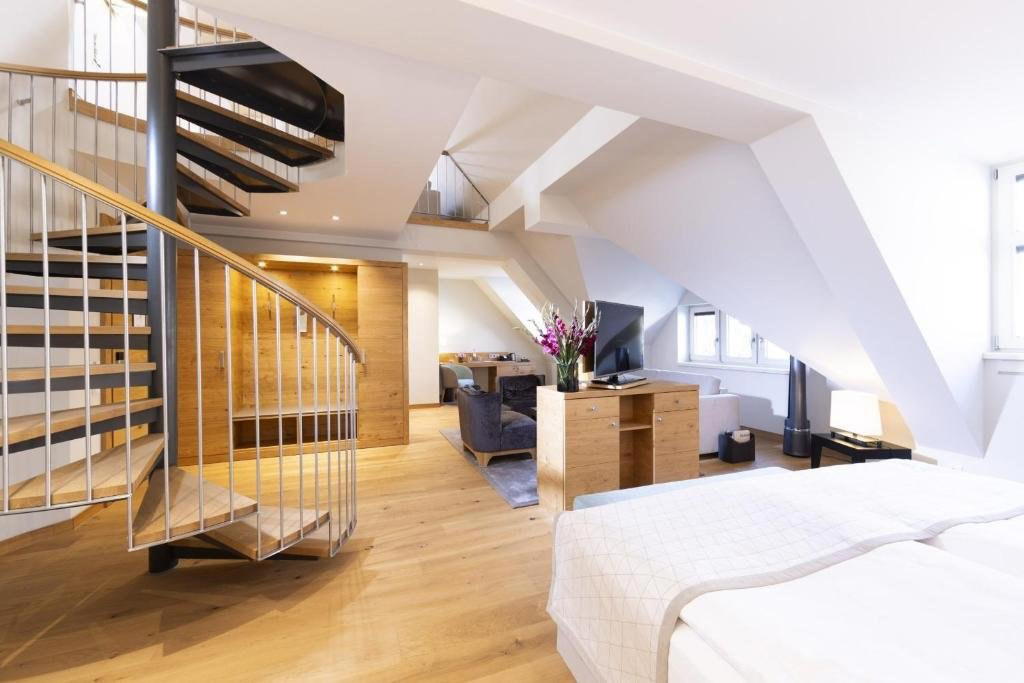
Where Medieval Fabric Meets a Careful Hand
Naumburg does not announce itself the way Leipzig or Halle do. Positioned along the Saale river in Saxony-Anhalt, it earned its significance during the High Middle Ages as a node on a major trade route, and the architecture accumulated across those centuries still defines how the town reads at street level. The cathedral — a UNESCO World Heritage site — sets the tone: heavy masonry, patient construction, an aesthetic built for permanence. Against that backdrop, any gesture toward the contemporary carries disproportionate weight. The question for hotels in a city like this is not how much modernity to introduce, but how lightly to apply it.
Gasthof Zufriedenheit, at Steinweg 26, answers that question through restraint. The structure dates to the 19th century, which by Naumburg's measure makes it practically recent. A thorough renovation in 2016 reworked the interior without erasing its proportions or material character, landing the property in the category of places that read as contemporary in detail while remaining coherent with their surroundings in scale and texture. That balance is harder to achieve than it appears, and smaller heritage towns across Germany have produced many cautionary examples in both directions: over-renovated guesthouses that feel displaced and under-renovated ones that feel merely preserved. Gasthof Zufriedenheit threads that gap with enough confidence to feel deliberate.
This approach, careful modernisation of historic fabric in a secondary German city, connects to a broader pattern in German hospitality. Properties like Bülow Palais in Dresden and Hotel Ketschauer Hof in Deidesheim occupy a similar register: historic shells, contemporary interiors, provincial settings that require the hotel to provide its own sense of occasion. At that scale, the design decisions in individual rooms matter more than a grand lobby statement.
Room Scale and Configuration
Seventeen rooms is a number that implies a particular hospitality model: enough inventory to function commercially, not so many that the operation becomes impersonal. At Gasthof Zufriedenheit, the room categories begin at a floor area that already distinguishes them from typical guesthouse stock. Garden rooms open at 24 square meters, which sits comfortably above the cramped-but-functional category that defines much of the three-star guesthouse tier in Germany. The majority come with king beds, which removes one of the most common sources of friction in European guesthouse bookings.
The suites push to 60 square meters, which is a meaningful jump. At that size, the bathroom configuration becomes architecturally relevant: both a shower and a freestanding tub are included, the latter a design element that tends to read as a considered choice rather than a standard fitting when it appears in a building of this age and category. In a 19th-century structure, installing a freestanding tub without making it feel anachronistic requires some calibration of ceiling height, natural light, and floor finish. When it works, it signals that the renovation was driven by spatial thinking rather than specification-list compliance.
For comparison, the room counts and configuration logic at large-format German hotels, the Fairmont Hotel Vier Jahreszeiten in Hamburg or Mandarin Oriental Munich, operate from entirely different premises. Those properties compete on service depth, F&B; programming, and brand infrastructure. A 17-room guesthouse in Naumburg competes on a different set of terms: intimacy, local specificity, and the quality of the individual room environment. On those terms, 60-square-meter suites with freestanding tubs represent a serious entry.
Communal Spaces and the Absence of a Lobby Bar
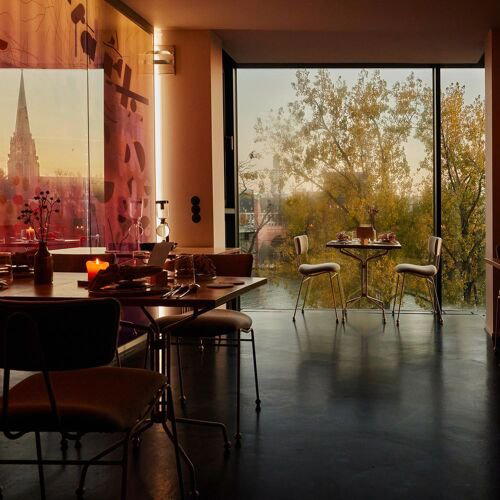
The decision to forgo a conventional lobby bar in favour of a living room and a courtyard reflects a design philosophy more commonly associated with smaller design-led properties than with traditional German guesthouses. In hospitality terms, a lobby bar is infrastructure, it serves as a default gathering point and a revenue channel. Replacing it with a living room reframes the communal space as residential rather than transactional, which changes how guests relate to the property and to each other.
The courtyard functions as Naumburg's climate allows: a warm-season extension of the interior, suitable for coffee, aperitifs, or the afternoon tea and cake service that the property offers. That afternoon ritual is a small but legible signal about the guest profile the hotel is positioning for: people with time to spend in one place, not passing through on a compressed itinerary. It also suggests a hospitality pace that aligns well with Naumburg's own tempo, which rewards slow movement through its medieval centre rather than rapid sightseeing.
The Restaurant and Wine Bar
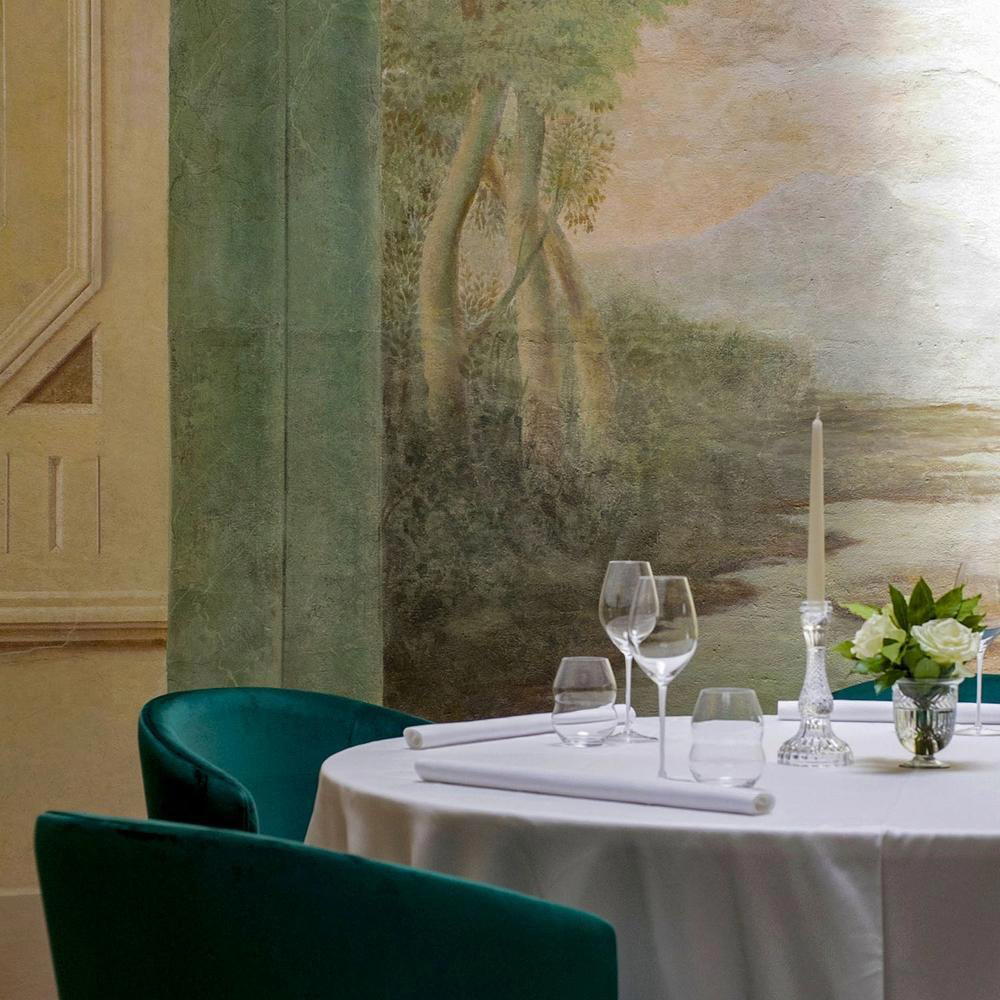
In smaller German towns with strong regional food traditions, hotel restaurants carry more weight than they do in major cities, where guests have abundant alternatives within walking distance. Naumburg's restaurant offer is limited enough that the in-house kitchen at Gasthof Zufriedenheit functions as a meaningful part of the stay rather than a fallback option. The kitchen works with seasonal produce including ingredients from the hotel's own garden, a supply model that imposes some discipline on the menu and tends to produce tighter, more coherent cooking than operations that source more broadly.
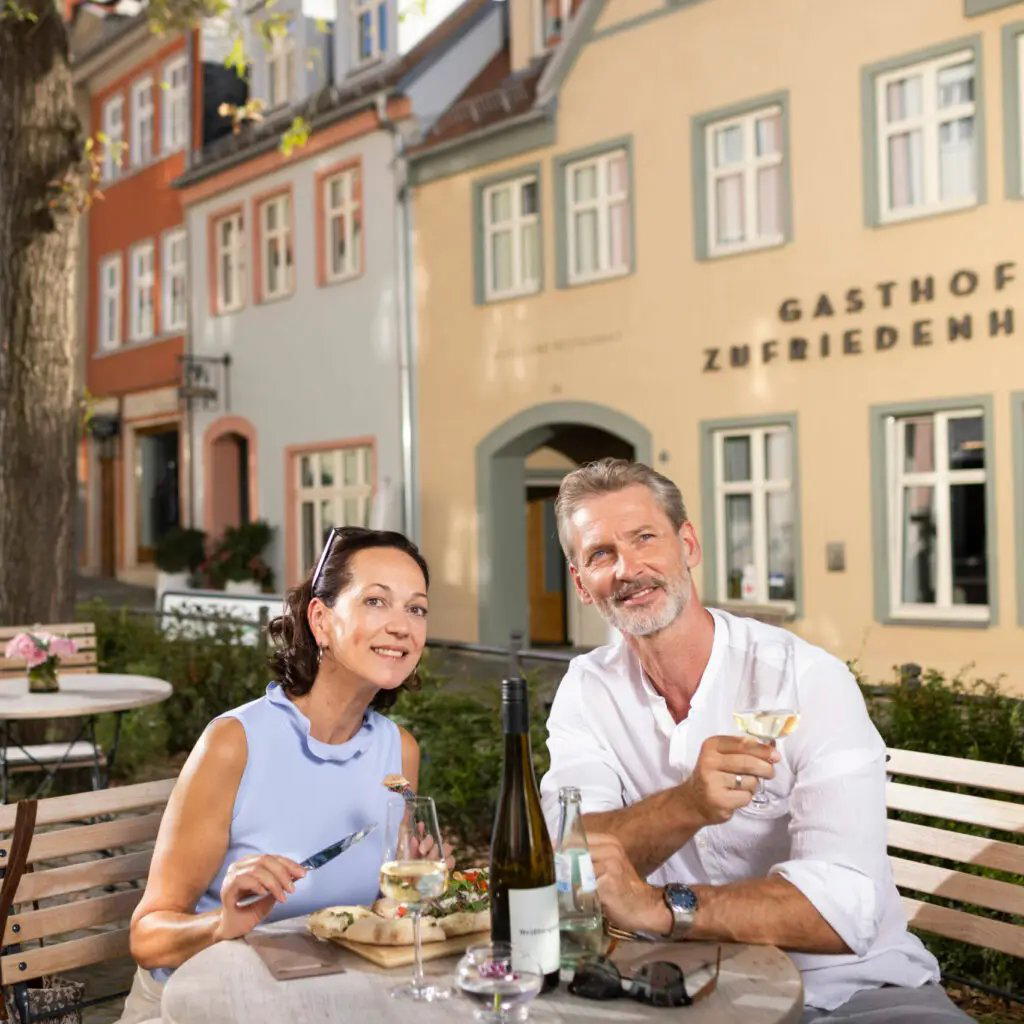
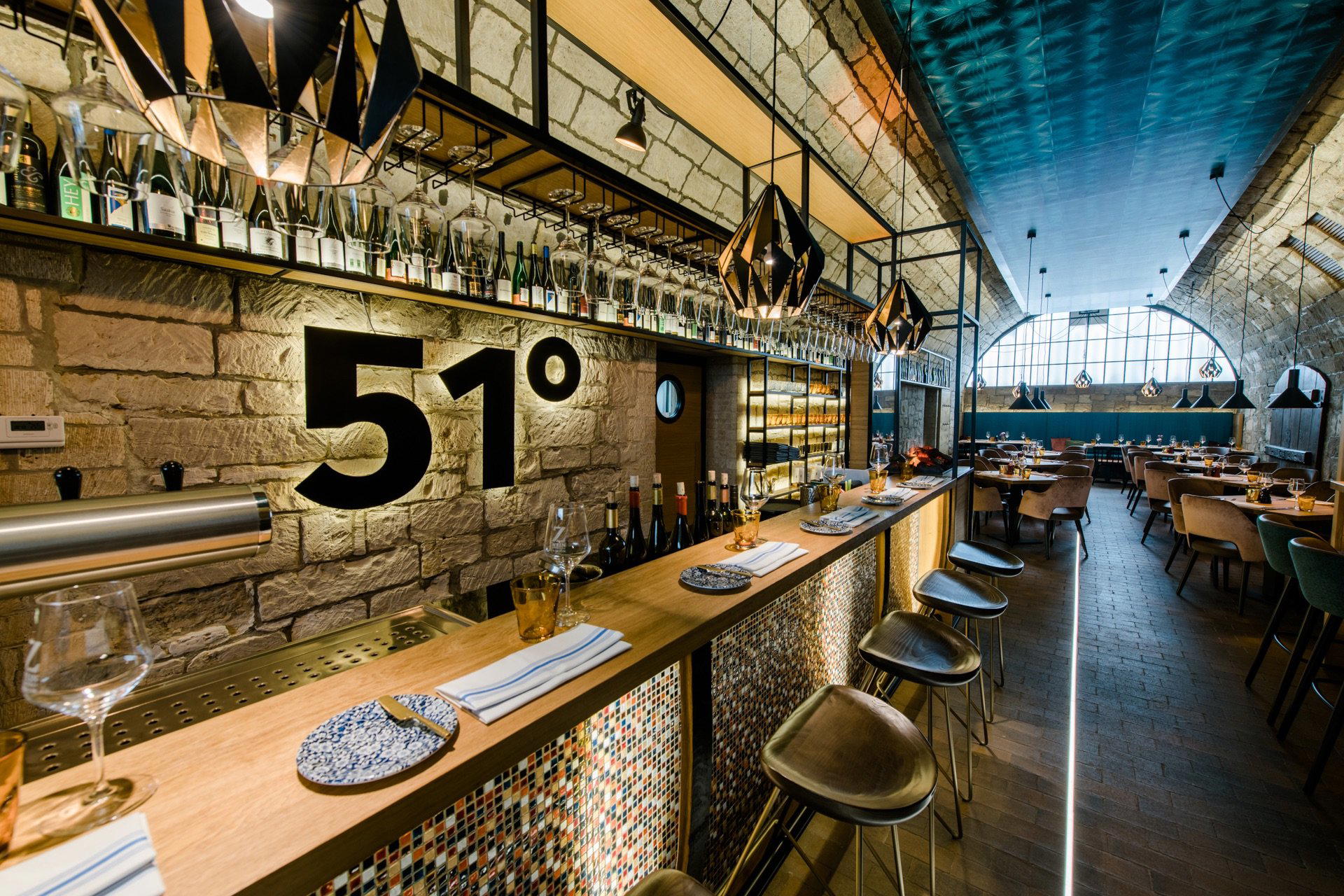
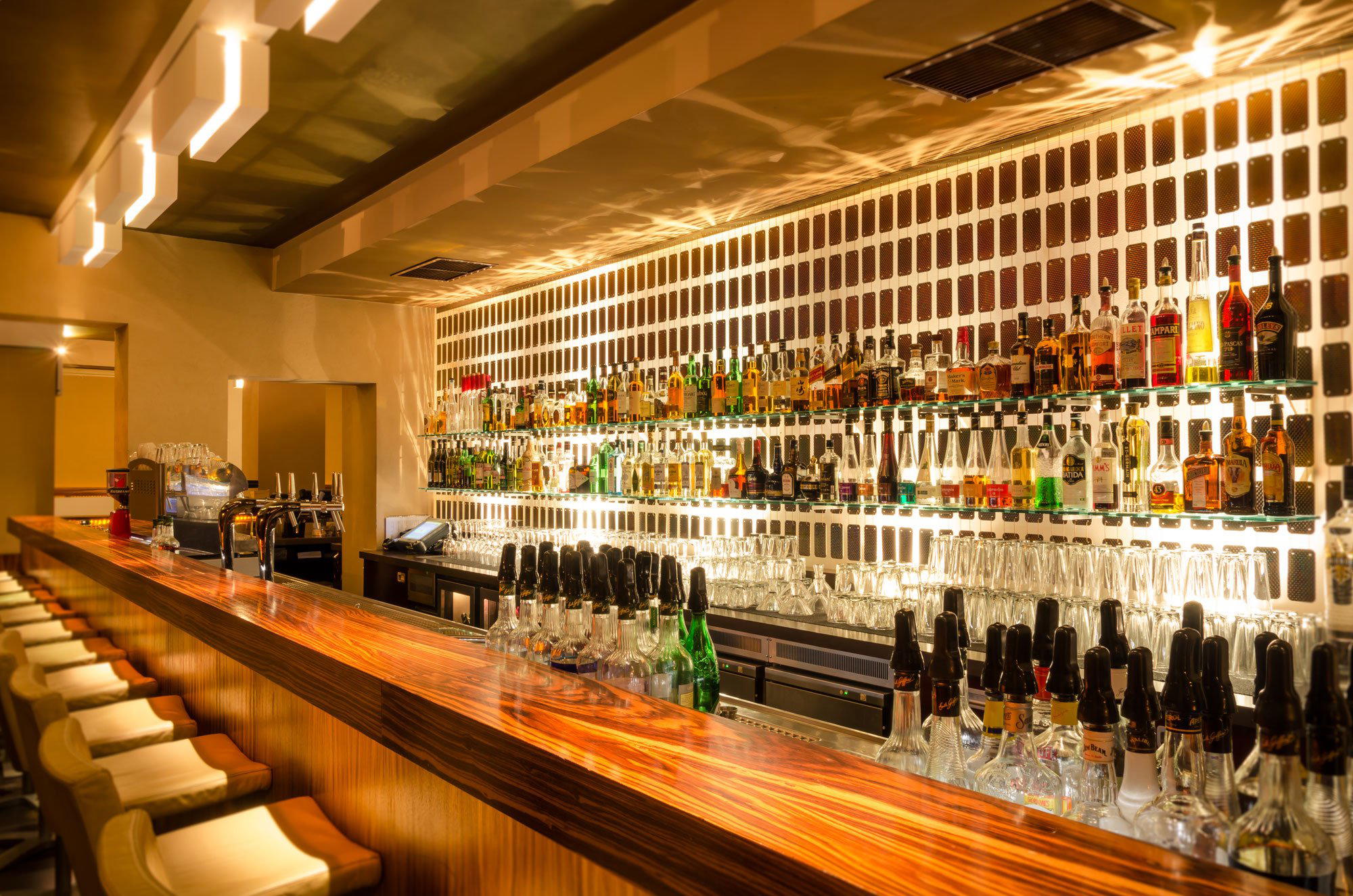
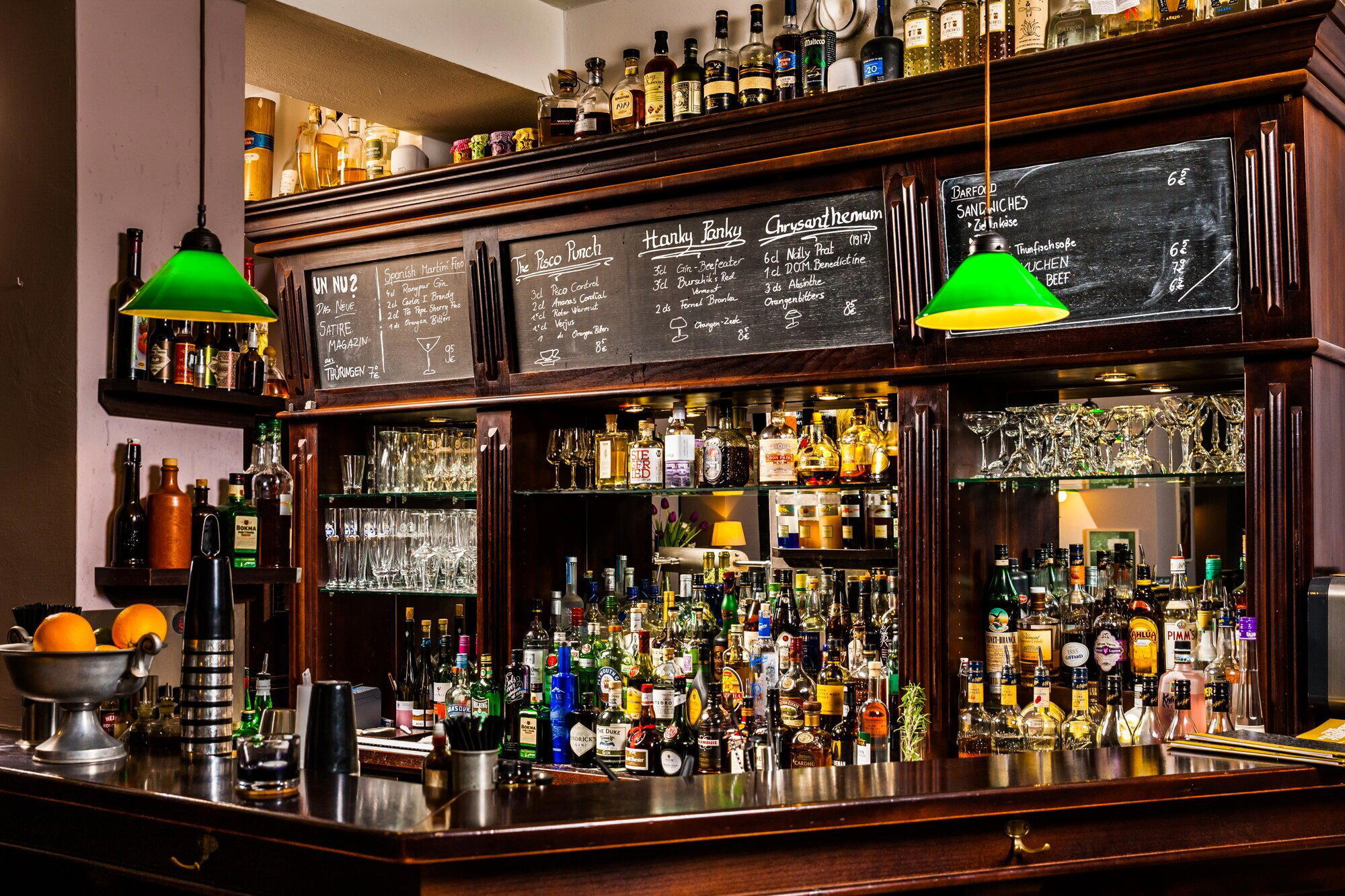
The wine bar's focus on Saxony-Anhalt producers is the more editorially interesting element. The region's wine identity is not well-known internationally, Saxony-Anhalt sits at the northern edge of Germany's wine-producing areas, and its output reaches far fewer export markets than the Mosel, Rheingau, or Baden regions. For a wine bar to focus specifically on local bottles is both a curatorial commitment and a genuine point of difference. Guests who arrive with a working knowledge of German wine will find bottles they are unlikely to have encountered elsewhere; guests without that background will leave with one. See our full Naumburg restaurants guide for context on the broader local eating and drinking scene.
Planning Your Stay
Naumburg is reachable by train from Leipzig in under an hour, which makes it a credible addition to an itinerary that begins or ends in a larger Saxony city without requiring a car. The property sits on Steinweg 26, within walking distance of the cathedral and the medieval centre. With 17 rooms, the hotel fills quickly during peak cathedral-visit periods and regional festival dates, so booking several weeks in advance is advisable for weekend stays. At a rate of $147 per room, the property sits in a range that makes the suite configuration, 60 square meters, freestanding tub, likely king bed, a reasonable consideration over the standard category rather than a significant step up in spend.
Travellers accustomed to the infrastructure of larger German properties, the Kempinski Hotel Berchtesgaden, the Schloss Elmau Luxury Spa Retreat, or the Althoff Seehotel Überfahrt in Rottach-Egern, should calibrate expectations accordingly. This is a 17-room guesthouse in a mid-sized medieval town. What it offers instead of scale is spatial quality, local wine specificity, and a design sensibility that holds up in a context where the surrounding architecture is already doing significant work. For stays oriented around the UNESCO cathedral, the Saale valley, and the slower pace of Saxony-Anhalt's smaller cities, it functions as the appropriate base. For those who prefer larger-footprint alternatives elsewhere in Germany, properties such as Hotel de Rome in Berlin, Excelsior Hotel Ernst in Cologne, or Breidenbacher Hof in Düsseldorf offer a different proposition entirely. Other smaller German properties worth considering in their respective regions include Luisenhöhe in Horben, LA MAISON in Saarlouis, Esplanade Saarbrücken, Villa Contessa in Bad Saarow, Landhaus Stricker in Sylt, BUDERSAND Hotel in Hörnum, Weissenhaus Private Nature Luxury Resort, Gut Steinbach Hotel Chalets Spa in Reit im Winkl, Das Kranzbach Hotel in Kranzbach, Der Öschberghof in Donaueschingen, and Hotel Bareiss in Baiersbronn. For international reference points at the design-led small-property end of the spectrum, Aman Venice, Aman New York, and The Fifth Avenue Hotel in New York City offer points of comparison for how small-key counts and considered design interact at different price tiers.
How It Stacks Up
Comparable venues nearby, for context on price, style, and recognition.
| Venue | Cuisine | Price | Awards | Notes |
|---|---|---|---|---|
| Gasthof ZufriedenheitThis venue — the venue you are viewing | Distinctive boutique hotel in historic 1853 building with modern updates | $200–300 | 1 Michelin Key | Not listed |
| Widmann's Löwen | Family-run heritage hotel blending traditional Swabian hospitality with contemporary luxury, positioned as a culinary destination in the countryside. | $1–100 | 1 Michelin Key | Königsbronn-Zang |
| Steigenberger Hotel Hamburg | Elegant country house with modern renovations | $100–200 | Michelin Selected | Alstertal |
| me and all hotel düsseldorf | Japanese-inspired boutique urban hotel | $1–100 | Michelin Selected | Little Tokyo |
| KroneLamm | Contemporary wellness retreat in historic Black Forest village | $300–500 | Not listed | Zavelstein |
| Landhaus Flottbek Boutique Hotel | Renovated historic country house with modern comforts | $100–200 | 1 Michelin Key | Gross Flottbek |
Recognition history
Dated appearances from independent guides and award organizations, with the underlying list record or original source where available.
Michelin 1 Key
Michelin
Full recognition history (2 entries)
Michelin 1 Key
Michelin

Details
- Cozy
- Modern
- Rustic
- Quiet
- Scenic
- Romantic Getaway
- Weekend Escape
- Garden
- Terrace
- Historic Building
- Wi Fi
- Restaurant
- Bar
- Garden
- Elevator
- Concierge
- Laundry Service
- Garden
- Street Scene
- Elevator
Peaceful and welcoming with cozy garden spaces, stylish modern interiors using natural materials, and a relaxed yet dignified atmosphere praised for its tranquility and refinement.