

2 Michelin Keys · Virtuoso Luxury Hotel Partner
Occupying a meticulously reconstructed 18th-century Baroque palace in Dresden's historic centre, the Kempinski Hotel Taschenbergpalais sits steps from the Frauenkirche, Zwinger Palace, and the Semper Opera House. Following a comprehensive renovation completed in February 2024, its 211 rooms and suites earned Michelin's two-key recognition that same year. Rates from $287 position it at the upper end of Dresden's luxury hotel market.

Pearl is the En Primeur Club membership app, where members save venues, book tables and use the concierge.
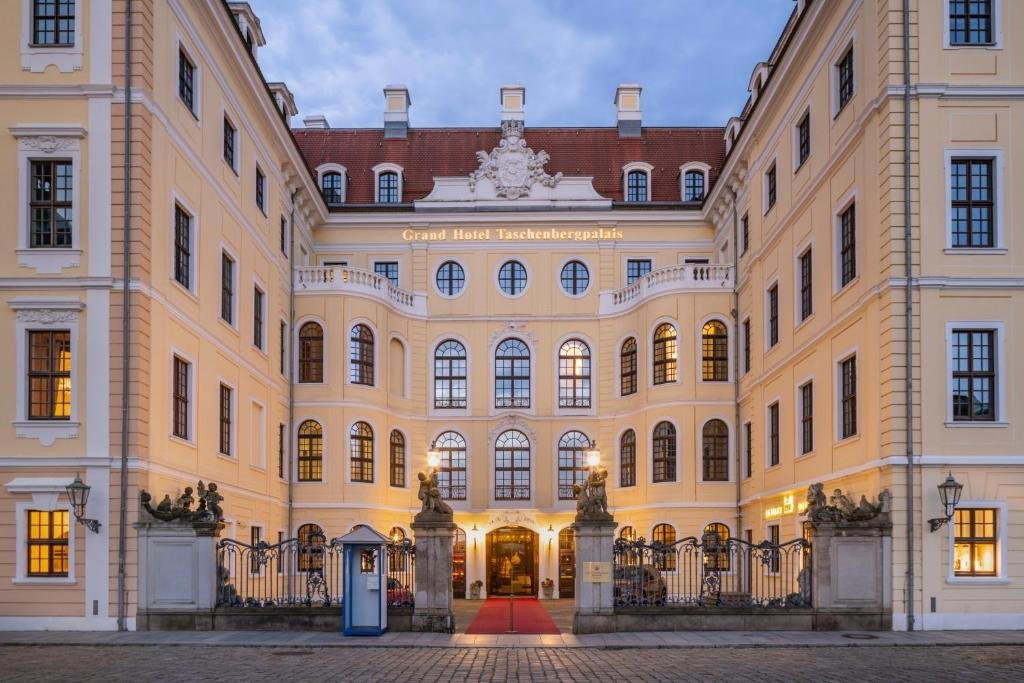
A Baroque Address in the Heart of Dresden's Historic Core
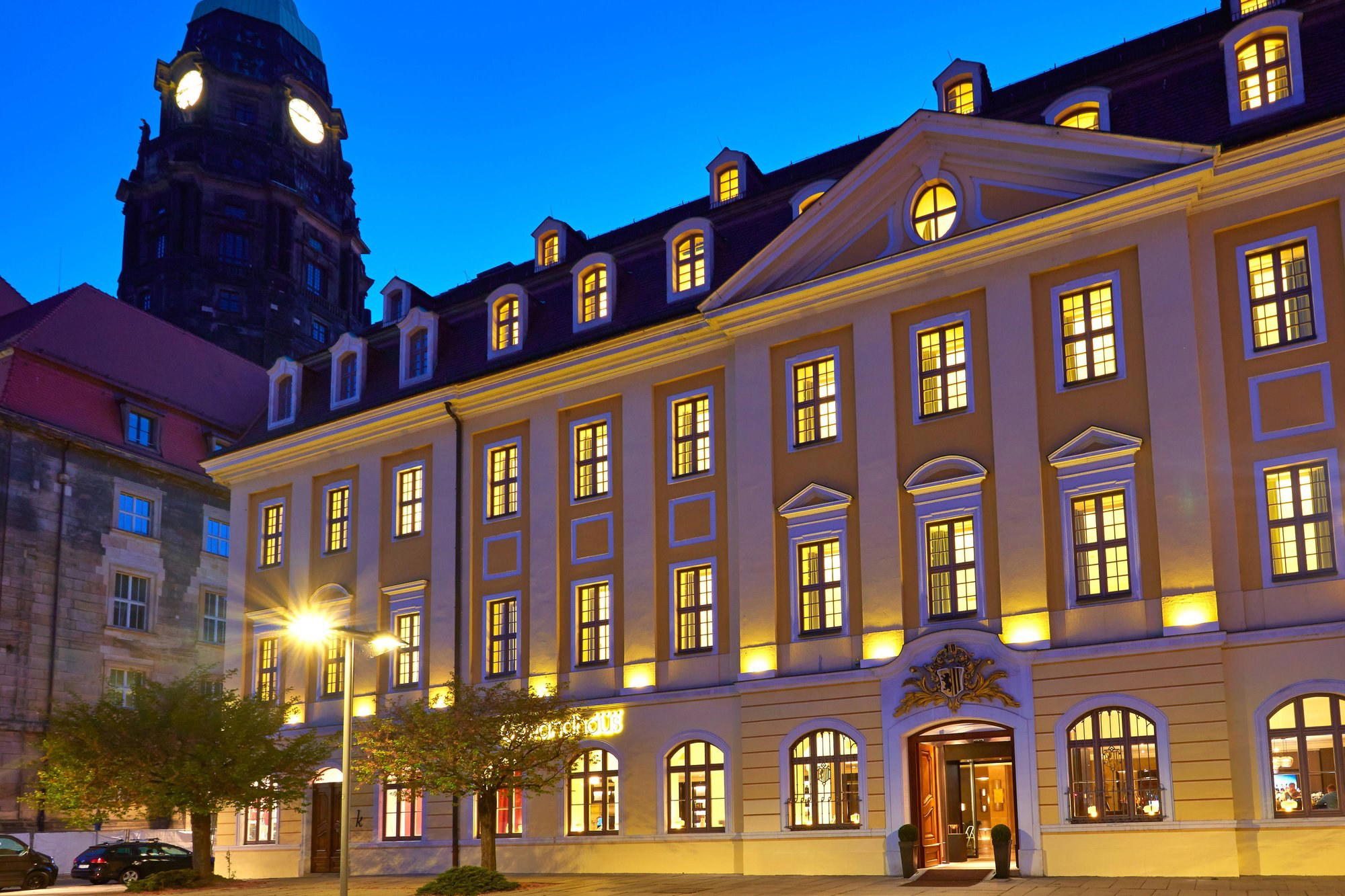
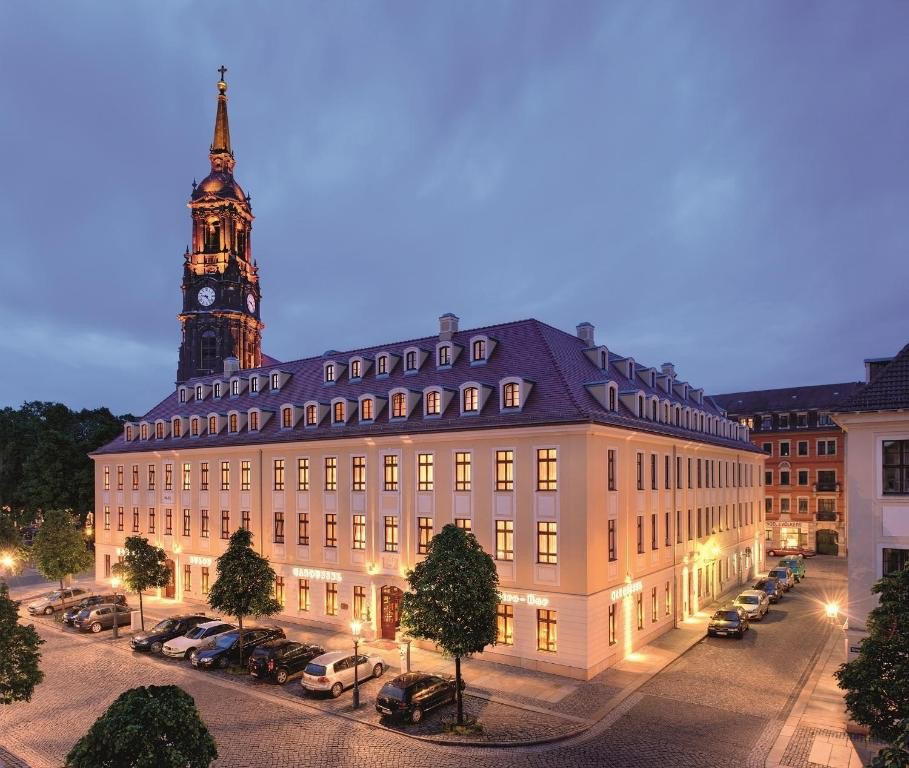
Dresden's Altstadt is one of Central Europe's most concentrated assemblages of Baroque civic architecture, and the Taschenbergpalais occupies one of its most consequential footprints. The building stands directly between the Residenzschloss and the Zwinger, with the Semper Opera House and the Frauenkirche within a few minutes on foot. For a hotel, that proximity is not incidental, it defines the entire logic of a stay here. Guests arriving at Taschenberg 3 are not commuting to Dresden's historic sights; they are already inside them.
That address shapes the experience before a guest reaches reception. The palace's Baroque facade, with its sandstone detailing and formal symmetry, reads as a continuation of the civic buildings flanking it rather than a hospitality product inserted into a heritage streetscape. The reconstruction of the Taschenbergpalais was itself a significant civic project, the building was heavily damaged in World War II and painstakingly rebuilt, making its restored presence a point of local identity rather than simply a hotel development. In a city where reconstruction and authenticity are charged topics, the Taschenbergpalais occupies an interesting position: a faithful historical exterior housing a fully modern interior, and understood locally as a legitimate piece of the city's architectural fabric.
After the 2024 Renovation: What Changed and What the Michelin Keys Signal
The hotel reopened in February 2024 following an extensive renovation, and the timing matters. Michelin's hotel keys programme, launched to bring the guide's credibility to the accommodation sector, awarded the Taschenbergpalais two keys in its 2024 assessment. Two keys in the Michelin framework signals a high degree of personality and comfort, a step below the rarified three-key tier but clearly above the baseline one-key category. For Dresden, which operates with a smaller luxury hotel market than Munich, Hamburg, or Berlin, a two-key Michelin property represents a meaningful benchmark.
The renovation updated the interior design throughout the 211 rooms and suites, 180 rooms and 31 suites in total, drawing on local references including the nearby Zwinger Palace as a design prompt. The result sits in the territory that high-end European palace hotels tend to occupy: historically inflected without being museum-like, with modern technical infrastructure (underfloor heating in the marble bathrooms, air conditioning, high-spec audiovisual equipment) that the original 18th-century structure obviously could not have provided. Among Dresden's luxury options, the Taschenbergpalais sits in a different register than the Bülow Palais or the Gewandhaus Dresden, the latter two offer their own distinct characters, but neither matches the Taschenbergpalais for sheer centrality or the symbolic weight of its address.
Rooms and the Logic of Scale
Hotel's positioning as offering some of Dresden's most spacious rooms matters in a city where the broader hotel stock skews toward more compact European room formats. The 211 keys across rooms and suites means the property operates at a scale larger than boutique competitors, which has practical implications: staffing depth, facilities breadth, and consistent service delivery across a larger guest base. The Kempinski flag, part of one of Europe's oldest luxury hotel groups, provides the operational infrastructure for that consistency.
Suites at the Taschenbergpalais carry the additional draw of views toward the surrounding Baroque ensemble, a consideration that matters most for guests who are in Dresden specifically for the architectural heritage rather than for business or wellness. For those guests, the view from a well-positioned suite functions as an extension of the experience the address already provides at street level.
Food and Drink Across the Property
The hotel runs several food and beverage outlets rather than concentrating its dining into a single flagship. Kastenmeiers Restaurant operates with a daily-changing four-course surprise menu format, a format that, in the European luxury hotel context, positions it closer to the chef's-discretion end of the spectrum than à la carte dining. The Palais Restaurant takes a different approach, with seasonal classics and a less prescriptive format. A Wine and Champagne Bar, a patisserie with handcrafted offerings, and a hotel bar complete the on-property options.
For guests exploring Dresden's broader restaurant scene, our full Dresden restaurants guide maps the city's dining options beyond the hotel walls. The Altstadt location means that several of Dresden's notable independent restaurants are reachable on foot, which reduces the pressure to rely entirely on in-hotel dining.
The Spa and Wellness Facilities
The spa area includes an indoor swimming pool, a gym with personal trainer availability on request, and a range of beauty and wellness treatments. In the context of Germany's luxury hotel sector, a market that places high value on wellness infrastructure, as properties like Schloss Elmau Luxury Spa Retreat & Cultural Hideaway in Elmau, Hotel Bareiss in Baiersbronn, and Das Kranzbach Hotel & Wellness Retreat in Kranzbach demonstrate, the Taschenbergpalais spa is a competent rather than defining offering. The property's primary argument is its location and its architecture; the wellness facilities support a stay rather than justify it.
Where the Taschenbergpalais Sits in the German Luxury Hotel Picture
Germany's luxury hotel market divides broadly between urban palace properties in major cities, resort and retreat formats in scenic regions, and a smaller set of heritage-led properties in secondary cities. It competes internationally with properties like Aman Venice in Venice, where the surrounding architectural heritage is as much a part of the proposition as the rooms themselves.
Rates from $287 place the Taschenbergpalais at the upper tier of Dresden's hotel market, though that figure positions it accessibly relative to comparable Kempinski properties in larger European cities. The Kempinski Hotel Berchtesgaden in Berchtesgaden offers a useful point of comparison within the same group: a different environment and rationale, but a similar level of group-backed operational standards. For travellers considering other German luxury options, Althoff Seehotel Überfahrt in Rottach-Egern, Der Öschberghof in Donaueschingen, and Landhaus Stricker in Sylt represent the resort end of the spectrum, a fundamentally different decision based on what a trip to Germany is for.
For guests whose trip is Dresden, the Taschenbergpalais is the address that most directly expresses the city's identity. The Hotel Villa Sorgenfrei & Restaurant Atelier Sanssouci offers an alternative for those who prefer a quieter, more intimate property outside the city centre. But for the full weight of a Baroque capital stay, where the view from the window, the walk to dinner, and the building underfoot are all part of the same argument, the Taschenbergpalais makes that case more directly than any other property in Dresden.
Planning Your Stay
The hotel's central position at Taschenberg 3 means it is reachable from Dresden Hauptbahnhof in approximately 20 minutes on foot, or a short taxi or tram ride. The February 2024 reopening means the property is now operating with fully refreshed interiors, which reduces the risk of encountering dated fixtures that can affect recently-renovated properties in a transitional period. Booking directly or through Kempinski's own channels typically provides the most reliable access to room category upgrades and pre-arrival communication.
Just the Basics
Comparable venues nearby, for context on price, style, and recognition.
| Venue | Price | Awards | Notes |
|---|---|---|---|
| Kempinski Hotel TaschenbergpalaisThis venue (the venue you are viewing) | $300–500 | 2 Michelin Keys · Virtuoso Luxury Hotel Partner | Not listed |
| Bülow Palais | $100–200 | 2 Michelin Keys · Relais Chateaux Award | Neustadt, Historic palace converted into a luxury boutique hotel with modern comforts. |
| Gewandhaus Dresden | Not listed | 1 Michelin Key | Neumarkt, Historic Baroque boutique with modern interiors |
| Hotel Villa Sorgenfrei & Restaurant Atelier Sanssouci | $100–200 | 1 Michelin Key | Radebeul, Restored 18th-century historic villa with modern comforts. |
| Hyperion Hotel Dresden Am Schloss | $100–200 | Michelin Selected | Altstadt (Old Town), Contemporary luxury boutique hotel housed in a historic facade dating to 1768-1770, combining period architecture with modern minimalist interiors. |
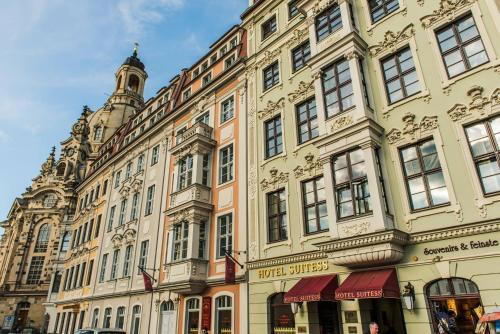
| Hotel Suitess | $200–300 | Michelin Selected | Altstadt (Old Town), Luxury boutique hotel combining contemporary architecture with Baroque styling in a restored historical building. |
Recognition history
Dated appearances from independent guides and award organizations, with the underlying list record or original source where available.
Michelin 2 Keys
Michelin
Virtuoso Luxury Hotel Partner
Virtuoso
Full recognition history (4 entries)
Michelin 2 Keys
Michelin
Michelin 2 Keys
Michelin
Continue exploring
More in Dresden
Hotels in Dresden
All hotels in Dresden →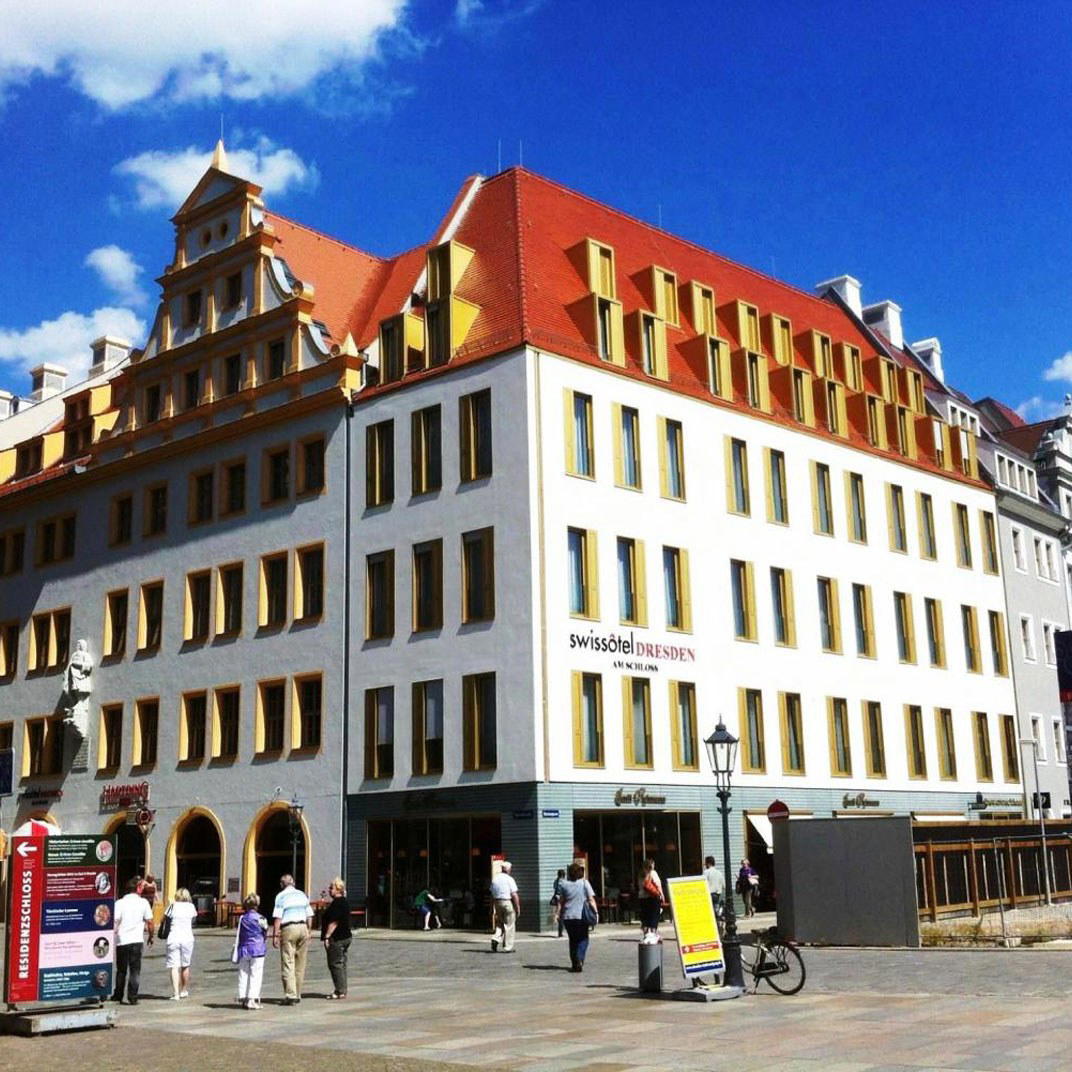
Bars in Dresden
All bars in Dresden →
Restaurants in Dresden
All restaurants in Dresden →![[m]eatery restaurant in Dresden](https://cdn.enprimeurclub.com/storage/v1/object/public/images/restaurants/399cba83-7e5d-4a0c-9c34-707a5a37a8d2/hero1.jpg?width=3840&quality=75)

Details
- Elegant
- Romantic
- Sophisticated
- Classic
- Scenic
- Romantic Getaway
- Anniversary
- Destination Wedding
- Business Trip
- Wellness Retreat
- Celebration
- Historic Building
- Panoramic View
- Destination Spa
- Terrace
- Garden
- Private Dining
- Design Destination
- Wi Fi
- Pool
- Spa
- Fitness Center
- Room Service
- Concierge
- Valet Parking
- EV Charging
- Business Center
- Sauna
- Street Scene
- Garden
- Wheelchair Accessible
- Elevator
- Accessible Restroom
- Accessible Parking
- Step Free Entrance
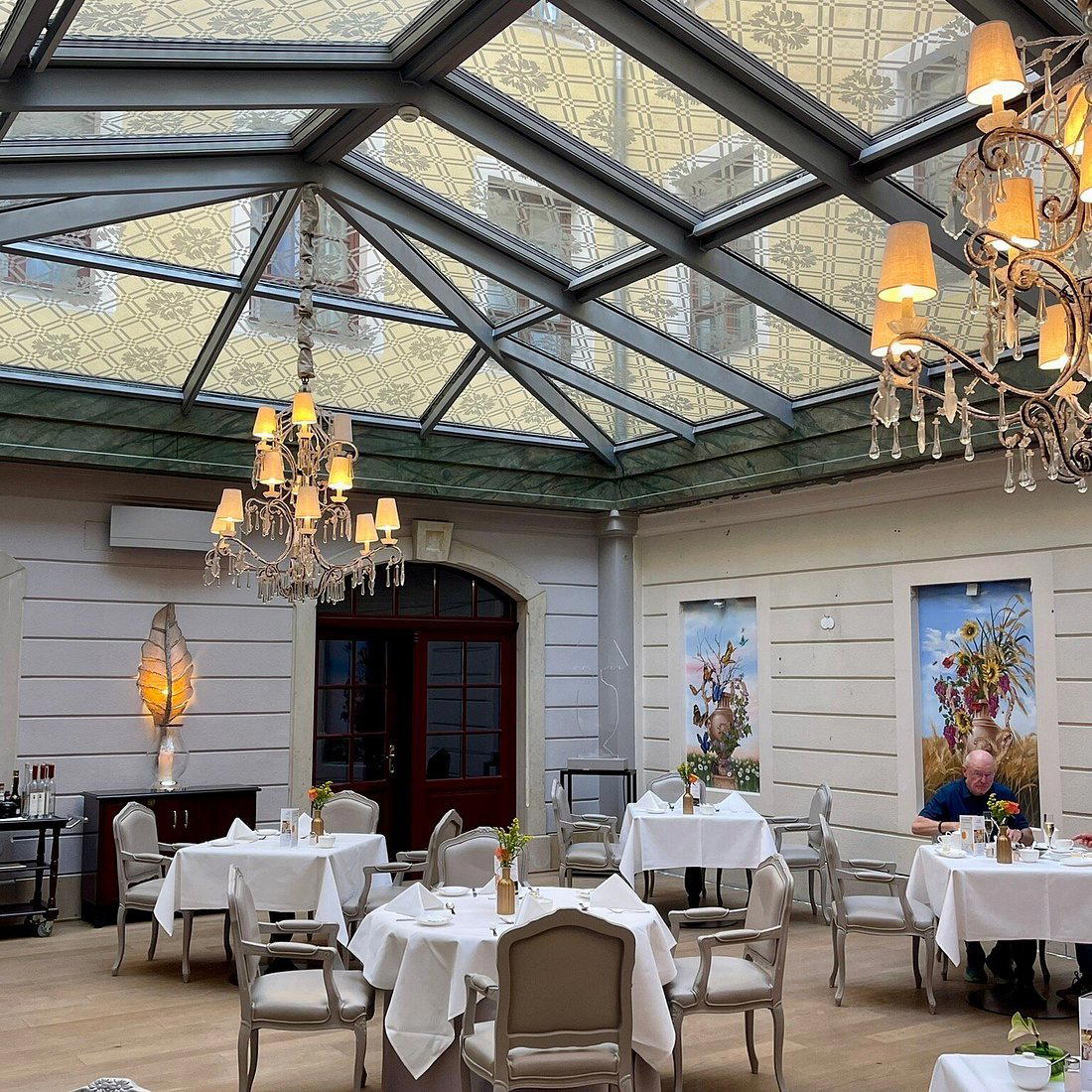
Soaring ceilings and baroque architecture blend with contemporary design; warm sandstone flooring, earthy tones, and fireplace areas create an inviting yet refined atmosphere with natural light flooding through newly installed doors to inner courtyards.