Jermann

Falstaff Winery - 5 Stars
Jermann sits in the Collio Orientale hills of Friuli-Venezia Giulia, a region where the flysch geology of alternating sandstone and marl layers produces white wines of unusual mineral tension.

Pearl is the En Primeur Club membership app — saves, bookings, and concierge access live there. Same editors, same standards.
- Address
- Località Trussio Ruttars, 11A, 34070 Ruttars, Dolegna del Collio GO
- Phone
- +39 0481 888080
- Website
- jermann.it
- Directions
- Get directions
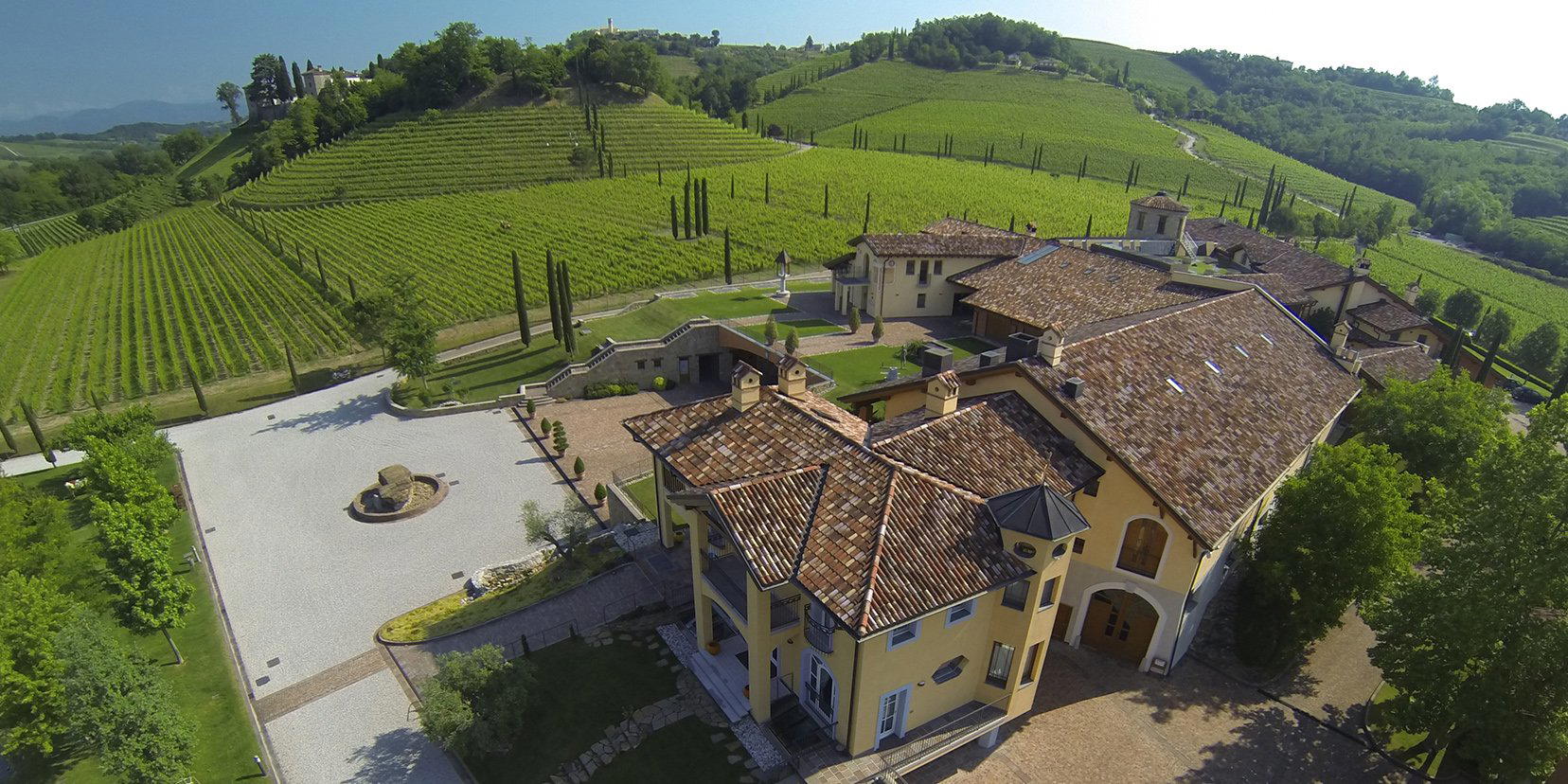
Where the Flysch Speaks Louder Than the Label
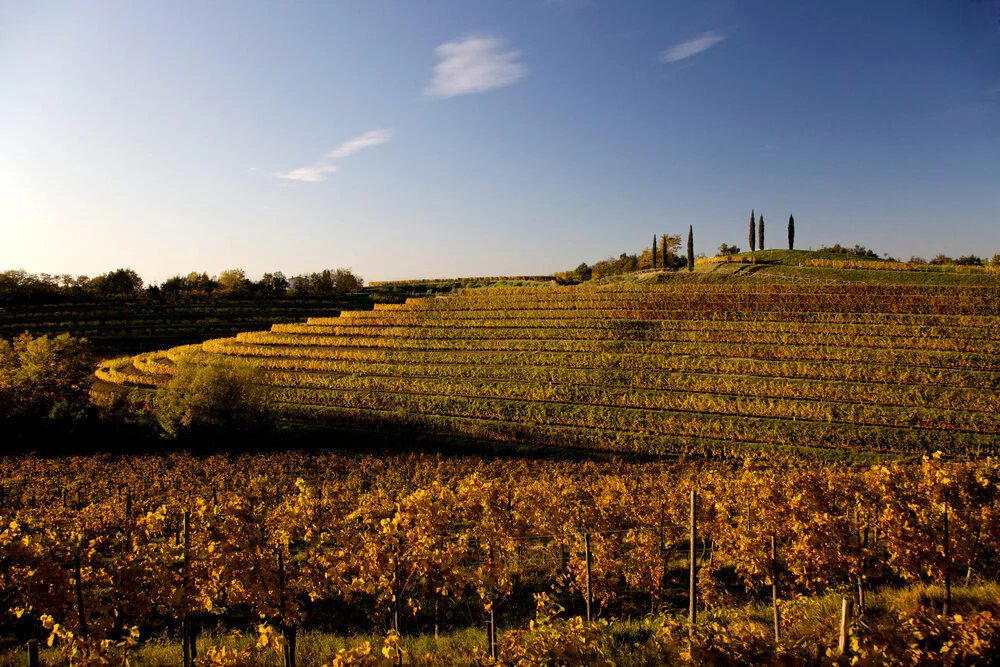
The road into Dolegna del Collio climbs through a landscape shaped by the Ponca, the local name for the compressed layers of Eocene sandstone and marl that fracture easily underfoot and drain the hillsides with unusual precision. This geology, shared across the border with Slovenia's Brda region, is the defining argument of Collio winemaking. Producers here do not so much choose their house style as inherit it from the subsoil. The Ponca's capacity to stress vine roots, concentrate mineral uptake, and moderate water retention through dry summers places a structural fingerprint on every wine grown in it, regardless of variety.
For context on what that recognition means geographically, Collio is a small appellation straddling the Friuli-Venezia Giulia hills near Gorizia. It produces a fraction of the volume of Tuscany's most celebrated zones, and its reputation rests almost entirely on native and international white varieties shaped by the Ponca rather than on Nebbiolo ambition or Sangiovese history. Producers like Lungarotti in Torgiano and Ca' del Bosco in Erbusco define their regions through sustained critical accumulation across decades; Collio's leading estates operate in the same register, building authority through geological consistency rather than varietal novelty.
Terroir as Method, Not Philosophy
Italian wine discourse tends to position terroir expression as a philosophical choice, something a producer elects to pursue against the alternative of stylistic intervention. In Collio, the framing is less optional. The Ponca's chemistry creates a baseline character in the wines that is difficult to argue away: refined acidity from cool nights at altitude, mineral texture from the compressed rock, and a aromatic restraint that distinguishes Collio whites from the more immediately exuberant profile of wines grown on alluvial plains. Tocai Friulano, Pinot Grigio, Malvasia Istriana, and Ribolla Gialla all behave differently here than in flatter, warmer Friulian zones, and that difference is the region's claim to critical attention.
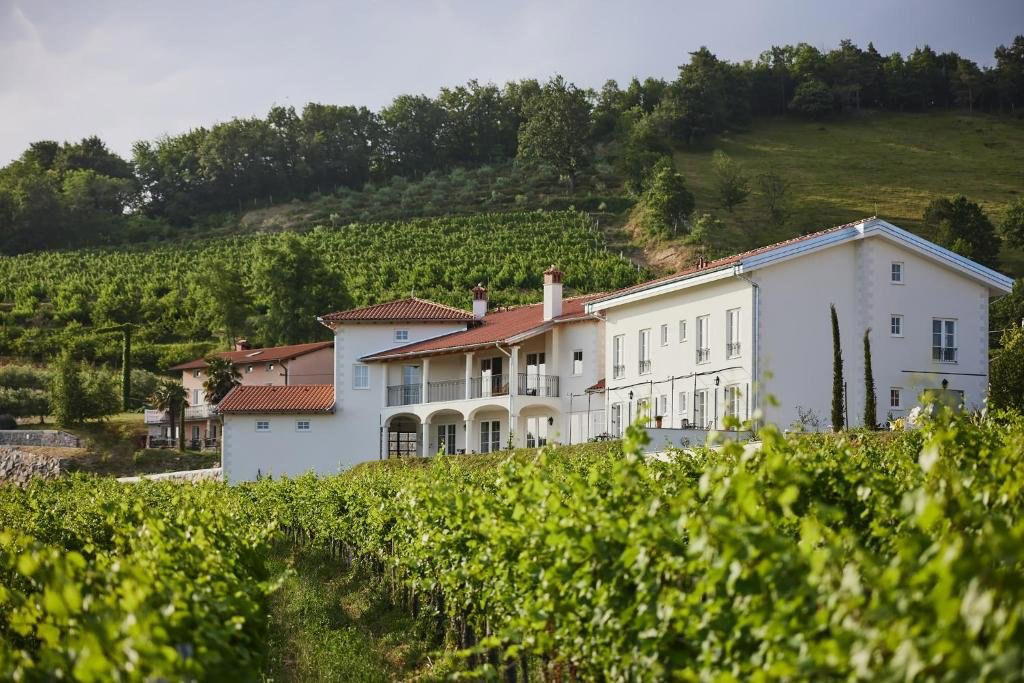
Jermann works within this tradition at a level that has attracted sustained recognition. For visitors approaching the estate, the address at Località Trussio Ruttars places them in the upper Collio hills, where the Ponca exposure is most concentrated and where the view across to the Slovenian Brda makes the cross-border geological argument visible in real time. The Collio and Brda share the same rock; the political boundary cuts across the wine region rather than along any natural divide, and the wines on both sides carry the same flysch-derived mineral signature.
This shared geological identity distinguishes Collio from most other Italian appellation stories. Where a region like Chianti Classico debates subzone terroir within a single variety, or Castello di Volpaia in Radda in Chianti argues for altitude and galestro soil as Sangiovese modifiers, Collio's producers make a different case: that a single geological stratum running across a national border expresses itself consistently through multiple varieties, and that the appellation's coherence is lithological rather than varietal. Jermann sits at the centre of that argument.
Positioning Within the Italian Fine Wine Tier
Italy's fine wine geography in 2025 is not simply divided between north and south or between red and white. It is divided between regions whose critical identity is established in international markets and those whose reputation remains primarily local or specialist. Collio occupies a specific position: well-regarded among sommeliers and fine wine buyers, underexposed relative to Barolo, Brunello, or Amarone, and therefore interesting to a reader who treats regional specificity as a signal rather than an obstacle.
For comparative reference, estates recognised at similar tiers across other Italian regions include producers whose sustained quality across multiple vintages, rather than single-vintage performance, drives the designation. Aldo Conterno in Monforte d'Alba operates at this kind of multi-decade recognition level in Barolo; Planeta in Menfi holds a comparable position in Sicilian fine wine. Jermann's recognition in Collio is legible against that broader Italian fine wine framework.
The Friuli-Venezia Giulia context also matters for understanding what kind of visit this is. Unlike a Montalcino producer such as L'Enoteca Banfi, which operates within a heavily touristed wine route with established infrastructure, Collio remains a quieter destination. The hillside roads between Gorizia and Cormons carry fewer wine tourists per square kilometre than Chianti or Langhe, and the estates that receive visitors do so at a pace that reflects the zone's relative quiet. That quietness is part of the appeal for a certain kind of traveller.
For broader Italian distillery context that overlaps with Friuli's cultural identity, Nonino Distillery in Pavia di Udine sits in the same regional frame and offers a different lens on Friulian craft production. Grappa culture and white wine culture intersect here in a way that is specific to the northeast corner of Italy, shaped by the same agricultural seriousness that distinguishes Collio producers from more commercially oriented zones.
Planning a Visit to Ruttars
Jermann is located at Località Trussio Ruttars, 11A, in the municipality of Dolegna del Collio, in the province of Gorizia. The nearest city with rail connections is Gorizia itself, roughly 15 kilometres to the southeast, though the hillside roads require a car; the estate is not accessible on foot from any transit point. The village of Cormons, a useful base for Collio exploration with accommodation options and a weekly market, sits within comfortable driving distance. Visitors planning a Collio itinerary benefit from treating the zone as a two-to-three day proposition: the appellation is compact, but the density of quality producers rewards unhurried movement between estates rather than a single-day circuit.
Our full Dolegna del Collio restaurants and estates guide provides additional context for planning a trip to the region, including surrounding producers and dining options that complement a Collio itinerary.
Other Italian producers in this recognition tier, for comparative itinerary planning, include Poggio Antico in Monte San Vito and, further north in the spirits category, Distilleria Marzadro in Nogaredo and Distilleria Romano Levi in Neive, each operating within specific geographic and craft traditions that parallel Collio's commitment to place-defined production.
Side-by-Side Snapshot
Comparable venues nearby, for context on price, style, and recognition.
| Venue | Cuisine | Awards | Notes |
|---|---|---|---|
| JermannThis venue — the venue you are viewing | Sauvignon, Chardonnay | Falstaff Winery - 5 Stars | Not listed |
| Tenuta Brancalupo | Sagrantino, Trebbiano Spoletino | Not listed | Montefalco |
| Luxardo | marasca | Not listed | Torreglia |
| Distilleria Castagner | Glera, Corvina | Not listed | Visnà di Vazzola |
| Umani Ronchi | Verdicchio, Montepulciano | Falstaff Winery - 4 Stars | Osimo |
| Cantina Produttori Nebbiolo di Carema | Nebbiolo | Falstaff Winery - Listed | Carema |
Recognition history
Dated appearances from independent guides and award organizations, with the underlying list record or original source where available.
Falstaff Winery - 5 Stars
Falstaff
Continue exploring
More in Dolegna del Collio
Wineries in Dolegna del Collio
Browse all →
Bars in Dolegna del Collio
Browse all →
Restaurants in Dolegna del Collio
Browse all →
Details
- Rustic
- Scenic
- Elegant
- Wine Education
- Special Occasion
- Vineyard Tour
- Estate Grounds
- Organic
- Vineyard
- Sauvignon
- Chardonnay
- Ribolla Gialla
- Malvasia Istriana
- Picolit
- Pinot Grigio
- Friulano
- Still White
- Estate Tasting