Google: 4.7 · 3 reviews

Eleven Street Distillery earned a Pearl 1 Star Prestige in 2025, placing it among a small cohort of recognized spirits producers in the Buenos Aires province. Located on Calle 22 in La Plata, it represents a growing movement of craft distillation taking root outside Argentina's traditional wine corridors. For travelers extending a Buenos Aires itinerary, it offers a credentialed reason to spend time in the provincial capital.
 Discover on Pearl
Pearl is the En Primeur Club membership app — saves, bookings, and concierge access live there. Same editors, same standards.
Craft Distillation in the Buenos Aires Province: A Shifting Picture
Argentina's spirits identity has long been overshadowed by its wine output. Mention Argentine producers to a well-traveled drinker and Mendoza Malbec arrives first, with references to Bodega Norton in Luján de Cuyo or Terrazas de los Andes in Mendoza close behind. What rarely enters that conversation is the Buenos Aires province, and specifically La Plata, as a locus for serious craft distillation. That picture has been shifting. A cluster of small-batch producers has emerged in and around Argentina's second-largest urban center, working outside the infrastructural gravity of Mendoza and Patagonia, and doing so without the institutional backing that typically accelerates recognition.
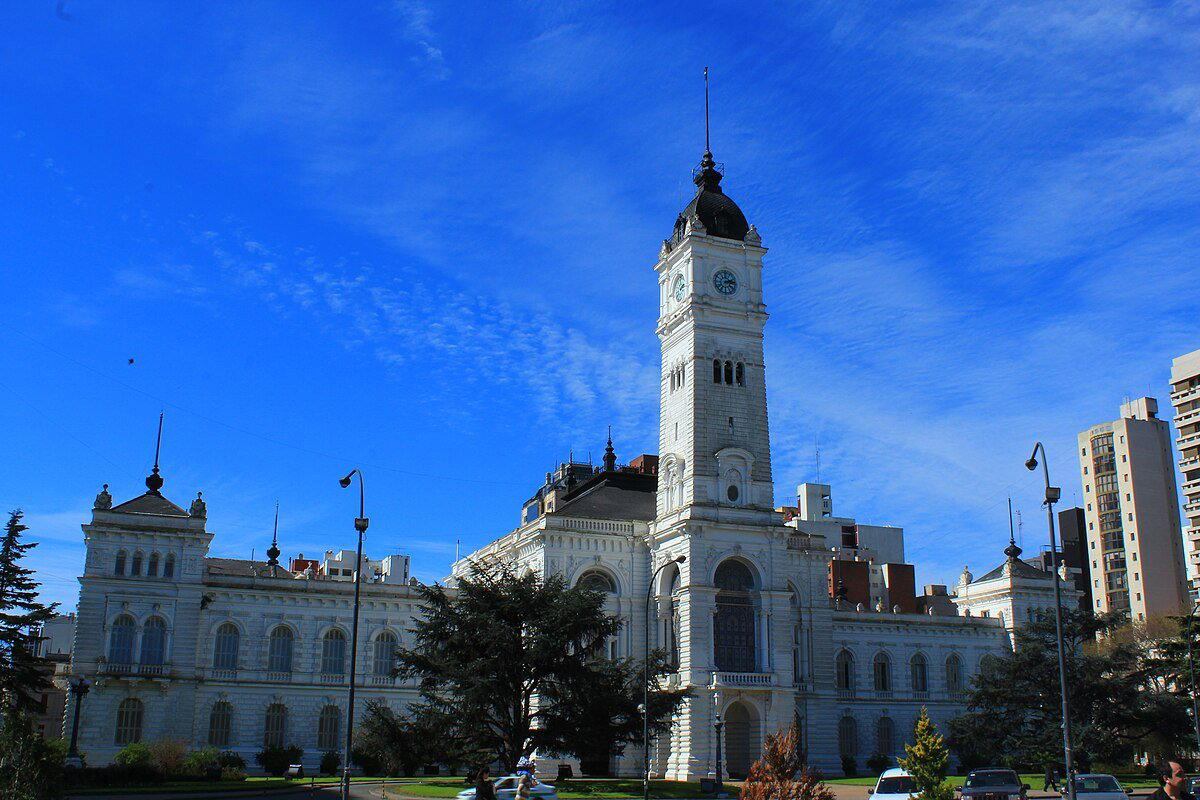
Eleven Street Distillery, on Calle 22 in La Plata, received a Pearl 1 Star Prestige from EP Club in 2025. That award places it within a verified tier of recognized producers, a signal that the operation has reached a level of craft and consistency that warrants serious attention. The address itself, a residential street in a city better known for its university, its neogothic cathedral, and its grid layout than for any drinks culture, underscores the point: credentialed production is appearing in places the spirits circuit hasn't historically tracked.
La Plata as a Drinks Destination
La Plata sits roughly 60 kilometers southeast of Buenos Aires, connected by motorway and commuter rail, and most visitors treat it as a day trip from the capital rather than a destination in its own right. That framing misses what the city actually offers to a drinks-focused traveler. Unlike Buenos Aires, where a recognized bar or distillery competes for attention against dozens of peer venues across Palermo and San Telmo, La Plata's recognized producers occupy a quieter, less saturated space. The city's drinking culture skews local and student-oriented, which means a 2025 Pearl 1 Star Prestige recipient is not surrounded by comparable competition. It occupies a different kind of prominence here.
For context, compare the dynamics at play in Buenos Aires proper, where Fratelli Branca Distillery in Buenos Aires operates within a city already dense with recognized hospitality. In La Plata, a venue earning formal recognition stands further apart from its immediate surroundings, which can work in a visitor's favor. There is less noise to cut through. The experience of visiting a serious producer here carries a different texture than the same visit in a more saturated market. See our full La Plata restaurants guide for the broader dining and drinking picture in the city.
What Distillation Means in This Context
Argentina's craft distillation sector does not have a single dominant regional identity the way Mendoza has with Malbec or the Calchaquí Valley has with high-altitude Torrontés, as seen at Bodega El Esteco in Cafayate or Bodega Colomé in Molinos. What Argentine craft spirits producers draw on instead is a combination of European immigrant tradition, local botanical raw materials, and a recent wave of technical investment that mirrors what happened in Chilean and Uruguayan craft spirits a decade earlier. Producers in the Buenos Aires province work with grains and botanicals sourced from the Pampas, a flat, agriculturally rich zone that provides reliable raw material supply without the altitude drama of the Andean west.
The terroir argument for Pampas-region distillation is less about elevation or dramatic diurnal temperature shifts, which drive so much of the character at high-altitude Andean wine estates like Bodega DiamAndes in Tunuyán or Familia Schroeder in San Patricio del Chañar, and more about consistency of supply, water quality from the Rio de la Plata basin, and the accumulated European distillation knowledge that arrived with Italian and Spanish settlers over more than a century. La Plata's immigrant history is part of what makes a distillery here legible within a broader Argentine producer tradition.
The Pearl 1 Star Prestige: What It Signals
EP Club's Pearl 1 Star Prestige designation, awarded in 2025, is a trust anchor worth reading carefully. The award sits within a tiered recognition system that evaluates producers across quality, consistency, and experiential standards. Receiving a first-tier Prestige star in 2025 indicates that Eleven Street Distillery has cleared a defined threshold, not simply that it exists and is operating. Within the Argentine spirits context, where formal recognition systems have historically been thin compared to the wine sector, a dedicated spirits award carries more signal weight than it might in an established category like Scotch or Cognac. For comparison, the recognitions sitting behind long-established producers such as Aberlour in Aberlour or Accendo Cellars in St. Helena reflect decades of institutional scrutiny. A 2025 award for a La Plata distillery is a different kind of credential: earlier-stage, but meaningful precisely because the competitive pool is less crowded and the evaluative bar is externally set.
Planning a Visit
The distillery is located at C. 22 1571, B1900 La Plata, in the Provincia de Buenos Aires. Reaching La Plata from Buenos Aires takes approximately 45 to 60 minutes by road, or a similar time on the Roca commuter line from Constitución station. The city's grid, laid out in a strict diagonal-and-square pattern, makes navigation by foot or short taxi ride direct once you arrive. Visitors planning around the distillery would do well to combine it with La Plata's other cultural anchors, the Museo de La Plata natural history collection and the cathedral are both within the central grid, making a half-day or full-day visit more coherent as an itinerary than a single-purpose trip.
No phone number, website, or published hours appear in the current venue record, which means advance planning requires some flexibility. Argentine craft producers at this stage of recognition frequently operate on appointment or limited public hours, a pattern common across the sector. Confirming availability before traveling from Buenos Aires is strongly advisable. This kind of producer, awarded but not yet fully institutionalized in terms of public-facing infrastructure, rewards the traveler who plans ahead rather than drops in.
For those building a wider Argentine drinks itinerary that extends beyond the province, the established Mendoza corridor offers context for how Argentine producers operate at scale. Escorihuela Gascón in Godoy Cruz, Bodega Trapiche in El Trapiche, Rutini Wines (La Rural) in Tupungato, and Bodega Bressia in Agrelo all represent the wine-side of Argentina's premium producer landscape. Bodega Antigal in Maipú rounds out the Mendoza picture at a different scale. Placing Eleven Street Distillery within that broader map clarifies what makes it distinctive: it operates in a different category, in a different region, with a different audience and a different kind of recognition story.
Quick Comparison
These are the closest comparables we have in our database for quick context.
| Venue | Cuisine | Price | Awards | Notes |
|---|---|---|---|---|
| Eleven Street Distillery | This venue | |||
| Bodega El Esteco | ||||
| Bodega Norton | ||||
| Chakana Winery | ||||
| Cheval des Andes | ||||
| Escorihuela Gascón |
Continue exploring