Michelin Plate · Tabelog 100 #62
Our verdict
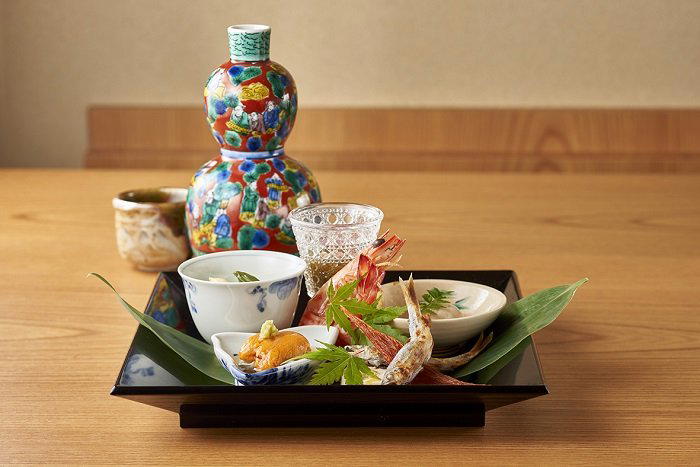
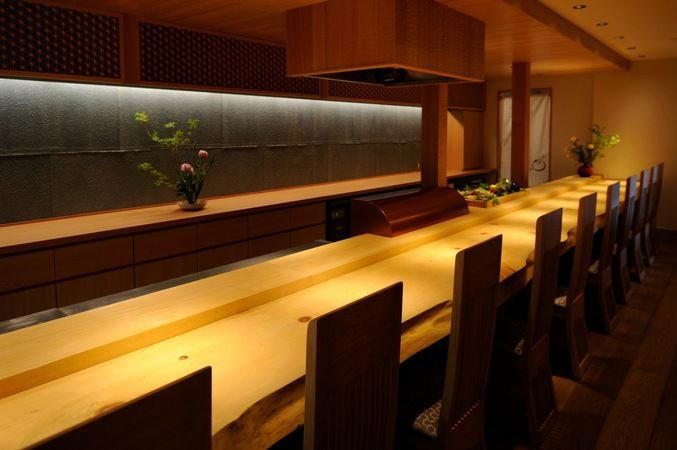
Yoshoku Ogata occupies a specific niche in Kyoto's dining scene: a kappo-style counter where the chef prepares yoshoku classics, deep-fried horse mackerel, hamburger steak, sautéed pork, with French technique informing the sauces and flame work. Ingredients are sourced from named suppliers in Shiga, Shizuoka, and Kyoto, making provenance a structural part of the menu rather than an afterthought.

Pearl is the En Primeur Club membership app, where members save venues, book tables and use the concierge.
The menu
What to order
- Aji fry
- Hamburg steak
- Beef cutlet
- Curry rice
Yoshoku at the Counter: A Kyoto Category Worth Understanding
Yoshoku, Japan's tradition of Western-inflected home cooking, formalised through Meiji-era adoption of French and European techniques, occupies an unusual position in Japanese culinary culture. It is neither Western food nor traditional Japanese cuisine, but a third category that absorbed foreign methods over roughly 150 years and made them entirely its own. Hamburger steak, deep-fried fish, breaded cutlets, and demi-glace sauces became as embedded in Japanese domestic cooking as miso soup, yet yoshoku has rarely earned the same critical attention as kaiseki or sushi. In Kyoto, where the Kikunoi Honten and Hyotei tradition dominates the city's culinary identity, a counter dedicated to yoshoku done with kappo-level rigour sits at a deliberate remove from the mainstream.
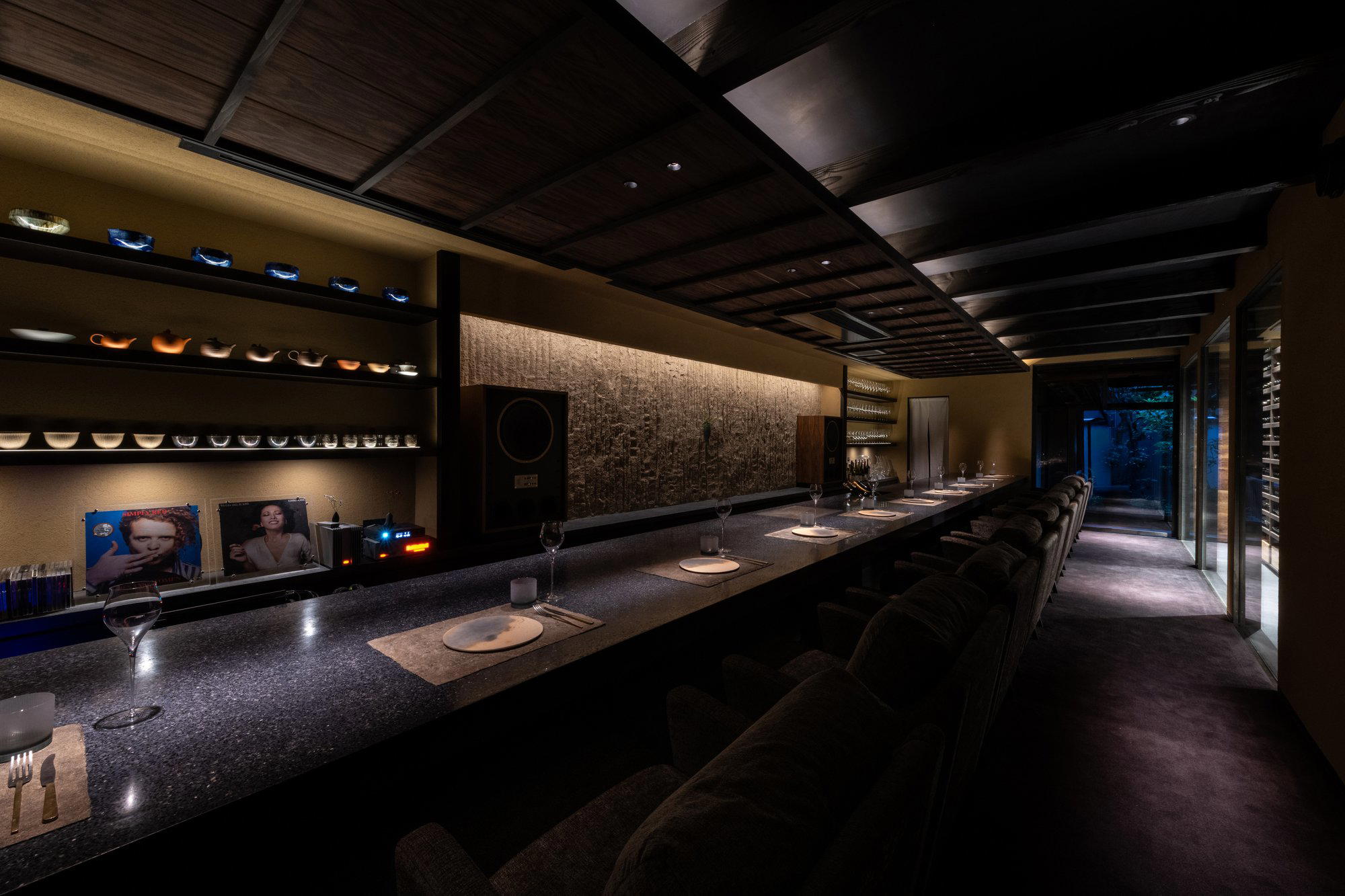
Yoshoku Ogata, in Nakagyo Ward, works from exactly that premise. The format is kappo, the chef cooks in front of guests, counter seating, conversation built into the structure of the meal, applied not to dashi-led seasonal cuisine but to the yoshoku canon. The dishes that anchor the menu are not obscure: horse mackerel fry, sautéed pork, hamburger steak. These are the same dishes that appear in neighbourhood yoshoku restaurants across Japan. What shifts the register is the sourcing discipline and the French technique informing the sauces and flame work.
Sourcing as the Foundation, Not the Marketing
The ethical sourcing story at Yoshoku Ogata is structural rather than decorative. In a category where the ingredients are often commoditised, yoshoku has historically been affordable, accessible food, the decision to build fixed supplier relationships with a butcher in Shiga Prefecture, a fishmonger in Shizuoka, and a farmer in Kyoto represents a meaningful cost and operational commitment. Each of those regions carries specific logic: Shiga's proximity to Kyoto has made it a trusted meat-supply corridor for the city's kitchens for generations; Shizuoka's Pacific-facing fisheries yield fish that differ materially from Kyoto's inland-sourced options; and local Kyoto agriculture, sustained by the city's long tradition of kyoyasai cultivation, provides the vegetable context.
This three-supplier framework is also a form of waste reduction by design. When a chef commits to specific sourcing relationships rather than buying from general markets, menus are shaped by what those suppliers produce at peak quality rather than by what happens to be available at the lowest price. The result is a tighter, more seasonal rotation of what gets prepared any given week. This is how supply-chain ethics functions in a working kitchen: not as certification or branding, but as a constraint that disciplines the menu. Compared to the multi-supplier flexibility that larger restaurants in Kyoto's Gion Sasaki or Mizai tier operate with, Ogata's narrower sourcing network is a deliberate trade-off, depth over breadth.
French Technique Inside a Japanese Canon
The chef's background in French cuisine is not a digression from yoshoku; it is, historically, a return to its origins. Yoshoku emerged partly because Japanese cooks in the Meiji and Taisho eras trained in French kitchens or learned from French-trained counterparts. Demi-glace, béchamel, and the management of pan sauces entered the Japanese kitchen through this exchange. What makes the French training visible at Yoshoku Ogata is not fusion but precision: the flame technique and sauce construction reflect a professional vocabulary that most yoshoku restaurants have either simplified or lost over time.
This places the restaurant in an interesting comparative position relative to fine-dining counterparts elsewhere in Japan. Restaurants like HAJIME in Osaka operate in an entirely different register, multi-course progressive cuisine at international pricing, but they share a commitment to French-derived rigour as a structural tool rather than a decorative gesture. The yoshoku context at Ogata asks that rigour to serve comfort food, which is a more demanding brief than it sounds: the reference dishes are deeply familiar to Japanese diners, and any departure from the expected texture or flavour profile is immediately legible.
Counter dining in Japan creates its own accountability. In the kappo format, shared also by the highest kaiseki counters at Isshisoden Nakamura and Gion Sasaki, there is no kitchen door to hide behind. The conversation between chef and guest that the restaurant describes as part of its concept is also a form of transparency: guests observe the sourcing, the technique, and the decisions being made in real time.
Where Yoshoku Ogata Sits in Kyoto's Dining Map
Kyoto's recognised fine-dining tier is dominated by kaiseki at the ¥¥¥¥ price point. The ¥¥¥¥ houses, Kikunoi Honten, Hyotei, Mizai, compete on seasonal ingredient mastery, dashi depth, and the grammar of kaiseki sequencing. Yoshoku Ogata does not compete in that category.
For visitors already navigating Kyoto's kaiseki circuit, Yoshoku Ogata represents a different kind of meal, one where the ambition is to make the familiar more honest rather than to construct something novel. That is a meaningful distinction in a city where novelty is rarely the point. For context on how the city's dining categories map against each other, our full Kyoto restaurants guide covers the range from kaiseki institutions to counter specialists.
The Nakagyo Ward address places the restaurant in central Kyoto, accessible from most of the city's accommodation areas. Nakagyo sits between Gion to the east and Nishiki Market to the south, in a neighbourhood with consistent foot traffic from both residents and visitors. For wider Kyoto planning, our full Kyoto hotels guide, bars guide, and experiences guide cover the adjacent categories.
For those travelling across Japan's Kansai and beyond, comparable counter-format restaurants with a strong sourcing or technique angle include akordu in Nara, which brings a different cross-cultural technique story, and Goh in Fukuoka, where Kyushu produce drives a more contemporary Japanese format. Outside Japan, the structural approach of technique-led counter dining with transparent sourcing finds international parallels at Le Bernardin in New York City and in the Korean-inflected tasting counter format at Atomix.
Know Before You Go
- Location: Tojijicho 32-1, Nakagyo Ward, Kyoto 604-0956
- Format: Kappo-style counter; chef cooks in front of guests
- Cuisine: Yoshoku with French technique; signature dishes include deep-fried horse mackerel, sautéed pork, and hamburger steak
- Sourcing: Meat from a butcher in Shiga, fish from a fishmonger in Shizuoka, produce from a Kyoto farmer
- Phone / Website: Not publicly listed; booking method not confirmed, see guidance in FAQ below
Frequently asked questions
Where exactly is YOSHOKU OGATA?
YOSHOKU OGATA is located at Japan, 〒604-0956 Kyoto, Nakagyo Ward, Tojijicho, 32−32-1, Kyoto.
What awards or recognition does YOSHOKU OGATA have?
YOSHOKU OGATA has received recognition including: ‘A kappo-style yoshoku restaurant to satisfy the heart as well as the stomach’ is the concept here. The chef converses with guests at the counter while pouring all his skills into his food preparation. Determined to satisfy, he never compro….
What's the best thing to order at YOSHOKU OGATA?
The counter anchors around yoshoku classics: deep-fried horse mackerel, hamburger steak, and sautéed pork are the dishes most associated with the restaurant. What sets them apart is execution, the chef applies French flame technique and sauce-making to these familiar forms, while the fish is sourced from a Shizuoka fishmonger and the meat from a Shiga butcher, so the raw material quality is well above yoshoku category norms.
Do I need a reservation for YOSHOKU OGATA?
The kappo counter format means seating is limited by design, and Kyoto's smaller specialist restaurants at this level tend to fill well in advance. Booking ahead is strongly advisable. Walk-ins at a chef-conversational counter in Nakagyo Ward are a risk not worth taking.
Recognition, Side-by-Side
A quick peer list to put this venue’s basics in context.
| Venue | Cuisine | Price | Awards | Notes |
|---|---|---|---|---|
| YOSHOKU OGATAThis venue (the venue you are viewing) | Refined Yoshoku | Not listed | Michelin Plate · Tabelog 100 #62 | Not listed |
| Gion Sasaki | Modern Kaiseki | $300–500 | 3 Michelin Stars · La Liste Top Restaurants | Kaiseki, Japanese |
| cenci | Innovative Italian-Japanese Fusion | $100–150 | 1 Michelin Star · World's 50 Best #76 | Italian |
| Ifuki | Sumibi Kappo Kaiseki | $200–300 | 2 Michelin Stars · La Liste Top Restaurants | Kaiseki |
| Kyokaiseki Kichisen | Kyoto Kaiseki | $200–300 | 2 Michelin Stars · La Liste Top Restaurants | Japanese |
| Kyo Seika | Modern Chinese Fine Dining | $150–200 | 1 Michelin Star · Tabelog Bronze #216 | Chinese |
Recognition history
Dated appearances from independent guides and award organizations, with the underlying list record or original source where available.
Michelin Plate
Michelin
Tabelog 100 #62 · No. 62
Tabelog · Tabelog 100 - Yoshoku - WEST - 2025