Michelin Plate
Our verdict
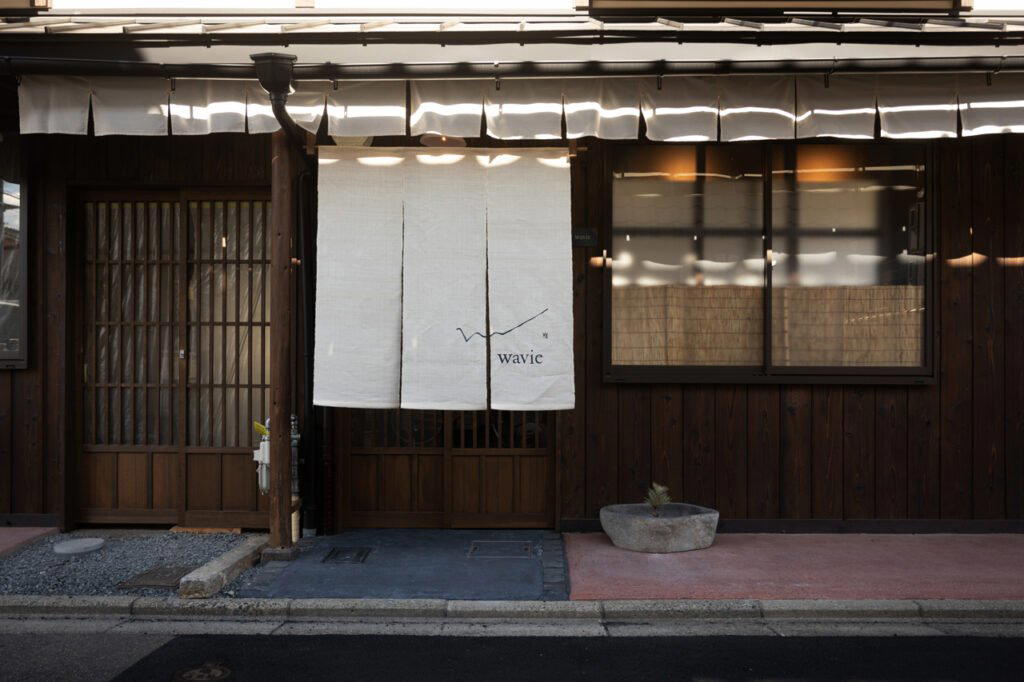
Wavie occupies a precise conceptual space in Kyoto's dining scene: a prix fixe format built around local and regional ingredients, where French technique meets Japanese produce through fermentation, wine-and-cream sauces, and modern plating. Located in Ukyo Ward, the restaurant's name fuses Japanese 'wa' (harmony) with French 'vie' (life), and that duality is the operating principle behind every plate.

Pearl is the En Primeur Club membership app, where members save venues, book tables and use the concierge.
The menu
What to order
- Deep-fried wakasagi with pomelo, rape blossoms and root celery paste in a green tea crepe
- Aged Kameoka Nanaya duck grilled over charcoal with duck broth and cassis sauce
- Chicory and minced duck mille-feuille
Where French Structure Meets Kyoto's Ingredient Culture
Japan's appetite for French-inflected dining has a long arc. From the postwar brasseries of Tokyo's Ginza district to the precision kitchens that helped define Osaka's restaurant identity in the 1990s, the French-Japanese synthesis has cycled through many iterations: literal transplantation, reverent copying, and, more recently, genuine integration. What the most credible contemporary practitioners share is a willingness to let the Japanese ingredient lead and the French technique follow. HAJIME in Osaka sits at one pole of that spectrum, using European structure to frame a deeply philosophical relationship with Japanese nature. Wavie, in Kyoto's Ukyo Ward, works a quieter version of the same principle.
The restaurant's name encodes its thesis: 'wa', the Japanese word for harmony, joined to 'vie', the French word for life. The compound is not just wordplay. It is a menu brief. French cuisine brought to new life through Japanese ingredients is the stated operating premise, and at wavie, the prix fixe format is the architecture through which that premise is tested, course by course.
The Menu as Argument
Prix fixe formats are, in culinary terms, a statement of intent. A restaurant that commits to a single set menu is asserting that the sequence matters, that each course is positioned in relation to the others, and that the kitchen's point of view is more important than the diner's preferences on any given evening. That structure is native to French haute cuisine but maps intuitively onto the kaiseki tradition that dominates Kyoto's premium dining tier. At Kikunoi Honten, Hyotei, and Mizai, the progression of a meal through specific seasonal courses is understood by regular diners as the grammar of the experience. Wavie applies a similar grammar, but in French rather than Japanese.
The specific mechanism is worth examining. Wavie's menu focuses on Kyoto vegetables and the produce of the surrounding region, a category that carries genuine culinary weight. Kyoto yasai, the city's heirloom vegetable tradition, includes varieties that have been cultivated in this specific basin for centuries: Kamo eggplant, Kujo green onion, Shishigatani pumpkin, Manganji sweet pepper. These are not incidental garnishes in Kyoto kitchens. At the kaiseki houses on Kikunoi's tier, they anchor entire courses. Wavie positions them at the centre of a French-structured meal, which changes the interpretive frame without diminishing the ingredient.
Fermentation deepens that structure further. Vegetables fermented in herbs appear across wavie's menu, adding layers of acidity and complexity that work differently from the umami-forward fermentation logic of traditional Japanese cooking. The wine-and-cream sauces that carry these preparations belong unambiguously to the French canon, but they are calibrated to carry Kyoto produce rather than the proteins and root vegetables that anchor classical French sauce work. That calibration is where the restaurant either succeeds or fails on its own terms, and it is the detail that distinguishes a genuine synthesis from a decorative fusion gesture.
Across Japan's French-Japanese continuum, the menu architecture at wavie aligns most closely with the format seen at akordu in Nara, where European technique is deployed to foreground hyper-local produce in a prix fixe sequence, or at 1000 in Yokohama, where French training frames a tightly curated ingredient story. The comparison with Atomix in New York City is also instructive: Atomix uses Korean ingredients inside a European fine dining format to produce something that reads as neither fully Korean nor fully European but is coherent on its own terms. Wavie is working toward a comparable coherence.
Plating and Register
The visual language at wavie is described as modern in style, which in the context of French-Japanese fusion carries specific implications. Modern French plating in Japan tends toward restraint: component separation, negative space, a preference for ceramic vessels that carry the aesthetic weight that garnish might carry in a more classical European presentation. That restraint aligns naturally with the Japanese visual tradition, making the crossover less jarring than it might be in a more decorative European idiom.
For reference points outside Japan, Le Bernardin in New York City represents the French-influence-plus-rigorous-ingredient-sourcing model at its most formalised. Wavie operates at a different scale and with a different cultural orientation, but the structural logic of letting a high-quality sourced ingredient determine the menu's direction is shared.
Ukyo Ward and the City Context
Wavie is located in Ukyo Ward, Kyoto's westernmost ward, at 27-3 Hanazonoimachi. This is not the geographic centre of Kyoto's restaurant density. The kaiseki establishments that anchor the city's international reputation, including Gion Sasaki and Isshisoden Nakamura, tend to cluster in the Higashiyama and Gion districts. Ukyo Ward, which encompasses the Arashiyama area and extends further west, has a quieter residential character.
That location is not incidental to the restaurant's identity. A venue built around Kyoto's agricultural tradition, the vegetables and producers of the city and its hinterland, makes a different kind of sense in a ward that sits closer to that agricultural periphery than the densely touristed restaurant corridors of central Kyoto. It also places wavie at some remove from the comparison set most visitors default to, which may be part of the point. The French-Japanese restaurants that attract the most international attention, including Goh in Fukuoka and the Osaka fine dining tier, are mostly operating within high-footfall city centres. Wavie is doing its version of this work in a quieter register.
For broader context on where wavie sits within Kyoto's restaurant scene, see our full Kyoto restaurants guide. The city's offering extends well beyond kaiseki: consult our Kyoto bars guide, our Kyoto hotels guide, our Kyoto wineries guide, and our Kyoto experiences guide for a fuller picture of the city's premium offer.
Know Before You Go
Address: 27-3 Hanazonoimachi, Ukyo Ward, Kyoto, 616-8042, Japan
Format: Prix fixe menu
Menu focus: Kyoto and regional ingredients; French technique with Japanese produce; fermented vegetable preparations; wine-and-cream sauces
Ward: Ukyo Ward, western Kyoto
Phone: Not published
Website: Not published
Price: Not published
Hours: Confirm directly before visiting
Frequently asked questions
What should I expect atmosphere-wise at wavie?
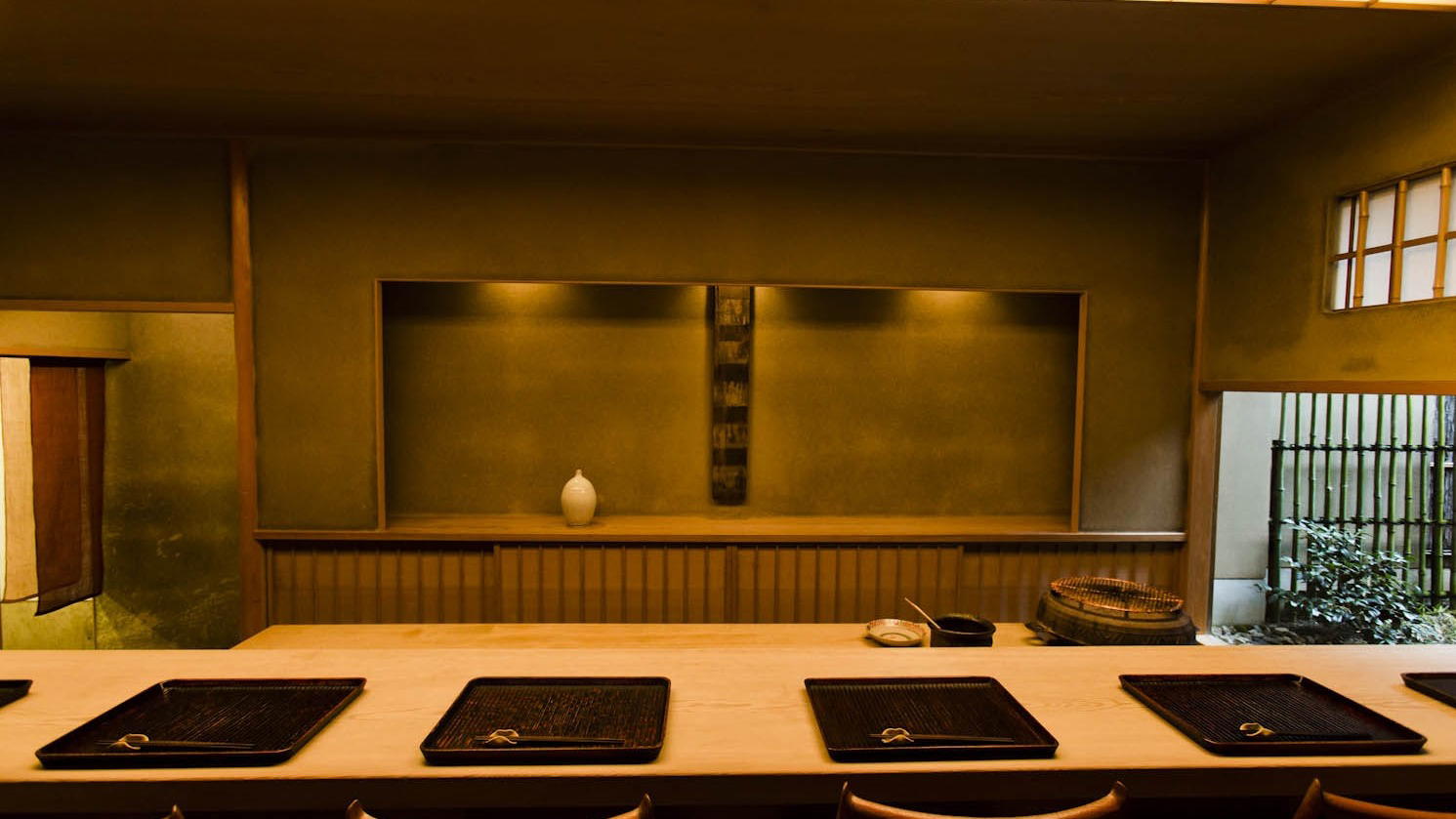
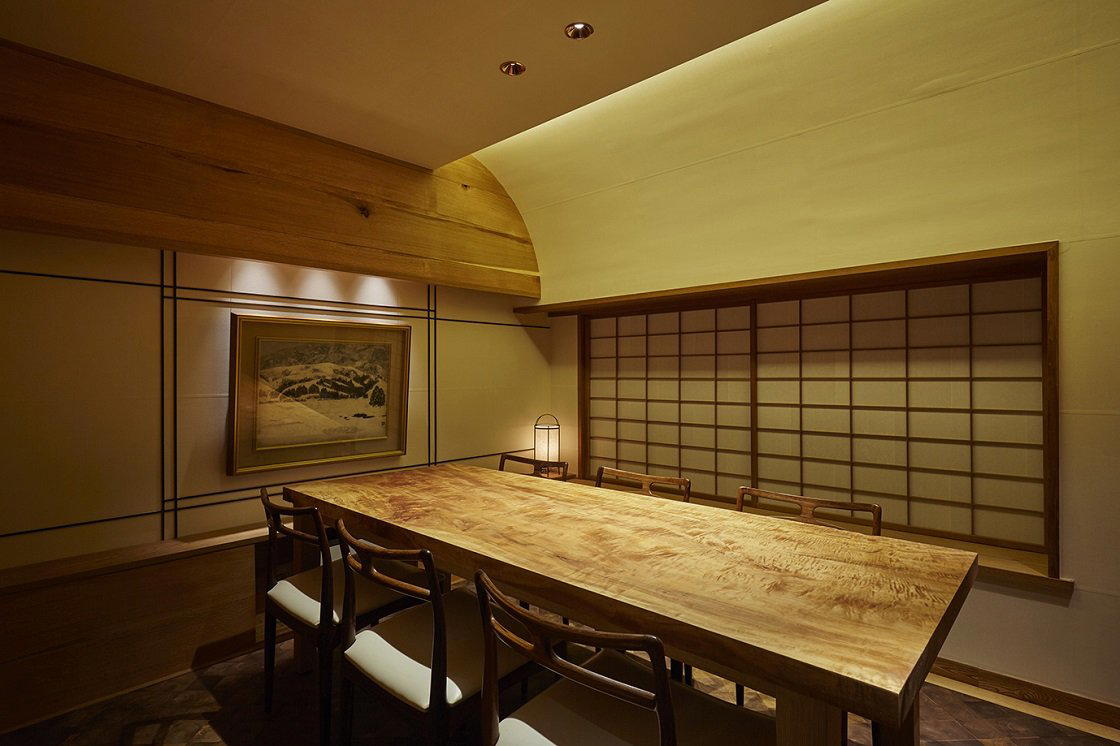
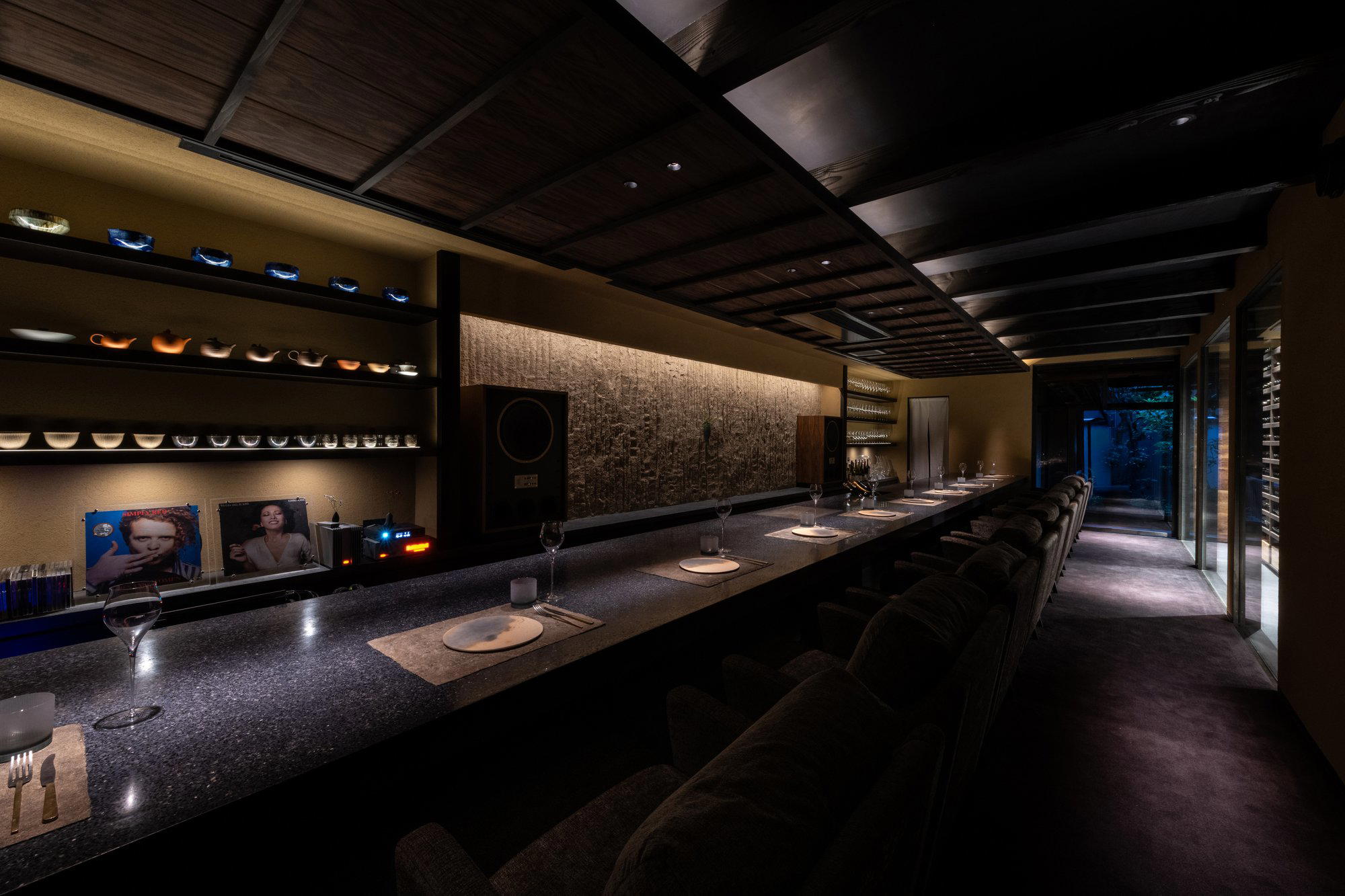
Ukyo Ward sits well outside the tourist-dense corridors of Gion and Higashiyama, and the address at 27-3 Hanazonoimachi reflects that: residential, unhurried, oriented toward local diners rather than passing foot traffic. The concept itself signals the register, a name that splices Japanese 'wa' (harmony) with French 'vie' (life) suggests a considered, conceptually deliberate space rather than a casual neighbourhood bistro. Expect a dining room where the menu sequence, not the scene, does the work.
Is wavie Michelin-listed?
wavie has received recognition including: ‘Wavie’ (pronounced ‘wah-vee’) is an invented word combining Japanese ‘wa’, ‘harmony’, with French ‘vie’, ‘life’; it expresses the concept of French cuisine brought to new life through Japanese ingredients. The prix fixe menu is squarely fo….
What do regulars order at wavie?
There is no à la carte option at wavie. The prix fixe format means every guest receives the same menu sequence, with the kitchen's focus squarely on Kyoto vegetables and local ingredients prepared through French technique. Herb-fermented vegetables and wine-cream-based sauces are the structural anchors of the menu, so the experience regulars return for is the kitchen's seasonal interpretation of those elements rather than any single dish.
How do I find wavie?
wavie is located at 27-3 Hanazonoimachi, Ukyo Ward, Kyoto, 616-8042, Japan, Kyoto.
Reputation Context
| Venue | Cuisine | Price | Awards | Notes |
|---|---|---|---|---|
| wavieThis venue (the venue you are viewing) | Creative French with Japanese Influences | $100–150 | Michelin Plate | Not listed |
| Gion Sasaki | Modern Kaiseki | $300–500 | 3 Michelin Stars · La Liste Top Restaurants | Kaiseki, Japanese |
| cenci | Innovative Italian-Japanese Fusion | $100–150 | 1 Michelin Star · World's 50 Best #76 | Italian |
| Ifuki | Sumibi Kappo Kaiseki | $200–300 | 2 Michelin Stars · La Liste Top Restaurants | Kaiseki |
| Kyokaiseki Kichisen | Kyoto Kaiseki | $200–300 | 2 Michelin Stars · La Liste Top Restaurants | Japanese |
| Kyo Seika | Modern Chinese Fine Dining | $150–200 | 1 Michelin Star · Tabelog Bronze #216 | Chinese |
Recognition history
Dated appearances from independent guides and award organizations, with the underlying list record or original source where available.
Michelin Plate
Michelin