
Michelin Bib Gourmand
Our verdict
Yi Jia has held the Michelin Bib Gourmand in both 2024 and 2025, an unusual sustained recognition for a Shanghainese restaurant operating from a Shau Kei Wan shopping podium. The price point sits at the accessible end of Hong Kong's Chinese dining spectrum, making it one of the more strategically placed entries in the city's Shanghainese scene for readers weighing value against critical credibility.

Pearl is the En Primeur Club membership app, where members save venues, book tables and use the concierge.
The menu
What to order
- Soup dumplings
- Steamed chicken with scallions in house special wine
- Yellow croaker spring rolls
- Claypot wonton chicken soup
Shanghainese Cooking in the Eastern Districts
Shau Kei Wan sits at the eastern end of Hong Kong Island's tram line, past the tourist circuits of Central and the restaurant density of Causeway Bay. The neighbourhood runs on local traffic: wet markets, commuters, family tables. It is not where Hong Kong's Shanghainese dining scene has historically concentrated, which makes the presence of a Michelin-recognised address here worth reading carefully.
Shanghainese cuisine in Hong Kong occupies a specific historical position. The wave of Shanghai migration to the colony in the late 1940s and 1950s planted the cuisine firmly in local food culture, and for decades the major Shanghainese houses operated in Wan Chai, Tsim Sha Tsui, and the mid-levels. The tradition carries strong markers: red-braised pork, cold appetiser spreads, xiao long bao, and a preference for wine-lees and aged vinegars in seasoning. Compared to Cantonese cooking, it runs sweeter, richer, and more reliant on patient braising times. The canon is well-established, which means the critical conversation around any Shanghainese restaurant is largely about execution rather than innovation.
What the Bib Gourmand Signal Actually Means Here
The Michelin Bib Gourmand category occupies a specific band in the guide's framework: good cooking at moderate prices. In Hong Kong's context, where the starred table tier often prices at HK$800 and above per head, the Bib Gourmand serves as the guide's endorsement of value-weighted quality. Yi Jia's $$ pricing places it comfortably within that bracket, and two consecutive years of recognition, 2024 and 2025, suggests the kitchen has not coasted on an initial citation. Sustained Bib recognition in a competitive city is a more demanding credential than a single-year listing, because the inspectors return.
Within Hong Kong's broader Shanghainese category, the competitive set spans a wide price and format range. Yè Shanghai (Tsim Sha Tsui) and Jardin de Jade (Wan Chai) operate at a higher price tier with larger dining rooms and banquet infrastructure. Liu Yuan Pavilion represents another critical reference point for the cuisine in the city. Yi Jia's position in the Bib tier, rather than the starred or upper-casual bracket, locates it in a different peer conversation: one about accessibility, neighbourhood anchoring, and whether cooking at this price point can hold up under a guide's repeated scrutiny. The 2025 retention answers that question in the affirmative.
For comparison across the Shanghainese tradition more broadly, the cuisine's home benchmarks include long-standing Shanghai addresses: Lao Zheng Xing and Cheng Long Hang (Huangpu) represent the classical institutional model, while Fu 1015, Fu 1039, and Fu 1088 sit in the heritage-villa tier. Ren He Guan (Xuhui) and Zhou She (Minhang) hold their own neighbourhood credentials. Understanding where Yi Jia sits within that lineage requires reading it as a Hong Kong expression of the cuisine, shaped by local supply chains and a dining public that has been eating Shanghainese food in this city for seventy years. Shanghai Cuisine in Beijing offers yet another regional inflection for the tradition.
The Neighbourhood Context
The Lime Gala podium format is not unusual for Hong Kong dining. A significant portion of the city's most serious eating happens inside residential and commercial podiums, removed from street-level visibility, dependent on word of mouth and review aggregators rather than footfall. This structural reality means that a restaurant's reputation has to travel independently of its location.
That audience profile matters when reading a Bib Gourmand citation in this part of the city. Michelin's Hong Kong inspectors have historically paid close attention to neighbourhood restaurants that sustain quality without tourist-driven demand. Addresses in Shau Kei Wan, Sham Shui Po, or Sai Wan Ho that make the guide do so on cooking merit alone. There is no proximity premium to inflate the scores, no tourist traffic to sustain a kitchen through rougher months. Yi Jia's eastern Island location places it in that category of recognition.
Readers planning Hong Kong Shanghainese itineraries more broadly should also consider The Merchants and Wing Lai Yuen for contrast in format and focus. The city's Chinese dining ecosystem is layered enough that a single cuisine tradition can support addresses across multiple price tiers, neighbourhood types, and dining occasions. Our full Hong Kong restaurants guide maps that wider picture.
How Yi Jia Sits in Hong Kong's Mid-Range Chinese Dining
Hong Kong's $$ Chinese dining tier is arguably where the city's food culture is most competitive. At this price point, Cantonese roast shops, dai pai dong operators, and regional Chinese specialists are all fighting for the same regular table. The Bib Gourmand functions here as a filter for readers who want critical endorsement without the commitment of a starred meal. Yi Jia holds that position in the Shanghainese category specifically, a cuisine that is less well-represented at the Bib level than Cantonese cooking.
The broader Hong Kong dining scene continues to include a tier of technically accomplished tables at the four-dollar price point, addresses like 8½ Otto e Mezzo Bombana, Ta Vie, and Caprice operate at the opposite end of the spectrum from Yi Jia. Between those poles, mid-range restaurants like Feuille and Neighborhood (both at $$$ and $$ respectively) show that the city's serious eating is distributed across price bands. Yi Jia's sustained recognition confirms that the Bib tier is not a consolation category but a legitimate critical register.
Planning Your Visit
Address: Shop G04, G/F, Lime Gala, 393 Shau Kei Wan Road, Shau Kei Wan, Hong Kong. Getting there: Shau Kei Wan MTR Station (Island Line) puts you within a short walk of the Lime Gala podium; the tram terminus is also nearby. Budget: Priced at the $$ tier, in line with the Michelin Bib Gourmand bracket for Hong Kong. Reservations: Awards: Michelin Bib Gourmand 2024 and 2025.
For further planning across the city, our full Hong Kong hotels guide, full Hong Kong bars guide, full Hong Kong experiences guide, and full Hong Kong wineries guide cover the broader city picture.
Frequently asked questions
What dish is Yi Jia known for?
Can I walk in to Yi Jia?
Comparison Snapshot
| Venue | Cuisine | Price | Awards | Notes |
|---|---|---|---|---|
| Yi JiaThis venue (the venue you are viewing) | Shanghainese and Sichuan Chinese | $20–30 | Michelin Bib Gourmand | Not listed |
| 8 1/2 Otto e Mezzo Bombana (Hong Kong) | 3 Michelin-Star Italian Fine Dining | $200–300 | 3 Michelin Stars · World's 50 Best #94 | Italian |
| Ta Vie | Modern French-Japanese Fine Dining | $300–500 | 3 Michelin Stars · World's 50 Best #68 | Japanese - French, Innovative |
| Caprice | Contemporary French Fine Dining | $200–300 | 3 Michelin Stars · World's 50 Best #35 | French, French Contemporary |
| Feuille | Modern Vegetable-Forward French | $200–300 | 1 Michelin Star · World's 50 Best #93 | French Contemporary |
| Neighborhood | Modern French with Asian Influences | $50–100 | 1 Michelin Star · World's 50 Best #24 | International, European Contemporary |
Recognition history
Dated appearances from independent guides and award organizations, with the underlying list record or original source where available.
Michelin Bib Gourmand
Michelin
Full recognition history (3 entries)
Michelin Bib Gourmand
Michelin
Michelin Bib Gourmand
Michelin
Continue exploring
More in Hong Kong
Restaurants in Hong Kong
All restaurants in Hong Kong →
Bars in Hong Kong
All bars in Hong Kong →
Hotels in Hong Kong
All hotels in Hong Kong →
Wineries in Hong Kong
All wineries in Hong Kong →
Details
- Cozy
- Classic
- Retro
- Family
- Casual Hangout
- Standalone
- Tea
Current opening hours
- Monday
- 11:30 a.m.–10 p.m.
- Tuesday
- 11:30 a.m.–10 p.m.
- Wednesday
- 11:30 a.m.–10 p.m.
- Thursday
- 11:30 a.m.–10 p.m.
- Friday
- 11:30 a.m.–10 p.m.
- Saturday
- 11:30 a.m.–10 p.m.
- Sunday
- 11:30 a.m.–10 p.m.
Hours can change for holidays and private events. Hours as of .
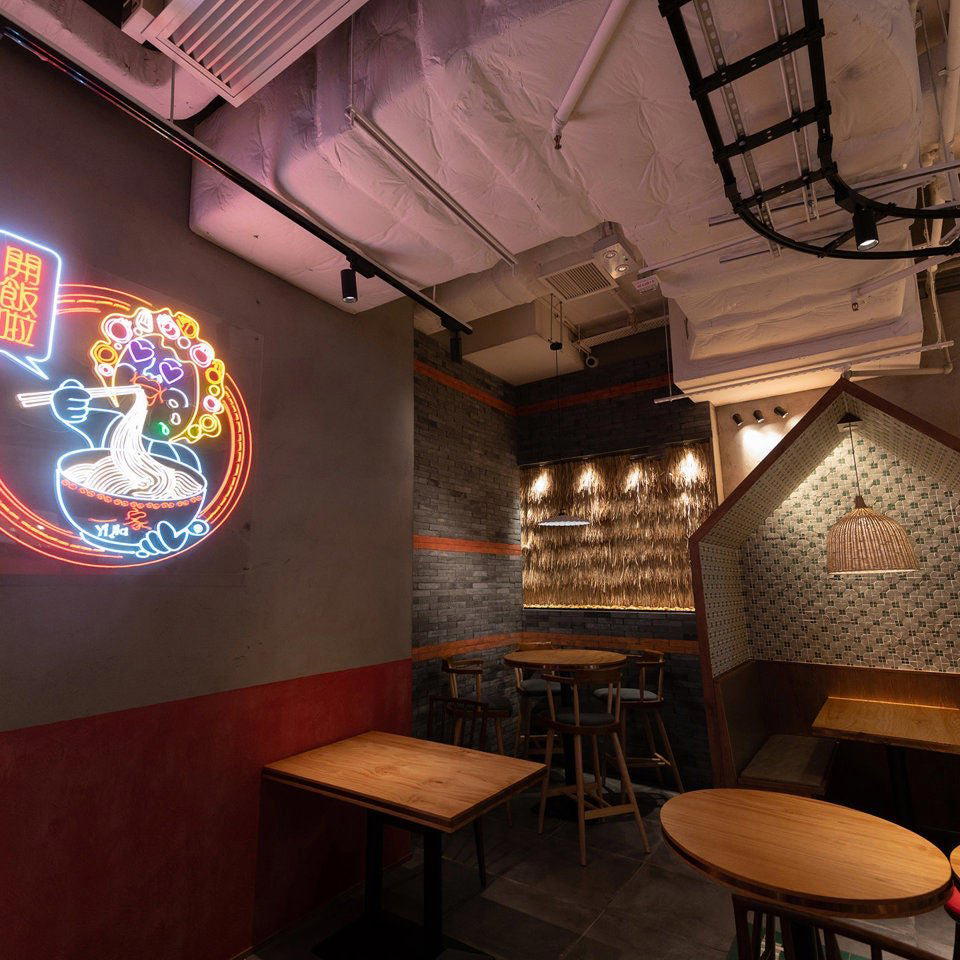
Lively and welcoming, with neon lights, bold colours, and a retro feel that makes the room feel energetic but comfortable.