
Michelin Bib Gourmand
Our verdict
Yangzhou Fan Dian on Fuyu Road has held the Michelin Bib Gourmand in both 2024 and 2025, making it one of the few dedicated Huaiyang kitchens in Shanghai to earn sustained critical recognition at the mid-price tier. Positioned in Huangpu's older commercial fabric, it represents the strand of Shanghai dining that treats the Yangtze Delta culinary tradition as a living practice rather than a heritage curio.

Pearl is the En Primeur Club membership app, where members save venues, book tables and use the concierge.
The menu
What to order
- Shredded tofu in soup
- Braised pork balls
Huaiyang Cooking in the Critical Spotlight
Michelin's Bib Gourmand designation is awarded for cooking that inspectors judge worth seeking out at a moderate spend, and sustaining it across consecutive years, as Yangzhou Fan Dian (Huangpu) has done in both 2024 and 2025, signals something more considered than a first-year discovery. In Shanghai's broader critical map, the award places this Huangpu address inside a small cohort: dedicated Huaiyang restaurants that have cleared the threshold of international guide recognition while holding to a price point accessible well below the city's starred tier. That combination is rarer than it sounds. Much of Shanghai's critical attention gravitates toward either high-ceremony Shanghainese tasting formats or the pan-Chinese luxury dining represented by venues such as Xin Rong Ji (West Nanjing Road). Huaiyang cooking at a ¥¥ price point, holding inspector approval, occupies a distinct and less crowded position.
What Huaiyang Actually Means
Huaiyang cuisine originates from the cities straddling the Huai River and the lower Yangtze, Yangzhou, Huai'an, Zhenjiang, and it is the foundation beneath much of what historically passed as refined Chinese cooking in official and diplomatic contexts. Its technical signatures are knife work of unusual precision, long-braised preparations that preserve rather than dissolve structure, and a restraint with chilli and strong aromatics that sets it apart from Sichuan or Cantonese approaches. The classic preparations, lion's head pork meatballs, Yangzhou fried rice, braised tofu with crab roe, and softly steamed fish in light stock, read as simple on paper but depend on ingredient quality and timing that leaves little room for improvisation. As a culinary tradition, Huaiyang sits in a category where the technique is the statement; there is no theatrical plating or fusion framing to absorb mistakes.
Within Shanghai, the cuisine has a particular historical logic. The city absorbed waves of Yangzhou merchants, bankers, and domestic workers from the late nineteenth century onward, and their food culture embedded itself in the local eating vocabulary. That history means a Yangzhou-named restaurant in Shanghai carries civic resonance, not just culinary positioning. Venues like The Huaiyang Garden in Macau and Huaiyang Fu (Dongcheng) in Beijing demonstrate how the tradition travels across major Chinese cities, though each context shifts the register slightly.
The Huangpu Address and Its Context
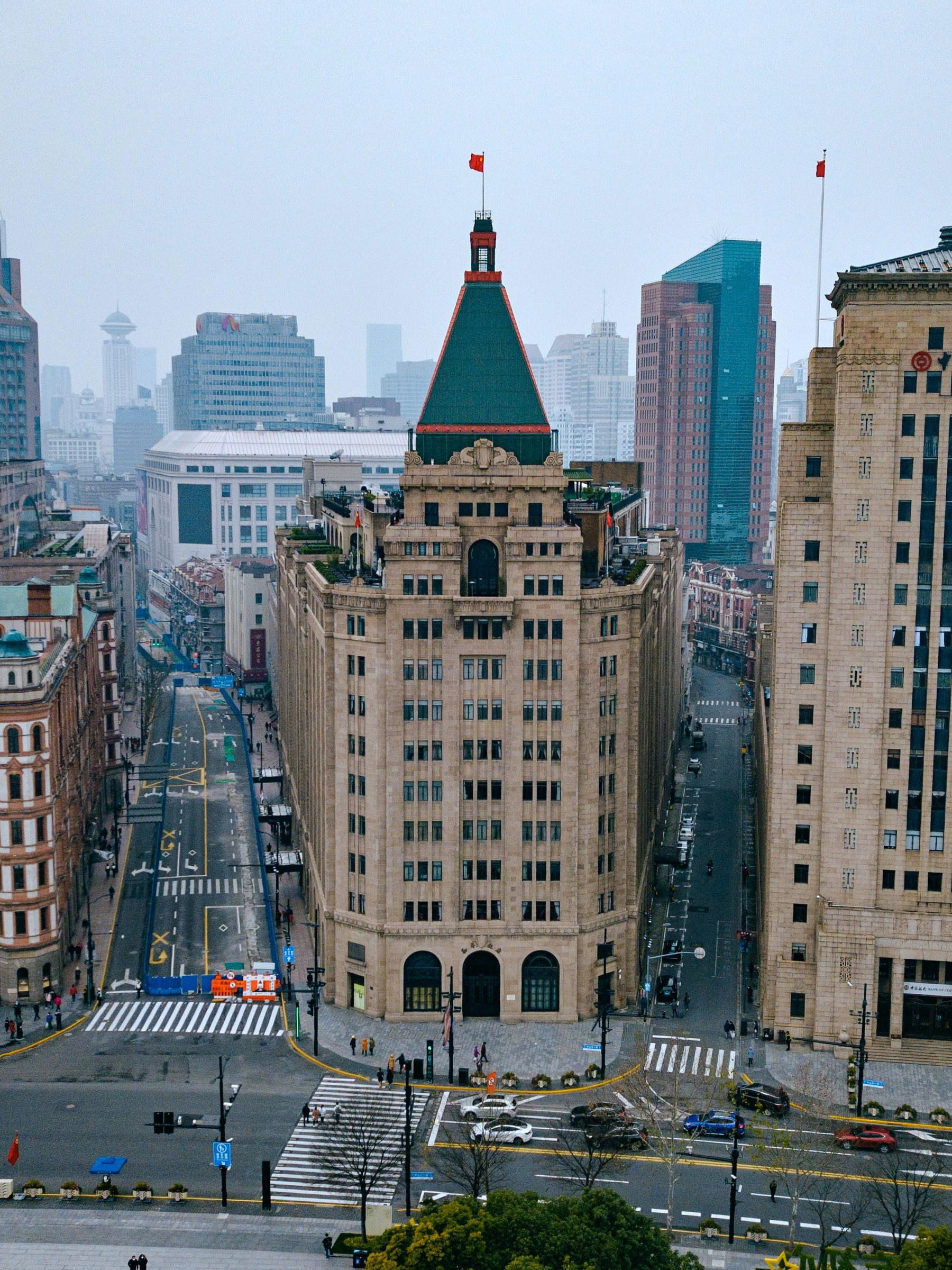
The restaurant sits on Fuyu Road (福佑路) in Huangpu district, a part of the city where the commercial grain is older and less polished than the Xintiandi or Bund corridors a few minutes away. Huangpu retains stretches of utilitarian food culture alongside the heritage tourism zones, and a mid-priced specialist restaurant fits that fabric without incongruity. For the visitor arriving from the more designed precincts of central Shanghai, the neighbourhood shift is minor in distance but noticeable in register. This is not a dining destination built around the performance of arriving somewhere impressive; it is a working restaurant in a working part of the old city.
Huangpu's dining scene is dense enough to support comparison. The district also contains venues at significantly higher price and ceremony points, including Fu He Hui, Shanghai's most recognised vegetarian restaurant at ¥¥¥¥, and Taian Table at the modern European end of the spectrum. Against that company, a ¥¥ Bib Gourmand holder represents a different access point to the city's critical dining layer, one that doesn't require the spend of a multi-course tasting menu to eat something the Michelin inspectors found worth flagging.
Critical Recognition at the Mid-Tier
The Bib Gourmand is sometimes treated as a consolation for venues that fall short of a star, but that reading misunderstands the award's function. Inspectors apply it to cooking that is notably good relative to its price, not to cooking that nearly qualified for something else. Consecutive years of recognition, 2024 and 2025, indicate that the kitchen has maintained consistency across multiple inspection cycles rather than delivering a single strong showing. In a city the size of Shanghai, where guide coverage is competitive and the Huaiyang category is not underrepresented, that durability is the relevant credential.
For regional comparison, Ru Yuan in Hangzhou and Dai Yuet Heen in Nanjing both operate within the broader Yangtze Delta culinary tradition, offering useful reference points for how that tradition performs across different city markets. The standard in that peer group is not uniform; some venues work closer to the ceremonial end, others hold to the kind of direct, ingredient-led cooking that Huaiyang at its core has always been.
Where This Fits in a Shanghai Visit
Shanghai's dining options at the ¥¥ tier span a wide range, from precise Japanese counters and casual Cantonese to the kind of pan-Asian brasserie format that reads as mid-range in almost every city. What is less common at this price level is a kitchen specifically focused on a regional Chinese tradition with inspector-verified consistency. For a visitor who has already mapped the city's higher-end Chinese dining through venues like 102 House or wants to cross-reference Chinese tea culture via Tea Culture (East Beijing Road), Yangzhou Fan Dian offers a different angle: the same seriousness of tradition at a spend that doesn't require advance financial planning.
For the broader Shanghai picture, including hotels, bars, and experiences that map to different parts of the city, the EP Club guides cover the full range: our full Shanghai restaurants guide, our full Shanghai hotels guide, our full Shanghai bars guide, our full Shanghai wineries guide, and our full Shanghai experiences guide. Regional context across China is provided by venues including Xin Rong Ji in Beijing, Xin Rong Ji in Chengdu, Chef Tam's Seasons in Macau, and Imperial Treasure Fine Chinese Cuisine in Guangzhou.
Planning Your Visit
Address: 福佑路242号, Huangpu, Shanghai 200010. Awards: Michelin Bib Gourmand 2024 and 2025. Price range: ¥¥ (mid-range by Shanghai standards). Reservations: Cuisine: Huaiyang, with the Yangzhou culinary tradition as the reference point.
Frequently asked questions
What part of town is Yangzhou Fan Dian (Huangpu) in?
Yangzhou Fan Dian (Huangpu) is located at China, Shanghai, Huangpu, 福佑路242号 邮政编码: 200010, Shanghai.
What price level is Yangzhou Fan Dian (Huangpu)?
Pricing at Yangzhou Fan Dian (Huangpu) is listed as ¥¥.
What's Yangzhou Fan Dian (Huangpu) known for in terms of accolades?
Yangzhou Fan Dian (Huangpu) has received recognition including: Michelin Bib Gourmand (2025); Michelin Bib Gourmand (2024).
What dish is Yangzhou Fan Dian (Huangpu) famous for?
The kitchen works within the Huaiyang canon, a tradition built on preparations such as Yangzhou fried rice, lion's head pork meatballs, and slow-braised whole fish from the Yangtze region. Huaiyang cooking prizes knife work and restrained seasoning over bold spice, which is precisely what Michelin's Bib Gourmand inspectors have recognised two consecutive years running (2024 and 2025).
Do I need a reservation for Yangzhou Fan Dian (Huangpu)?
For a ¥¥ restaurant in Shanghai with back-to-back Bib Gourmand recognition in 2024 and 2025, walk-in availability at peak meal times is unlikely to be reliable. Booking ahead is the practical approach, particularly for dinner or weekend lunch.
Credentials Lens
A quick snapshot of similar venues for side-by-side context.
| Venue | Cuisine | Price | Awards | Notes |
|---|---|---|---|---|
| Yangzhou Fan Dian (Huangpu)This venue (the venue you are viewing) | Traditional Huaiyang Chinese | Not listed | Michelin Bib Gourmand | Not listed |
| Fu He Hui | Modern Seasonal Vegetarian Fine Dining | $200–300 | 2 Michelin Stars · World's 50 Best #11 | Vegetarian |
| Ming Court | Cantonese with Shanghainese Influences | $30–50 | 1 Michelin Star · Black Pearl 1 Diamond | Cantonese |
| Polux | French Bistro | $30–50 | Michelin Bib Gourmand | French |
| Royal China Club | Cantonese Dim Sum | $100–150 | Michelin Plate · The Good Food Guide GFG Good | Chinese, Cantonese |
| Scarpetta | Refined Italian Pasta & Pizza | $50–100 | Michelin Plate · Wine Spectator Best of Award of Excellence | Italian |
Recognition history
Dated appearances from independent guides and award organizations, with the underlying list record or original source where available.
Michelin Bib Gourmand
Michelin
Full recognition history (2 entries)
Michelin Bib Gourmand
Michelin
Continue exploring
More in Shanghai
Restaurants in Shanghai
All restaurants in Shanghai →
Bars in Shanghai
All bars in Shanghai →
Details
- Classic
- Well Known
- Scenic
- Lively
- Group Dining
- Special Occasion
- Business Dinner
- Family
- Private Dining
- Standalone
- Skyline
Current opening hours
- Monday
- 10 AM–10 PM
- Tuesday
- 10 AM–10 PM
- Wednesday
- 10 AM–10 PM
- Thursday
- 10 AM–10 PM
- Friday
- 10 AM–10 PM
- Saturday
- 10 AM–10 PM
- Sunday
- 10 AM–10 PM
Hours can change for holidays and private events. Hours as of .
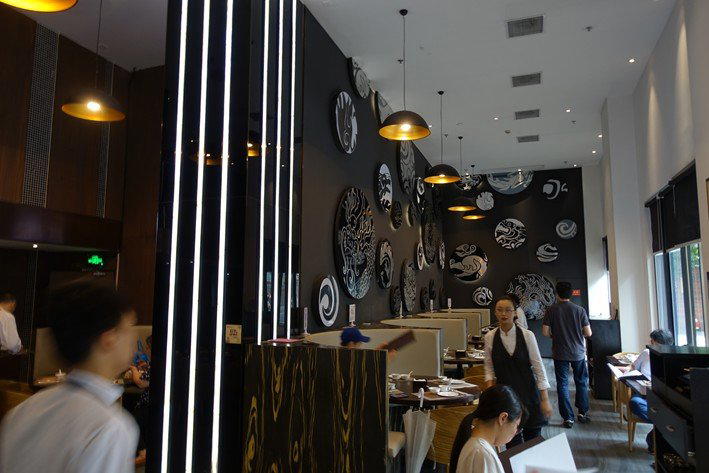
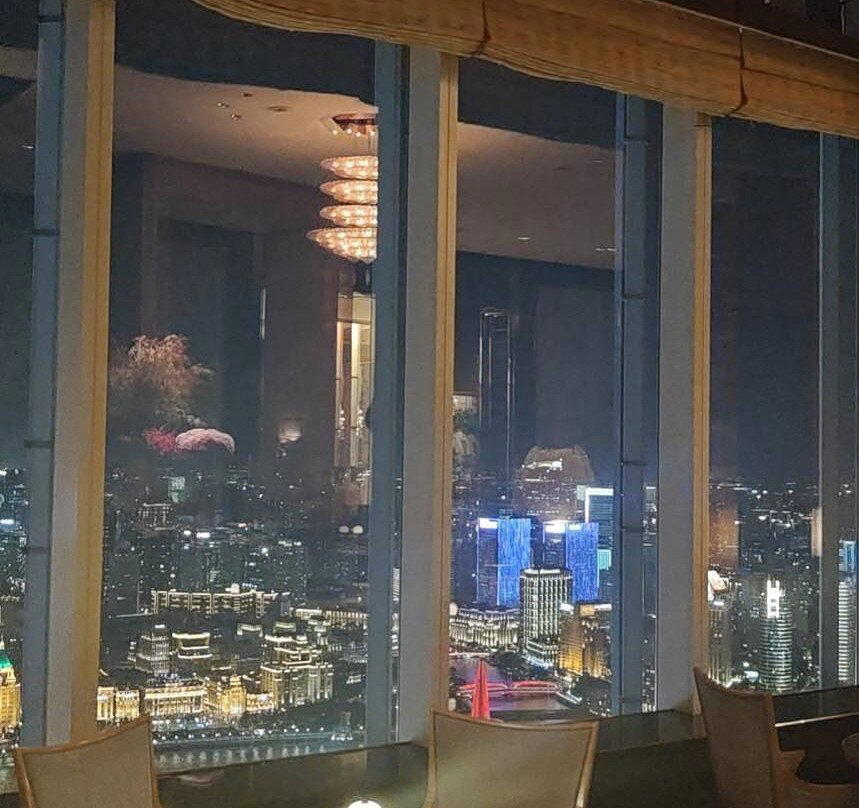
A busy, classic dining room with traditional paintings and wood carvings; the second floor has floor-to-ceiling windows with city views.